Client Background
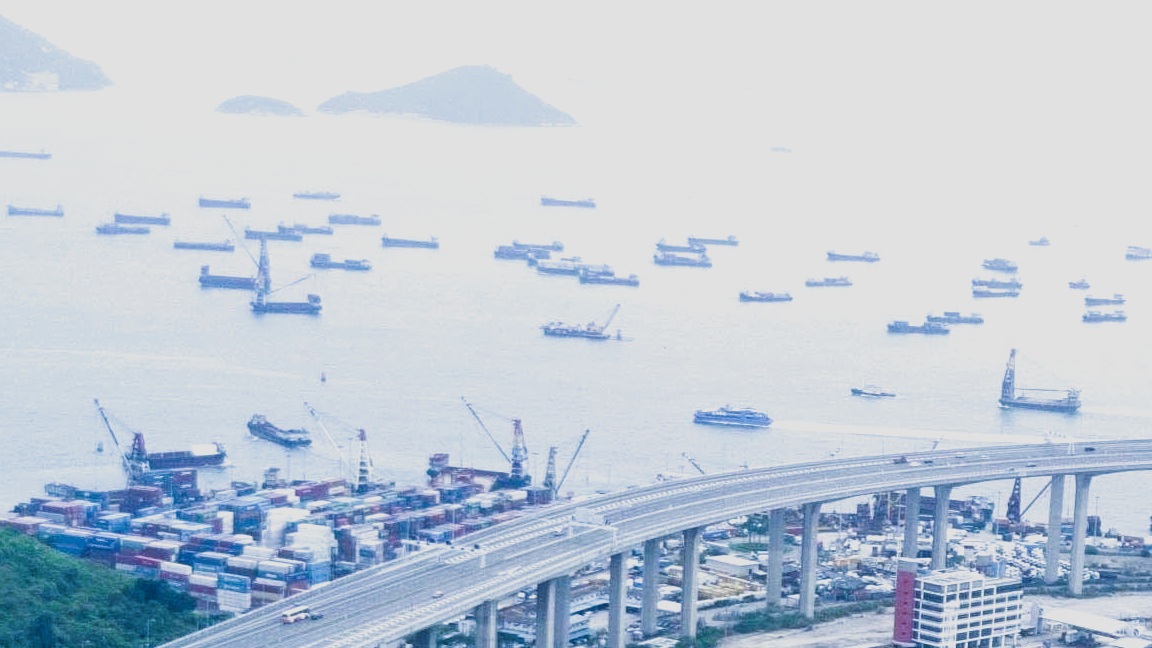
Macau is a free trade port. Most goods are imported with zero tariffs, and there is no VAT or consumption tax. At the import stage, only a statistical fee of a few thousandths of the cargo value is required, making it one of the markets with the lower tariff burden in the Asia-Pacific region. It is for this reason that many mainland Chinese traders regard Macau as an important import destination for the local consumer market. The protagonist of this case study is a cosmetics import trading company in Zhuhai that purchases cosmetics from mainland factories and transports them via the Hong Kong-Zhuhai-Macau Bridge from Zhuhai into Macau, supplying local retailers and duty-free channels.
Although cosmetics are not high-tax goods like tobacco and alcohol, they are classified as controlled goods in Macau's import control system, and the regulatory requirements are not simple. Import declarations must be filed by a Macau customs broker through the customs electronic system, and cosmetics must comply with product labeling regulations—bilingual Chinese-English labels, ingredient lists, and other information must all be complete. Compared with the electronic declaration and release of general cargo, cosmetics have more detailed requirements at the documentation and labeling level, leaving more room for error.
The overall customs clearance process in Macau is not complicated. After goods arrive in Macau via the Hong Kong-Zhuhai-Macau Bridge, one-stop clearance at the port takes about 15-25 minutes. Import declarations are filed online by a Macau customs broker through the Macau Customs electronic system, which supports a Chinese-language interface; general cargo declarations can be completed in a few minutes, and customs clearance is usually completed within 1-2 working days. If a shipment is selected by the system for inspection, it must cooperate with customs for container opening and examination, which adds 1-2 working days. Macau Customs conducts random inspections on imported goods; the inspection rate for cosmetics is normally in the range of 5-10%, and inspections mainly involve document verification. In other words, the clearance process itself is highly efficient; the difficulties are concentrated on upstream details such as whether declaration information is accurate and whether labels are compliant—only when details go wrong does a declaration that should have been released quickly turn into a detention.
The company initially understood Macau customs clearance as "it's a free port, just file a declaration and it can enter." Only during actual operations did it discover that the documentation and labeling steps involved far more intricacies than expected. When the first batch of goods arrived in Macau, it was selected by customs for inspection due to inconsistency between the declaration information and the label information. The goods were held at the port, and since the company was unfamiliar with the handling process internally, rounds of communication over several days failed to resolve the issue, leaving the entire shipment stuck in a dilemma. This experience made the company realize that compliance work for importing into Macau must be done in advance before shipment, rather than waiting until the goods arrive at the port to remedy the problem. The lesson from the first shipment also changed the company's procurement rhythm—previously suppliers did not check labels before shipping, but now label review is moved forward to the factory shipping stage, so problems are stopped at the source.
For the company, cosmetics importing is an ongoing business, not a one-off deal. If problems repeatedly occur in the customs clearance process, what is lost is not only port detention time and effort, but also the confidence of downstream Macau customers in supply stability—if goods are inspected today and documents need to be supplemented tomorrow, who would be willing to cooperate long-term? Therefore, what the company needs is not just a logistics provider that "can transport goods," but a full-process service provider that "understands controlled goods declaration," one that can provide quality control from documentation preparation and label verification to inspection response.
Key Challenges
- Unclear compliance requirements for controlled goods: Cosmetics are controlled goods in Macau and must comply with product labeling regulations, including detailed requirements for labels in Chinese and English, ingredient lists, etc. When companies first enter the industry, they do not have a full grasp of these requirements, resulting in discrepancies between declared information and actual product labels.
- Lack of experience in inspection and remedy: After the first shipment was selected for inspection by customs, the company did not know how the inspection process worked, what cooperation was needed, or what documents were missing. The goods were held at the port for days, and business almost came to a standstill.
- Passive document preparation: In the past, documents were only remembered when the goods arrived. Invoices, packing lists, and label information could not be gathered in full, leading to repeated rounds of document supplements and amendments. One inspection required multiple trips back and forth.
- Confusing coordination channels: Transportation, customs declaration, and clearance were handled by different service providers, who shifted blame when problems arose. The company did not know whom to contact or urge, and could only wait anxiously.
The root of these challenges is misinterpreting "free port" as "no declaration, no compliance." Macau's free port status exempts tariff burdens, not import declaration obligations—the procedures required for controlled goods cannot be skipped at all.
Transport Requirements
- Route: Zhuhai → via Hong Kong-Zhuhai-Macao Bridge → Macau Customs → Macau warehouse/store, door-to-door;
- Cargo volume: Regular batches, 3-5 batches per month, including multiple categories of cosmetics; declaration required item by item by product name/specification;
- Timeline: General cargo customs clearance 1-2 business days, electronic declaration review about 1-2 hours, territory-wide delivery 2-4 hours;
- Special requirements: Cosmetics are declared as controlled goods, with complete bilingual Chinese and English labels and ingredient lists; if selected for inspection, cooperate with customs inspection and promptly provide supplementary documents; reserve 1-2 days of inspection buffer in the batch schedule to avoid affecting the next batch arrangement;
- Billing method: ALL-IN inclusive (transportation + customs declaration + customs clearance + delivery), no additional charges for inspection communication;
- Insurance: Insured based on cargo value, claims can be made throughout the entire transportation.
Solution
Bofeng assisted the enterprise in completing the remedy for the first shipment inspection, and on this basis established a compliance mechanism of "pre-declaration + inspection response":
- Rapid problem identification in the first inspection: After the cargo was held up at the port, Bofeng Macau customs broker immediately retrieved the declaration records and checked them item by item, pinpointing two problem areas — "the declared product name was a consolidated category inconsistent with the label details, and certain ingredients were not listed on the label" — which clarified the direction of the remedy and eliminated the need for repeated blind submissions;
- Document supplementation and re-declaration: Supplementary documents were prepared as required by Macau Customs — invoices and packing lists were reorganized, and the declaration details were corrected according to the actual ingredient list; after the bilingual label information was aligned with the declared content, the goods were re-declared through the Macau Customs electronic system, with electronic review taking approximately 1-2 hours. Once approved, pickup and delivery were arranged, and the entire batch was released under the new declaration;
- Upfront label compliance review: After the remedy was completed, the approach shifted from "declare and be compliant" to "be compliant before shipping" — before every shipment, Bofeng helps verify that the bilingual labels, ingredient lists, and declaration information are consistent; any discrepancies are corrected in advance, reducing at the source the probability of needing document supplements when selected for inspection;
- Standardized inspection response procedure: An inspection response plan was established — when selected for inspection, the customs broker completes document verification within 2 hours and provides a handling path, while the client only needs to cooperate in providing materials, avoiding the situation of "cargo stuck at the port while people can only wait helplessly";
- Integrated electronic declaration: Transport and customs declaration from Zhuhai to Macau are handled in an integrated manner — commercial invoices, packing lists, and waybills are submitted together with the cargo, and the Macau customs broker makes the electronic declaration, with general cargo released within 1-2 working days, and the entire process handled through a single point of contact; mainland export declaration and Macau import declaration are synchronized, with both customs authorities verifying the information in one pass, reducing repeated communication;
- Abnormality coordination and review: After each batch is released, the declaration records are reviewed; categories that required document supplements are added to a priority checklist, and for subsequent shipments the verification is automatically strengthened so that similar problems do not recur.
Take the timeline of the first remedy as an example: on the 2nd day of the cargo being held up, the problem was identified and supplementary documents were submitted; on the 3rd day, the re-declaration was completed and approved for release the same day, followed by pickup and delivery — the entire remedy took about 3 days, saving a significant amount of back-and-forth time compared with the enterprise handling it on its own. Subsequent batches followed the "pre-declaration" process, with general cargo released steadily within 1-2 working days, and no further whole-batch hold-ups occurred.
The other value of this mechanism is that it becomes the enterprise's operating standard: which categories are prone to classification errors, which label elements Macau Customs emphasizes, and which documents need to accompany the cargo — all are compiled into a checklist that moves in sync with the procurement plan. New SKUs are compared against label and declaration information before entering the warehouse, making "comply first, ship later" a fixed practice. Internally, import clearance no longer depends on a few knowledgeable individuals but follows a standard process that can be handed over and trained on, reducing the compliance risk caused by team turnover.
Results
| Metric | Before Remediation (First Shipment Handling) | After Remediation (Compliance Mechanism) | Improvement |
|---|---|---|---|
| Inspection & Release Cycle (Discovery → Release) | Approximately 5–6 days | Within 3 days | Reduced by ~40% |
| Document Supplements / Re-declarations | 2 out of the first 3 shipments | Only 1 in the past 12 months | Significant decline |
| First-time Declaration Approval Rate | ~60% | 95% | Up by ~35 percentage points |
| Average Customs Clearance Time | 3–4 days | 1–2 days | Cut in half |
| Declaration Preparation Timing | Documents prepared only after cargo arrived at port | Fully prepared before shipment | Compliance at the source |
Once the remediation process was fully implemented, the company's biggest gain was shifting from "passively responding to inspections" to "proactively managing compliance": documents and labels are now verified before shipment, the first-time declaration approval rate has risen to 95%, and the inspection release cycle has been compressed from 5–6 days to within 3 days. Supply stability for downstream customers in Macau has improved significantly, and customs clearance for monthly shipment batches is no longer a business bottleneck. It should be noted that Macau Customs conducts random inspections on imported goods, with cosmetics inspection rates normally ranging between 5% and 10%. Being selected for inspection is part of the normal regulatory process; the key is to handle every selected declaration properly on the first attempt — this is precisely the core value of this mechanism.
Monthly data shows that after stable compliance was achieved, detention-type anomalies in customs clearance have virtually disappeared: among all batches declared in the past 12 months, the proportion rejected due to documentation issues has dropped notably, allowing downstream customers in Macau to execute procurement plans at their established pace without needing to reserve excessive buffer time for clearance uncertainty.
For similar import trading enterprises, this "advance declaration + inspection response" process is replicable: when compliance work is done before shipment and inspection is managed as just one step in the workflow, customs clearance is no longer an uncontrollable risk point. The company has already applied the same compliance mechanism to new product categories introduced later, and its product line imported into Macau is steadily expanding.
Data Disclaimer: The above are case-specific figures (as of July 2026), reflecting this client's performance during the cooperation period and do not constitute a service commitment.
The two parties have entered the second year of cooperation; the above data are case records for cosmetics imported into Macau over the past 12 months.
Client Testimonial
"When we were first inspected, we were completely baffled, and the goods were stuck at the port. Bofeng Customs Brokerage helped us sort out the problem within a day, and after resubmitting the supplementary documents, the goods were quickly released. Now we check all the documents and labels in advance before shipping, so even if we're selected for inspection again, we don't panic."
— Customer feedback on Bofeng Logistics · Macau Logistics Dedicated Line (published with authorization and anonymized)
Need a similar logistics solution? Contact us — a plan within 30 minutes.
Phone:13075678958 | WhatsApp:+86 13075678958 | Email:info@zhbfwl.com
Get a Quote