
Client Background
A medical device and pharmaceutical trading company in Guangzhou provides supply and distribution of hospital equipment, consumables, and medicines to medical institutions in South China, Hong Kong, and Macau. Its clients include several medium-sized hospitals, clinics, and community health centers in Macau. The local pharmaceutical supply chain in Macau is limited in scale, and a considerable portion of hospital equipment, imported drugs, and testing consumables rely on mainland supply. Unified procurement and distribution by mainland suppliers has become a stable supply route.
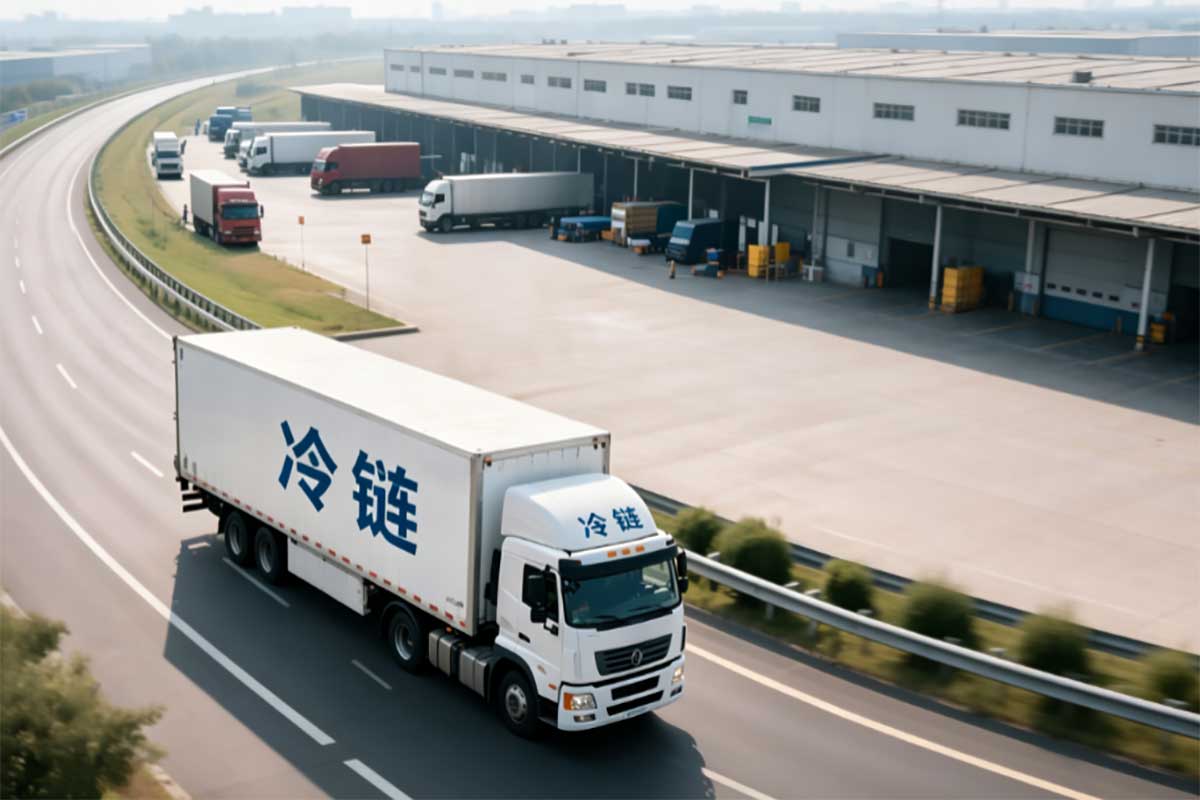
The logistics of medical supplies are fundamentally different from ordinary goods, with requirements for "compliance" and "temperature control" running throughout the entire process. Medicines, especially biological products, certain injections, and diagnostic reagents, are temperature-sensitive and require cold-chain temperature control during transport, along with temperature records. Hospital equipment, on the other hand, is often bulky, high-value, and subject to strict installation requirements, requiring not only safe transport but also on-site positioning and infrastructure connection. The two types of goods have completely different transport requirements, yet they often need to be handled within similar timeframes by the same supply chain.
When Macau medical institutions purchase medical supplies from the mainland, they value one-stop, stable supply: hospital pharmacies order according to clinical and stocking plans, equipment departments purchase according to equipment renewal plans, and arrival times must have clear expectations. If logistics become unstable—temperature data for medicines has gaps, or equipment is damaged during transport—it directly affects the normal operation of hospitals. When choosing a logistics service provider, supplying companies place "compliance and traceability" above freight costs—if something goes wrong with medical supplies, the loss is not just one shipment, but the long-term trust with hospitals.
Previously, the company assigned medicines and equipment to different carriers: pharmaceutical cold chain relied on the empirical judgment of "having a cooling unit on the truck," with no unified standard for whether temperature data was continuous or whether complete reports could be issued. For hospital equipment transport, vehicles were arranged on an ad hoc basis, and mismatched specifications or inadequate securing occurred from time to time. Every shipment of medical supplies required confirming compliance details from scratch, and traceability depended on searching chat records—the risk of problems always existed. The company's management decided to hand over all medical supply shipments to Macau to a single service provider with experience in cold chain and equipment transport, turning compliance into a standardized process.
The supply rhythm of medical supplies in Macau follows a certain pattern: large equipment purchases arrive in batches according to annual plans, while medicines and testing consumables are replenished on a rolling basis according to clinical usage, with high frequency and many batches. Mixing the two types of goods in the same supply chain places high demands on logistics flexibility—equipment requires one-time, reliable delivery, while medicines require continuous and stable supply. If either type fails, it directly affects the usage arrangements at hospitals. What supplying companies need is a logistics partner that can manage these two completely different types of goods in a unified manner and ensure every shipment is traceable.
Key Challenges
- Pharmaceutical cold-chain requirements are strict: Some drugs are temperature-sensitive, and the entire transport process must be maintained within the specified temperature zone; temperature records must be continuous, complete, and traceable, with no gaps; in summer, during port clearance and loading/unloading, the temperature difference between inside and outside the vehicle is large, and the risk of temperature fluctuation is high; any abnormal segment may cause the drugs to fail to meet storage conditions.
- Hospital equipment varies in specifications: Equipment ranges from large to small, including precision instruments and large mainframes, each with different transport requirements; precision instruments are sensitive to vibration and jolting, requiring cushioning packaging and professional securing, which ordinary vehicles are not up to the task.
- Compliance declarations are cumbersome: Medical supplies require many elements for customs declaration; pharmaceuticals involve quarantine and registration information verification; incomplete documents or inconsistent information may cause delays; different categories have different declaration paths, and manual verification is prone to omissions.
- On-site installation and positioning requirements are high: Hospital equipment often needs to be positioned on site and connected to installation conditions after arrival; some equipment requires a clean environment, and the unloading and handling process must avoid collisions and contamination.
- Decentralized responsibilities make traceability difficult: Pharmaceuticals and equipment are handled by different carriers; temperature records and accompanying documents belong to different links; once traceability is needed, responsibility is hard to define, and the traceability chain is easily broken.
The common thread among these challenges is that "compliance is no small matter": for medical supplies, every item—temperature control gaps, missing documents, or handling bumps—can affect whether the supplies can be used normally. What a logistics service provider needs to do is ensure every shipment is executed according to medical standards, making compliance a process rather than a matter of luck. Such barriers are not unique to a particular hospital; they are common requirements for mainland medical supplies entering Macau. In the past, supply companies often relied on manual experience, and with more links in the chain, it was easy to lose track.
Transport Requirements
- Route: Guangzhou/Zhuhai → Hong Kong-Zhuhai-Macao Bridge → Macau hospital, door-to-door;
- Cargo: Hospital equipment (precision instruments, large mainframes) and pharmaceuticals (requiring cold-chain temperature control), testing consumables, shipped in mixed batches;
- Cold-chain requirements: Pharmaceuticals matched with refrigerated trucks according to designated temperature zones, continuous temperature recording throughout transit, temperature control report provided upon delivery;
- Compliance declaration: Customs declaration for medical supplies, verification of pharmaceutical quarantine and registration information, complete accompanying documents;
- Transport vehicles: Refrigerated trucks for pharmaceuticals (configured by temperature zone), hospital equipment transported by box truck or flatbed truck according to specifications, precision instruments with additional cushioning packaging;
- Installation and positioning: After hospital equipment arrives on site, coordinate unloading, handling, and on-site positioning, and coordinate installation conditions;
- Timeliness: Shipping arranged according to the hospital pharmacy stocking schedule and equipment procurement plan, with clear and predictable delivery times.
The client's core need is to turn both temperature-control compliance for pharmaceuticals and safe installation of equipment into recordable, traceable, and deliverable standard procedures.
Solution
Bofeng establishes a "compliant transportation of medical supplies" solution for enterprises, with unified management of two lines: pharmaceutical cold chain and hospital equipment:
- Cold chain temperature control fully traceable throughout the process: Pharmaceuticals are matched to refrigerated trucks according to the temperature zone required by the cargo — those requiring refrigeration are configured at 0~8°C, those requiring freezing are configured at -18°C or below; the temperature zone is confirmed shipment by shipment based on the temperature control label on the cargo packaging. Before dispatch, the refrigerated truck's refrigeration unit is turned on in advance for pre-cooling; in summer, pre-cooling time shall be no less than half an hour; before loading, the core temperature of the cargo is confirmed to meet transport requirements. Temperature recorders are placed at the center of the cargo, with dual backups, recording throughout loading, transport, customs clearance, and delivery. During transit, temperature data is monitored in real time; at port queuing and loading/unloading stages, door-open time should be shortened as much as possible to reduce cold air loss. For shipments during high-temperature periods in summer, departure times should be arranged as early morning or evening as possible, avoiding daytime port queuing peaks to reduce temperature fluctuations caused by door opening and waiting. Upon delivery, a temperature control report is issued with the cargo; the temperature data is continuous, complete, with no gaps, and traceable and available for review;
- Professional shipping of hospital equipment: Vehicles are selected according to equipment specifications — large equipment uses ton trucks or flatbed trucks; precision instruments are additionally packed with shock-absorbing cushioning and professionally secured to avoid transport vibration. After loading, equipment is fastened at multiple points, and vulnerable parts are protected with corner guards. Upon arrival at the hospital, unloading, handling, and positioning are carried out according to plan, coordinating with the hospital's installation conditions, and equipment is handed over in good condition;
- Compliant declaration of medical supplies: Declaration materials for pharmaceuticals and equipment are organized separately; for pharmaceuticals, quarantine and registration information is verified in advance, and all accompanying documents are prepared at once. Before shipment, the declaration requirements for medical supplies are confirmed with the port, and any information that may be questioned is checked in advance to avoid having to supplement materials at the port. Pharmaceutical documents and equipment documents are archived separately; the packing list follows one shipment one document, and hospital staff checks item by item upon receipt. After customs clearance, documents are archived by shipment, making it convenient for subsequent verification by the hospital and regulatory authorities;
- Combined and batched dispatch: For pharmaceuticals and equipment arriving within a similar time window, scheduling is unified to share a truck — the cold-chain truck carries pharmaceuticals, and the same truck is partitioned by cargo space to load equipment and consumables in sections, reducing the number of scattered shipments and making it easier for the hospital to receive goods centrally. Dispatching is planned backward from the hospital's stocking milestones, with clear delivery times;
- Single-window interface: A dedicated customer service representative is assigned to interface with hospital procurement and pharmacy, coordinating dispatch, temperature control, declaration, and positioning in a unified manner. Monthly shipping ledgers and temperature control reports are archived, available for review by the supplier and hospital at any time; when traceability is needed, any shipment can be traced with one document.
The core of this solution is to fix the "compliance details" of medical supply transportation into standardized procedures: pharmaceutical cold chain has temperature data to check, equipment transport has professional solutions to control, and customs declaration has a unified checklist to follow. For suppliers, shipping medical supplies to Macau is no longer "reconfirming everything each time," but simply executing according to the procedure.
Results
| Indicator | Before cooperation (dispersed carriage) | After cooperation (medical dedicated line) | Improvement |
|---|---|---|---|
| Temperature control report completeness rate | Baseline | Issued for each shipment | Fully traceable throughout |
| One-time customs clearance pass rate | Baseline | Stable pass | Advance declaration |
| Equipment intact rate upon arrival at hospital | Baseline | Steadily improving | Professional handling |
| Traceability time per shipment | Baseline | Reduced by about 60% | Ledger archiving |
| Average delivery time | Baseline | Reduced by about 25% | Scheduling and consolidated vehicle loading |
After the cooperation, the company brought all medical supplies shipments bound for Macau into this dedicated line: each cold-chain pharmaceutical shipment has a temperature control report, and temperature data can be continuously checked; the intact rate of hospital equipment upon arrival has steadily improved, and installation is completed as planned; customs declaration documents are prepared in one go, and coordination for supplementary orders caused by incomplete documents has been reduced by about half. Delivery coordination between suppliers and Macau hospitals has improved significantly. Hospital pharmacies and equipment departments now have stable expectations for arrival times, and the communication cost for both parties to verify documents and archive temperature control records has also decreased noticeably.
Looking at it by month, the focus in the first two months was on standardizing the archiving of temperature control reports and declaration lists. From the third month onward, ad hoc coordination caused by missing documents and temperature control gaps decreased significantly, and delivery times gradually stabilized. Hospital pharmacy feedback indicates that once arrival times became predictable, stocking plans no longer needed large safety margins, inventory turnover became smoother, and the equipment department's acceptance of installed equipment went much more smoothly.
Data statement: The above are case data (as of July 2026), reflecting the performance of this specific case during the customer's cooperation period and do not constitute a service commitment.
The two parties' cooperation has entered its second year. The above data are case records of medical supplies shipments from Guangzhou/Zhuhai to Macau hospitals over the past 12 months.
Client Testimonial
"In pharmaceutical cold chain, the biggest fear is gaps in temperature records, and for equipment, it's bumps during transport. Now every shipment comes with a temperature control report, and every piece of equipment is in place intact—so we have more confidence when reporting to the hospital."
— Customer feedback from Bofeng Logistics · Macau Logistics Line (published with authorization and anonymized)
Need a similar logistics solution? Contact us — a plan within 30 minutes.
Phone:13075678958 | WhatsApp:+86 13075678958 | Email:info@zhbfwl.com
Get a Quote