In China-Hong Kong logistics, general cargo accounts for the majority of shipments, but special cargo transport is also common. Oversized equipment and cold-chain food are the two most frequent types of special cargo, each with specific requirements for vehicle types, declaration procedures, and operational processes. Understanding these requirements enables thorough preparation before shipment, helping to avoid clearance delays or safety incidents caused by improper handling.
I. Oversized and Over-Dimensional Cargo
Applicable Vehicle Types and Classification
Oversized cargo is classified into three categories based on the type of over-dimension, each corresponding to different vehicle types and operational requirements:
| Over-Dimension Type | Dimension Standard | Recommended Vehicle Type | Typical Cargo |
|---|---|---|---|
| Over-Length | Length > 12m | Flatbed Truck (with extendable racks) | Steel pipes, steel structures, long equipment |
| Over-Width | Width > 3m | Low-bed Semi-Trailer | Engineering vehicles, large machinery |
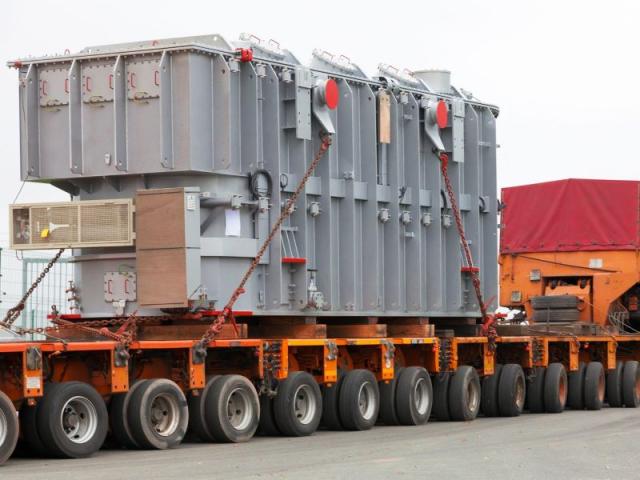
| Over-Weight | Single piece > 20t | Reinforced Flatbed Truck (multi-axle) | Generator sets, large molds |
The dimensions and weight of oversized cargo determine the vehicle type selection. Flatbed trucks have no container walls or side panels, making them suitable for over-length cargo. Low-bed semi-trailers have a lower loading platform and a lower center of gravity, making them suitable for over-width and over-weight cargo. Reinforced flatbed trucks distribute weight through additional axles, making them suitable for over-weight cargo.
Operational Process
The process for transporting oversized cargo from mainland factories to Hong Kong includes the following steps:
Step 1: Solution Assessment. Provide cargo dimensions, weight, and photos (or drawings) for the logistics provider to assess the loading plan, lashing plan, and route feasibility. Cargo dimensions and weight must be measured accurately to the centimeter and kilogram, as these data form the basis for port declarations and route planning. It is recommended to complete the assessment before cargo loading to avoid discovering that the vehicle type is unsuitable after the cargo has arrived at the loading site.
Step 2: Vehicle Arrangement. After the plan is confirmed, arrange a flatbed truck to the factory for loading. Oversized cargo requires flatbed trucks or low-bed semi-trailers; standard trucks cannot accommodate them. It is recommended to notify the logistics provider 2–3 business days in advance to arrange vehicles and port declarations. Vehicle resources for oversized cargo are tight around holidays, requiring earlier booking.
Step 3: Loading and Lashing. After loading, the cargo is secured to the floor-mounted tie-down rings using steel bands or fiber ropes, with wooden supports added as needed to prevent shifting. The lashing plan must be designed according to the cargo's shape and center of gravity—regular-shaped box-type cargo uses cross-lashing (two straps crossing front and back), while irregularly shaped machinery uses direct lashing with wooden blocks filling gaps. For oversized cargo, ensure the center of gravity is aligned with the vehicle's centerline to prevent rollover during transit due to off-center weight distribution.
Step 4: Port Declaration and Customs Clearance. Since oversized cargo exceeds standard container dimensions, vehicle dimensions and cargo information must be declared to the port authority in advance. Port selection for China-Hong Kong vehicles requires comprehensive consideration of traffic conditions—different ports have different height and width restrictions for oversized transport, so the port must be selected based on compliance with these conditions. Over-length cargo must display over-length warning flags at the rear; over-width cargo requires advance confirmation of road traffic conditions along the route. Customs may require container inspection for oversized cargo at the port, so additional time should be allowed.
Lashing and Securing Examples
Different types of oversized cargo require different lashing approaches:
- Engineering Vehicles (Excavators/Loaders) : Use 4 or more steel chains + turnbuckles secured to the flatbed's floor-mounted tie-down rings, with wooden chocks placed at the front and rear of the tracks. Tension on the steel chains must be evenly distributed to prevent vehicle tilting due to excessive force on one side.
- Steel Structural Components : Use fiber ropes + edge protectors (to prevent cargo edges from cutting through the straps) in cross-lashing pattern, with a lashing point every 2 meters. Steel structural components have sharp edges, making edge protectors essential—otherwise, straps may be cut during transit.
- Generator Sets : Secure the chassis to the flatbed floor with steel bands, with wooden supports at all four corners to prevent rolling. Generator sets have a high center of gravity and require additional side supports.
Lashing and securing standards refer to the CSS Code (Code of Safe Practice for Cargo Stowage and Securing). China-Hong Kong vehicles travel approximately 30–40 minutes between Shenzhen Bay and Huanggang ports, with about 1 hour on urban roads. The lashing plan must ensure that cargo does not shift or overturn throughout the entire journey.
Port Access Restrictions
Different ports have different restrictions on oversized transport; comprehensive consideration is required when selecting a port:
| Port | Height Limit | Access Characteristics | Recommended Scenario |
|---|---|---|---|
| Shenzhen Bay | 4.5m | One-stop inspection, fast clearance | First choice for over-height cargo |
| Huanggang | 4.2m | 24-hour clearance, night operations possible | Over-height restricted; suitable for other oversized cargo |
| Wenjindu | 4.0m | Lower traffic volume | Low-height oversized cargo |
Before transporting oversized cargo, confirm the height limits, width limits, and bridge weight-bearing conditions along the route. Some sections of Shenzhen's urban roads have height limits below 4.0m, and some older districts in Futian and Luohu have height limits of 3.8m. Route planning must avoid height- and width-restricted sections. The most common obstacle for oversized China-Hong Kong transport is the height restriction gantry on the Shenzhen-side port access roads—cargo exceeding 4.5m must use special access channels.
Suitable Oversized Cargo Types
Common oversized cargo includes engineering vehicles (excavators, bulldozers, road rollers), large machinery (injection molding machines, printing presses, CNC machine tools), steel structural components (factory trusses, bridge components), generator sets (diesel generator sets, gas turbines), marine components (propellers, rudder blades), and large molds (automotive panel molds, appliance molds). It is recommended to provide photos or drawings of oversized cargo before transport to facilitate assessment of the loading plan and lashing requirements.
II. Cold-Chain Cargo
Temperature Zone Classification and Applicable Cargo
Cold-chain transport is divided into four common temperature zones based on different temperature requirements:
| Temperature Zone | Temperature Range | Applicable Cargo | Transport Characteristics |
|---|---|---|---|
| Chilled | 0~8°C | Fresh food, pharmaceuticals, flowers | Prevent excessive temperature fluctuations |
| Frozen | -18°C and below | Frozen meat, ice cream, quick-frozen food | Maintain constant low temperature with fluctuation ≤ ±2°C |
| Deep-Frozen | -25°C and below | Certain biological products, special pharmaceuticals | Requires dedicated deep-frozen reefer; significantly higher fuel consumption |
| Constant Temperature | 15~25°C | Chocolate, wine, electronic products | Protect against high and low temperatures; ideal for off-peak port clearance (spring/autumn) |
Select the temperature zone based on the cargo's actual requirements, not experience or estimation. For example, while both are frozen foods, ice cream requires -22°C or below, whereas regular frozen meat only requires -18°C. Check the temperature control markings on packaging before loading to confirm transport temperature requirements.
Pre-Cooling Operational Practices
The key to cold-chain transport is pre-cooling—both the cargo and the reefer truck must be pre-cooled to the transport temperature before loading; otherwise, the truck's temperature cannot be stably maintained within the required range.
Cargo Pre-Cooling: Before loading into the reefer truck, the cargo must be pre-cooled to the transport temperature in a cold storage facility. Pre-cooling time varies by cargo type—fresh meat requires 4–8 hours to reach core temperature in cold storage, while fruits and vegetables with higher respiratory heat may require longer. If cargo is loaded before the core temperature reaches the transport temperature, the reefer's cooling system will be overloaded and unable to bring the truck temperature down in time.
Reefer Truck Pre-Cooling: The reefer truck's refrigeration unit must be started in advance to pre-cool the container. Pre-cooling time should be at least 30 minutes in summer and 15 minutes in winter. Close the container doors during pre-cooling; only begin loading after the interior air temperature reaches the transport temperature. The loading process should minimize the time the container doors remain open to reduce cold air loss.
Temperature Data Logger Placement: Temperature data loggers should be placed at the cargo's center, not near the container doors or cold air outlets. Temperatures at the door are affected by external conditions and do not represent the cargo's actual temperature. Hong Kong's Food and Environmental Hygiene Department (FEHD) and Department of Health have clear requirements for temperature records of imported food; data must be retained for inspection. It is recommended to use dual-backup temperature data loggers to prevent data loss in case of a single device failure.
Port Clearance Temperature Management
Under high summer temperatures, temperature management during port queue clearance is the greatest challenge for cold-chain transport. Summer surface temperatures at Shenzhen ports can exceed 50°C, and the truck's interior temperature rises rapidly under direct sunlight.
Port Selection Strategy:
- Shenzhen Bay Port: Clearance time approximately 20–40 minutes; one-stop inspection with high efficiency and short queue times—the preferred choice for reefer trucks
- Huanggang Port: 24-hour clearance, but longer truck queues; avoid peak daytime hours (10:00–15:00) in summer
- Wenjindu Port: Dedicated live cargo channel—suitable for fresh food reefer trucks
Reefer trucks must keep the engine running to maintain refrigeration while queuing at the port, resulting in significantly higher fuel consumption. During peak summer heat, if queuing at the port exceeds 30 minutes, the interior temperature may rise by 2–3°C. It is recommended to ensure sufficient fuel reserves for cold-chain cargo, monitor interior temperature changes, and request priority passage if necessary.
Seasonal Operational Differences
Cold-chain transport requirements vary by season:
- Summer (May–October) : Pre-cooling time should be extended by 50%; load cargo into the truck as soon as possible after leaving cold storage, with loading time controlled within 15 minutes. Check temperature data every 2 hours during transit, paying special attention to container temperature while queuing at the port. Consider dispatching in the early morning or evening to avoid queuing at the port during daytime peak heat.
- Winter (November–February) : Pay attention to frost protection. Some chilled cargo (0–8°C) may drop below freezing while queuing at the port in winter due to low external temperatures. Although Zhuhai and Shenzhen have mild winters, cargo originating from northern regions requires insulation during transshipment.
- Rainy Season (March–April) : Humidity control presents an additional challenge. The reefer's defrost function must operate properly to prevent evaporator icing from affecting cooling performance.
Cold-Chain Compliance Requirements
Hong Kong has strict compliance requirements for imported cold-chain cargo, involving two regulatory authorities: the Food and Environmental Hygiene Department (FEHD) and the Department of Health.
Food Category: Imported frozen meat requires advance application for an import license from the FEHD, along with a certificate of origin and veterinary inspection certificate. Temperature records for imported food must be retained for at least 3 months for inspection. Different frozen food categories have different temperature requirements—frozen meat requires -18°C, frozen seafood requires -20°C, and ice cream requires -22°C or below.
Pharmaceutical Category: Cold-chain transport for pharmaceuticals has stricter requirements, typically requiring dual-backup temperature data loggers and completion of temperature mapping validation before transport. Hong Kong's Department of Health has clear requirements for temperature records of imported pharmaceuticals; temperature data must be retained for at least 2 years. Temperature data must be continuous and complete without gaps; otherwise, the pharmaceutical products may be deemed to have been stored under non-compliant conditions.
Common Issues: The most frequent compliance issues in cold-chain China-Hong Kong transport are incomplete temperature records (power interruptions, data logger failures) and insufficient pre-cooling resulting in substandard temperatures. It is recommended to check the refrigeration unit's operating status and temperature data logger battery levels before each shipment to ensure full traceability of temperature control.
Cold-Chain Cargo Sources and Typical Routes
Cold-chain China-Hong Kong transport mainly originates from three sources:
Pearl River Delta Frozen Food Factories → Hong Kong Supermarkets and Foodservice Channels. This is the largest source of cold-chain China-Hong Kong transport. Frozen food processing plants in Shenzhen, Dongguan, and Guangzhou supply supermarkets such as ParknShop and Wellcome, as well as tea restaurants in Hong Kong, mainly frozen meat, quick-frozen food, and prepared dishes. High-frequency transport with stable volumes, ideal for long-term contract arrangements.
Pharmaceuticals and Biological Products → Hong Kong for Re-Export. Biopharmaceutical companies in Shenzhen transport pharmaceuticals via China-Hong Kong reefer trucks to Hong Kong Airport, then export globally via international flights. Pharmaceutical cold-chain requires extremely high temperature stability, typically with full-route temperature recording and GPS tracking.
Flowers and Premium Ingredients → Hong Kong Airport for Air Freight. Flower bases in Yunnan and premium ingredient suppliers in Guangzhou transport goods via China-Hong Kong reefer trucks to Hong Kong Airport's cold-chain center for air export. Flower transport requires constant temperature of 15–25°C and also has humidity requirements, making it a special category within cold-chain logistics.
Customs inspections for cold-chain cargo are relatively strict; it is recommended to prepare quarantine certificates and temperature records in advance. Cold-chain cargo for export must also meet the importing country's quarantine requirements, as different countries have varying temperature standards for food and pharmaceuticals. Hong Kong's Department of Health has clear requirements for temperature records of imported pharmaceuticals; temperature data must be retained for inspection.
III. Bofeng Logistics Special Cargo Services
Both oversized equipment and cold-chain food can be transported. We provide specialized vehicle types including flatbed trucks and reefer trucks, equipped with professional lashing and securing solutions as well as temperature monitoring systems. Each special cargo shipment is assigned a dedicated contact person, ensuring full control from solution design through transport execution:
- Oversized Cargo: Lashing plan confirmation, over-dimensional transport route planning
- Cold-Chain Cargo: Real-time temperature data tracking, compliance documentation processing
Door-to-door service within Guangdong Province; out-of-region cargo can be transshipped via Zhuhai warehouse. For special cargo shipments, it is recommended to contact Bofeng Logistics in advance to confirm the solution and receive a quotation. We will provide the optimal vehicle type and transport recommendations based on your cargo requirements.
Data as of: July 2026
Need special cargo transport for China-Hong Kong logistics? Contact us to confirm your solution.
Inquiry: 13075678958 | info@zhbfwl.com
Related Logistics Services
Bofeng Logistics offers the following related services, feel free to inquire: