When dongexporting, you first need to choose a mode. Traditional B2B foreign trade (business-to-business) and cross-border e-commerce B2C (business-to-consumer) are two entirely different paths—the customers are not the same, the methods of operation differ, and the risks and profits are also in stark contrast. This article will help you clarify the differences between them and find the direction that suits you.
1. Core Differences Between the Two Modes
| Dimension of Comparison | Traditional B2B Foreign Trade | Cross-border E-commerce B2C |
|---|---|---|
| Who are the customers | Overseas wholesalers/brand owners/retailers | Overseas end consumers |
| Order size | Large (thousands to hundreds of thousands of USD) | Small (tens to hundreds of USD) |
| Transaction frequency | Low (a few to tens of orders per month) | High (tens to thousands of orders per day) |
| Logistics method | Primarily full containers/LCL sea freight | Air express/sea freight + last-mile delivery |
| Profit margin | Gross margin 10%-30% | Gross margin 30%-60% |
| Capital cycle | Long (payment collection in 30-90 days) | Short (payment made upon order) |
| Operational difficulty | Primarily customer development | Platform operation + traffic advertising |
| Core capabilities | Product knowledge + communication and negotiation | Product selection + operation + marketing |
2. Detailed Explanation of Traditional B2B Foreign Trade
Traditional B2B foreign trade is the first impression most people have of "foreign trade"—a factory produces goods, sells them to foreign wholesalers or brand owners, who then distribute them to the end market.
Typical Transaction Process
Domestic Factory → Exporter → International Transport → Overseas Importer → Wholesaler → Retailer → Consumer
                                    ↑
                           Target of B2B Foreign Trade Transactions
Characteristics of B2B Foreign Trade
| Advantages | Disadvantages |
|---|---|
| Stable orders, substantial profits from large orders | Long customer development cycle (3-6 months or even longer) |
| High customer loyalty; once cooperation begins, it's not easy to lose them | Credit term issue (30-90 days, significant capital pressure) |
| Product quality is controllable, brand accumulation | Relatively transparent profit margins |
| Strong compliance; mature processes for customs/commodity inspection/tax rebates, etc. | Need to be familiar with complex documentation and procedures |
What Products are Suitable for B2B?
- Industrial products/raw materials (steel, chemical raw materials, components)
- Bulk consumer goods (furniture, home appliances, garment OEM)
- Customized products (needing production according to customer requirements)
- Products with a high unit price (machinery, equipment)
3. Detailed Explanation of Cross-border E-commerce B2C
Cross-border e-commerce B2C is the fastest-growing export mode over the past decade—selling directly to overseas consumers through platforms like Amazon, AliExpress, and TikTok Shop.
Typical Transaction Process
Domestic Factory → Cross-border E-commerce Seller → International Transport → Overseas Warehouse/Direct Mail → Consumer
                                                      ↑
                                               Target of B2C Transactions
Characteristics of Cross-border E-commerce B2C
| Advantages | Disadvantages |
|---|---|
| Low entry barrier (can be done by individuals) | Fierce competition, severe homogenization |
| Large profit margins (brand premium) | High operational costs (platform commissions + advertising fees + logistics) |
| Direct reach to consumers, understanding market demand | High return rate (up to 20%-30% for some product categories) |
| Fast capital turnover (short payment collection cycle) | High inventory risk (dealing with slow-moving stock is difficult) |
| No complicated documentation procedures needed | Platform rules change rapidly, high compliance requirements |
What Products are Suitable for Cross-border E-commerce?
- Small, lightweight, high-value products (electronic accessories, jewelry)
- Standard/universal products (home goods, pet supplies)
- Products with strong brand premium capability
- Products that are not easily damaged and have a low return rate
4. How to Choose Between the Two Modes?
Choose Based on Product
| Product Type | Recommended Mode | Reasons |
|---|---|---|
| Large/heavy goods (furniture, machinery, building materials) | B2B | Logistics cost constitutes high proportion; B2C is uneconomical |
| Small, lightweight items (3C accessories, jewelry) | B2C | Low logistics costs, direct to consumer |
| Industrial products/raw materials (chemicals, steel) | B2B | Target customers are factories or traders |
| Branded consumer goods (home appliances, apparel) | Both suitable | Can conduct B2B wholesale + B2C retail simultaneously |
Choose Based on Resources
| What Resources You Possess | Recommended Mode |
|---|---|
| Have a factory/have product advantages | B2B (leverage cost advantage) |
| Have operational/marketing capabilities | B2C (leverage traffic advantage) |
| Have foreign trade experience/customer resources | B2B (leverage relationship advantage) |
| News starting/personal entrepreneurship | B2C (low entry barrier) |
5. The Two Modes Can Be Done Simultaneously
Many companies choose to "walk on two legs":
- B2B is the "engine"—provides stable orders and cash flow
- B2C is the "weather vane"—direct understanding of consumer needs, feeding back into product development
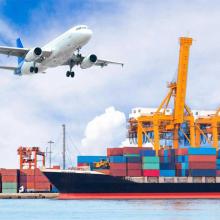
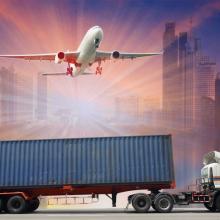
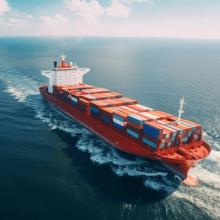
The difference between the two modes on the logistics side is also very clear—B2B mainly involves full-container sea freight, while B2C mainly involves air express and drop shipping from overseas warehouses. But regardless of the mode, you need a reliable logistics partner.
💡 No matter whether you choose B2B or B2C, understanding the basics of foreign trade is the first step. In the next section, we will delve into specific export trade methods.
📞 Need logistics support? Bofeng Logistics serves both B2B and B2C customers— International Ocean Freight, Cross-border E-commerce FBA Ocean Freight, Hong Kong & Macau Logistics Dedicated Line. Hotline: 13075678958 | info@zhbfwl.com
Related Logistics Services
Bofeng Logistics offers the following related services, feel free to inquire: