
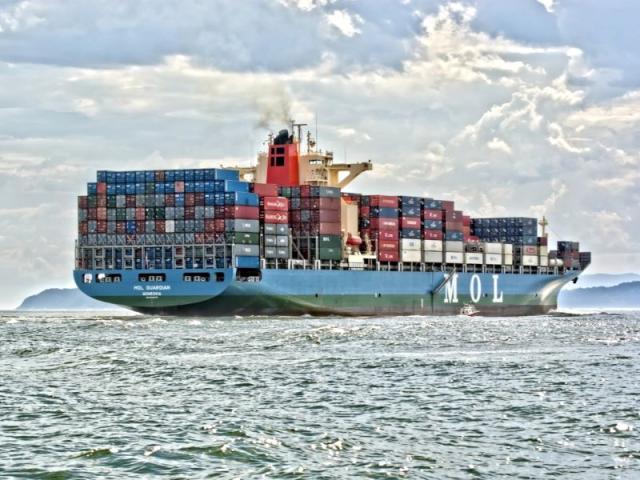
U.S. import customs clearance is uniformly managed by U.S. Customs and Border Protection (CBP). Importers must file declarations with CBP through a customs broker registered in the United States. Ocean import involves a large number of documents and strict time limits. Any omission or inaccurate filling may cause cargo to be held at the port, incur fines, or even affect subsequent customs clearance.
This article organizes the core documents required for U.S. ocean import from "before shipment" to "pickup" into a complete checklist by stage, explaining the purpose, submitting party, time limit, and common errors of each document, helping you prepare everything at once and avoid detours.
1. Why You Need This Document Checklist
U.S. Customs enforces the "Reasonable Care" principle — importers are responsible for the truthfulness and accuracy of the declaration content. Even if customs clearance is delegated to a customs broker, the responsibility remains with the importer. In practice, the reason ocean imports get held up is rarely the goods themselves; the vast majority of issues stem from documentation:
- Declaration information does not match the goods: any discrepancy in product name, HS code, quantity, value, or country of origin
- Timely filing delays: e.g., ISF not submitted 24 hours before departure
- Incomplete or inaccurate consignee/shipper information: errors in company name, address, or tax ID
- Missing regulatory documents: admission documents required by agencies such as FDA, CPSC, and EPA are not prepared
Therefore, organizing this document checklist clearly at the booking stage is the first step to smooth customs clearance. For details on the regulatory and declaration mechanisms for U.S. import clearance, see the "U.S. Import Clearance Guide".
. Complete List by Stage (Core)The table below organizes all commonly used documents according to the timeline of ocean import. Depending on the trade conditions of the goods (e.g., whether anti-dumping duties are involved or whether the goods are subject to FDA regulation), the actual documents required may vary, but the following list covers most scenarios:
| Stage | Document | Purpose | Submitted By | Time Requirement |
|---|---|---|---|---|
| Pre-shipment | Commercial Invoice | Records product name, HS code, quantity, unit price, total price, and origin | Shipper | With shipment |
| Pre-shipment | Packing List | Packing details, number of packages, weight, volume | Shipper | With shipment |
| Pre-shipment | Trade Contract / Purchase Order | Transactional basis | Buyer and seller | With shipment |
| Pre-shipment | Export Customs Declaration (China Side) | Export declaration to Chinese Customs | Shipper/Customs broker | As required by Chinese Customs |
| Before departure | ISF Importer Security Filing (10+2) | U.S. counter-terrorism security filing | Importer or its agent | 24 hours before loading |
| Before departure | AMS Manifest (U.S. Automated Manifest System) | Bill-of-lading-level cargo information | Shipping company/NVOCC | 24 hours before loading |
| Arrival clearance | Bill of Lading B/L (Original/Telex Release) | Document of title to goods | Carrier | Exchange documents after arrival |
| Arrival clearance | CBP Form 3461 Entry Declaration Form | Basic entry information | Customs broker | After arrival |
| Arrival clearance | Customs Bond | Customs duty payment guarantee | Importer/Customs broker | Before first import |
| Arrival clearance | Certificate of Origin (if applicable) | Preferential tariff treatment under agreements | Shipper/CCPIT | With customs clearance |
| Arrival clearance | Regulatory Agency Documents (FDA/CPSC, etc., if applicable) | Access compliance | Importer | With customs clearance |
| Delivery | D/O (Delivery Order) (when needed) | To exchange for a delivery order | Shipping company agent | After arrival |
3. Core Documents Explained One by One
3.1 Commercial Invoice
The commercial invoice is the core basis for customs clearance declarations; CBP primarily uses it for classification, valuation, and duty assessment:
- The product description must correspond to the HS code (HTSUS), and vague descriptions should be avoided.
- Quantity, unit price, currency, trade terms (Incoterms), and country of origin must all be provided.
- The declared value must be truthful—undervaluation is a key target of CBP inspections.
3.2 Packing List
The packing list provides packaging details (number of packages, carton specifications, gross weight, net weight, and volume), which cross-check with the commercial invoice and bill of lading data. Full container load (FCL) shipments typically correspond to multiple packing lists, while less than container load (LCL) shipments must ensure that the packing information is consistent with the stowage plan.
3.3 Bill of Lading
The bill of lading is a document of title. After a sea freight import arrives at port, the cargo is exchanged for a delivery order against the original bill of lading or a telex release bill of lading. Special attention should be paid to the difference between House BL and Master BL: the NVOCC issues the House BL, while the shipping company issues the Master BL. Information such as consignee details, number of packages, and gross weight must be consistent between the two bills of lading; otherwise, customs clearance delays will occur.
3.4 Customs Bond
A Customs Bond is a mandatory guarantee for U.S. imports, used to ensure the performance of obligations such as duties and fines. It is divided into Single Entry Bond (covering a single shipment) and Continuous Bond (covering all imports throughout the year), purchased by the importer or its agent from a U.S. surety company.
4. ISF vs. AMS: Differences Between Two Pre-Shipment Declarations
| Item | ISF (Importer Security Filing, 10+2) | AMS (U.S. Automated Manifest System) |
|---|---|---|
| Purpose | Anti-terrorism security filing (10 importer information items + 2 carrier information items) | Cargo manifest filing (bill of lading level information) |
| Filing entity | Importer or its agent | Shipping company, NVOCC (carrier) |
| Filing contents | Buyer and seller, consignee, container loading location, consolidator, etc. (10+2 items) | Carrier, bill of lading number, cargo description, piece count, weight, etc. |
| Time limit | 24 hours before vessel loading | 24 hours before vessel loading (subject to shipping company's regulations) |
| Responsibility | Failure to file or incorrect filing may result in fines | Omission may prevent cargo from being loaded on the vessel |
For details on the filing contents and operational specifics of both (specific 10+2 fields, amendment rules, and filing channels), see U.S. Import Customs Clearance Guide.
5. Customs Clearance Process at a Glance
The main customs clearance process after goods arrive at port is: Arrival → Import Declaration → Duty Payment → Inspection → Release → Pickup.
- Arrival: Shipping company issues arrival notice; importer confirms vessel name and voyage, bill of lading number, ETA
- Import Declaration: The customs broker submits an entry declaration to CBP with the required documents (CBP Form 3461 and attachments)
- Duty Payment: Pay customs duties according to the HTSUS classification (additional duties such as anti-dumping/301 tariffs are calculated separately)
- Inspection: CBP inspects certain goods (X-ray, opening containers for verification, etc.)
- Release: Goods are released after the declaration is correct and duties are settled
- Pickup: Arrange trucking to pick up the container upon release information
For detailed operational steps and declaration deadlines at each stage (such as filing deadlines after arrival and risks of late declaration/demurrage), please refer to the Complete Guide to Import Customs Clearance.
6. Common Errors and Key Points for Filing
- Inaccurate consignee information: The consignee information (company name, address, tax ID) on the ISF and the bill of lading must be consistent and accurate; misreporting is a common cause of fines.
- Inconsistent House BL data: Inconsistencies in piece count, gross weight, or cargo description between the House BL and Master BL can trigger inspections and delays.
- Incorrect HS code classification: Misclassification can result in additional duties at best, or involve regulatory issues such as antidumping at worst; it is recommended to verify the HTSUS before shipment.
- Missing origin/brand markings: For goods subject to antidumping or specific regulatory controls (e.g., steel/aluminum, textiles, solar products), missing origin and brand information will directly affect release.
- Delayed time-sensitive filings: Time-sensitive filings such as ISF must be completed before loading; do not wait until the vessel has sailed to file.
7. Bofeng Logistics U.S. Import Service Launch
Bofeng Logistics has been deeply involved in China-U.S. ocean freight for many years and has long-term direct booking cooperation with the world's top ten shipping companies such as COSCO, Maersk, and MSC, offering:
- U.S. route FCL/LCL shipping: From Shenzhen to major U.S. West and East Coast ports such as Los Angeles, Long Beach, New York, and Savannah
- Destination port supporting services: Customs declaration, customs clearance, truck delivery, and warehousing transshipment, achieving door-to-door coverage
Documentation support: Assistance with ISF/AMS filings, broker coordination, and document verification
- Shenzhen to Los Angeles Port ocean freight route
- Shenzhen to Long Beach Port ocean freight route
- Shenzhen to New York Port ocean freight route
- Shenzhen to Savannah Port ocean freight route
For U.S. route booking, import customs clearance, or documentation support, please contact Bofeng Logistics for a customized logistics solution:
- Phone: 130-7567-8958
- Email: info@zhbfwl.com
- Online consultation: Get an ocean freight quote
This article was compiled and written by the Bofeng Logistics team, with content verified in August 2026.
8. FAQ
Q: When must ISF be filed?
A: The ISF (Importer Security Filing) must be submitted to U.S. CBP at least 24 hours before cargo is loaded onto the vessel. Failure to file or inaccurate filing may result in penalties, subject to CBP's current regulations.
Q: What is the difference between House BL and Master BL?
A: A House BL is issued by a Non-Vessel Operating Common Carrier (NVOCC) and serves as the transport document between the cargo owner and the NVOCC; a Master BL is issued by the actual shipping company. The consignee information, piece count, weight, and other data between the two bills of lading must be consistent; otherwise, customs clearance may be affected.
9. Further Reading
- Southeast Asia Ocean Shipping Documents & RCEP Guide
- European Ocean Import Documents: ENS Filing, ICS2 & EU EORI
- U.S. Import Clearance Guide: ISF/AMS Filing, FDA/CPSC Inspection, and Tariff Inquiry
- Complete Import Clearance Process: Port Arrival, Document Exchange
- Full Process of Export Ocean Shipping: From Booking to Cargo Pickup
Related Logistics Services
Bofeng Logistics offers the following related services, feel free to inquire: