
2026 Guangdong-Hong Kong-Macao Greater Bay Area Cross-Border Logistics White Paper: Hong Kong and Macao Dedicated Route Capacity Panorama and Supply Chain Layout Guide
. Core JudgmentsWhite Paper Summary: The Guangdong-Hong Kong-Macao Greater Bay Area has become one of the world's most dynamic manufacturing and foreign trade hubs. Based on Bofeng Logistics' Hong Kong and Macao dedicated route operation data (285 Hong Kong routes, 14 Macao routes, covering 283 origin cities nationwide) and public shipping statistics, this white paper systematically reviews the Greater Bay Area's hub position in cross-border logistics, the capacity panorama of Hong Kong and Macao dedicated routes, a decision-making framework for enterprise route selection, and trend projections for 2026-2027, for reference by cross-border trade enterprises in supply chain and warehousing layout.
Judgment 1: Hong Kong remains the preferred gateway for foreign brands and re-export trade. Hong Kong's free-port policy, mature multimodal transport system, and international financial status make it the preferred channel for high-value goods entering the Asia-Pacific market; manufacturing capacity in mainland Greater Bay Area cities is connected to Hong Kong's international hub through Hong Kong-Macau dedicated routes within 1-3 days. For cross-border trading companies, the Hong Kong dedicated route is not just "shipping to Hong Kong," but also the "last mile" interface connecting to global air and sea networks.
Judgment 2: The Macau dedicated route is upgrading from a "tourist city supply line" to a "Hengqin-Macau linked industrial line." Since the launch of the Hengqin Guangdong-Macau Deep Cooperation Zone, Macau's warehousing, transshipment, and cross-border functions have accelerated their integration with mainland production networks. The Macau dedicated route now carries not only tourism and daily necessities, but also industrial goods such as electronic components, exhibition materials, and cross-border e-commerce products.
Judgment 3: The Hong Kong-Macau dedicated route is not a single mode of transport, but an integrated capability of "land transport + customs declaration + warehousing + insurance." Data from Bofeng Logistics' platform shows that 290 Hong Kong-Macau dedicated routes also provide sea-freight transshipment services, and almost all routes come standard with four services: land transport, customs declaration, warehousing, and insurance. This means that what companies purchase is not "a single truck," but a complete cross-border fulfillment capability—customs declaration upfront, in-warehouse consolidation, and insurance as a safety net are all closed within a single dedicated route.
Judgment 4: Greater Bay Area logistics is shifting from "competing on cost" to "competing on hubs." The focus of supply chain decision-making is moving from single-point transport costs to a triangular division of labor: "Hong Kong hub + Pearl River Delta production capacity + policy dividends." Companies' route selection logic should follow the direction of cargo flow, evaluating port efficiency, clearance capacity, and extended services, rather than looking only at a single quote.
2. The Hub Status of Greater Bay Area Logistics: Why Global Supply Chains Cannot Bypass This Region
The Guangdong-Hong Kong-Macao Greater Bay Area consists of the two Special Administrative Regions of Hong Kong and Macao along with nine Pearl River Delta cities. It is one of the few metropolitan areas in the world that simultaneously possesses a free port, a world-class port cluster, ultra-large-scale manufacturing capacity, and cross-border institutional innovation.
Free port and multimodal transport. Hong Kong implements a free port policy, with goods basically exempt from customs duties on entry and exit, and its customs clearance efficiency has long been among the world's highest. Hong Kong International Airport is one of the world's busiest cargo airports, and the Port of Hong Kong also ranks among the world's leading container ports. This makes Hong Kong a natural "transshipment hub" for cross-border logistics—after mainland goods are transported to Hong Kong via the Hong Kong-Macao dedicated routes, they can seamlessly connect with international air freight, sea freight, and global distribution networks.
Pearl River Delta production hinterland. Pearl River Delta cities such as Shenzhen, Dongguan, Guangzhou, Foshan, and Zhongshan form the world's densest industrial clusters for electronics, home appliances, furniture, clothing, and auto parts. The connection between this production capacity and the international market relies heavily on the cross-border logistics network within the Greater Bay Area.
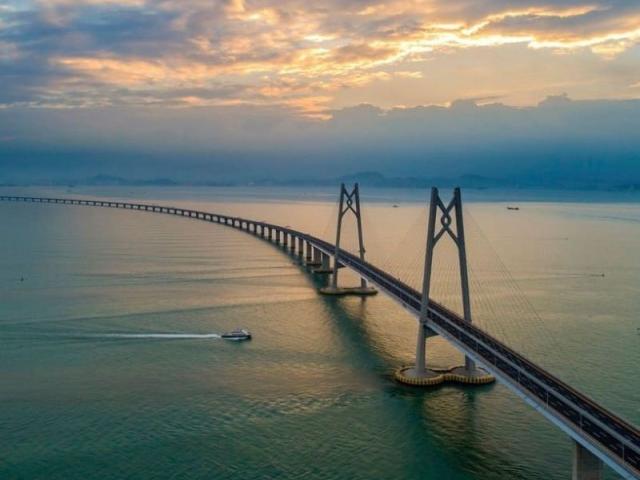
Port coordination and infrastructure synergy. Major infrastructure such as the Hong Kong-Zhuhai-Macao Bridge, Shenzhen-Hong Kong land ports, Guangzhou Nansha Port, and Shenzhen Yantian Port form the "hardware foundation" of Greater Bay Area logistics. Since the opening of the Hong Kong-Zhuhai-Macao Bridge, land transport time between Hong Kong and the west bank of the Pearl River has been significantly reduced, and Macao has also achieved round-the-clock land connectivity with the mainland via the bridge.
Institutional innovation dividends. Policy platforms such as the Hengqin Guangdong-Macao Deep Cooperation Zone, Qianhai Shenzhen-Hong Kong Modern Service Industry Cooperation Zone, and Nansha Free Trade Zone continue to release policy benefits in customs clearance facilitation, bonded warehousing, and cross-border e-commerce, further reducing the institutional costs of cross-border logistics in the Greater Bay Area.
3. Overview of Hong Kong and Macau Dedicated Line Capacity: A "Greater Bay Area Network" Woven from 299 Routes
According to Bofeng Logistics' Hong Kong and Macau dedicated line capacity data, as of August 2026:
Capacity scale. There are 285 Hong Kong dedicated lines and 14 Macau dedicated lines, totaling 299 routes. Origins cover 283 cities across the country, from the northeast and northwest in the north to Hainan in the south, all connected to the Hong Kong and Macau dedicated line network.
Standard services. Hong Kong and Macau dedicated lines generally adopt a four-in-one service package of "road transport + customs declaration + warehousing + insurance." Among them, 290 routes also offer sea freight transit services, enabling two-way transit connections for "mainland city–Hong Kong–global shipping routes" and "mainland city–Hong Kong–mainland re-export."
Tiered routes. Core Pearl River Delta cities (Shenzhen, Guangzhou, Zhuhai, Dongguan, Foshan, Zhongshan, etc.) have the highest density of dedicated lines, supporting same-day or next-day delivery. Routes in East China, North China, Southwest, Central China, and Hainan offer standard delivery times; most cities can achieve port arrival in 1-3 days. Actual delivery times are subject to the notes on each route page.
Value-added services. Hong Kong and Macau dedicated lines can be combined with value-added services such as LCL consolidation, bonded warehousing, cross-border e-commerce declaration, and destination port delivery. Enterprises can flexibly combine these based on cargo volume and frequency.
4. Enterprise Decision Framework: Three Questions on Cargo Volume, Transit Time, and Destination
When selecting from 299 Hong Kong and Macau dedicated routes, you can start with three questions:
Question 1: What range is the cargo volume in? Small-batch, high-frequency goods are suitable for LCL consolidation or dedicated-line co-loading to spread out per-shipment transportation and customs clearance costs; large-batch, full-pallet goods can consider direct truckload or FCL dispatch; time-sensitive, high-value goods should prioritize same-day delivery routes in core Pearl River Delta cities.
Question 2: How strict is the delivery time requirement? For orders with hard delivery deadlines, choose dedicated routes in core Pearl River Delta cities and add priority customs clearance; for goods with greater flexibility in delivery time, you can choose a more cost-balanced combination of regular routes and sea freight transit.
Question 3: What is the final destination? If the goods have Hong Kong as the final destination, choose a Hong Kong dedicated route and clarify the delivery scope; if Hong Kong is used as a transshipment port for onward global shipment, you need to confirm the connection arrangements at Hong Kong airport or port; if the destination is Macau or entry into the Macau market via Hengqin, choose a Macau dedicated route and confirm the customs clearance and delivery plan.
After these three questions, compare the service items and transit time labels of specific routes to complete the initial route selection.
5. Five Major Trends: Where Is Greater Bay Area Logistics Heading in 2026-2027
Trend 1: Cross-border e-commerce logistics is accelerating toward standardization. Business formats such as 9610 continue to be regulated, and the role of the Hong Kong-Macau corridor in cross-border e-commerce export declaration, warehousing, and transshipment is further strengthened.
Trend 2: Cooperative zone policies continue to be implemented. Innovations in customs clearance facilitation, bonded operations, and cross-border data in cooperative zones such as Hengqin, Qianhai, and Nansha will continue to reshape the institutional environment for logistics in the Greater Bay Area.
Trend 3: Port cluster and multimodal transport integration. The coordinated division of labor among the Guangzhou, Shenzhen, and Hong Kong port clusters is deepening. Combined sea-rail transport, sea-road transport, and bridge corridor options make the "Mainland factory–Hong Kong hub–global" chain shorter and more stable.
Trend 4: Digital tracking is becoming standard. Real-time logistics tracking, electronic documentation, and warehouse data collaboration are moving from being exclusive to major customers to becoming the standard on all routes.
Trend 5: Green and low-carbon constraints are strengthening. New-energy vehicles, carbon accounting, and international clients' ESG requirements are driving Greater Bay Area logistics toward greener and lower-carbon upgrades.
6. Enterprise Implementation Checklist: Six Steps
- Identify the destination port and transshipment needs: First determine whether the goods will ultimately remain in Hong Kong/Macau or use Hong Kong as a transit port for global shipment.
- Assess cargo volume and transit time: Based on the order cycle, evaluate the suitability of LCL, FTL, FCL, and same-day/standard delivery options.
- Choose routes and service combinations: Select matching routes from the Hong Kong/Macau dedicated line list, and add extended services such as customs clearance, warehousing, and insurance.
- Advance compliance declaration: Prepare customs declaration documents in advance and confirm cargo compliance (including requirements for dangerous goods, intellectual property, origin, etc.).
- Trial shipment and end-to-end tracking: Use the first shipment as a trial to verify transit time and service quality, then follow up in real time based on logistics tracking.
- Consolidate regular routes: Incorporate verified stable routes into normal fulfillment and establish long-term collaboration between the enterprise and the carrier.
Data Sources and Disclaimer
The capacity data listed in this white paper (299 Hong Kong/Macau dedicated routes, 283 departure cities, 290 sea freight transshipment routes, etc.) is derived from the operational data on the Hong Kong/Macau dedicated routes page of the Bofeng Logistics official website as of August 2026; macroeconomic assessments reference public shipping statistics and industry research. The timeliness, service, and route information in the text are general references only, and the real-time annotations on each route page of the Bofeng Logistics official website shall prevail. This white paper does not constitute a transportation contract or price commitment; actual business shall be subject to confirmation by both parties.
Further Reading
- Hong Kong and Macau Logistics Dedicated Line Manual: Full-process operation guide for Hong Kong and Macau dedicated lines
- Macau Logistics Market Overview: The New Logistics Landscape After the Opening of the Hong Kong-Zhuhai-Macau Bridge
- Complete Guide to Freight via the Hong Kong-Zhuhai-Macau Bridge
- Hong Kong Logistics Dedicated Line Case Studies
- Macau Logistics Dedicated Line Case Studies
- More routes: /hong-kong-lines · /macau-lines
About Bofeng Logistics
Bofeng Logistics specializes in domestic and international container shipping, international air freight, Hong Kong and Macau logistics dedicated lines, and value-added services (trucking, customs clearance, warehousing, insurance). With years of deep involvement in cross-border logistics, its Hong Kong and Macau dedicated line network covers 283 origin cities nationwide. If you have cross-border logistics needs in the Greater Bay Area or require Hong Kong and Macau dedicated lines, please contact Bofeng Logistics for a customized solution:
- Phone: 130-7567-8958
- Email: info@zhbfwl.com
- Online Consultation: Get Hong Kong and Macau Dedicated Line Solutions
This article was created by the professional team at Bofeng Logistics. The data is compiled based on the operation of the on-site Hong Kong and Macau dedicated lines and is for industry reference only.