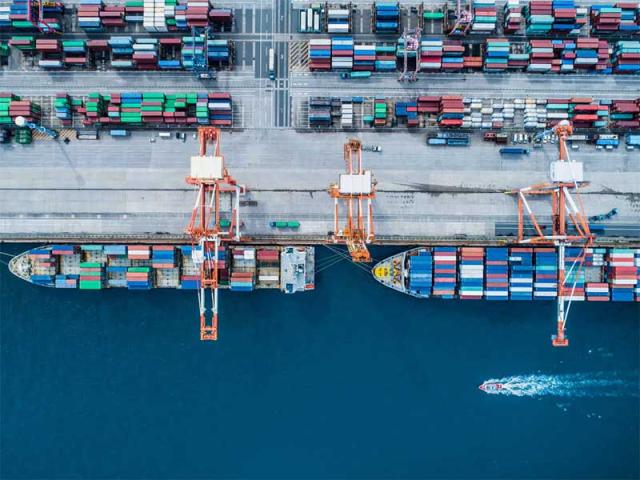
Ships primarily designed for carrying cargo. Most of their space is used for cargo holds. There are many types and sizes of cargo ships, with displacement ranging from hundreds to hundreds of thousands of tons.
Dry Bulk Carriers
Also known as bulk carriers, they are specifically used to transport bulk commodities such as coal, ore, grain, fertilizer, cement, and steel. Their number is currently second only to oil tankers. They are characterized by the bridge and engine room being located aft, wide and large cargo hatches; the inner bottom connects to the side plating via upward inclined wing tanks to facilitate the concentration of cargo in the center of the hold, and sloping topside tanks under the deck at the sides of the hatches to restrict cargo shifting; they have numerous ballast tanks for ballast voyages. Based on the type of cargo carried, they can be further divided into ore carriers, coal carriers, grain carriers, cement carriers, and timber carriers.
Liquid Cargo Ships
Vessels specifically designed to transport liquid cargoes. Liquid cargoes mainly include oil, liquefied gas, fresh water, and chemical liquids. Among these, petroleum and its products are transported in the largest quantities. Based on the type of cargo carried, they can be divided into crude oil tankers, product tankers, chemical tankers, and liquefied gas carriers.
Crude Oil Tankers
Ships specifically used to transport crude oil, often referred to simply as oil tankers. Due to the enormous volume of crude oil transport, the deadweight of oil tankers can reach over 500,000 tons, making them the largest type of ship. Structurally, they were typically single-hulled, but with increasing environmental requirements, the structure is evolving towards double-hull and double-bottom designs. Superstructures are located at the stern. There are no large openings on the deck; pumps and pipelines are used for loading and unloading crude oil. Heating facilities are installed to heat the crude oil at low temperatures to prevent it from solidifying and affecting loading and unloading operations. Very large crude carriers can have a draft of up to 25 meters and are often unable to berth dockside, thus requiring underwater pipelines for loading and unloading crude.
Product Tankers
Ships specifically designed to transport petroleum products such as diesel and gasoline. Their structure is similar to crude oil tankers but with smaller tonnage. They have very high fire and explosion prevention requirements.
General Cargo Ships
Also known as general cargo ships, general dry cargo ships, or break-bulk ships, they are mainly used to carry packaged, bagged, boxed, and barreled general cargo. Because the volume of break-bulk cargo is relatively small, the tonnage of general cargo ships is also smaller than that of bulk carriers and oil tankers. The typical cargo capacity is around 10,000 to 20,000 tons, usually with two decks and equipped with comprehensive cargo handling gear. There are relatively many cargo holds and deck layers to allow for cargo separation. New general cargo ships are usually of a multi-purpose design, capable of transporting not only ordinary general cargo but also bulk cargo, heavy-lift cargo, refrigerated cargo, and containers.
Container Ships
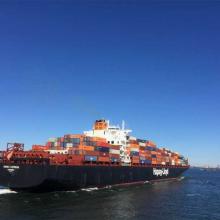
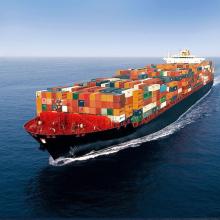
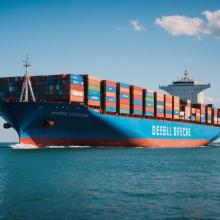
Also known as box ships or container vessels, these are ships specifically designed to carry containers. All or most of their holds are used to stow containers, and containers can often also be stacked on the deck or hatch covers. Container ships have wide and long cargo hatches, and the dimensions of the cargo holds are standardized according to the container requirements. They offer high loading and unloading efficiency, greatly reducing port turnaround time. For better economic performance, their speeds are generally higher than other types of cargo ships, sometimes reaching over 30 knots.
Chemical Tankers
Ships specifically used to transport liquid chemicals that are toxic, volatile, and hazardous, such as methanol, sulfuric acid, and benzene. The cargo area is of double-hull construction to reduce the risk of spillage incase of ship damage. The cargo tanks are separated from the crew accommodation, drinking water, and engine rooms by cofferdams. The capacity of cargo tanks is limited depending on the hazard level of the cargo being transported.
Liquefied Gas Carriers
Ships specifically designed to transport liquefied gases. The liquefied gases transported include liquefied petroleum gas, liquefied natural gas, ammonia, ethylene, and liquid chlorine. These liquid cargoes generally have low boiling points and are often flammable, explosive, and hazardous, some even being highly toxic or corrosive. Consequently, the cargo containment systems on liquefied gas carriers are complex and costly. Liquefied gas carriers are categorized into three types based on their containment method: pressure type, semi-pressure/semi-refrigerated type, and fully refrigerated type. In pressure type carriers, the cargo is loaded at ambient temperature into spherical or cylindrical pressure vessels. The semi and fully refrigerated types control both temperature and pressure, thus requiring tank insulation and cargo cooling systems.
Refrigerated Ships
Ships specifically designed to carry perishable cargoes requiring refrigeration, such as fruit, vegetables, meat, and fish. They often have multiple decks, and the cargo holds are usually partitioned into several independent insulated compartments. They are equipped with high-power refrigeration units capable of maintaining the required temperature for the stored goods, even in harsh environments.
Lighter Aboard Ships (LASH)
Ships specifically designed to carry lighter barges, also known as barge carriers or mother-ship type vessels. This transport concept is similar to container transport, as a lighter barge can be seen as a floating container. The process involves: loading cargo into uniform square lighter barges (daughter craft), loading the lighters onto the LASH carrier (mother ship), transporting the lighters to the destination port, unloading the lighters back into the water, and then towing them to their final destinations. Characteristics of LASH carriers include not needing docks or storage yards, high loading/unloading efficiency, and facilitating sea-river combined transport. However, due to high construction costs and complex distribution logistics for the lighters, their development has been limited.
Roll-on/Roll-off Ships (Ro-Ro)
Multi-purpose ships that are loaded and unloaded using vehicles, originally also called drive-on/drive-off ships. Trailers loaded with large items like containers and palletized cargo are used as transport units. Tractor units or forklifts can drive directly into the holds for handling. Ro-Ro ships typically have a stern door and ramp; vehicles can drive directly onto the various deck levels via the ramp and through the stern door, using internal sloping ramps or lifts between decks. Thus, Ro-Ro ships achieve high cargo handling efficiency without needing traditional cargo gear on board or at the dock.
Bofeng Logistics professionally provides one-stop logistics services including domestic container sea freight, international sea freight (FCL/LCL), Hong Kong and Macau logistics dedicated lines, as well as trucking, customs declaration, and warehousing. Contact phone number: 130-7567-8958 (Manager Huang), call now for a customized quote!
Related Logistics Services
Bofeng Logistics offers the following related services, feel free to inquire: