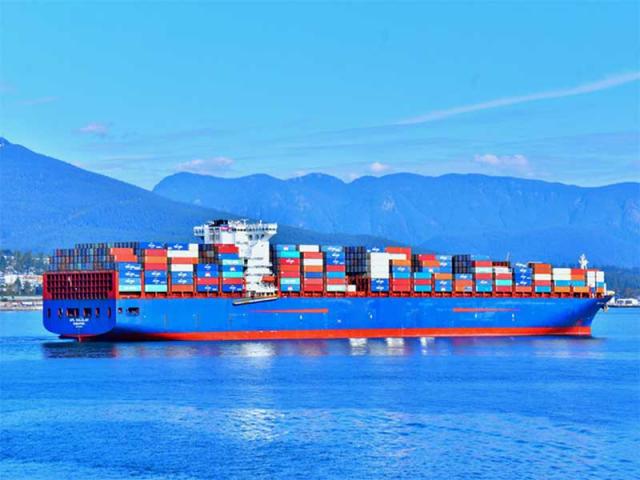
Cargo Ship
A specialized vessel primarily used for transporting goods. Most of its space consists of cargo holds for storing goods. Cargo ships come in many types and sizes, with displacements ranging from hundreds to hundreds of thousands of tons.
Dry Bulk Carrier
Also known as a bulk carrier, it is specifically used for transporting bulk materials such as coal, ore, grain, fertilizer, cement, and steel. Currently, its number is second only to oil tankers. Its characteristics include the wheelhouse and engine room located at the stern, with wide cargo hatches; the inner bottom connects to the side plating via upward sloping wing plates to facilitate cargo concentration toward the center of the hold, and sloping top wing tanks under the deck at both sides and near the hatch openings limit cargo shift; it has numerous ballast tanks for ballast voyages. Depending on the cargo carried, it can be further divided into ore carriers, coal carriers, grain carriers, cement carriers, timber carriers, etc.
Liquid Cargo Ship
A vessel specifically designed to carry liquid cargo. The main liquid cargoes include oil, liquefied gas, fresh water, and chemical liquids. Among these, petroleum and its products have the largest transport volume. Depending on the cargo carried, it can be further divided into crude oil tankers, product carriers, chemical tankers, and liquefied gas carriers.
Crude Oil Tanker
A vessel exclusively for transporting crude oil, simply referred to as an oil tanker. Due to the massive volume of crude oil transport, the deadweight of oil tankers can reach over 500,000 tons, making them the largest type of ship. They typically have a single bottom structure, but with increasing environmental requirements, the structure is evolving towards double-hull and double-bottom designs. Superstructures are located aft. There are no large hatches on deck, and pumps and pipelines are used for loading and unloading crude oil. Heating facilities are equipped to heat the crude oil at low temperatures to prevent solidification from affecting handling. Ultra-large crude oil carriers (ULCCs) can have drafts of up to 25 meters, often making them unable to dock at berths, necessitating underwater pipelines for loading and unloading crude oil.
Product Carrier
A vessel specifically designed to transport petroleum products such as diesel and gasoline. Its structure is similar to a crude oil tanker but with smaller tonnage. It has high requirements for fire and explosion prevention.
General Cargo Ship
Also known as a general-purpose freighter, multi-purpose vessel, or break-bulk carrier, it is mainly used for loading packaged, bagged, boxed, and drummed cargo. Due to the smaller batch sizes of break-bulk cargo, the tonnage of general cargo ships is also smaller than that of bulk carriers and oil tankers. Typical cargo capacity is between 10,000 and 20,000 tons. They usually have two decks and are equipped with comprehensive cargo handling gear. They have numerous cargo holds and deck levels for easy segregation of goods. Modern general cargo ships are mostly multi-purpose types, capable of carrying ordinary general cargo, bulk cargo, heavy-lift items, refrigerated goods, and container cargo.
Container Ship
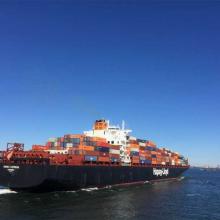
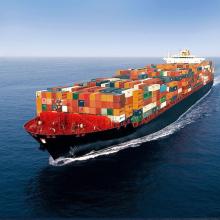
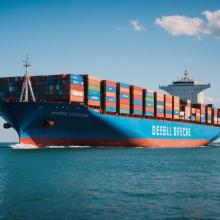
A vessel specifically designed to carry containers, where all or most of the cargo space is used for holding containers, and containers are often also stacked on the deck or hatch covers. Container ships have wide and long cargo hatches, with cargo hold dimensions standardized according to container requirements. They offer high loading and unloading efficiency, significantly reducing port turnaround time. To achieve better economic performance, their speed is generally higher than other cargo vessels, with some reaching over 30 knots.
Chemical Tanker
A vessel specifically designed for transporting toxic, volatile liquid chemicals that are hazardous goods, such as methanol, sulfuric acid, and benzene. The cargo tank area features a double-hull structure to minimize the risk of cargo spillage in case of damage. Cargo tanks are separated from crew accommodation, drinking water, and engine room spaces by cofferdams. The volume of cargo tanks is limited according to the hazardous nature of the cargo being carried.
Liquefied Gas Carrier
A vessel specifically designed for transporting liquefied gases. The transported liquefied gases include liquefied petroleum gas (LPG), liquefied natural gas (LNG), ammonia, ethylene, and liquid chlorine. These liquid cargoes have low boiling points, are mostly flammable and explosive dangerous goods, and some are highly toxic and corrosive. Therefore, the cargo tank structure of liquefied gas carriers is complex and costly.
Liquefied gas carriers are classified by the method of storing liquefied gas into three types: pressure type, semi-pressurized/semi-refrigerated type (semi-cold type), and fully refrigerated type. In pressure type carriers, the cargo is stored at ambient temperature in spherical or cylindrical pressure tanks. For semi-pressurized/semi-refrigerated and fully refrigerated types, both the temperature and pressure of the cargo are controlled, thus requiring tank insulation and cargo cooling systems.
Reefer Ship
A vessel specifically designed for transporting goods requiring refrigeration, such as fruits, vegetables, meat, and fish. It often has multiple decks, and the cargo holds are usually divided into several independent insulated compartments. The ship is equipped with powerful refrigeration systems that can maintain the required appropriate temperature in each refrigerated compartment, even in harsh conditions.
Lighter Aboard Ship (LASH)
A vessel specifically designed to carry cargo barges, also known as a mother-daughter ship. Its transportation method is similar to container shipping, as cargo barges can be considered floating containers. The transport process involves loading cargo into uniformly sized square cargo barges (daughter ships), then loading these barges onto the LASH vessel (mother ship). The mother ship transports the barges to the destination port, unloads them onto the water, where tugs then distribute them to their final destinations. LASH vessels have the advantage of not requiring docks and storage yards, offer high loading and unloading efficiency, and facilitate sea-river combined transport. However, due to high construction costs and the complexity of consolidating and forwarding the barges, their development has been limited.
Roll-on/Roll-off Ship (Ro-Ro)
A multi-purpose vessel using vehicles for loading and unloading cargo, initially also known as a roll-on/roll-off ship. It uses trailers loaded with container cargo and wheeled pallets loaded with goods as cargo units, with tractors or forklifts driving directly into and out of the cargo holds for loading and unloading. Ro-Ro ships usually have a stern ramp and door; vehicles can drive directly onto different decks via the ramp, door, and internal movable ramps or elevators connecting the decks. Therefore, Ro-Ro ships achieve high loading and unloading efficiency without the need for conventional cargo handling equipment on the ship or wharf.
Bofeng Logistics specializes in providing one-stop logistics services including domestic intermodal shipping via container, international ocean freight (FCL/LCL), Hong Kong & Macau dedicated logistics lines, as well as trucking, customs declaration, and warehousing. Contact number: 130-7567-8958 (Manager Huang), call now for a customized quotation!
Related Logistics Services
Bofeng Logistics offers the following related services, feel free to inquire: