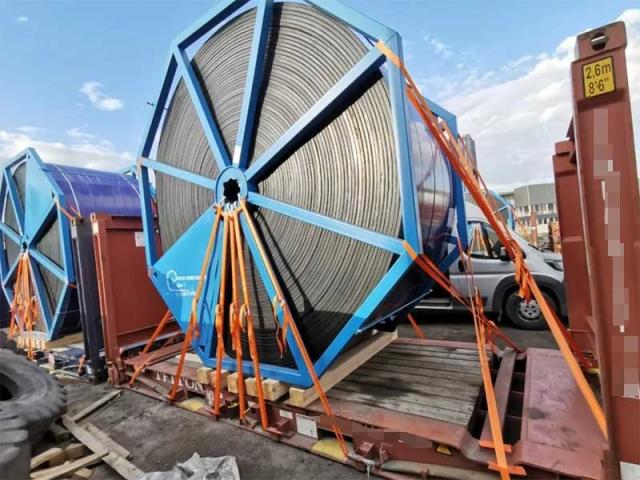
Loading Methods for Roll Cargo and Coil Cargo in Container Shipping
Roll cargo in container shipping generally includes plastic film, tar paper, steel cylinders, etc.
Roll cargo is usually loaded vertically, with plywood laid on the side and end walls to enhance load-bearing capacity. When loading, start from the end of the container and stack tightly. If there is any gap between the cargo, use soft padding to fill it.
For roll cargo in container shipping, horizontal loading is generally not convenient to prevent deformation or damage. If horizontal loading is necessary due to special reasons, it must be elevated from the container walls with the help of chess pieces or corresponding materials, and each layer must be secured with wedges.
Coil cargo in container shipping generally includes paper rolls, steel coils, wire ropes, cables, etc.
Coil cargo in container shipping should cover the entire container bottom when loaded horizontally. To prevent impact on the container sides due to swaying during transport, several sturdy hollow wooden supports must be inserted between the cargo and the end walls, securely resting against the side walls. During loading, necessary measures must be taken to fully protect the end walls and container doors.
Domestic Container Shipping Door-to-Door Inquiry and Booking Hotline: 13075678958 Manager Huang
Methods for Securing Roll Cargo and Coil Cargo
Roll cargo and coil cargo are secured using dedicated brackets or V-shaped grooves. Steel coils are cross-bound with steel wire ropes. Paper rolls stand upright and support each other. Cable reels have their bottoms fixed with wedges.
Bofeng Logistics specializes in providing domestic container shipping, international shipping (FCL/LCL), Hong Kong and Macau logistics routes, as well as comprehensive logistics services including trucking, customs clearance, and warehousing. Contact number: 130-7567-8958 (Manager Huang), call now for an exclusive quote!
Summary of Precautions for Loading Roll Cargo
The core of loading roll cargo and coil cargo is to prevent rolling displacement. Using dedicated securing equipment, proper placement direction, and sufficient lashing are the keys to successful loading.
Loading Differences for Various Roll Cargos
Steel coils: Heavy weight, must be secured with V-shaped grooves or dedicated brackets. The eye direction of the steel coil should be placed along the fore-aft direction of the ship.
Paper rolls: Sensitive to pressure and moisture, should be placed upright and secured with airbags or wooden boards. Paper rolls should be separated with cardboard to prevent sticking.
Cable reels: Wooden reels should have their bottoms secured with wedges to prevent rolling. Leave gaps between cable reels for inspection and ventilation.
Related Logistics Services
Bofeng Logistics offers the following related services, feel free to inquire: