Data Sources: ISO 668:2020 Standard, IMO CSC Convention, Clarksons Research, China Container Industry Association
The container is one of the most important logistics innovations of the 20th century. It may appear to be just a metal box, but it has reduced the cost of global trade by over 90%, enabling "Made in China" products to be shipped worldwide at extremely low costs.
Features and Advantages of Container Transport
Container transport has three defining features: cargo moves throughout in a container with no re-packing en route; door-to-door service reduces intermediate handling; and a single carrier usually handles the whole move, simplifying procedures. These bring core advantages: standardised operations raise handling efficiency, sealed boxes reduce cargo-damage risk, intermodal transport eases end-to-end management, and digital tracking makes cargo visible. These features make the container a cornerstone of modern logistics and have cut global trade costs dramatically.
1. The Birth of the Container (1956)
The inventor of the container is Malcom McLean, an American trucking company owner. His core insight was: The cost of transport lies not in the distance traveled, but in the efficiency of loading and unloading cargo.
On April 26, 1956, a converted oil tanker—the Ideal X—departed from the port of Newark, New Jersey, USA, bound for the port of Houston, Texas. It carried 58 containers. This was the first container shipment in human history.
Why was the container invented?
Before the container, cargo transport followed a "break-bulk" model:
Traditional Dock → Workers move cargo piece by piece into hold → Unload piece by piece upon arrival → Load onto truck
Cargo handling cost per ton ≈ $5.86 (equivalent to ~$56 today)
Ship loading/unloading time: 3-5 days
Dock workers: hundreds
The container completely transformed this:
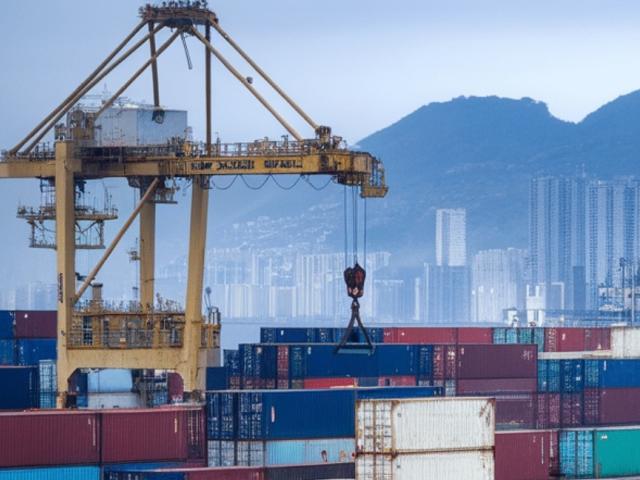
Container Terminal → Pre-loaded boxes → Crane lifts directly onto ship → After arrival, crane loads onto trailer
Cargo handling cost per ton ≈ $0.16 (equivalent to ~$1.50 today)
Ship loading/unloading time: a few hours
Dock workers: a dozen or so
Nearly 40 times more efficient, with costs reduced by 97%.
2. The History of Container Standardization
1961-1965: Establishment of International Standards
The International Organization for Standardization (ISO) established Technical Committee ISO/TC 104 in 1961, specifically responsible for container standardization. In 1965, ISO released the first edition of the container standard, later known as the ISO 668 Standard, defining the basic sizes of 20-foot and 40-foot.
The Birth of the TEU Concept
TEU (Twenty-foot Equivalent Unit) became the basic unit for measuring container capacity. To this day, global port throughput and vessel capacity are measured in TEUs.
| Time | ISO Standard Update | Impact |
| 1965 | ISO 668 First Edition: 20ft × 8ft × 8ft | Established basic dimensions |
| 1970 | Added 40-foot specification | Adaptation for light, bulky cargo |
| 1980s | Added high-cube (9ft 6in high) | 40HQ became mainstream |
| 1990s | Added 45-foot container | North American inland transport demand |
| 2000s | Detailed container structure standards | Improved safety and interchangeability |
Note: Currently, the mainstream standard container heights are 8ft 6in (standard) and 9ft 6in (high-cube). Ultra-high containers (10ft 6in and above) are not standard types, used only in very small quantities for special purposes.
Key Milestones in Global Adoption
| Year | Event |
| 1966 | First transatlantic container shipping route (USA → Europe) |
| 1967 | Large-scale use of containers by the US military during the Vietnam War (first military application) |
| 1968 | ISO 668 Standard accepted by major global shipping companies |
| 1972 | CSC Convention signed (Container Safety Standards) |
| 1980s | China begins large-scale construction of container ports |
| 1990s | Container ships evolve from thousands to tens of thousands of TEUs |
| 2000s | China becomes the world's largest container manufacturer (95% of global containers built in China) |
| 2010s | Ultra-Large Container Ships (ULCS) reach 20,000+ TEU |
| 2020s | Smart containers and green shipping become new trends |
3. Global Impact of the Container
Economic Impact
| Metric | Change |
| Global Seaborne Trade Volume (1960) | ~500 million tons |
| Global Seaborne Trade Volume (2025) | ~12 billion tons (Source: Clarksons Research) |
| Containerization Rate | From 0% to approximately 60% of international trade goods shipped in containers |
| Global Port Container Throughput (2025) | Over 900 million TEU |
| Transport Cost | Down 90%-97% compared to break-bulk |
| Global Container Fleet | ~50 million units (including owner-owned boxes) |
China's Position in Containers
Ranking | Item | Data |
1 | World's Largest Container Manufacturer | Annual production ~4 million TEU, 95% of global share |
2 | World's Largest Container Port | Port of Shanghai, annual throughput ~49 million TEU |
3 | Holds 7 of the Top 10 Global Ports | Shanghai/Ningbo/Shenzhen/Qingdao/Guangzhou/Tianjin/Xiamen |
4 | Leading Chinese Container Manufacturer | CIMC (China International Marine Containers) global market share ~45% |
Data Note: The above data is as of July 2026 (Sources: Clarksons Research, Shanghai Shipping Exchange, China Container Industry Association).
4. Further Reading
- Container Type Encyclopedia – Understand parameter comparisons and selection decision processes for various box types.
- Container Dimensions & Specifications – Detailed internal and external dimension charts for 20GP/40GP/40HQ.
- Container Number & CSC Plate Interpretation – Interpretation of container number rules and safety certification.
Bofeng Logistics – 20 years of international shipping experience, providing one-stop services for container shipping, FCL, LCL, and special container transport.
Contact Us: 13075678958 | info@zhbfwl.com
Related Logistics Services
Bofeng Logistics offers the following related services, feel free to inquire: