Chapter I General Provisions
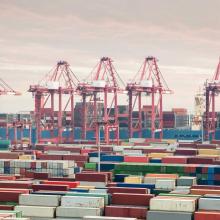
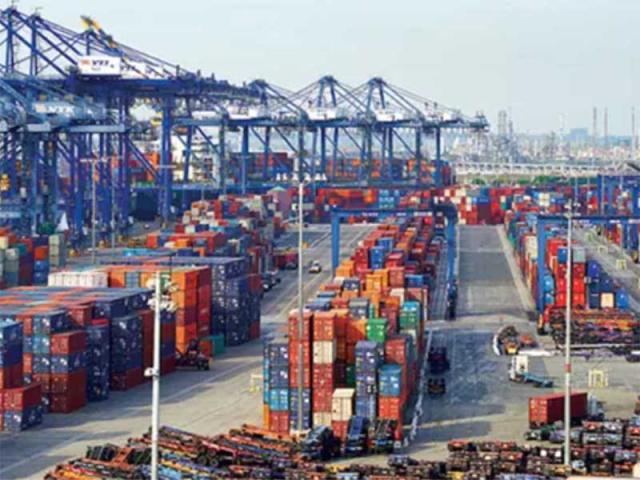
Article 1 These provisions are formulated in accordance with the Port Law of the People's Republic of China and other administrative laws and regulations to strengthen and regulate the maintenance and management of port infrastructure, ensuring safe and stable port operations.
Article 2 These provisions apply to the maintenance of port infrastructure conducted within the territory of the People's Republic of China.
For the purposes of these provisions, "port infrastructure" refers to wharves and their concurrently approved supporting facilities, breakwaters, anchorages, revetments, etc., which have been accepted and put into use within the scope of port planning.
For the purposes of these provisions, "port infrastructure maintenance" refers to activities such as inspections, testing and evaluation, and repairs carried out to maintain or restore port infrastructure to a good technical condition.
Article 3 The Ministry of Transport is responsible for guiding the nationwide management of port infrastructure maintenance.
Transport authorities of provincial people's governments are responsible for guiding the management of port infrastructure maintenance within their respective administrative regions.
The port administrative authority at the port's location is specifically responsible for implementing the supervision and management of port infrastructure maintenance.
Article 4 Public port infrastructure such as breakwaters and anchorages shall be maintained by the department or unit designated by the people's government at or above the county level. Other port infrastructure shall be maintained by the port operator.
The departments and units responsible for maintaining port infrastructure as mentioned in the preceding paragraph are collectively referred to as maintenance units.
Article 5 Port infrastructure maintenance shall fulfill the requirements of full lifecycle maintenance, adhere to the principles of prevention first, combining prevention with remediation, being timely and standardized, and ensuring safety and environmental protection, to increase the service life of port infrastructure.
Article 6 Maintenance units shall implement the responsibility system for production safety and shall use and maintain port infrastructure reasonably according to verified functions, design requirements, operating instructions, and relevant regulations, standards, and specifications.
The adoption of new materials, new processes, and new equipment for port infrastructure maintenance is encouraged, along with the deployment of automated monitoring and surveillance facilities and the active promotion of automation and intelligent technology applications.
Chapter II Maintenance Plans
Article 7 A port infrastructure maintenance plan is a work arrangement made by the maintenance unit for activities such as inspections, testing and evaluation, and repairs of port infrastructure.
The port infrastructure maintenance plan shall include maintenance content, maintenance standards, and financing plans, among others.
Article 8 Maintenance units shall organize the preparation of maintenance plans based on the operational status and service life of port infrastructure, and in accordance with relevant mandatory standards and technical specifications.
If the port infrastructure maintenance plan needs to be changed due to changes in technical condition or other factors, the maintenance unit shall make timely adjustments.
Article 9 Port administrative authorities shall actively encourage people's governments at or above the county level to guarantee necessary funding for the maintenance of public port infrastructure such as breakwaters and anchorages.
Chapter III Inspections and Testing Evaluation
Article 10 Maintenance units shall carry out inspections based on the port infrastructure maintenance plan and actual operating conditions, and maintain records.
For passenger terminals, hazardous chemical terminals, and their ancillary facilities, or in the event of natural disasters such as typhoons, storm surges, or earthquakes, maintenance units shall increase the frequency of inspections.
Article 11 A testing and evaluation shall be commissioned by the maintenance unit from a testing unit with qualifications stipulated by the state in any of the following situations for port infrastructure:
(1) The foundation, foundation pit, or main structure shows obvious settlement, displacement, deformation, cracking, or damage exceeding the limits of mandatory standards and technical specifications;
(2) The infrastructure reaches its design service life or the inspection and evaluation cycle specified in relevant mandatory standards and technical specifications.
For port infrastructure continuing to be used after reaching its design service life, maintenance units shall increase the frequency of testing and evaluation.
Article 12 The testing unit shall issue a testing evaluation report after conducting the testing.
The testing evaluation report shall include the basis, content, and methods of the testing evaluation, the category of the port infrastructure's technical condition, and a conclusion on whether it meets safety requirements for use.
If the technical condition of the port infrastructure does not meet the requirements for safe use, the testing evaluation report shall clearly state an opinion to cease use and propose repair suggestions. If an evaluation indicates that adopting restricted use measures can meet safety requirements for use, the testing evaluation report shall specify the specific conditions for restriction of use.
Article 13 When the testing evaluation report involves structural safety calculations, it shall be issued with a calculation certificate from a duly qualified registered engineer, or commissioned to a design unit with qualifications stipulated by the state to issue the calculation certificate.
Article 14 The testing unit, registered engineers, and design unit shall be responsible for the legality, authenticity, and accuracy of the testing evaluation report or calculation certificate they issue.
Article 15 No unit or individual may interfere with normal testing and evaluation work, or forge or alter testing evaluation reports.
Article 16 If the testing evaluation report recommends ceasing or restricting the use of port infrastructure, the maintenance unit shall immediately cease or restrict its use and set up necessary safety warning signs.
Article 17 The maintenance unit shall, within 10 working days of receiving the testing evaluation report, submit the report and the status of ceasing or restricting use to the local port administrative authority. If the port administrative authority itself is the maintenance unit, it shall submit the report to the higher-level port administrative authority as required.
When the cessation or restriction involves the use of a wharf or anchorage, the port administrative authority shall promptly notify the relevant maritime administration agency and make the information public.
Chapter IV Facility Repairs
Article 18 If inspections or testing evaluation reveal that port infrastructure is damaged or does not meet use requirements, the maintenance unit shall carry out timely repairs to maintain or restore it to a safe and serviceable condition.
For larger-scale, technically complex repairs involving structural safety of port infrastructure, maintenance units shall conduct specialized repairs.
Repairs to port infrastructure shall not alter the facility's use function, berth nature, berthing capacity, etc. If changes are genuinely necessary, they must comply with the relevant procedures for reconstruction or expansion stipulated by port engineering construction management regulations.
Article 19 When commissioning design for specialized repairs, maintenance units shall engage the original design unit of the port infrastructure or a design unit with a qualification level not lower than that of the original design unit.
Design documents shall be prepared based on the testing evaluation report, the structure type of the port infrastructure, use requirements, etc., specifying the design standards, plans, and requirements for environmental protection and quality control for the specialized repairs. The depth of design documents shall meet the requirements for construction drawings.
The maintenance unit shall organize relevant experts to review the design document. If the review is not approved, the maintenance unit shall require the design unit to redesign or commission another design unit to carry out the design.
Article 20 The use of supervision for specialized repairs of public port infrastructure, passenger terminals, and hazardous chemical terminals is encouraged.
Article 21 Port infrastructure may only be put into use after a specialized repair is completed and verified by the maintenance unit through inspection.
After the completion of specialized repairs for port infrastructure whose use was ceased or restricted, the maintenance unit shall, before verification, commission a testing unit with qualifications stipulated by the state to carry out testing and evaluation.
Article 22 The maintenance unit shall submit the verification materials to the local port administrative authority within 20 working days after verification passes. If the port administrative authority itself is the maintenance unit, it shall submit to the higher-level port administrative authority as required.
Port administrative authorities shall notify the relevant maritime administration agency of the verification materials.
Chapter V Archives and Information Reporting
Article 23 Maintenance units shall maintain a ledger for port infrastructure, clarifying the type, quantity, construction and operation status, and historical maintenance status of the facilities.
Article 24 Maintenance units shall establish and improve a management system for archives related to port infrastructure maintenance, ensuring that archival materials are truthful, accurate, and complete.
Article 25 Maintenance units shall timely collect, organize, and archive paper or electronic technical archival materials such as maintenance plans, inspections, testing evaluation reports, designs, repair records, and verification documents, by relevant archive management regulations.
Testing and evaluation units, design units, and supervision units shall properly carry out the collection, organization, and archiving of relevant materials according to regulations.
Article 26 Maintenance units shall periodically report information such as the technical condition of port infrastructure in accordance with relevant statistical and information reporting system requirements.
Chapter VI Supervision and Inspection
Article 27 Port administrative authorities shall, in principle, conduct supervision and inspection of port infrastructure maintenance activities through random selection of inspection targets and random assignment of law enforcement inspectors. The results of supervision and inspection shall be published in a timely manner.
Article 28 If a maintenance unit violates the requirements of these provisions, the port administrative authority shall order rectification. If the port administrative authority itself is the maintenance unit, its superior port administrative authority shall order rectification.
Article 29 If inspection or investigation confirms that port infrastructure does not meet the requirements for a port operating permit, the port administrative authority shall impose penalties in accordance with Article 42, paragraph 1 of the Port Operation Management Regulations.
Article 30 If a testing unit or related personnel engages in fraud or issues a false report, the relevant authorities shall impose penalties in accordance with relevant regulations.
Article 31 Port administrative authorities shall strengthen the credit management of units and personnel related to port infrastructure maintenance and shall incorporate relevant information into the credit information sharing platform as applicable.
Chapter VII Supplementary Provisions
Article 32 The management of channel maintenance and navigation aid maintenance related to ports is not applicable under these provisions and shall follow the relevant regulations of the Ministry of Transport.
Article 33 These provisions shall take effect as of September 1, 2022. The "Notice on Issuing the Provisional Regulations for Port Facility Maintenance (Trial)" (Jiao Shui Fa [2012] No. 728) issued by the Ministry of Transport on December 14, 2012, is simultaneously abolished.
Bofeng Logistics specializes in providing one-stop logistics services such as domestic container shipping, international shipping (FCL/LCL), Hong Kong and Macau logistics routes, as well as trucking, customs clearance, and warehousing. Contact number: 130-7567-8958 (Manager Huang). Call now for a customized quote!
Related Logistics Services
Bofeng Logistics offers the following related services, feel free to inquire: