Client Background
A fresh seafood exporter in Guangzhou, mainly dealing in exports of live and chilled aquatic products, with a core market in Tokyo and surrounding areas in Japan. Its downstream clients are Japanese supermarkets, restaurant channels, and seafood markets. Fresh aquatic products are highly time-sensitive: product value declines rapidly over time. Arriving half a day earlier versus half a day later makes a completely different outcome in terms of quality, selling price, and customer satisfaction. The client ships frequently and each shipment contains many specifications, requiring the ability to carry both live seafood (fish, shrimp, shellfish) and chilled seafood (quick-frozen/refrigerated aquatic products). Temperature control and timeliness are critical throughout the entire process.
Previously, the client mainly exported chilled seafood to Japan by sea (refrigerated containers). The voyage could take as little as a few days or as long as over a week, which chilled seafood could still withstand, but live seafood could hardly be shipped by sea—oxygenation, water changes, and survival rates could not hold up over such a long journey. As a result, the live seafood business has long been at the mercy of airfreight solutions: if the shipment catches a flight, survival rates are high; if flight connections are missed, the entire batch can only be sold at a discount or even lost. The client urgently needs a stable airfreight channel that "can catch flights, control temperature, and keep products alive," so as to manage both live and chilled product lines under one unified system.
Key Challenges
In the old model, customer pain points centered on four aspects:
- The time window for live seafood is extremely short; missing the flight means losses: Live seafood (fish, shrimp, shellfish) has an effective survival window of only a few dozen hours from leaving the water to reaching the destination market. Flight connections must be precise: receive goods in the early morning, oxygenate and pack at dawn, catch the morning flight, arrive in Tokyo the same day, and pick up and go to market the same day. Any delay in any step significantly reduces the survival rate, and the entire batch faces price markdowns or scrapping;
- Inadequate temperature control degrades chilled freshness quality: Chilled aquatic products are sensitive to temperature ranges. Once the cold chain is broken, product temperature rises and freshness declines, so the arrival quality fails to meet supermarket standards and can only be diverted to secondary channels, significantly shrinking the selling price. The customer previously shipped with simple foam boxes plus ice packs, where insulation duration was unstable, especially tight in summer;
- Non-standard oxygenation and packaging for live seafood lead to low survival rates: Live seafood transport requires oxygenated bags, oxygen-filled sealing, and density-controlled loading. Non-standard packaging and oxygenation cause large losses during transit. The customer once, due to rushing orders in peak season and insufficient oxygenation, saw a noticeably low survival rate for a batch of shrimp arriving in Tokyo. Downstream channels lowered prices because of unstable quality; the customer bore the losses and it also affected long-term credibility;
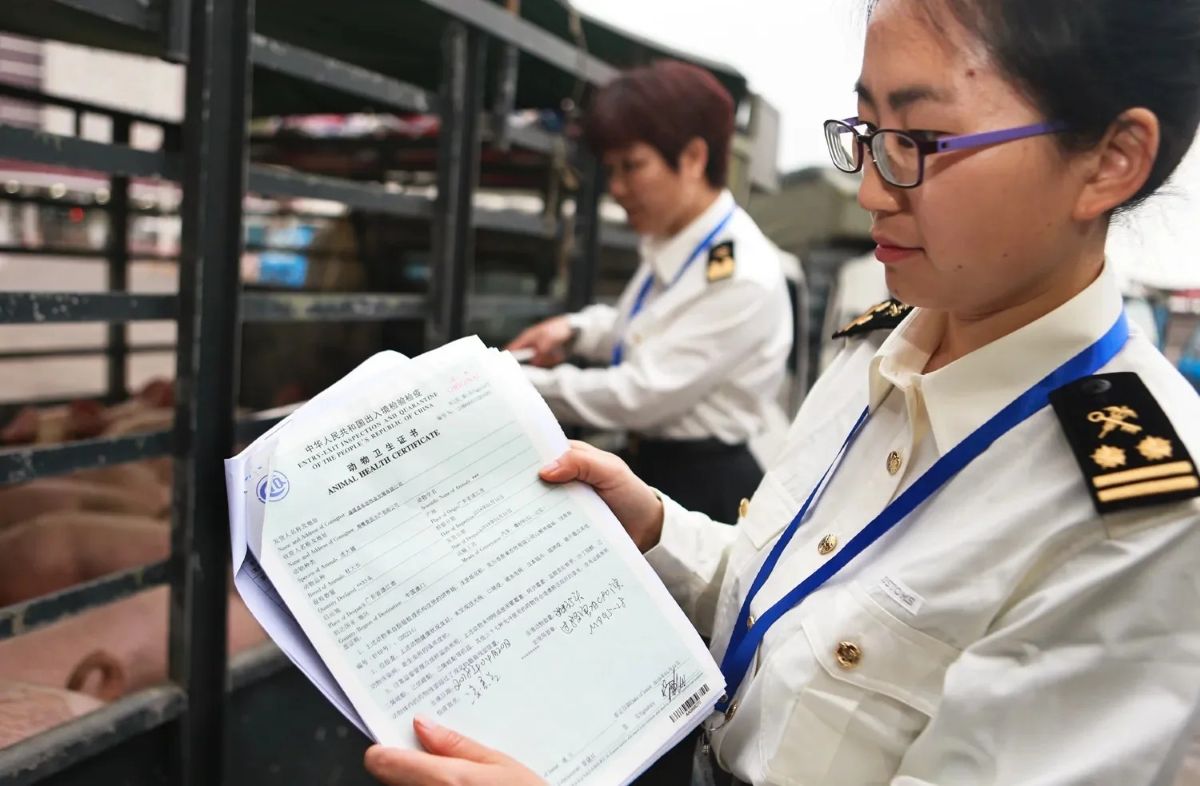
- Quarantine and documentation procedures are numerous, and any slight misstep can cause delays: Fresh aquatic product exports involve export quarantine and destination-country import quarantine requirements. If documents are incomplete or declaration elements are inaccurate, goods arriving in Japan may be held for inspection, missing the sales window. The customer previously had each step handled separately, and document handoffs often had errors.
One real lesson made the customer determined to overhaul the freshness-preservation chain. Earlier, a batch of live shrimp was being rushed during peak season. The customer placed a last-minute order, oxygenation time was insufficient, and packaging was overly dense. When the boxes were opened in Tokyo, the survival rate was clearly lower than usual. Downstream channels pressed down the price on the entire batch; the customer basically made no money on that shipment and spent considerable effort placating the channels. A review found that the root cause was not the air freight itself, but the lack of unified standards for the "four key elements of freshness preservation" before shipment: oxygenation duration, packaging density, temperature control methods, and flight schedules were each managed separately. This lesson directly pushed the customer to standardize freshness-preservation operations and made them realize: what fresh-produce air freight truly needs to solve is turning the variable of "live" into a "manageable process" — from receiving goods, oxygenation, packaging, to catching the flight, every step must have standards and records.
Transport Requirements
- Route: Guangzhou → Narita (NRT), Tokyo, Japan, direct flight about 4 hours. Upon arrival, quick pickup and delivery to Tokyo and surrounding fresh markets/supermarkets;
- Cargo: Live seafood (fish, shrimp, shellfish) and chilled aquatic products, classified as non-dangerous perishable goods (live seafood air transport must comply with IATA Live Animals Regulations and destination country quarantine requirements);
- Lead time: From factory to Tokyo arrival about 2 days (same-day order cutoff to catch morning flight → arrive next day → same-day pickup and delivery);
- Temperature control: Chilled products maintain 0–4°C cold chain throughout (insulated boxes + coolant packs); live seafood oxygenated by species, with temperature and density controlled;
- Documentation: Export quarantine declaration and destination country import quarantine requirements fully prepared, with accurate declaration elements;
- Rhythm: Reverse-scheduled by flight times—goods received in the early morning, packed in the early morning, and shipped on the same-day flight.
For clients, the "lead time" of fresh produce air freight is not simply "arrives in a few days," but "whether it can catch a definite flight that day and whether it can hit the market that day." What clients need is to turn every step in the freshness-preservation chain into a standard operation—which flight to catch, what time to receive goods, how to oxygenate, how to control temperature—all predetermined and executed according to the order.
Solution
Bofeng customizes an integrated air freight solution built on the "Four Elements of Freshness Preservation" for clients, unifying the four steps of receiving, oxygenation, temperature control, and flight catching into a standard process:
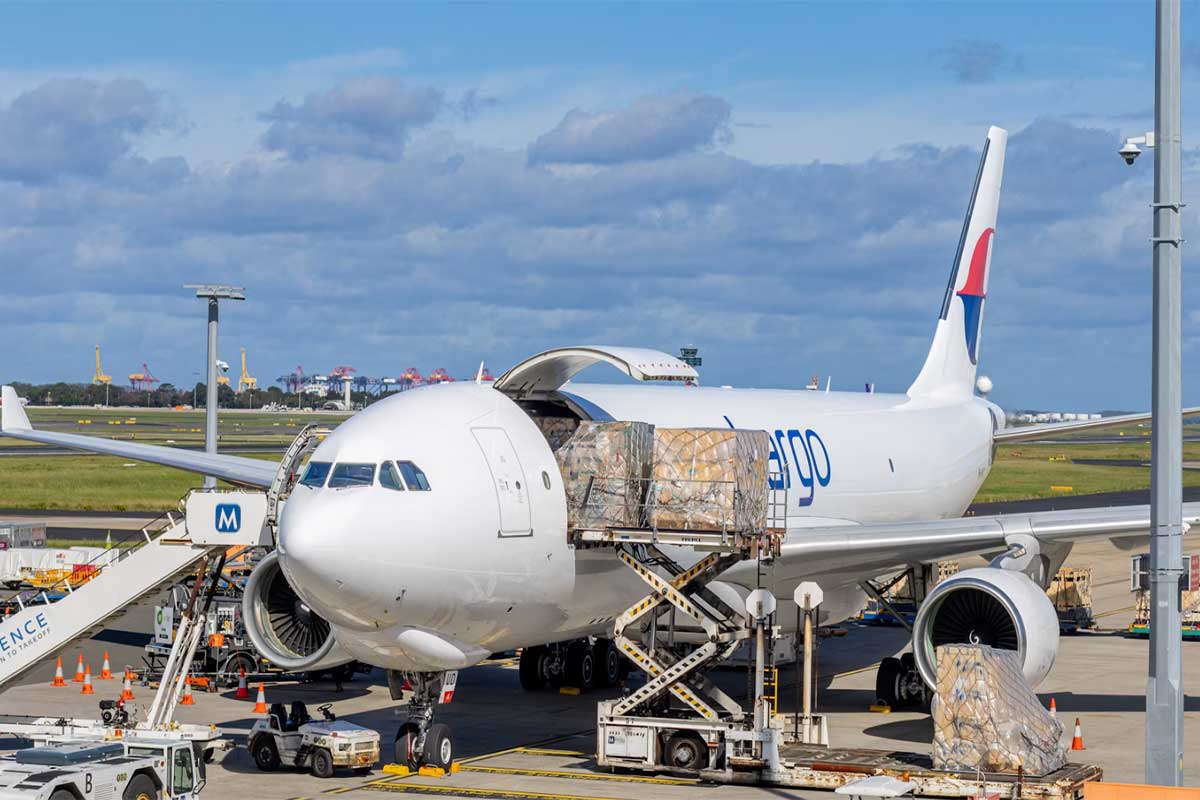
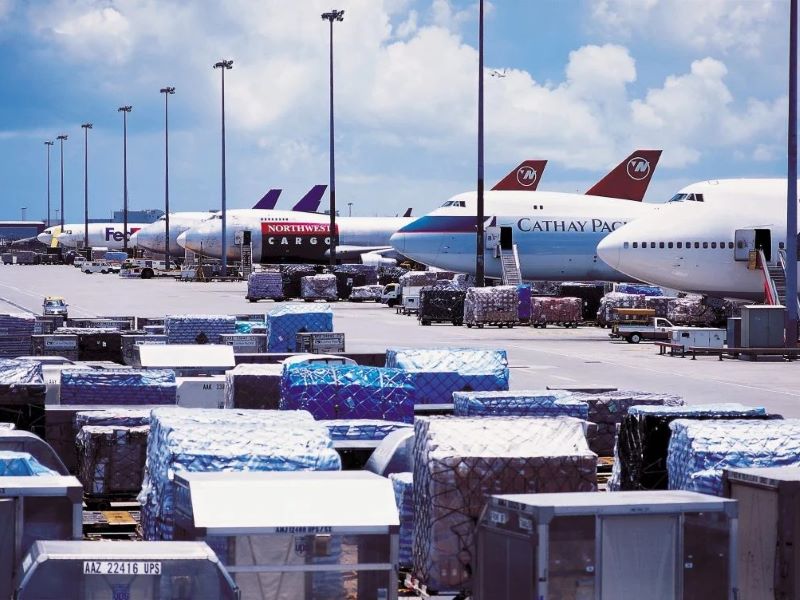
- Pearl River Delta → Japan air freight dedicated line, direct flight from Guangzhou to Tokyo: Cargo flies direct from Guangzhou Baiyun Airport to Tokyo Narita (NRT), with a direct flight time of about 4 hours, making it one of the shortest air freight corridors from China to Japan. For flight schedules and space availability, please refer to the Pearl River Delta-Japan International Air Freight Logistics Dedicated Line. For live seafood and other goods with extremely tight time windows, direct flights with no transshipment minimize transit time to the greatest extent;
- Ice-fresh cold chain packaging: insulated boxes + cold packs, temperature controlled throughout: Ice-fresh aquatic products use a combination of high-density insulated boxes + sufficient cold packs + sealed waterproof inner liners. The amount of cold packs is matched to the destination temperature and flight duration, keeping the product temperature within the target range throughout the journey. Packaging and temperature control solutions are customized by species, with denser cold pack configurations for summer high heat and long-haul routes, preventing cold chain breakdowns that would cause freshness to drop off. For the packaging and temperature control limits of air-suitable cargo, please refer to Air-Suitable Cargo Classification Guide: Which Cargo Is Suitable for Air Freight?;
- Standardized oxygenation for live seafood: oxygenation and density control by species: Live seafood is matched with oxygenation bag specifications and oxygenation duration based on species and shipment volume, with loading controlled by water carrying density to avoid oxygen deprivation losses from overcrowding; after packing, boxes are sealed and leak-proofed, marked with a "Live Product" label, and handled on the principle of light loading and fast unloading. Before departure, each box is checked for oxygenation and sealing status, turning the "survival rate" from an after-the-fact result into a verifiable indicator prior to shipment;
- Quarantine and documentation upfront: getting declaration elements right the first time: Bofeng conducts upfront verification of export quarantine declarations and destination country import quarantine requirements during the shipment process, getting declaration elements such as product name, quantity, and origin accurate in a single pass to avoid detention and inspection upon arrival. Documentation coordination is centrally managed by Bofeng, with clients only needing to provide basic cargo information without coordinating at each step. For documentation and time management across all export stages, please refer to Complete Export Air Freight Operation Process: From Booking to Takeoff;
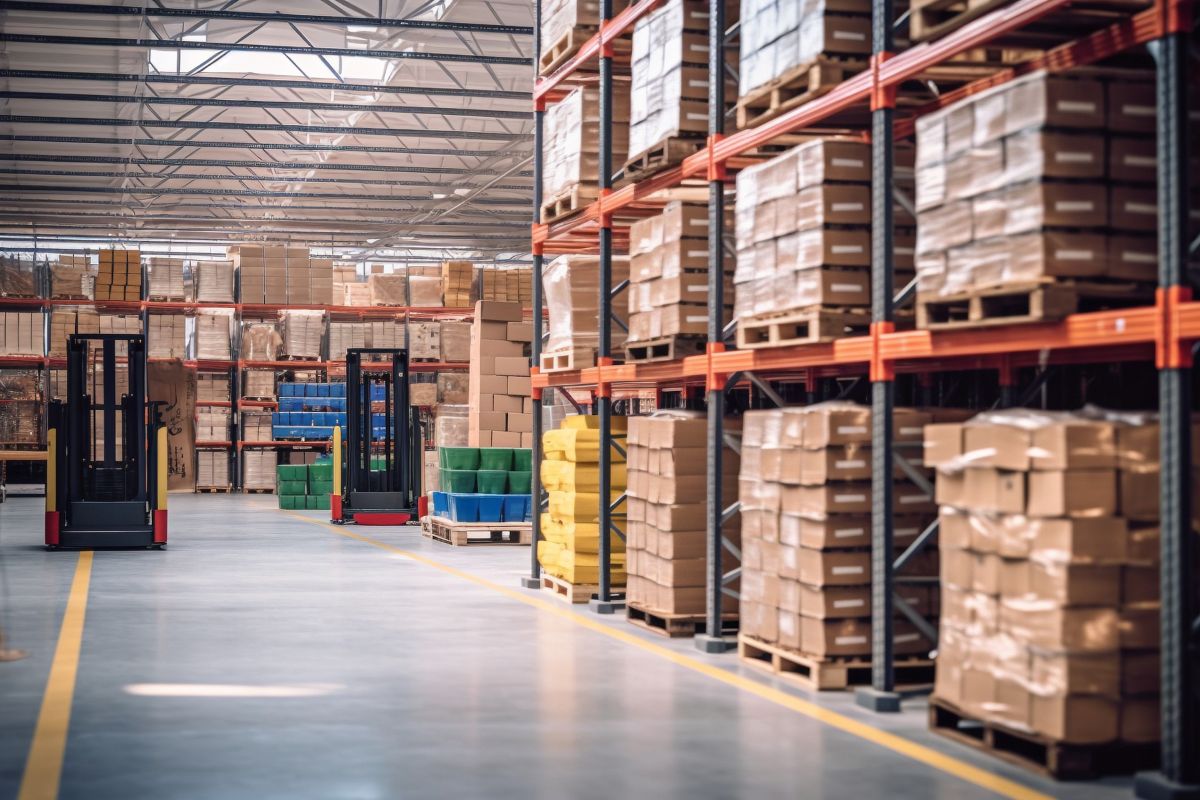
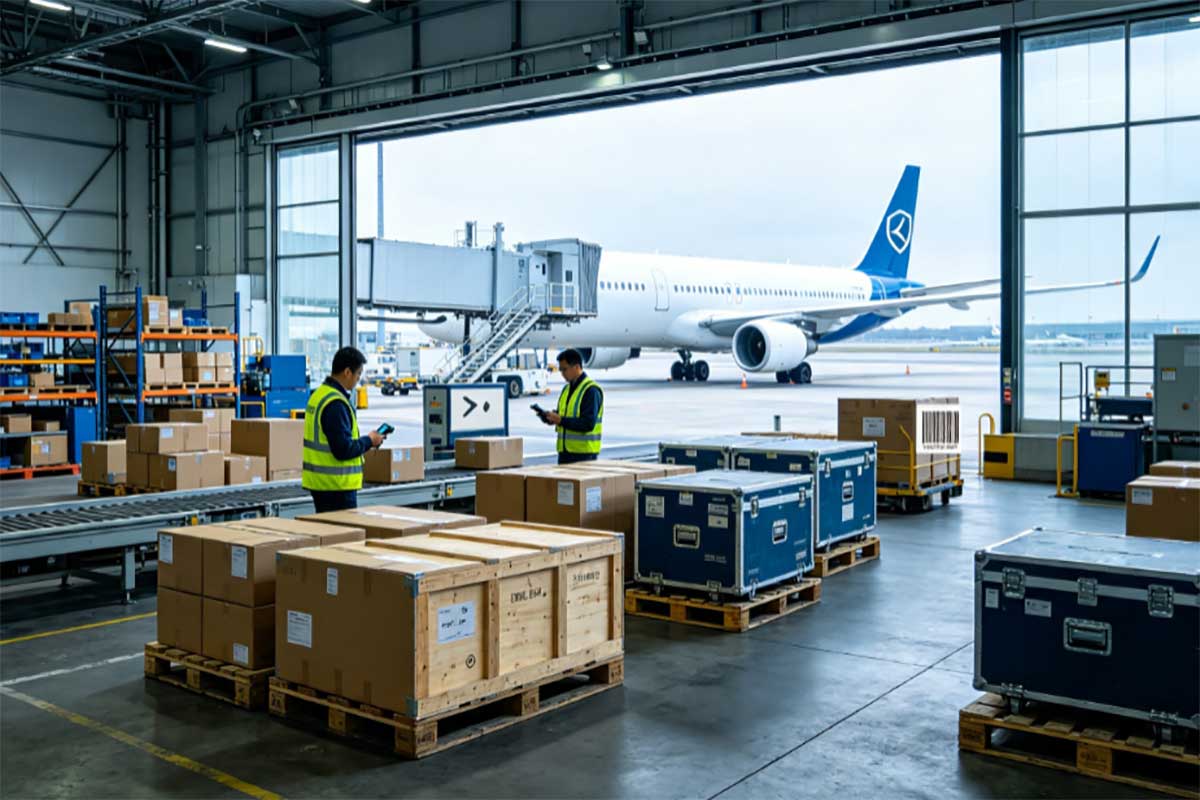
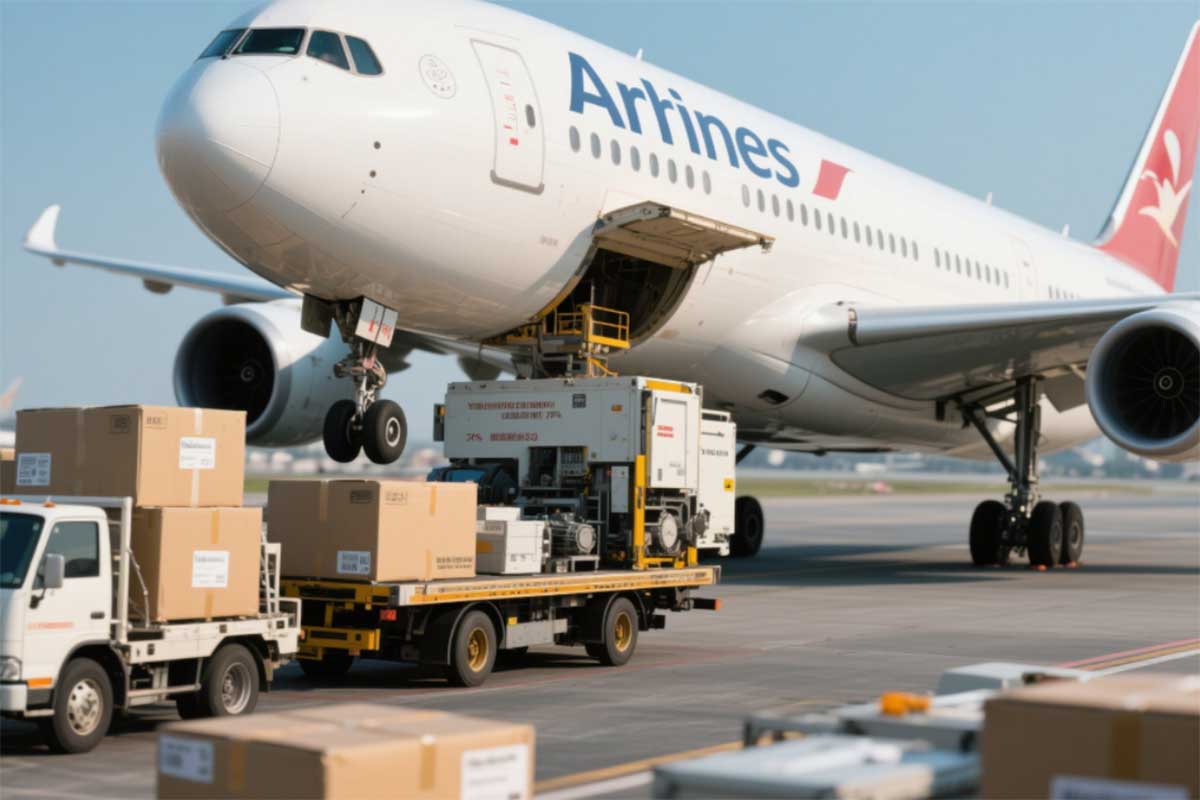
- Flight-catching node management: same-day cut-off, same-day departure, same-day arrival: Each node is scheduled in reverse order based on NRT flight times — early morning receiving, dawn oxygenation and packing, warehousing before the cargo cut-off time, and document submission before the cut-off. Cargo is cut off and departs the same day, arriving the next day; after arrival, rapid pickup and delivery aligns with the morning market rhythm of Tokyo's fresh seafood markets and supermarkets. Fresh cargo is loaded with priority and unloaded first, shortening ground dwell time;
- Full-journey temperature control records and emergency coordination: Temperature control and time performance records are kept throughout the shipment, with arrival pickup and delivery nodes traceable in the system; in the event of flight delays or temperature anomalies, Bofeng notifies clients in advance to adjust, coordinating the next available flight and delivery plan to keep uncertainty within the process.
The core of this solution is turning "live" variables into "manageable standards": how long to oxygenate, what temperature to hold, which flight to catch, and when to pick up — all determined in advance and executed per order. For clients, fresh cargo shipping moves from "relying on luck" to "following a process," making survival rate, freshness, and timeliness predictable and verifiable results.
Results
After the collaboration, the client's fresh seafood export to Japan showed significant improvement in freshness preservation—transit time shortened by about 30%, the loss rate dropped by about 60%, and both the freshness/liveliness and temperature control compliance rates rose to approximately 98% or above:
| Indicator | Before Optimization | After Optimization | Improvement |
|---|---|---|---|
| Transit time (from factory to Tokyo delivery) | Approximately 3 days | Approximately 2 days | Shortened by about 30% |
| Freshness/liveliness compliance rate | Approximately 85% | Approximately 98% | Improved |
| Loss rate | Approximately 8% | Approximately 3% | Decreased by about 60% |
| Temperature control compliance rate | Approximately 90% | Approximately 99% | Improved |
Data statement: The above are case-specific data (as of July 2026, based on actual shipment batches during the collaboration period), reflecting the individual performance of this client during the cooperation period and do not constitute a service commitment; this case is adapted from actual carriage experience with desensitization, and client information has been concealed as per authorization requirements.
Quantitatively: ① Transit time was reduced from about 3 days to about 2 days, a reduction of about 30%, mainly driven by the optimized connection between same-day cutoff for the early morning flight and fast pickup upon arrival; ② The freshness/liveliness compliance rate increased from about 85% to about 98%, a direct result of standardized freshness-preservation operations; ③ The loss rate dropped from about 8% to about 3%, a decrease of about 60%, through the combined safeguards of oxygenation, temperature control, and light loading with rapid unloading; ④ The temperature control compliance rate rose from about 90% to about 99%, reflecting improved stability after cold-chain packaging was configured with coolant based on route and season. These improvements are directly reflected at the client's channel end: downstream supermarkets and seafood markets now have stable expectations for arrival quality, price haggling and rejections have markedly decreased, and the client's shipping rhythm and pricing room have improved simultaneously.
Data caliber: Transit time is calculated based on the actual duration from factory departure to pickup and signing in Tokyo; the freshness/liveliness compliance rate is calculated based on the proportion of batches that pass on-site inspection upon arrival and meet the client's acceptance criteria; the loss rate is calculated based on the ratio of transport loss weight to total shipped weight; the temperature control compliance rate is calculated based on the proportion of batches whose full-journey product temperature records fall within the target range.
The applicable boundaries also need to be explained: air freight for fresh seafood is suitable for high-value live and chilled seafood with short time windows, with the Japan route taking about 2 days in total; for quick-frozen seafood that can accept a longer lead time and has sufficient volume, sea freight cold chain is more cost-effective; air freight temperature control and transit time are subject to actual flights and seasons, and transportation may be affected by flight schedules and weather, with related risks controlled through time-management contingency plans. Live seafood air transport involves live animal transport regulations and quarantine requirements, and must be carried out in accordance with the actual compliant operating procedures.
The two parties' cooperation has entered its second year, and the above data are case records from continuous shipments over the past 12 months.
Client Testimonial
“In the past, when shipping live seafood, our biggest worry was missing the flight, and oxygen filling and packaging were all improvised by each party involved. Now the entire freshness-preservation chain follows standard procedures: receiving goods in the early morning, packing at dawn, and catching the early flight the same day. By the time they reach Tokyo, the survival rate and freshness are consistently stable, and the distributors are much more at ease.”
— Customer feedback for Bofeng Logistics · International Air Freight (published with authorization and desensitized)
Need a similar logistics solution? Contact us — a plan within 30 minutes.
Phone:13075678958 | WhatsApp:+86 13075678958 | Email:info@zhbfwl.com
Get a Quote