Client Background
A foreign trade company in Shenzhen, mainly engaged in the export of consumer electronic accessories and household goods, with customers across Europe, America, and Southeast Asia, and frequently participating in domestic and international industry exhibitions. The foreign trade industry relies heavily on sample shipments: new customers need samples for confirmation before placing orders, samples are needed for exhibitions, and existing customers also need samples for prototype confirmation. Sample shipments are characterized by being "small, urgent, and time-pressed" — quantities are often just a few pieces, but delivery deadlines are extremely strict. Missing an international flight could mean missing an order negotiation window, or even losing a customer.
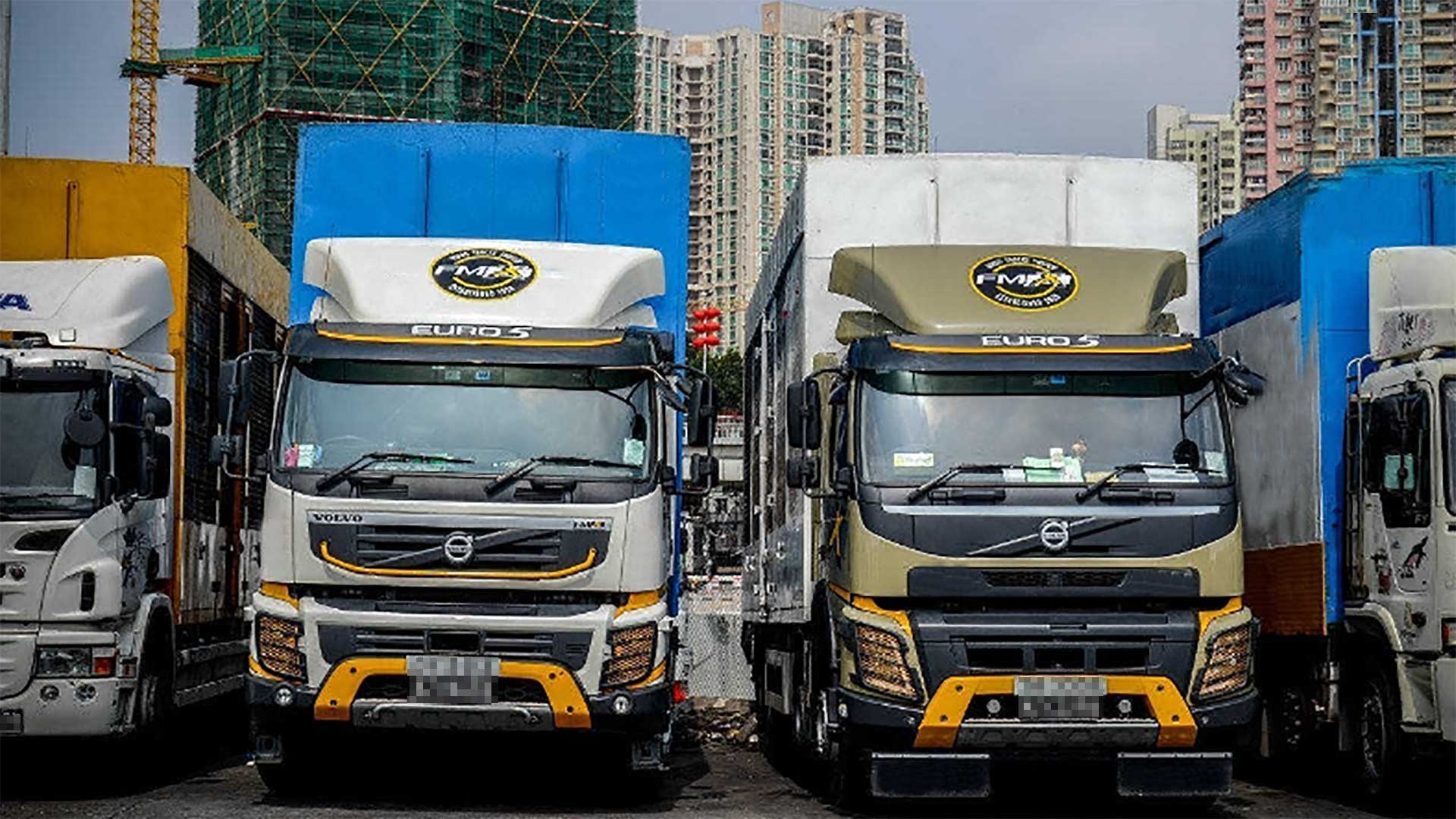
Shenzhen is about one and a half to two hours' drive from Hong Kong International Airport. With its dense international routes and high flight frequency, Hong Kong International Airport is an important transit hub for South China foreign trade companies sending international express shipments. Compared with mainland airports, Hong Kong Airport has clear advantages in capacity, flight density, and transit times on certain routes. As a result, many Shenzhen companies choose the route of "Shenzhen to Hong Kong Airport, then boarding an international flight in Hong Kong" for urgent samples. Cross-border vehicles with dual Guangdong-Hong Kong plates providing direct point-to-point service are the mainstream choice for such urgent shipments.
Exhibition season is the period with the highest volume of sample express shipments for this company: in the week before an exhibition, multiple batches of samples and documents must be sent to overseas customers and agents, each with different cut-off times. A slight oversight can result in rushing multiple flights on the same day. In daily operations, customer prototype confirmation and new product shipments are also routine; a single sample shipment often carries an opportunity to quote. Together, these scenarios make a "stable and controllable expedited channel" a critical necessity for the company, not just an occasional emergency measure.
For this company, the timeliness of sample express shipments is directly tied to business rhythm: customer requests for samples, upcoming exhibitions, and customers' cut-off times are all hard deadlines. In the past, when sending urgent samples, the company relied on ordinary couriers to first deliver to Hong Kong and then transfer to international express services, which involved many steps and made connections a matter of luck. Once, due to a delay in the transit segment, a shipment missed the international flight that day, and the customer waited three days before receiving it, nearly costing the company an order. This lesson prompted the company to reassess the logistics arrangements for urgent samples, hoping to establish a channel of "direct departure from Shenzhen and boarding the same day," transforming sample delivery from "gambling on luck" to "calculating time."
Key Challenges
- Multiple transit points: After pickup in Shenzhen, ordinary express shipments must first be consolidated in Hong Kong before being forwarded by an international express company. This adds an extra warehousing step and an extra sorting step. The more nodes there are, the more prone to delay, and if any node goes wrong, the flight window may be missed.
- Uncontrollable flight connections: Whether a sample can catch the same-day international flight depends on what time the transit logistics arrives in Hong Kong. However, transit times are unstable, so companies cannot predict "what time it will reach the airport or whether it can catch the flight." Their answers to customers can only be vague.
- Slow customs clearance pace: Even though a courier item is small, it still involves customs declaration coordination. In ordinary channels, customs declaration points are scattered. If the same-day declaration misses the airline's cutoff time, it has to be postponed to the next day. Before exhibitions, concentrated sample shipments are even more likely to be repeatedly rushed against the cutoff.
- Lack of transparency: After shipment, companies can only see vague logistics tracking and cannot know the exact time the item reaches the airport or is handed over to the airline. When customers ask, they can only say "wait a little longer," putting sales staff in a passive position with customers.
The cost of these challenges is the opportunity cost of "missing the window": if samples arrive a day late, customers may turn to other suppliers; business opportunities at exhibitions may be seized by competitors; one mistake can shake customer trust built up over many years. For foreign trade companies, such hidden losses are often far more expensive than the freight itself.
Transport Requirements
- Route: Shenzhen urban area / factory area → Hong Kong International Airport cargo area, deliver to designated airline / cargo terminal;
- Shipment volume: 1-5 pieces per shipment, 0.5-30kg per piece. In urgent cases, the shipment departs as soon as it arrives;
- Timeliness: Delivery to the Hong Kong airport cargo area within 4 hours after pickup in Shenzhen, connecting to the same-day international flight (subject to the actual flight cutoff time);
- Customs clearance: Integrated export declaration, with declaration and transportation carried out simultaneously to reduce customs declaration waiting time;
- Special requirements: Sample packaging must meet air transport requirements, and transport conditions for special items must be confirmed in advance. Handover must include the airway bill number and expected flight information;
- Billing method: Flat rate per shipment, including Shenzhen pickup, Shenzhen-Hong Kong transportation, Hong Kong airport delivery, and customs declaration coordination, with transparent and budgetable costs.
Solution
Bofeng has established a dedicated express channel from Shenzhen directly to Hong Kong International Airport for scenarios of "urgent samples catching a flight", fully delivering on "streamlining processes and racing against time":
- Immediate pickup in Shenzhen: Upon receiving an assignment, vehicles are arranged in Shenzhen’s urban area and surrounding regions to pick up goods at the agreed time. Small-batch sample shipments depart as soon as they arrive, with no waiting to consolidate a full truckload—turning "waiting for scheduled departures" into "dispatch on order receipt" to win every minute.
- Expedited customs clearance coordination: Export customs declaration is processed in parallel with transport. Declaration elements for samples are checked in advance to avoid inspection holds caused by discrepancies. Regular samples are declared as general cargo, and special samples have transport conditions confirmed in advance, ensuring customs clearance does not become a bottleneck.
- Direct delivery to Hong Kong Airport: Vehicles pass through Shenzhen Bay Port and proceed directly to the cargo area of Hong Kong International Airport, with no transit or secondary loading/unloading along the way. The "Shenzhen to Hong Kong Airport" route is compressed into a single direct transport leg, reducing delay risks from intermediate stops.
- Flight connection confirmation: Before arriving at the airport, flight space and cutoff times are confirmed with the cargo terminal / airline. Samples are handed over directly upon arrival, and waybill information is synchronized after delivery. This enables companies to provide clients with clear details—"handed over to airline, flight number, estimated departure time"—so responses are well-supported.
- Emergency response: In the event of uncontrollable factors such as inspections or traffic jams, clients are informed immediately and assisted with alternative arrangements (e.g., rebooking later same-day flights, coordinating priority handling), minimizing the impact on flight connections and keeping clients honestly informed of current progress.
The express channel also offers tiered service levels: standard expedited service follows the normal process, ensuring same-day delivery to the airport and connection with that day’s flight; super-urgent shipments are handled by dedicated staff, with real-time location updates after pickup and advance booking of cargo terminal handover before arrival at the airport, saving time that would otherwise be spent waiting in queues or navigating. Clients can select the desired service level when placing an assignment and receive corresponding milestone expectations—meeting urgent needs while avoiding unnecessary costs for expediting that is not required.
The core of the solution is "streamlining processes and racing against time": the ordinary channel’s three-stage "Shenzhen—Hong Kong consolidation—international transshipment" is compressed here into "direct pickup in Shenzhen—direct airport delivery—direct handover to airline". One less step means one less risk of delay. Meanwhile, key nodes such as customs declaration and flight connection are confirmed in advance, making delivery reliability a matter of process, not luck. It should be noted that the 4-hour turnaround is the actual performance of this case under normal port clearance conditions. Due to external factors such as customs clearance, flight schedules, and weather, actual transit times may vary by shipment. Clients will receive clear time-expectation explanations when placing assignments.
Results
| Metric | Regular transit (before cooperation) | China-HK Express (after cooperation) | Improvement |
|---|---|---|---|
| Shenzhen to Hong Kong Airport transit time | Half a day to 1 day, uncertain | Delivered within 4 hours | Transit time greatly shortened |
| Same-day international flight connection | About 60% | Over 90% | Connection rate improved |
| Transit steps | 2-3 sorting operations | Direct single handover | Fewer steps |
| Logistics trace visibility | Vague and untrackable | Step-by-step visible: pickup / customs clearance / airport arrival / airline handover | Full visibility |
| Sample delay complaints | Occasional | Significantly reduced | Customer satisfaction improved |
Data statement: The above is case data (as of July 2026), reflecting this customer's performance during the cooperation period and does not constitute a service commitment.
After the cooperation, sending samples shifted from "betting on luck" to "calculating time": pickup in Shenzhen arrives at Hong Kong Airport within 4 hours, most samples can connect with the same-day international flight, and customers at the other end usually receive samples faster than through the old channel. For the business team, the most direct change is that "replies are now grounded" — responding to customers with "sample handed to airline, flight number, estimated days to arrival" all have clear supporting evidence, sample delay complaints have dropped significantly, and sales staff have shifted from "passively explaining" to "proactively informing" in front of customers. The business team also turned these time milestones into follow-up scripts. When customers ask about sample progress, they can directly pull up the records of pickup, customs clearance, airport arrival, and airline handover, noticeably improving the professionalism of their replies. When there is a concentrated sample mailing before exhibitions or a customer's last-minute urgent request, the company prioritizes this express channel, standardizing the "catch the flight" scenario. The most frequently mentioned point in customer feedback is that time milestones are visible: from pickup and customs clearance to airport arrival and airline handover, every step has trackable progress, so customers no longer have to wait idle.
This case also shows that for urgent small shipments like express samples, the competition is not about transport tools but about process design and information coordination. By connecting the three nodes of direct delivery, customs clearance, and flight connection, the China-HK Express channel can fully meet foreign trade companies' need to "get on an international flight the same day." From a cost logic perspective, the per-shipment cost of the express channel is higher than ordinary courier transit, but companies calculate another account: the order loss caused by late samples, the trust erosion from customer waiting, and the opportunity cost of missing business opportunities at exhibitions often far exceed the one-time freight difference. Putting urgent items into a predictable express channel may mean paying more freight on the surface, but overall it is actually more economical. For companies that also rely on sending samples via Hong Kong Airport, putting urgent items into a predictable express channel is more reliable than temporarily looking for ordinary courier transit.
The two parties have entered the second year of cooperation. The above data are case records of the urgent express channel during the cooperation period.
Client Testimonial
"Previously, when sending urgent samples, we could only wait helplessly for the courier's transit. Whether they could catch the same-day flight was all up to luck. When customers asked, we couldn't give a definite answer. Now, samples arrive at the airport within 4 hours, handed over to the airline, with tracking number and flight number all clear. When customers ask, we have confidence. For the concentrated urgent sample sending before exhibitions, the most worry-free option is to use Bofeng's expedited channel."
— Customer feedback for Bofeng Logistics · Hong Kong logistics dedicated line (published with authorization and desensitization)
Need a similar logistics solution? Contact us — a plan within 30 minutes.
Phone:13075678958 | WhatsApp:+86 13075678958 | Email:info@zhbfwl.com
Get a Quote