
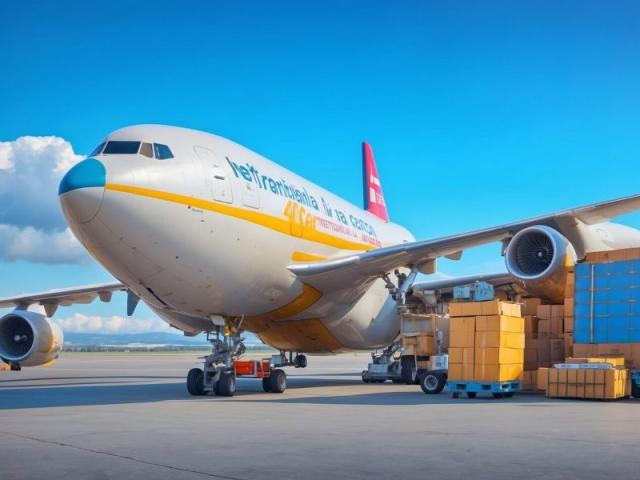
Export air freight from booking to takeoff involves 8 steps: Booking (T-5~3 days) → Cargo Delivery to Warehouse → Customs Declaration → Customs Release → Security Check → Palletizing/ULD Build-Up → Loading → Takeoff. The key is managing three critical time windows: Last Acceptance Time (4-8 hours before departure), Document Cut-Off Time, and Customs Cut-Off Time. Pearl River Delta reminder: Shenzhen SZX local delivery, Guangzhou CAN direct delivery at airport cargo terminal, Hong Kong HKG involves cross-border transport and different customs regimes, requiring additional time buffer.
I. Overview of Export Air Freight Process
From when cargo leaves the factory until it is loaded onto the aircraft and takes off, a typical air export shipment goes through the following 8 key steps:
| Step | Time Point | Description | Responsible Party |
|---|---|---|---|
| ① Booking | T-5~3 days | Reserve space on a specific flight with freight forwarder/airline | Shipper / Freight Forwarder |
| ② Cargo Delivery to Warehouse | T-2~1 day | Cargo transported to airport cargo terminal | Shipper / Transport Company |
| ③ Customs Declaration | T-1 day | Declare export to customs | Customs Broker |
| ④ Customs Release | T-1~0 days | Customs inspection or release | Customs |
| ⑤ Security Check | T-0 day | Cargo passes through security scanner | Cargo Terminal |
| ⑥ Palletizing/ULD Build-Up | T-0 day | Cargo loaded onto ULD (Unit Load Device) | Terminal Operations |
| ⑦ Loading | 2-3 hours before departure | Loaded onto aircraft | Airline / Ground Handling |
| ⑧ Takeoff | Flight time | Aircraft departs | Airline |
The above is the standard process for general cargo. Dangerous goods, cold chain cargo, and other special cargo require additional procedures.
II. Step-by-step Details
① Booking (T-5~3 days)
What is booking: Reserving cargo space on a specific flight.
Booking elements:
| Information Item | Description |
|---|---|
| Product name | Cargo name in Chinese and English, must match customs declaration |
| Pieces / Weight / Volume | Total number of pieces, gross weight, total volume |
| Destination | Airport three-letter code (e.g. LAX, FRA) |
| Desired departure date | Earliest delivery time and expected arrival time |
| Special cargo requirements | Whether dangerous goods, temperature control needed, high-value cargo |
Booking channels:
| Channel | Suitable For | Advantages | Disadvantages |
|---|---|---|---|
| Direct with airline | Large volumes, fixed routes | Low price, guaranteed space | High threshold (monthly volume requirement) |
| Tier-1 freight forwarder | Small to medium volumes | Full route coverage, flexible service | Slightly higher price than direct |
| Tier-2 / Tier-3 forwarder | Loose cargo, consolidations | Small volumes accepted, convenient | Higher price, more intermediaries |
Booking confirmation: After successful booking, the forwarder provides a Booking Confirmation containing flight number, departure date, and key information such as Last Acceptance Time.
② Cargo Delivery to Warehouse (T-2~1 day)
Cargo must arrive at the airport cargo terminal before the Last Acceptance Time (cut-off time) of the flight. Different airlines have different cut-off times, usually 4–12 hours before departure.
Delivery preparation:
| Document | Purpose |
|---|---|
| Booking Confirmation | Receipt voucher at cargo terminal |
| Invoice / Packing List | Cargo content details |
| Customs Declaration Power of Attorney | Entrust customs broker |
| MSDS (for dangerous goods) | Material Safety Data Sheet |
| Special cargo certificates | e.g. CCC certification, quarantine certificate |
Things to note when delivering:
- Outer packaging check: Ensure packaging is intact and labels are clear (product name, piece number, destination)
- Weighing and measuring: The cargo terminal will re-measure weight and dimensions; the terminal's actual data prevails
- Warehouse receipt: The terminal issues a Warehouse Receipt; keep as proof
③ Customs Declaration (T-1 day)
The export customs declaration process for air freight is similar to sea freight, but time requirements are tighter — the window for air cargo customs declaration is shorter.
Basic process:
Prepare declaration documents → Electronic submission (Single Window) → Customs review → Inspection (if any) → ReleaseAfter customs release: The customs broker receives a release notice (Customs Release Certificate); cargo may then proceed to security and loading.
Differences between air and sea customs declaration:
| Comparison | Air Export | Sea Export |
|---|---|---|
| Customs cut-off time | 4–8 hours before departure | 24–48 hours before sailing |
| Inspection method | Inspected at cargo terminal | Inspected at dock |
| Document requirements | Essentially same | Essentially same |
| Release mode | Electronic release + manual confirmation | Electronic release |
④ Customs Release (T-1~0 days)
Customs release is a prerequisite for cargo to be loaded onto the aircraft. Two release modes:
- Electronic release: Customs system automatically compares declaration info and releases (fastest, common for general cargo)
- Manual review: Manual review by customs officer (may require amendments or additional documents)
- Inspection: Physical inspection of cargo (requires unpacking); about 5–20% of shipments are randomly selected
Cargo selected for inspection must wait until inspection is complete before release, which may cause it to miss the original flight. Therefore, it is recommended to allow sufficient customs clearance time for air shipments.
⑤ Security Check (T-0 day)
Air cargo must pass aviation security screening before being loaded.
Security requirements:
- General cargo: Usually scanned by X-ray
- Known Consignment: Cargo pre-screened by certified shippers/forwarders can enter the warehouse directly
- Oversized cargo (cannot pass through X-ray): Manual inspection by opening
Common reasons for failing security:
- Undeclared batteries, magnets, or other sensitive items in the cargo
- Suspicious items inside packaging
- Product name does not match actual contents
⑥ Palletizing/ULD Build-Up (T-0 day)
Palletizing is the process of assembling loose cargo onto ULDs (Unit Load Devices), a unique operation in air freight.
Common ULD types:
| ULD Type | Specs (internal dimensions, cm) | Max Payload | Suitable Aircraft |
|---|---|---|---|
| AKE (LD-3) | 156 × 153 × 163 | ~1,588kg | Wide-body (777/787/A330/A350) |
| PMC (P6P) | 318 × 244 × 200 | ~6,804kg | 747/777 full freighter |
| PAG (PGA) | 318 × 244 × 300 | ~6,804kg | 747 full freighter (high deck) |
| Bulk compartment | Varies by aircraft | ~2–3 tons | Narrow-body belly hold |
See Manual Part 06: Air Cargo Packaging and Palletizing Operation Standards for details.
⑦ Loading (T-0 day, 2-3 hours before departure)
The finished ULDs are transported by ground handling staff from the cargo terminal to the apron using tugs, then loaded onto the aircraft using lifting platforms.
Loading sequence:
- Rear hold first, then front hold (for weight and balance requirements)
- Dangerous goods have specific loading position requirements (e.g., lithium batteries can only be loaded in specific compartments)
- Live animals and valuable cargo are loaded first to ensure earliest offloading
⑧ Takeoff (Flight time)
After cargo is loaded, doors closed, and the crew completes pre-flight checks, the aircraft departs according to the flight schedule.
After takeoff:
- The forwarder receives a Flight Departure Confirmation
- The shipper can start tracking cargo information (via airline website or forwarder system)
- The AWB (Air Waybill) travels with the cargo
III. Pearl River Delta Export Air Freight Operation Differences
Different airports have different processes. Below is a comparison of key differences among the three major PRD air cargo ports:
| Operation Step | Guangzhou Baiyun (CAN) | Shenzhen Baoan (SZX) | Hong Kong Chek Lap Kok (HKG) |
|---|---|---|---|
| Cargo Delivery to Warehouse | Direct delivery to airport cargo terminal (Aviation Logistics Park) | Direct delivery to airport cargo terminal | Must enter Hong Kong via land port from Shenzhen/Guangzhou |
| Customs Declaration | Guangzhou Baiyun Airport Customs | Shenzhen Baoan Airport Customs | Hong Kong Customs (free port, simplified process) |
| Cross-border Operation | Not involved | Not involved | Cargo from mainland requires cross-border transport |
| Last Acceptance Time | 4–6 hours before departure | 4–6 hours before departure | 6–8 hours before departure (including cross-border transport time) |
| Security Standards | CAAC unified standards | CAAC unified standards | Hong Kong Civil Aviation Department standards |
| Peak Season Characteristics | Stable belly capacity on China Southern | SF full freighters + concentrated e-commerce cargo | Largest international transit cargo volume |
Key Points for Shipping from Shenzhen to Hong Kong Airport
For shipments destined for Hong Kong, the typical operation route is:
- Mainland export customs declaration (Shenzhen/Guangzhou) → Cross-border trucking (via Huanggang/Shenzhen Bay port) → Hong Kong airport cargo terminal
- Direct customs declaration and shipment from Shenzhen airport (using SZX direct flights)
Both routes have pros and cons: Hong Kong offers more flights and potentially better prices, but involves cross-border transport steps and time costs. It is recommended to evaluate based on specific destination and time requirements.
IV. Key Time Milestones for Export Air Freight
| Milestone | Time | Reminder |
|---|---|---|
| Last Acceptance Time | 4–8 hours before departure | Cargo must be in warehouse by this time |
| Document Cut-Off Time | 1–2 hours before last acceptance | AWB and customs declaration must be submitted |
| Customs Cut-Off Time | 2–4 hours before departure | Customs release must be completed |
| Security Check Time | Begins after customs cut-off | Cargo moves to security after release |
| Loading Time | 2–3 hours before departure | ULD build-up completed, loading begins |
| Takeoff Time | Scheduled flight time | Doors closed, taxi, takeoff |
Note: Document Cut-Off Time is usually before the Last Acceptance Time — meaning the shipper must have documents ready in advance, while cargo can arrive slightly later.
V. Export Air Freight Checklist
Before shipping, confirm each item:
Documents Checklist
- [ ] Booking Confirmation ✓
- [ ] Commercial Invoice ✓
- [ ] Packing List ✓
- [ ] AWB (Air Waybill) draft ✓
- [ ] Customs Declaration Power of Attorney ✓
- [ ] MSDS (if dangerous goods) ✓
Cargo Checklist
- [ ] Outer packaging intact, labels clear ✓
- [ ] Cargo matches declared information ✓
- [ ] Weight/volume rechecked at terminal ✓
- [ ] No prohibited or undeclared items ✓
- [ ] Destination labels affixed ✓
Compliance Checklist
- [ ] HS code and export control requirements confirmed ✓
- [ ] CCC certification (if needed) confirmed ✓
- [ ] Destination country import restrictions confirmed ✓
- [ ] Insurance (air cargo insurance) confirmed ✓
📞 Hotline: 130-7567-8958 | ✉️ Email: info@zhbfwl.com
Further reading:
Related Logistics Services
Bofeng Logistics offers the following related services, feel free to inquire: