Client Background
A pharmaceutical distribution company in Guangzhou has long been supplying licensed drug wholesalers, chain pharmaceutical warehouses, and clinics in Hong Kong, with products covering various drugs that require cold storage and cool storage. Drug transportation is fundamentally different from ordinary goods: drugs have clear temperature requirements. Some drugs need to be stored and transported in a cold chain temperature range (typically 2–8°C), and some in a cool temperature range (typically 15–25°C). More importantly, pharmaceutical warehouses in Hong Kong generally accept goods in accordance with the Pharmaceutical Distribution Quality Management Standard (commonly known in the industry as GSP). Complete temperature control records are required as evidence upon warehousing; without qualified temperature data, goods may be rejected. Such compliance requirements are not harsh but are based on the basic consideration of medication safety: if drugs are exposed to environments beyond the specified temperature range, their efficacy and safety may be affected, and every party in the pharmaceutical distribution chain bears responsibility for this.
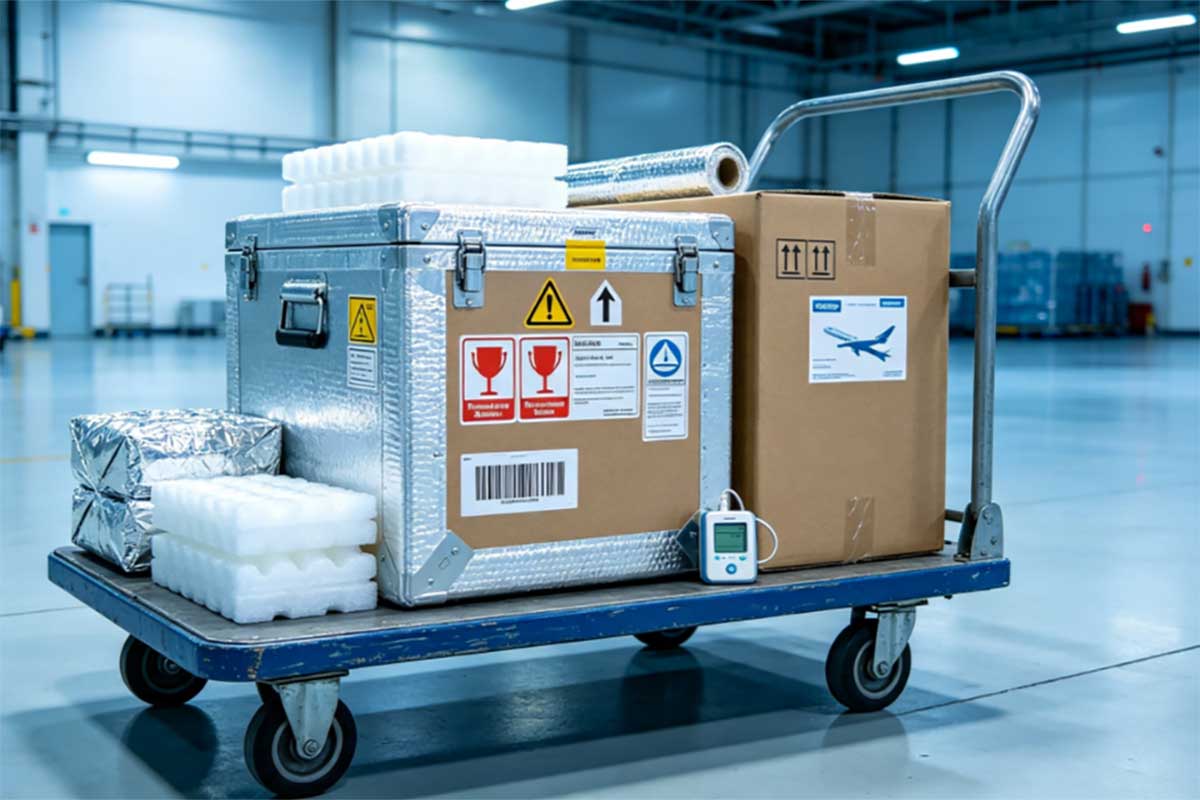
The client's previous understanding of pharmaceutical cold chain was at the level of "using insulated boxes with ice packs." Temperature control during transportation relied mainly on manual experience and judgment, with no systematic temperature records. During summer transportation, temperature fluctuations inside insulated boxes were significant, and there were multiple instances of missing temperature records or temperature excursions after arrival in Hong Kong. The most typical case was when a truckload of drugs requiring cold storage arrived at a Hong Kong pharmaceutical warehouse with no temperature records whatsoever. The warehouse refused to accept the goods according to acceptance specifications, and the goods had to be handled through emergency measures. The client suffered considerable financial losses and reputational pressure as a result (specific product types, batch numbers, and cargo values have been desensitized). Pharmaceutical cold chain is especially testing in summer: in high-temperature weather, every door-opening action from loading to delivery introduces heat, and the refrigerant ratio, pre-cooling of the vehicle compartment, and loading/unloading speed all directly affect the final temperature.
This rejection made the client realize that the core of pharmaceutical cold-chain transportation is "full-process temperature control + full-process traceability," rather than mere insulation measures. For pharmaceutical companies, the investment in cold-chain transportation brings certainty in acceptance pass rates and drug quality. The cargo damage, rework, and loss of customer trust caused by a single rejection far exceed the reasonable cost of cold-chain transportation. The client hoped to cooperate with China-Hong Kong logistics service providers with pharmaceutical cold-chain operation capabilities, to open up a temperature-control compliance chain from the Guangzhou warehouse to the Hong Kong pharmaceutical warehouse, making "controllable temperature, auditable data" a standard practice for every shipment. After early-stage solution alignment and trial runs, the client quickly incorporated the new cold-chain standards into their daily shipping processes.
Key Challenges
- Stringent temperature control standards: Different medications require different temperature zones, and refrigerated and cool-storage products cannot be mixed; Hong Kong pharmaceutical warehouses inspect according to GSP standards, and missing or incomplete temperature records directly result in rejection;
- Limited temperature control methods: The use of foam boxes and ice packs makes it difficult to maintain a stable temperature in summer, coolant ratios rely on experience, and the duration of temperature zone maintenance is limited;
- Long transit times: From pickup in Guangzhou, through cross-border customs clearance to delivery in Hong Kong, the entire process takes several hours; coolant decay during transit and the difficulty in sustaining temperature zones are practical challenges;
- No temperature control reports: Without calibrated temperature recorders, complete, exportable, tamper-proof temperature data cannot be generated, leaving the acceptance stage without evidence;
- Complex compliance coordination: The boundaries of temperature control responsibilities across outbound, in-transit, and inbound stages are unclear; once temperatures exceed limits, responsibility is difficult to determine, affecting handling efficiency;
- Lack of emergency response plans: There is no standard handling procedure when temperature anomalies occur; decisions are often made ad hoc, resulting in slow handling and potential record defects;
- Unclear responsibility attribution: Multiple parties are involved from pickup to warehousing; once temperature exceedance or missing records occur, responsibility is difficult to divide among the cargo owner, logistics provider, and pharmaceutical warehouse, often leading to lengthy resolution cycles.
These challenges compound each other and ultimately manifest as two types of costs: one is the visible cost of rejected goods, damage, and rework; the other is the hidden compliance risk — once temperature record issues occur repeatedly, the client's supplier qualification through the Hong Kong pharmaceutical warehouse channel will be affected. For clients, the latter cost is higher and harder to recover. Pharmaceutical warehouses will significantly tighten their willingness to accept goods from suppliers with repeated temperature control issues, and such channel-level impact is often long-term.
Transport Requirements
- Route: Guangzhou → Hong Kong pharmaceutical warehouse, door-to-door delivery;
- Cargo type: Pharmaceuticals requiring cold storage (typically 2-8°C) and cool storage (typically 15-25°C), loaded in separate vehicles or zones by temperature range;
- Temperature control requirements: Full-journey temperature must be controllable and recordable, with a complete temperature control report provided upon delivery;
- Compliance requirements: In compliance with Hong Kong pharmaceutical warehouse acceptance standards, with clear accountability for in-transit temperature control and coordination with the client's qualification document flow (specific product categories and qualification details redacted);
- Timeliness: Pickup on the same day, arrival in Hong Kong the next day, avoiding prolonged temperature exposure;
- Emergency requirements: Real-time alerts for temperature anomalies, with standardized emergency handling procedures;
- Insurance and records: Temperature control records retained for each cold-chain pharmaceutical shipment, with related handover documents archived for future reference, and full traceability of exception handling throughout the process.
The client's core demand is "compliance + traceability": pharmaceuticals must not only arrive on time, but also arrive in a temperature state that meets acceptance standards, with every shipment documented and verifiable. For a Hong Kong pharmaceutical warehouse, a complete temperature control report serves both as a basis for receiving goods and as part of the warehouse entry archive, directly impacting subsequent quality traceability.
Solution
Bofeng builds pharmaceutical cold chain solutions for clients based on "dedicated cold chain vehicles + full-process temperature monitoring + temperature control reports + compliant handover":
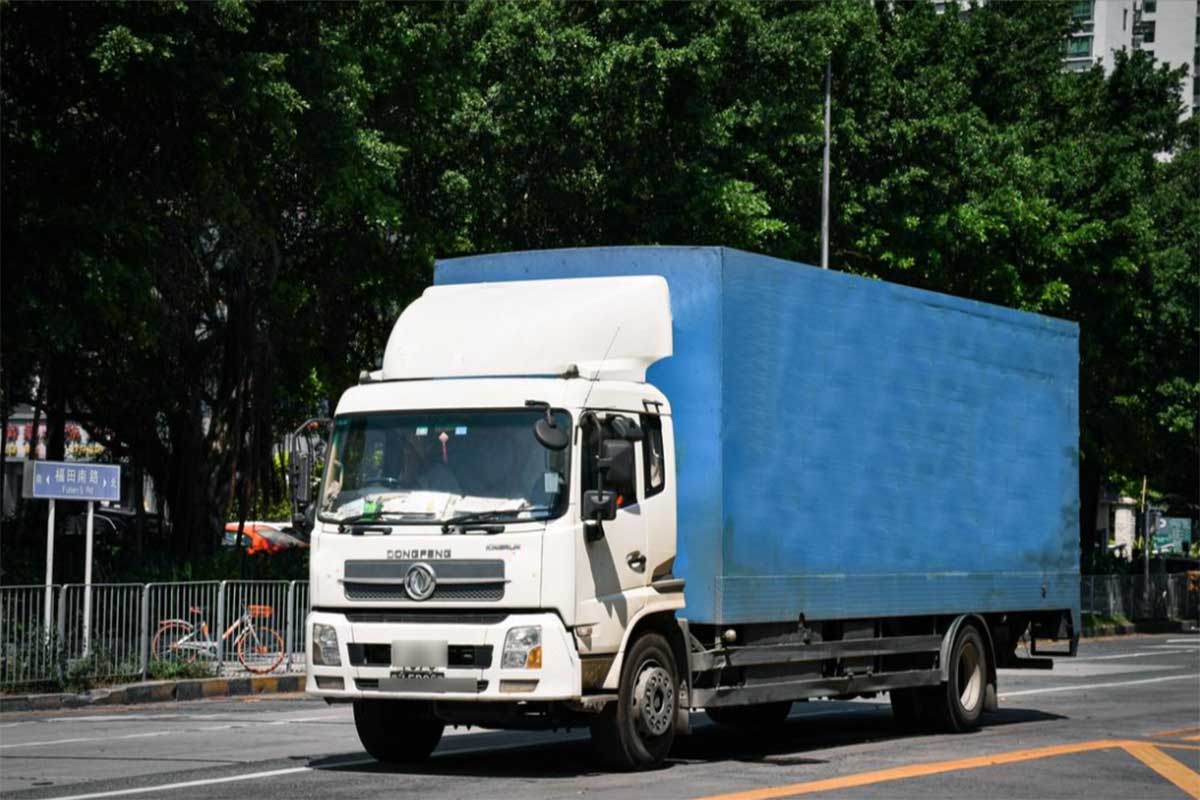
- Cold chain transport configured by temperature zone: Based on the product's temperature zone, refrigerated goods are transported in pre-cooled, qualified refrigerated vehicles, cool-storage goods in temperature-controlled vehicles, and goods requiring cold and warm zones are shipped in separate vehicles to avoid mixed loading; before loading, confirm the compartment is properly pre-cooled, and during loading/unloading operate quickly to minimize door-open time;
- Full-process temperature monitoring: Calibrated temperature recorders are placed with the goods, with the number of probes reasonably configured based on container volume. Temperature is recorded at regular intervals throughout transport. Data can be exported and cannot be tampered with, forming a complete temperature trail;
- Attached temperature control report: Upon delivery at the destination port, a complete temperature control report is attached with the goods, meeting the strict temperature data requirements for acceptance at Hong Kong pharmaceutical warehouses, achieving "one shipment, one report";
- Compliant handover coordination: Assist clients in reviewing temperature control handover points from outbound, in-transit, to inbound, and clarify responsibility boundaries at each stage; in-transit temperature data and handover documents are retained in accordance with regulations, supporting clients in the acceptance process with Hong Kong pharmaceutical warehouses;
- Port and time-efficiency optimization: Select ports with stable customs clearance efficiency, reasonably plan departure times, shorten transit duration, and reduce temperature exposure windows;
- Temperature abnormality emergency response: Real-time monitoring throughout the process; when temperature deviates from the set range, the system issues an alert, and designated personnel follow up promptly (re-establishing temperature control nearby, contacting the pharmaceutical warehouse to coordinate handling). The handling process is truthfully recorded, with nothing concealed or omitted;
- Cold chain operation standards: Implement cold chain operating standards for loading, escort, and handover, keeping records of key operations so that every step meets temperature control and compliance requirements. In summer, an additional pre-loading compartment temperature recheck is added; in winter, attention is given to insulation and moisture protection, adjusting operational details by season to reduce the impact of environmental factors on temperature.
Taking a typical order as an example, the operational rhythm is roughly as follows: on the shipping day, compartment pre-cooling and temperature confirmation are completed in the morning; after loading, the temperature recorder accompanying the goods starts immediately; the vehicle departs from the Guangzhou warehouse at noon, clears customs at the port in the afternoon, and arrives at the Hong Kong pharmaceutical warehouse that evening or the next morning, with a complete temperature control report attached upon handover and inbound. Temperature control data is available for real-time review throughout the process; any deviation triggers a timely alert and follow-up, and handover documents are archived in accordance with regulations.
The core of the solution is to shift from "keeping temperature by experience" to "controlling temperature by standards": how temperature is controlled, how records are kept, and how abnormalities are handled are all executed according to unified standards, making quality replicable and responsibility traceable, so clients can feel confident when facing pharmaceutical warehouse acceptance.
Results
| Metric | Before Cooperation | After Cooperation | Improvement |
|---|---|---|---|
| Temperature control report completeness | Generally missing | Attached to every shipment | Complete traceability |
| Percentage of shipments exceeding temperature limits | About 15% | Below 2% | Significantly reduced |
| First-pass acceptance rate at pharmaceutical warehouse | About 70% | Around 95% | Notably improved |
| Transit time | Baseline | Reduced by about 25% | Reduced temperature exposure |
| Temperature anomaly response | Several hours | Follow-up within 30 minutes | Faster response |
Data Statement: The above are data from this case (as of July 2026), reflecting the performance of individual shipments during the cooperation period with this client, and do not constitute a service guarantee.
After the cooperation began, every shipment of pharmaceuticals to the client comes with a complete temperature control report. The acceptance rate at the Hong Kong pharmaceutical warehouse has improved significantly, and rejections and temperature excursion disputes have been greatly reduced. The standardization of temperature control records gives the client a clear baseline for transport quality, and the pharmaceutical warehouse is also more confident in the quality of arriving goods, thereby enhancing the stability of the supply channel. From a cost perspective, the investment in cold-chain transport has been exchanged for the certainty of "first-pass approval": reducing costs from rejection and rework, lowering communication costs associated with temperature disputes, and preserving trust in the pharmaceutical warehouse channel. This combination of "vehicle allocation by temperature zone + full-process monitoring + temperature control reports + emergency response" is suitable for China-Hong Kong transportation of various temperature-sensitive pharmaceuticals, biological products, and medical devices. Upon contract renewal, the client has made full-process temperature control reports a standard configuration for every delivery and plans to extend the same cold-chain standard to more pharmaceutical clients. For pharmaceutical distribution companies, the stability and traceability of cold-chain logistics are themselves part of compliant operations: only with complete temperature data can they calmly handle regulatory inspections and client audits.
The two parties are now in the second year of cooperation. The data above reflect the performance of temperature control records for each shipment over the past 12 months.
Client Testimonial
"Temperature records are required for medical warehouse acceptance. Previously we couldn't provide them and often got held up. Now every shipment comes with a complete temperature control report, and any temperature excursions are handled promptly by dedicated staff. Acceptance basically passes on the first try, which saves us a lot of trouble."
— Feedback from Bofeng Logistics·Hong Kong logistics dedicated line customer (published with authorization and anonymized)
Need a similar logistics solution? Contact us — a plan within 30 minutes.
Phone:13075678958 | WhatsApp:+86 13075678958 | Email:info@zhbfwl.com
Get a Quote