Client Background
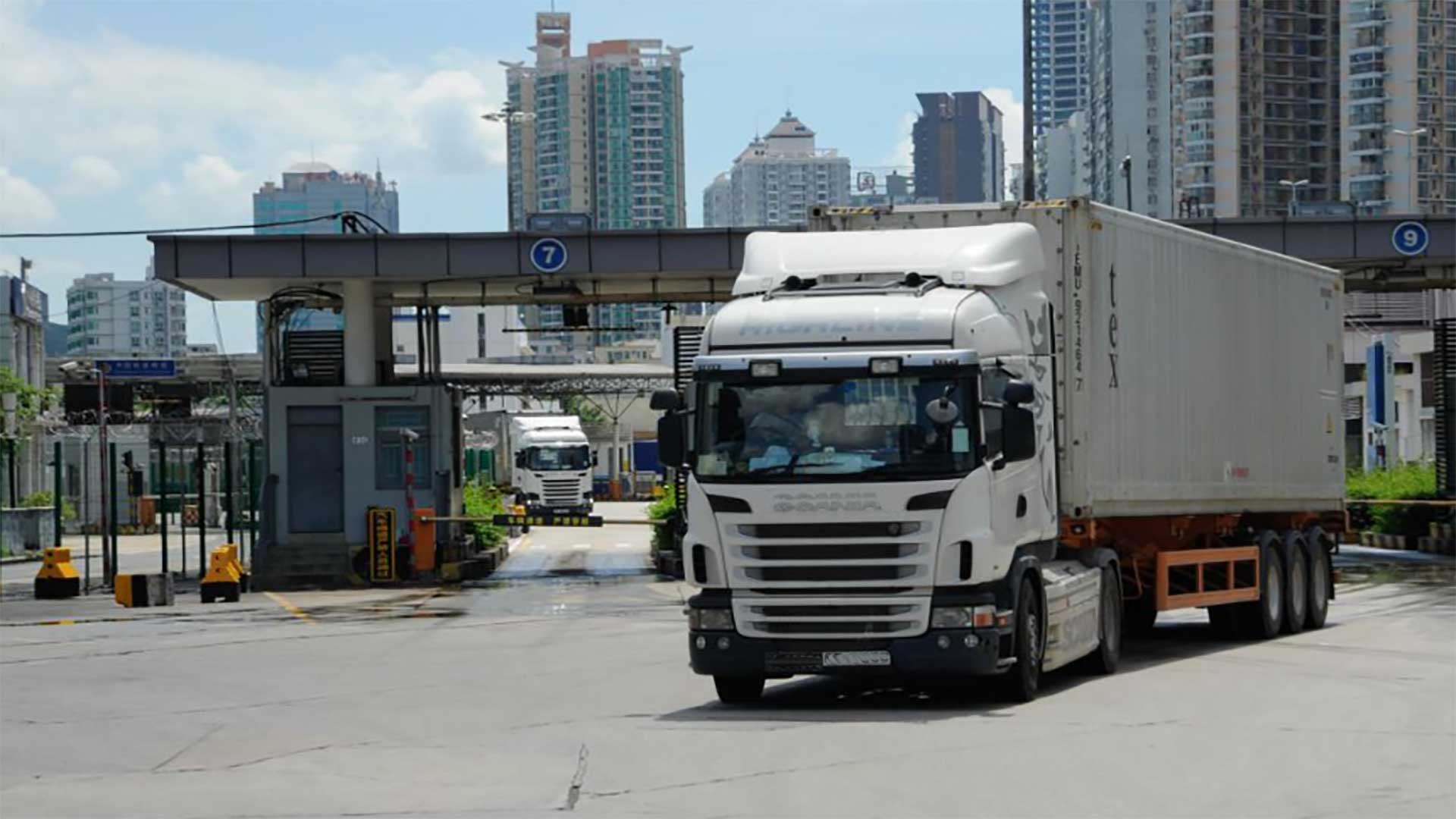
A factory in Dongguan that manufactures equipment, primarily supplying electromechanical equipment for automated production line supporting systems, continuously procures complete machines and core components from overseas for production line upgrades and capacity expansion. The factory is located at the junction between downtown Dongguan and Shenzhen, and its production facility has clear scheduling requirements for equipment arrival times. Most of the equipment is sourced from Europe, Japan, and South Korea, and suppliers habitually choose Hong Kong International Airport as the air freight hub — with its high international flight frequency and extensive route network, cargo arriving there is then transported into the mainland via cross-border vehicles with dual-plate (Hong Kong and mainland) registration, a common import path for enterprises in the Pearl River Delta region.
The customer's import business is not a weekly occurrence; it follows a "project-based, irregular" rhythm: when a new production line is approved, there is a concentrated round of procurement, while at ordinary times only sporadic spare parts and wear parts are replenished. For this reason, the customer has no dedicated mainland customs affairs team, and has long relied on third parties for import declaration and documentation preparation. When inspection or other irregularities occur, the enterprise lacks internal experience in handling them, and the processing cycle tends to be prolonged. The equipment being procured is subject to a wide range of regulatory conditions, and different equipment categories have different requirements for declaration elements and regulatory certificates. Whether the documentation is properly prepared directly determines whether customs clearance goes smoothly.
For a factory like this, the core of import logistics is not "shipping fast" but "clearing smoothly": whether the equipment can be installed into the production line on time directly determines the project schedule, and for every day the equipment arrives late, the cost of idle production line time accumulates. There is a fundamental difference between the import and export directions — in exports, the initiative lies with the shipper, whereas imports must simultaneously face two hurdles: pickup in Hong Kong and supervision by mainland customs. If either link is held up, the entire shipment is stranded at the airport or the port, and the time cost becomes completely uncontrollable. Over the past two years, the customer has switched between two China–Hong Kong logistics providers and always felt that "something was missing": freight charges were not a major issue, but every import felt like fighting a battle without a plan — until one inspection-related detention finally prompted management to make up its mind to restructure the overall arrangement of import logistics.
Key Challenges
The client's previous import process involved three separate parties—the freight forwarder, the customs broker, and the transport company—each handling only their own segment, which fragmented the workflow. The problems centered on four areas:
- Multiple points of contact for Hong Kong pickup: After the equipment arrived at the port, the airline, ground handler, and Hong Kong customs broker each had their own contact channels. The client had to confirm arrival notices, pickup documents, and storage status with each one individually—a single pickup could require over a dozen phone calls to verify information, and one small slip could mean missing the free storage period;
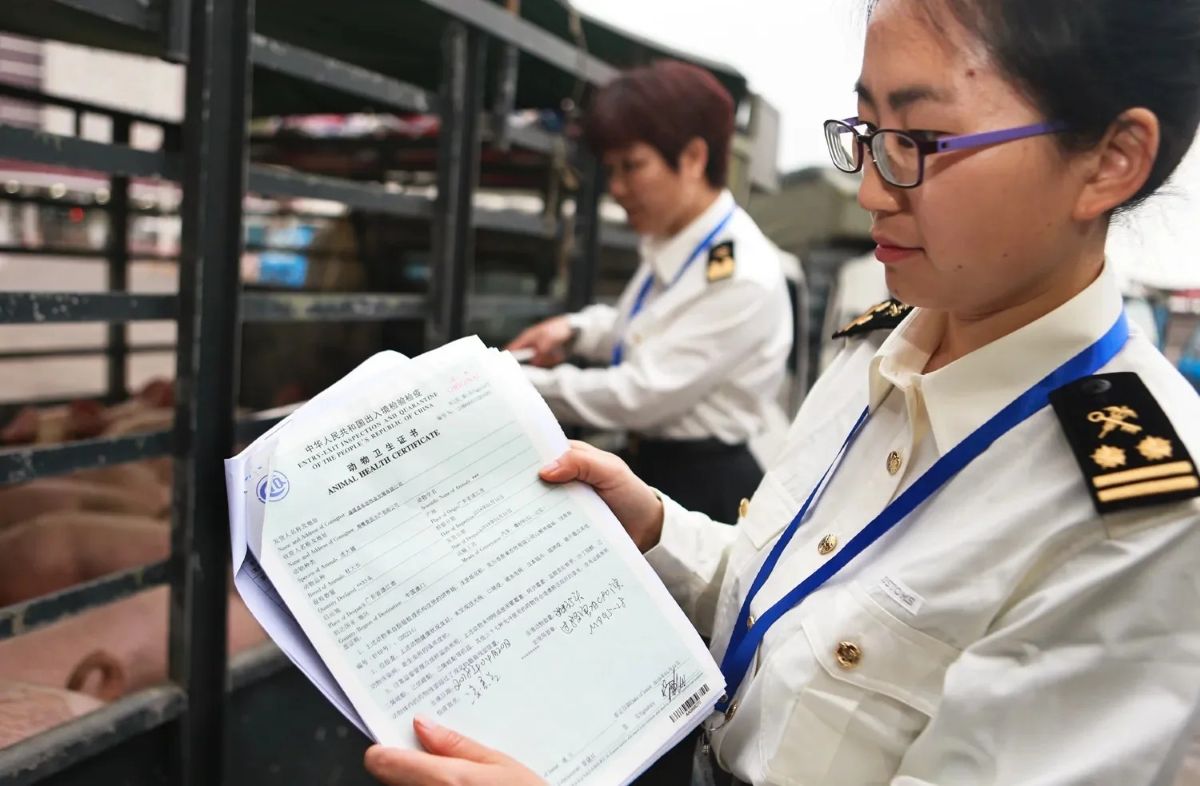
- Insufficient front-end risk management for import declarations: Importing electromechanical equipment involves many regulatory requirements, such as automatic import licenses, certificates of origin, and consistency between the declared brand/model and the actual goods. Without pre-declaration review, whether the paperwork was complete or the declaration elements were correct was left to on-site trial and error, so mismatches between declared elements and the actual goods occurred from time to time;
- No contingency plan for customs inspection: Mainland customs inspection is an unpredictable factor in the import process. Once goods were flagged for inspection, supplemental documents, amendments, and re-declarations were needed. If no one systematically followed up on the resolution track, the goods could be held for days, forcing delays in production scheduling and leaving the factory anxious on both ends;
- Weak coordination for unloading at the factory: Imported equipment typically needs to be placed in position upon arrival. Under the old model, there was no standardized unloading coordination when the truck arrived—lifting, positioning, and inventorying all had to be arranged by the factory itself. Equipment could be unloaded at the factory gate but then sit there for a long time before being moved into the workshop, and the extra handling increased the risk of cargo damage.
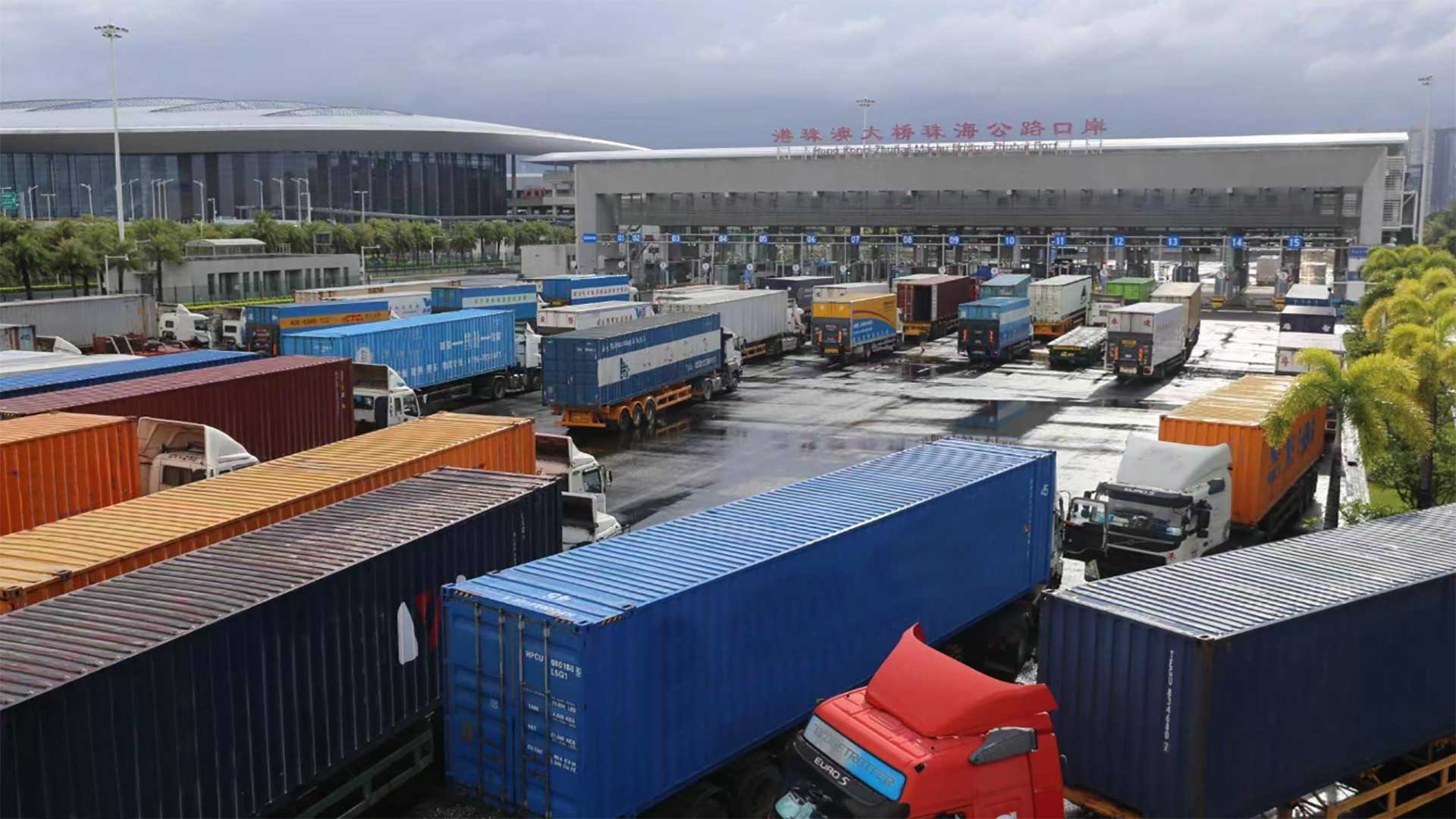
What the client remembers most vividly was a batch of equipment from last year: a consignment of electromechanical equipment air-freighted from Europe to Hong Kong Airport, then carried by cross-border trucks to a mainland port for import declaration. Because the model on the equipment nameplate did not match the declared information, customs detained it for inspection. All three parties followed up separately with no information sharing, so the goods remained stuck at the port. The client could neither explain where it was held up nor get a clear timeline. That crisis became the direct starting point for handling this cooperation, and it was precisely that emergency response that led the client to reassess the overall import logistics arrangements and realize that "being able to save the day" matters more than "being able to quote a price."
Transport Requirements
- Route: Hong Kong Airport → Dongguan factory, door-to-door delivery, including Hong Kong pickup, import customs clearance, and mainland customs declaration;
- Cargo Volume: 1-3 pallets / flat rack containers per batch, individual pieces ranging from 200kg to 3 tons, shipped irregularly according to project schedule;
- Timeliness: Within 2-3 working days after equipment arrives at port, complete pickup, customs clearance, and delivery to the factory; abnormal situations such as inspections shall be handled per emergency response plans;
- Documentation Requirements: Import declaration documents such as certificate of origin, packing list, invoice, and equipment model/specification descriptions must be prepared in advance and pre-reviewed for each shipment;
- Special Requirements: Electromechanical equipment requires moisture-proof and shock-proof packaging; upon arrival at the factory, unload and position at designated workstations, including advance coordination for heavy-lift hoisting;
- Billing Method: Flat rate per shipment, covering the entire chain including Hong Kong pickup, import customs clearance, mainland customs declaration, transportation, and unloading at the factory, with a single invoice itemized line by line.
Solution
Bofeng takes "one-stop import clearance + inspection emergency remedy" as its main line, establishing a replicable import process for clients, standardizing both "transportation" and "remedy":
- Standardized Hong Kong airport pickup: Before equipment arrives at the port, prepare pickup documents in advance based on the airline's arrival notice, confirm storage and pickup times to avoid extra costs from cargo remaining in airport storage; check the piece count and outer packaging condition at pickup, photograph any anomalies on site as evidence, and keep handover responsibilities clear;
- Import declaration pre-review mechanism: Before equipment departs from Hong Kong, pre-review declaration elements such as invoices, packing lists, certificates of origin, model specifications, and other details; identify goods requiring automatic import licenses, 3C certification, or regulatory documents, and remind clients to prepare in advance, turning "on-site trial and error" into "advance verification," reducing the probability of declaration discrepancies from the source;
- Inspection emergency remedy process (the core of this crisis handling):
- Step 1 Rapid location: After goods are detained for inspection, promptly work with the client to confirm the detention reason — in this case, the equipment nameplate model did not match the declared model, a discrepancy between declaration elements and the actual goods;
- Step 2 Document supplementation: Assist the client in obtaining the equipment model specification manual and factory qualification certificate from the supplier, confirm the actual received model, complete the documents corresponding to the actual goods, and clarify "what the goods are, what the documents are, and where the difference lies";
- Step 3 Declaration amendment and re-declaration: Based on the verified model information, apply to customs to amend the declaration elements and re-declare, tracking the processing progress throughout to avoid the idle cycle of "changing one step, waiting one round";
- Step 4 Coordinated release: Maintain communication with the inspection department, cooperate with on-site verification per regulatory requirements, promptly arrange vehicle pickup and customs exit after release, seamlessly connect with mainland transport, and prevent goods from continuing to remain in storage after release;
- Factory arrival unloading and positioning: Vehicles arrive at the factory at the scheduled time, cooperate with crane positioning at the factory-designated workstation, and conduct item-by-item count and sign-off after unloading; for equipment requiring professional rigging, coordinate unloading tools and personnel in advance to achieve one-time positioning without secondary handling;
- Exception notification and responsibility interface: Throughout all nodes, synchronize progress with the client; when anomalies occur, clearly state the cause, handling path, and estimated time, so the client always knows "where the goods are, why they stopped, and what happens next," without having to call around to ask.
The starting point of the solution design is to manage the two things in import logistics that are most prone to going out of control — declaration and inspection — through "advance pre-review + in-process contingency plans." Inspection is not frightening; what is frightening is that after inspection, no one follows up systematically, leaving goods idling in the regulatory stage. The value of the remedy process lies precisely in turning "unknown waiting" into "path-driven progress."
Results
| Indicator | Before Cooperation | After Cooperation | Improvement |
|---|---|---|---|
| Hong Kong pickup coordination | Phone confirmation one by one | One-time assignment, unified follow-up | Coordination manpower reduced by about 60% |
| Import declaration first-pass rate | About 70% | Over 90% | Advance pre-review of declarations |
| Inspection processing cycle | Longest detention of nearly one week | Released within 2 working days after document supplementation, amendment, and re-declaration | Cycle significantly shortened |
| Equipment arrival time at plant | 5-7 days after arrival at port | 2-3 working days | Average reduction of more than half |
| Unloading rework at plant | Occasional secondary handling | Completed in place at the workstation in one step | Rework significantly reduced |
Data Statement: The above is data from this case (as of July 2026), reflecting the specific performance of this customer during the cooperation period and does not constitute a service commitment.
After the cooperation began, the customer institutionalized "declaration pre-review" and "inspection contingency plan" as standard procedures. The batch of equipment that had been detained was smoothly released after document supplementation, amendment, and re-declaration, and the first-pass rate of subsequent import batches improved significantly. For the customer, the most direct change was "having someone to back you up": previously, when inspection occurred, they could only wait helplessly; now, from identifying the problem to supplementing documents and re-declaring, every step has a clear point of contact and processing deadline, and management no longer needs to make repeated calls asking "which stage is the shipment stuck at?" Equipment arrives on schedule, production line scheduling is no longer repeatedly interrupted by the import process, and the import logistics budget has shifted from "uncontrollable unexpected expenditure" to "predictable fixed cost." The customer later proactively institutionalized Bofeng's model as the default process for imported equipment, synchronizing procurement plans in advance when new projects are initiated, further advancing the pre-review window, and keeping risks ahead of declaration.
This case shows that the value of import logistics management lies not only in "transportation" but also in "rescue": a remediation mechanism capable of handling unexpected situations such as inspections is often more worth investing in than a single low freight rate. For enterprises that also rely on the Hong Kong hub for importing equipment, doing document pre-review and exception contingency planning in advance is more reassuring than coordinating at the last minute after problems arise. The uncertainty in the import process cannot be eradicated, but its impact on the production line can be compressed to a very small level through process design.
The two parties' cooperation has entered its second year, and the above data are case records of irregular import shipments during the cooperation period.
Client Testimonial
"Last year when our equipment was detained for inspection, we were truly at a loss. After making a round of phone calls, no one could give a clear timeline, and the production line was waiting day after day. After Bofeng took over, from verifying the model, supplementing documents to revising the declaration and resubmitting, every step was advanced clearly, the equipment was released smoothly, and the production line was not delayed for too long. Now we use this process for all imported equipment, and we have people keeping an eye on the declaration and inspection in advance, which makes us feel much more at ease."
— Customer feedback for Bofeng Logistics · Hong Kong Logistics Dedicated Line (published with authorization and desensitized)
Need a similar logistics solution? Contact us — a plan within 30 minutes.
Phone:13075678958 | WhatsApp:+86 13075678958 | Email:info@zhbfwl.com
Get a Quote