Client Background
A clothing enterprise in Zhongshan specializes in the design and production of knit and woven apparel. The Hong Kong market is its key retail channel, with multiple directly operated stores and brand counters across Hong Kong Island, Kowloon, and the New Territories. The company operates a "produced in Zhongshan, sold in Hong Kong" model: production is based in Zhongshan, while sales outlets are in Hong Kong, requiring a logistics system that can support the entire chain of "production—warehousing—replenishment—stores." The core of apparel retail is "speed" and "accuracy"—fast style updates, many SKUs, and strong seasonality. Out-of-stock sizes in stores mean lost sales opportunities, while excess inventory ties up capital; both need to be balanced through the warehousing and distribution system.
Previously, the customer rented a standalone warehouse in Hong Kong to store ready-made garments shipped from Zhongshan, and then replenished stores according to demand. Under the old model, warehousing and transportation were separated: one logistics provider handled the Zhongshan-to-Hong Kong transport, the Hong Kong warehouse was self-managed, store replenishment was outsourced to a local delivery service, and returns were handled separately. Warehouse rent, transportation, warehousing management, and last-mile delivery were each accounted for independently. While each segment appeared to have a supplier, no single party was truly accountable for "overall inventory efficiency." Apparel is a seasonal product; seasonal clearance, hot-item replenishment, and slow-moving product returns are highly time-sensitive. If any link in the chain underperforms, it ultimately shows up on the store shelves.
The rhythm of apparel retail follows a distinct seasonal cycle: seasonal transitions are the peak periods for new product launches and clearance sales; hot-selling items often have a lifecycle of only a few weeks from launch to decline; and stores also transfer stock among themselves based on sales performance. These all place the same demand on the supply chain—stock in the warehouse must be "visible and movable," and store shelves must be "replenishable and never out of sizes." The Hong Kong warehouse, being close to the stores and capable of same-day response, is a key link in supporting store replenishment timeliness—but only if warehousing and transportation operate in coordination, which is exactly what was most lacking under the customer's previous separated model.
As the number of stores increased and SKUs expanded, the customer found that inventory turnover was slowing, hot-item replenishment was getting slower, and returns were becoming more chaotic. Management realized that the problem was not in any single link, but in the coordination of the entire supply chain. They therefore decided to bundle "warehousing" and "transportation" together and hand them to a service provider capable of unified scheduling of China-Hong Kong transportation and Hong Kong warehousing and distribution, using one system to manage the complete chain from the Zhongshan factory to all Hong Kong stores.
Key Challenges
- Unstable replenishment lead times: The shipping schedule from Zhongshan to Hong Kong is irregular. Replenishment requests submitted by stores in the afternoon often wait until the next day or even the third day to arrive. The stockout period for best-selling sizes is extended, and sales windows are lost right before their eyes.
- Out-of-sync inventory data: Warehouse stock, in-transit quantities, and store sales are recorded separately in three tables. The enterprise cannot know in real time "how much stock there is and where it is." Replenishment decisions rely on experience and gut instinct, resulting in the strange coexistence of overstocked styles and out-of-stock styles.
- Chaotic return flow: Slow-moving or defective items in stores need to be returned to the warehouse for reprocessing. Under the old model, return batches are scattered and paperwork is unclear. After arriving back at the warehouse, they sit piled in corners for a long time, taking up storage capacity and dragging down secondary sales. Slow-moving items miss the window for handling before the seasonal transition.
- Disconnection between warehousing and distribution: The warehouse only handles storage, and the delivery party only handles shipping. The handover responsibility for goods from the warehouse to the store is vague. Occasional wrong or missing shipments cause stores and warehouses to shift blame, leading to repeated disputes.
The ultimate cost of these challenges is capital turnover efficiency: apparel is a seasonal product. If an item sits in a warehouse for an extra month, it means a sum of capital is tied up for an extra month, and missing a seasonal transition window can turn it into slow-moving inventory. For customers, inventory turnover rate better reflects the health of the logistics system than the cost of a single shipment. In addition, during peak season, store sales are concentrated and replenishment volumes double. Under the old model, tight transport capacity and conflicting delivery schedules further amplify the above problems.
Transport Requirements
- Route: Zhongshan factory → Hong Kong warehouse (consolidated trucking into warehouse) → all Hong Kong stores (JIT replenishment), including return flow;
- Volume: 2-3 consolidated trucking trips per week into warehouse, 3-5 pallets per trip; store replenishment 1-2 trips daily, 5-30 pieces per store;
- Lead time: T+1 arrival at Hong Kong warehouse after departure from Zhongshan; store replenishment orders placed same day, delivered next day; hot items expedited same-day delivery;
- Inventory management: Warehouse storage zoned by SKU, first-in, first-out, regular stocktaking, inventory data synced with customer system;
- Special requirements: Garments need moisture-proof and stain-proof storage, hanging and folded items in separate zones; returns individually registered, sorted and put back in place; when replenishment volume doubles during peak season, maintain stable delivery times;
- Billing method: Storage billed by storage location, delivery billed by shipment, integrated quote to avoid hidden costs from separate warehouse, transport, and distribution accounting.
Solution
Bo Feng provides customers with an integrated solution of “shared trucking to warehouse + Hong Kong warehouse management + JIT replenishment + return flow,” turning “warehousing,” “transportation,” and “distribution” into one chain:
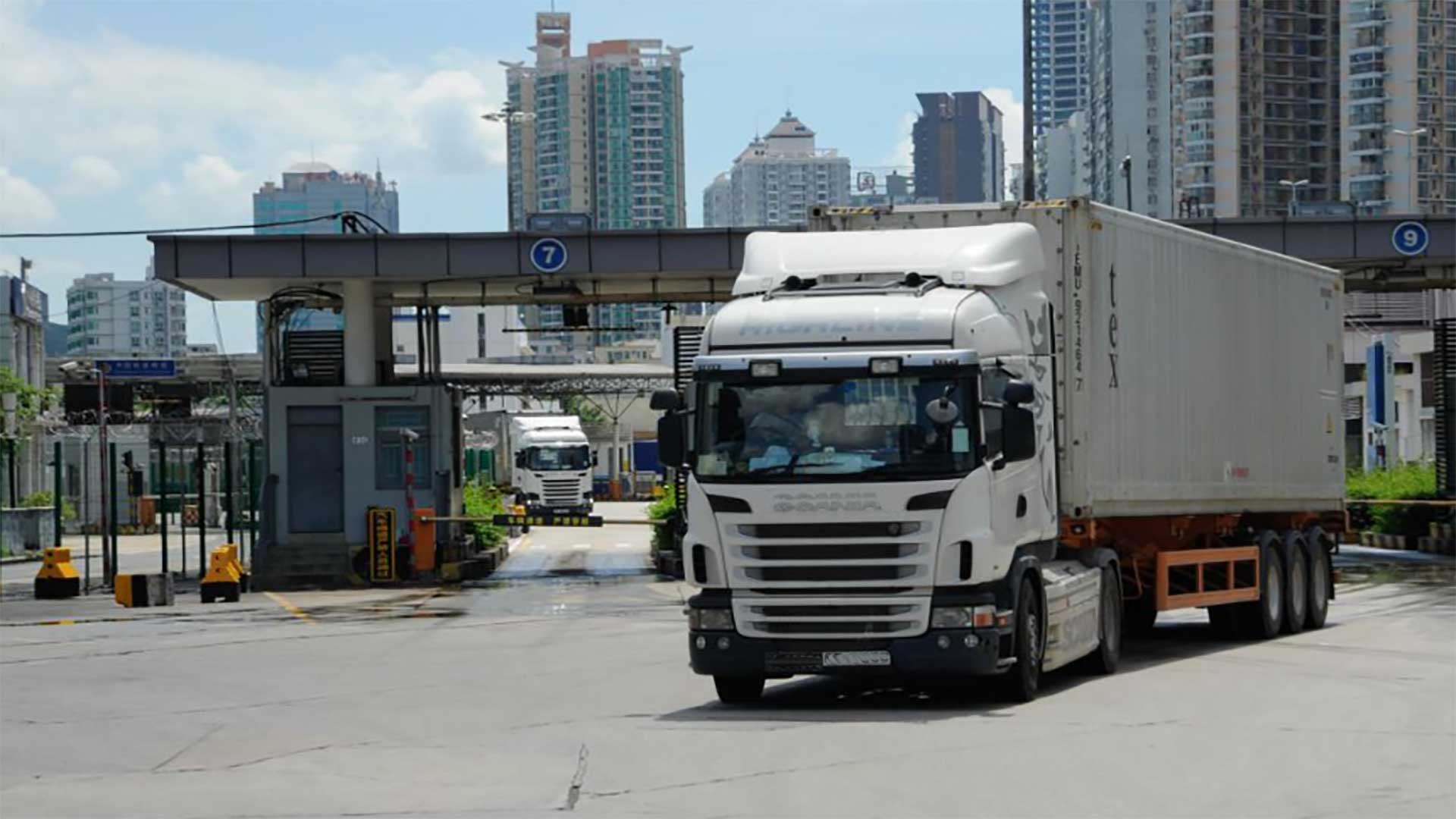
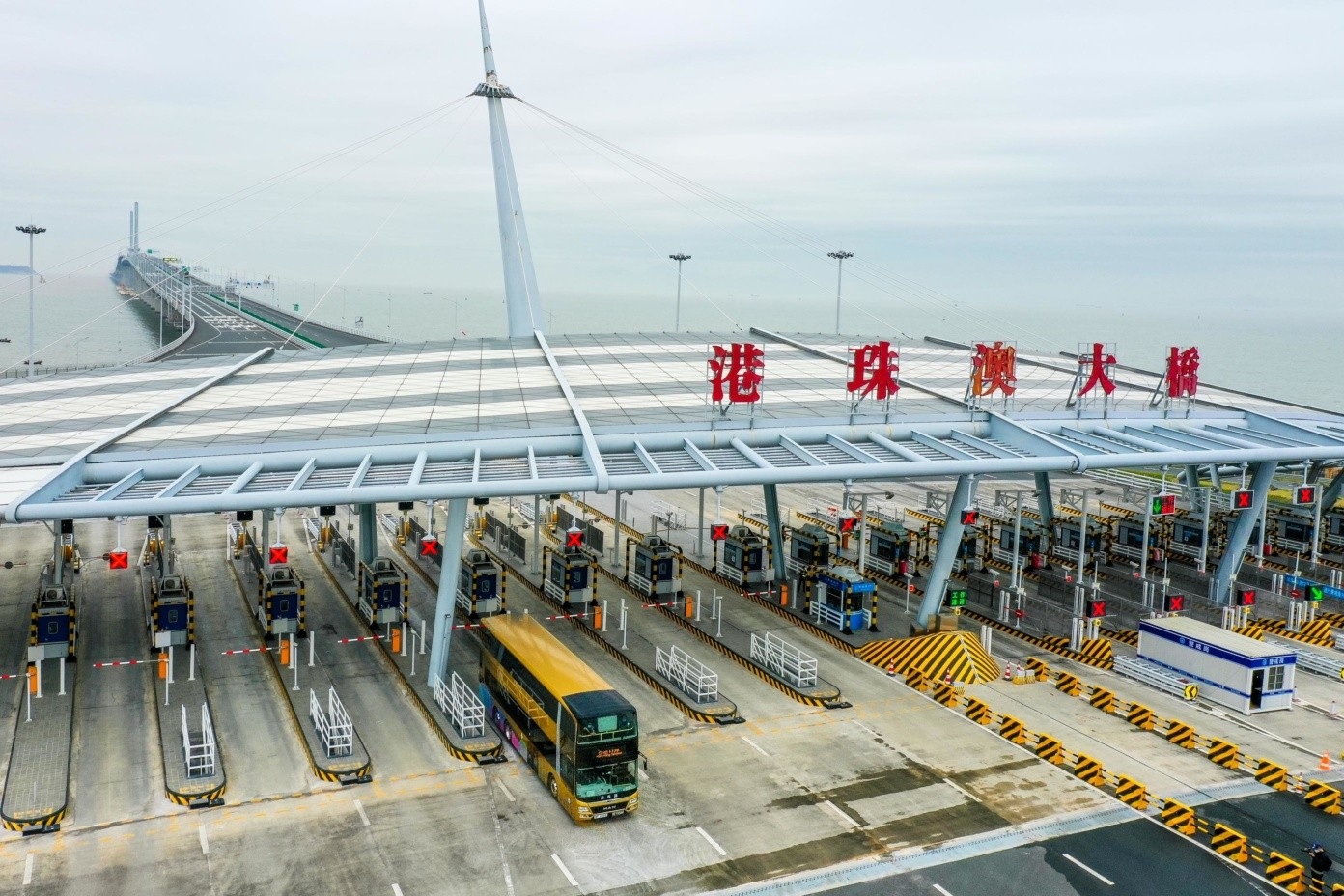
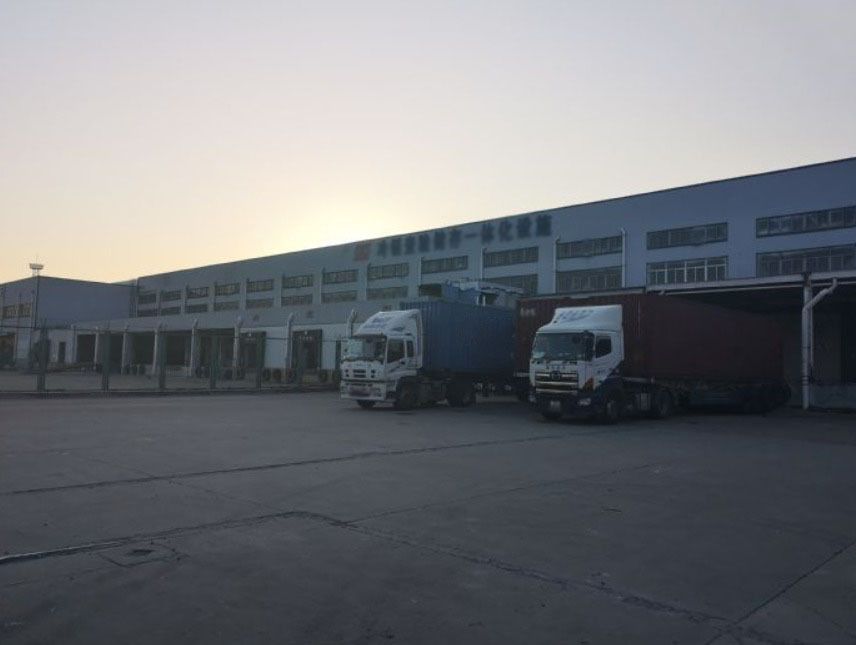
- Zhongshan scheduled shared trucking to warehouse: 2–3 cross-border shared truck trips per week, picking up goods from the Zhongshan factory and entering Hong Kong via Shenzhen Bay Port. Bulk shared trucking spreads out per-shipment costs, and the fixed warehouse entry time allows the Hong Kong warehouse to reserve storage locations and manpower in advance. Goods are unloaded and counted immediately upon arrival—no waiting for trucks, no delaying warehouse intake;
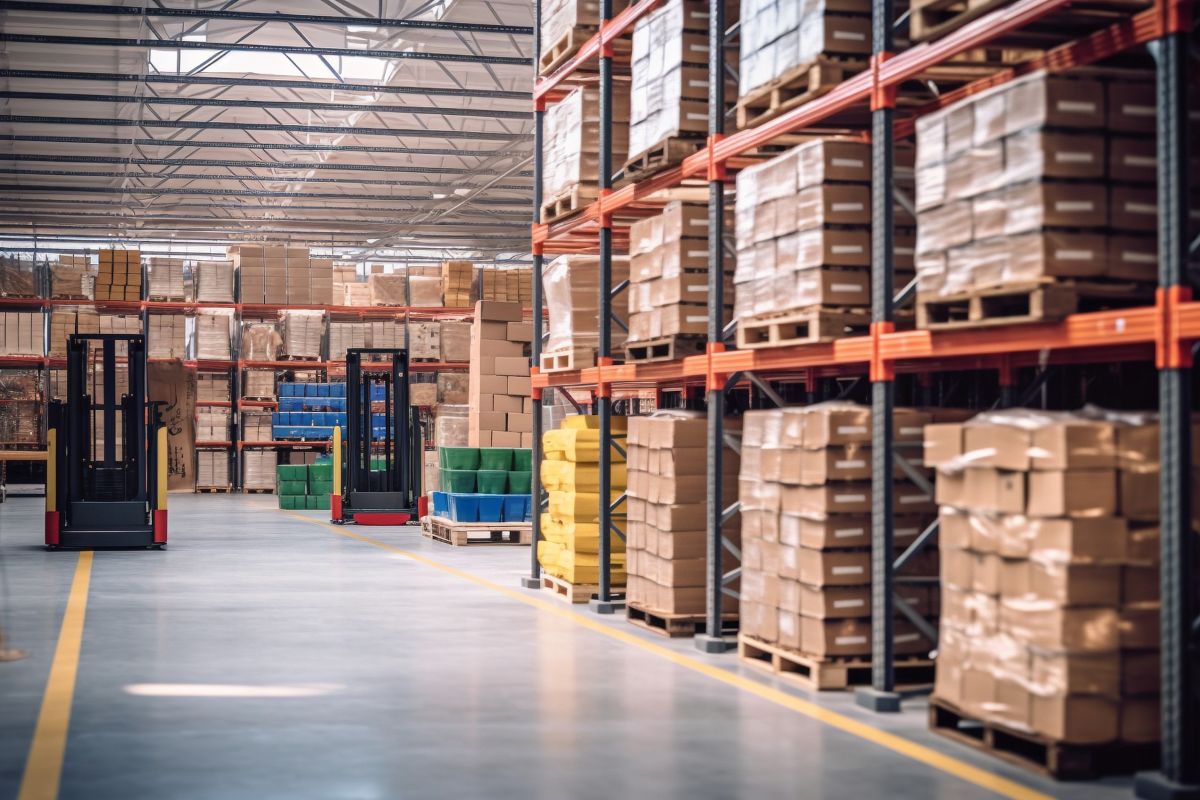
- Hong Kong warehouse inventory management: Goods are stored in zones by SKU code, with hanging and folded items separated, and operations follow the first-in, first-out principle. Regular stocktakes are conducted and inventory data is synced with the customer’s system, so the customer can check three figures at any time—“how much is in the warehouse, how much is in transit, and how much has reached stores.” Stocking up shifts from relying on experience to relying on data;
- JIT replenishment to stores: Stores order the same day, the warehouse picks goods that evening, and delivery to all Hong Kong stores is completed the next day. Best-selling items have safety stock thresholds set, and replenishment reminders are triggered automatically when stock falls below the threshold. Hot-selling urgent items get priority picking and priority delivery, catching the same-day sales window;
- Return flow and repositioning: Store returns are registered and brought into the warehouse by batch, then sorted into three categories—“resellable / needs repair / dispose of as inventory”—to shorten how long returns stay in the warehouse, let slow-moving goods enter secondary sales or disposal channels as soon as possible, and digest inventory before the season-change window;
- Peak season capacity plan: During season changes and promotional peaks, replenishment volumes double. Cross-border truck capacity and Hong Kong local delivery resources are locked in advance, keeping store replenishment lead times stable in peak season without letting high volumes cause a letdown;
- Unified reconciliation and clear responsibility interface: Warehousing, transportation, delivery, and returns are quoted as one package and reconciled on one invoice. Responsibility for each link is clear, and the customer only needs to deal with one window. Month-end reconciliation changes from “piecing together multiple bills” to “one list gets it done”;
- Hong Kong-wide delivery route planning: The Hong Kong warehouse arranges routes by Hong Kong Island, Kowloon, and the New Territories, sequencing deliveries according to store business hours and receiving windows. Stores in popular business districts receive priority delivery, reducing empty runs and waiting time. Replenishment for each store is handed over one by one with signed proof, and delivery timeliness and inventory data are visible on the same dashboard.
The core of the solution is to let data flow within one system: goods from Zhongshan enter the warehouse on schedule, goods in the warehouse leave to stores according to demand, and returns flow back according to rules. Every step has a clearly responsible party and queryable records. For the customer, logistics changes from “three separate accounts” into “one predictable chain.” Replenishment, returns, and stocktakes all become standard procedures rather than troubles requiring ad-hoc coordination every time.
Results
| Indicator | Separate Warehousing & Transport (Before Cooperation) | Integrated (After Cooperation) | Improvement |
|---|---|---|---|
| Store replenishment timeliness | Next day to 2 days, unpredictable | Order today, arrive next day | Stable and predictable |
| Inventory turnover rate | Baseline | Improved by ~30% | Clearly faster turnover |
| Best-seller out-of-stock rate | About 12% | Below 5% | Significant drop |
| Returns stuck in warehouse | Average over 2 weeks | Sorted and restored within one week | Cycle time cut in half |
| Overall logistics cost | Separate billing for warehousing, transport, and delivery | Integrated pricing | Lower overall cost |
Data Statement: The above is case data (as of July 2026), reflecting the performance of this specific case during the cooperation period, and does not constitute a service commitment.
After the cooperation, store replenishment shifted from "based on shifts" to "based on demand": the out-of-stock rate for best-sellers dropped significantly, hot-product replenishment can now catch the sales window, and inventory turnover increased by about 30%, freeing up more usable capital with the same volume of goods. The return flow was also streamlined — slow-moving items that previously piled up in warehouse corners are now sorted and processed in time, warehouse capacity utilization improved, and the window for second-sale opportunities before the season change has reopened. For management, the most intuitive change is "seeing is believing": a single table shows the three numbers of in-warehouse, in-transit, and at-store status at a glance, and stock planning has shifted from gut feeling to data-driven decisions, providing a solid basis for seasonal stocking and promotion forecasting. When the client renewed the contract, they also included the peak-season contingency plan in the long-term cooperation scope and plan to extend the same model to the supply plan of their Macau stores, allowing one supply chain to serve two markets.
This case shows that logistics problems in clothing retail are often not "which segment is slow," but rather "there is no connection between segments." Unifying warehousing and transport, letting data flow within the same system, the combination of China-Hong Kong consolidated trucking + Hong Kong warehouse + Hong Kong-wide delivery can fully support retailers' requirements for "speed" and "accuracy." For retail companies that likewise produce on the mainland and sell in Hong Kong, this integrated model is worth using as a reference starting point for supply chain integration.
Another change brought by this solution is that the accounts are clearer: previously warehouse rental, transportation, and delivery were quoted separately, with hidden costs buried in the books, and management couldn't see where the money was going. After integration, warehousing and delivery are priced uniformly and traceable shipment by shipment, making the cost structure clear at a glance and providing a basis for next year's budget and supply chain planning. Store sales data, inventory data, and logistics cost data are gradually connected, and when the client makes decisions between "stock up more" or "replenish more," they now have data to support them, rather than relying solely on peak-season experience.
The two sides have entered the second year of cooperation, and the above figures are case records of continuous shipping and store replenishment during the cooperation period.
Client Testimonial
"In the past, warehousing was warehousing, transport was transport, accounts were kept separately, and finding out where goods were meant making phone calls; restocking was a matter of luck. Now everything is clear at a glance on a single spreadsheet. Stores place orders in the morning, goods are picked by the afternoon, and they arrive in-store the next day. Popular styles no longer risk size shortages. Returns are also better managed, finally freeing up warehouse space for new stock, and seasonal clearance has become far smoother than before."
— Customer feedback for Bofeng Logistics · Hong Kong Logistics Dedicated Line (published with authorization and anonymized)
Need a similar logistics solution? Contact us — a plan within 30 minutes.
Phone:13075678958 | WhatsApp:+86 13075678958 | Email:info@zhbfwl.com
Get a Quote