Client Background
A manufacturing group has set up multiple production bases in western and northern Guangdong, with one factory each in Jiangmen, Yangjiang, Maoming, and Shaoguan, producing different types of components and finished products such as household appliances, hardware fittings, and packaging materials. Ultimately, all goods are consolidated into a single transit warehouse in Hong Kong, which receives and verifies them, sorts them according to customer orders, and then dispatches them to local channels or onward to overseas markets. The group's sales focus is on Hong Kong, Macau, and Southeast Asia, and the Hong Kong transit warehouse is responsible for centralized receiving, quality inspection, and break-bulk distribution. Whether each base's goods arrive at the Hong Kong warehouse "on time, complete, and as planned" therefore directly determines the pace of the entire supply chain.
In the past, each base acted independently: the Jiangmen factory contacted logistics providers in Jiangmen, the Yangjiang factory found freight forwarders in Yangjiang, the Maoming factory used consolidation resources in Maoming, and the Shaoguan factory relied on its local fleet. With four sets of logistics, four sets of bills, and four sets of reconciliation standards, the group's logistics department had to spend a large amount of time each month consolidating delivery records from four suppliers just to determine whether each factory was shipping on time and whether costs were reasonable. The head of the logistics department described this state as "four isolated islands" — each factory only knew about its own goods without seeing the bigger picture, and coordinating a consolidated shipment required many phone calls and messages, making efficiency very low. Logistics resources in western and northern Guangdong were relatively fragmented: the shipment volume from any single city was small, the unit price for consolidation was on the high side, and transit times fluctuated with the daily cargo volume.
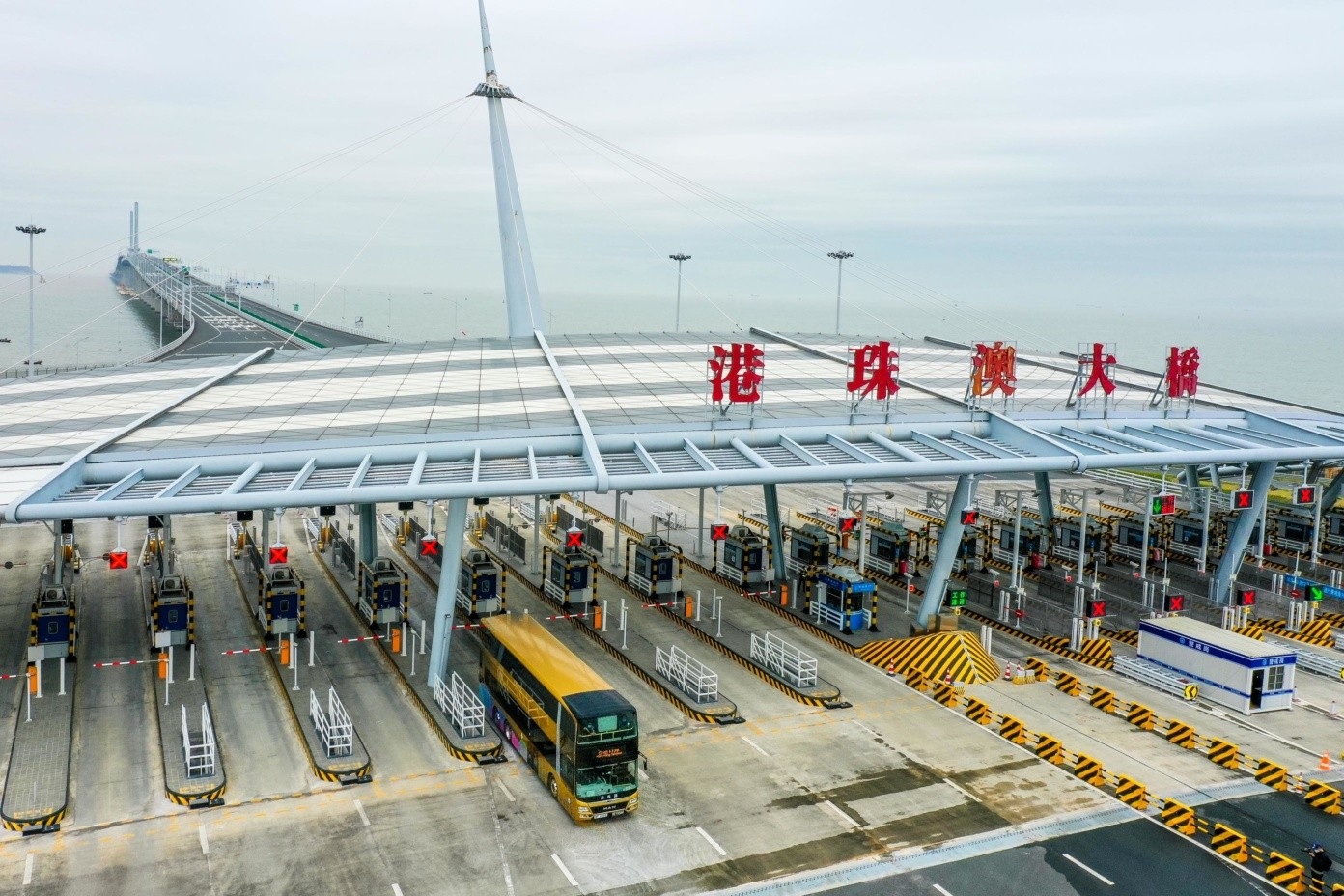
What drew the group's attention even more was the Zhuhai link. Although the four bases were located in western and northern Guangdong, they all shared a common shortcut: converging via the expressway into Zhuhai, then reaching Hong Kong directly over the Hong Kong–Zhuhai–Macau Bridge. The Hong Kong–Zhuhai–Macau Bridge is the core passageway from the west bank of the Pearl River to Hong Kong, with 24-hour customs clearance. The drive from Zhuhai to Hong Kong takes about 40 minutes, significantly shorter than detouring through traditional ports. However, the existing logistics providers had no corresponding route arrangements, so goods from western Guangdong still habitually detoured through Shenzhen Bay Port, resulting in longer driving distances and frequent peak traffic, making delivery times highly unreliable. The group realized that the problem was not the goods themselves, but "how the four bases could be coordinated through Zhuhai as one integrated whole."
Key Challenges
The problems under the old model are concentrated in five areas:
- Inconsistent shipping rhythm: Each of the four bases has its own cutoff time, and the Hong Kong warehouse cannot predict how many batches of goods will arrive that day or at what times, so the receiving area often experiences idle waiting or congestion, making it difficult to arrange loading and unloading staff. A batch of finished goods from the Jiangmen factory was rushed for shipment before the holiday, but the local logistics provider temporarily reassigned vehicles, causing a delay, and the goods missed that day's departure. To wait for this batch, the Hong Kong warehouse postponed the entire next morning's receiving schedule, disrupting the whole sorting process.
- Poor transit time due to detours in Western Guangdong: Goods from Western Guangdong routinely detour through traditional ports such as Shenzhen Bay, resulting in long driving distances and frequent peak traffic, making it the least stable of all bases in terms of transit time. After the opening of the Hong Kong-Zhuhai-Macao Bridge, the driving distance from Zhuhai to Hong Kong was significantly shortened, but the original logistics provider had no corresponding route, so Western Guangdong goods were slow to use this faster corridor.
- Unstable consolidated shipping transit time: Each base consolidates its own shipments, and arrival times at the port fluctuate with the day's cargo volume—sometimes arriving in the evening, sometimes the next afternoon. The Hong Kong warehouse's split-case sorting can only start when all goods have arrived, and waiting time eats into effective operating time.
- Fragmented costs are difficult to optimize: Four logistics providers each quote and price separately, and the cargo volume per city is small, so individual consolidated shipment unit prices are high. The group has no bargaining room after combining volumes and finds it difficult to spread costs through scale.
- Transit clearance handover risks in multi-city consolidation: Multi-city consolidation involves goods from various bases arriving successively and applying for export as one declaration. The transit clearance handover has many steps, involving document and cargo quantity verification, and is the risk point most in need of control in such solutions. Delays caused by handover omissions in transit clearance are not uncommon in the industry. Bofeng has set up a dedicated review position at the Zhuhai distribution center, institutionalizing "verify documents on arrival, recheck before loading, and confirm again when passing the checkpoint" as a mandatory step for every shipment, avoiding handover omissions through process controls and ensuring that goods from each base clear customs as planned and arrive at the port together.
The combined effect of these challenges is persistently high logistics costs and unpredictable arrival times, while the Hong Kong warehouse's waiting for goods and repeated receiving further amplify hidden costs. For the group, the most urgent question is not "how to ship from a single city," but "how multiple cities in Western and Northern Guangdong can coordinate as a whole through Zhuhai."
Transport Requirements
- Route: Four bases (Jiangmen, Yangjiang, Maoming, Shaoguan) → Zhuhai consolidation and distribution point → via Hong Kong-Zhuhai-Macao Bridge → same transit warehouse in Hong Kong, door-to-port delivery;
- Volume: The four bases together approximately 300-400 cartons/pallets per week; after consolidation, an average of 3-5 truckloads per week, rising to 7-8 truckloads in peak season;
- Timeliness: Each base delivers to the Zhuhai consolidation point on the same day, passes through customs 24 hours via the Hong Kong-Zhuhai-Macao Bridge, and arrives at the port for delivery the next morning; the Hong Kong warehouse must complete receiving before 11:00 that day to arrange sorting;
- Special requirements: Goods from each base should be labeled separately and sorted by base identifier; after arrival, unloading is done in the same time slot, handover is conducted by base zones, with photos taken and sent back;
- Billing method: Multi-city consolidation is settled as a single bill; costs are apportioned among the four bases by number of shipments/volume, with unified billing;
- Exception handling: If a single base is delayed, quickly adjust the consolidation plan without affecting the overall schedule for that day.
The group's core needs can be summarized in three points: multi-city coordination, controllable costs, and unified delivery—so that goods from the bases in western and northern Guangdong can be "consolidated smoothly, calculated clearly, and delivered on time."
Solution
Bofeng designed an integrated solution for the group: "multi-base point pickup + Zhuhai consolidation hub + unified arrival via the Hong Kong–Zhuhai–Macao Bridge," merging four scattered lines from western and northern Guangdong into one:
- Fixed pickup points at the four bases: Fixed pickup points are set up in Jiangmen, Yangjiang, Maoming, and Shaoguan, with door-to-door collection from each factory according to agreed time windows. Each factory only needs to deliver its batch of goods to the pickup point before the cutoff to be included in the day's consolidation plan, without having to contact logistics providers individually. The pickup point also performs initial inspection on the spot—weighing, counting, and verifying the piece count and labels—with any discrepancies confirmed with the factory immediately, stopping problems before loading;
- Zhuhai consolidation and distribution center: Using the Zhuhai warehouse as the consolidation hub on the west bank of the Pearl River, goods from the four bases are short-hauled to Zhuhai on the same day, where they are re-sorted and consolidated at the distribution center according to the receiving requirements of the Hong Kong warehouse. Zhuhai is the gateway to the west bank of the Pearl River: Jiangmen, Yangjiang, and Maoming all have smooth highway access to Zhuhai, while Shaoguan's goods travel south on the Beijing–Hong Kong–Macao Expressway to Zhuhai, keeping the consolidation radius reasonable. On days with sufficient volume, dedicated trucks are dispatched directly; when volume is low, multiple bases share a truck, striking a balance between load factor and timeliness;
- Hong Kong–Zhuhai–Macao Bridge trunk route: After consolidation, all goods pass through the Hong Kong–Zhuhai–Macao Bridge port of entry directly to Hong Kong. The bridge offers 24-hour customs clearance, and the drive from Zhuhai to Hong Kong takes about 40 minutes, significantly reducing mileage compared to detouring through the Shenzhen Bay Port. Cross-border transport uses dual-plate vehicles, and the bridge offers smooth passage with overnight departures available, making it possible to arrive in Hong Kong early the next morning for unified delivery;
- Unified scheduled arrivals in Hong Kong: A fixed daily departure schedule is established, with the evening truck from the Zhuhai distribution center making a unified run to the Hong Kong warehouse. The Hong Kong warehouse no longer receives goods in batches; instead, it receives all goods from the four bases in one fixed time window, greatly simplifying the scheduling of receiving, counting, and sorting. Each shipment is photographed upon arrival and the images are sent back, so the four bases and the group can see the status of every shipment in real time;
- Document verification and double-checking to prevent misloading: "Verify documents at the pickup point, double-check before loading, and confirm again when passing through the checkpoint" are standardized as routine procedures, and the Zhuhai distribution center has a dedicated inspection post to prevent misloading and coordination gaps during consolidation;
- Single-invoice reconciliation: The four bases are consolidated into a single billing statement, with costs allocated among the four bases based on shipment count and volume. Reconciliation is completed in one go each month, avoiding the confusion of multi-standard reconciliation;
- Dedicated account service and peak-season contingency plan: A dedicated account manager is assigned to liaise with the group's logistics department, giving the four bases a single window for shipping, shipment tracking, and exception handling. Before peak holiday seasons, truck capacity is locked in advance so that consolidated shipments from the four bases are not broken up due to tight capacity, keeping delivery performance stable during peak periods.
The design logic of the solution is "Zhuhai as the hub, consolidation for efficiency": merging four independent low-volume flows into a single dispatchable high-volume flow, so that every truck is loaded as full as possible and every pickup point stays in sync. For the group, logistics shifts from "four isolated islands operating independently" to "one hub with unified dispatch," as shipping management, cost accounting, and exception handling all converge into a single process. Each factory is only responsible for delivering goods to the pickup point, while the rest—short-haul transport, consolidation, customs clearance, and delivery—is all handled by Bofeng according to the established process.
Take a typical working day after the partnership begins: before 9:00 AM, the four bases successively deliver their current batches to their respective pickup points and complete initial inspection; before 3:00 PM, goods from each base are short-hauled to the Zhuhai distribution center; at 6:00 PM, Zhuhai completes all consolidation, document verification, and label checking; at 8:00 PM, the truck departs across the Hong Kong–Zhuhai–Macao Bridge to the Hong Kong warehouse, arriving the next morning for unified receiving. The entire process follows a fixed rhythm—the four bases and the Hong Kong warehouse all know their place in the schedule, and there are clear communication points for any ad hoc adjustments.
Results
| Metric | Scattered LTL (before cooperation) | Zhuhai consolidation (after cooperation) | Improvement |
|---|---|---|---|
| Transportation cost per shipment | Baseline | Reduced by 25% | Combined volumes spread costs |
| Arrival timeliness | Irregular at each base, next-day arrival at varying times | Unified T+1 morning | Enhanced certainty |
| Driving distance in the Zhuhai section | Detour via Shenzhen Bay Port | Via Hong Kong-Zhuhai-Macao Bridge | Shortened by approx. 40% |
| HK warehouse receiving frequency | 5-8 times per week in batches | Fixed and unified receiving | Simplified scheduling |
| Consolidation handover rechecking | Decentralized operations at each base | Full coverage by dedicated rechecking staff | Formalized process |
Data disclaimer: The above are case data (as of July 2026), reflecting the performance of this specific case during the customer's cooperation period, and do not constitute a service commitment.
After cooperation, the most visible change is that the "waiting for goods" time at the Hong Kong warehouse has disappeared — the goods from the four bases arrive within the same time window, and receiving, counting, and sorting are completed in one smooth flow. After the goods from western Guangdong arrived directly via the Hong Kong-Zhuhai-Macao Bridge, their arrival timeliness was no longer the worst, and the timeliness of the four bases converged. For the group's logistics department, previously they had to consolidate four sets of bills and coordinate four service providers every month; now there is one customer service contact, one window, and single-invoice reconciliation, reducing management costs significantly. The pre-booked shuttle capacity during the peak season also kept the four-base joint shipments stable during high-demand periods. When renewing the contract, the customer had already institutionalized this multi-city model of consolidated shipments via Zhuhai as a regular shipping method, and planned to extend the solution to the newly established Zhanjiang plant, bringing the new production base into the same consolidation network.
This case offers an idea for enterprises shipping from multiple cities in western and northern Guangdong: cross-city shipping does not necessarily require "one logistics provider per city." As long as the pickup points, the Zhuhai consolidation hub, and the Hong Kong-Zhuhai-Macao Bridge shuttle services are standardized, multiple cities can still achieve both full-truckload timeliness and LTL cost efficiency, turning scattered small flows into controllable large flows. Zhuhai, as the gateway to the west bank of the Pearl River, is precisely the natural hub for this consolidation network.
The two parties' cooperation has entered its second year, and over the past 12 months, fixed weekly shuttle consolidation has been maintained. The above data are case records of unified port arrivals during the cooperation period.
Client Testimonial
"Previously, the four factories each used their own logistics, and reconciliation meant checking four sets of bills, with the Hong Kong warehouse waiting for goods every day. Now there's one customer service contact and one window. Goods are consolidated in Zhuhai and transported via the Hong Kong-Zhuhai-Macao Bridge to arrive in Hong Kong in a unified manner. Billing is a single-invoice system — we just check the system to know exactly where each shipment is."
— Customer feedback on Bofeng Logistics' Hong Kong logistics dedicated line (published with authorization after anonymization)
Need a similar logistics solution? Contact us — a plan within 30 minutes.
Phone:13075678958 | WhatsApp:+86 13075678958 | Email:info@zhbfwl.com
Get a Quote