Client Background
A foreign trade company in a central province (client information has been anonymized), mainly exporting electromechanical equipment, auto parts, and household products, with major markets in Europe, the United States, and Southeast Asia. The company's suppliers and factories are mostly concentrated in inland cities, and most export orders have clear delivery deadlines — if the goods are one day late getting on the plane, downstream customers' production schedules and sales milestones are disrupted. Rushing to catch flights is almost a weekly routine.
The client previously used the transit route of "other provinces → Shenzhen → Hong Kong Airport": after leaving the factory, goods were first transported by trunk line to Shenzhen, then transferred to cross-boundary vehicles with both Guangdong and Hong Kong license plates and entered Hong Kong Airport via the border port. Although this route was mature, it had a natural shortcoming for this client — before arriving in Shenzhen, the goods had already gone through long trunk transportation, and Shenzhen is a national collection hub, where queuing and transshipment waiting are common during peak port hours, leaving less and less time for catching flights.
What truly made the client decide to adjust the route was a missed flight: a batch of auto parts bound for Europe arrived at the Shenzhen port during peak customs clearance, and by the time it entered the Hong Kong Airport cargo terminal, it had missed the flight's cutoff time and had to be postponed to the next day's flight. The downstream customer pressed hard, and no amount of coordination by the client could change the outcome. This incident made the client realize that for out-of-province goods "a thousand miles away," the "convenience" of the Shenzhen hub sometimes turns into "congestion," and a more controllable channel into Hong Kong was needed.
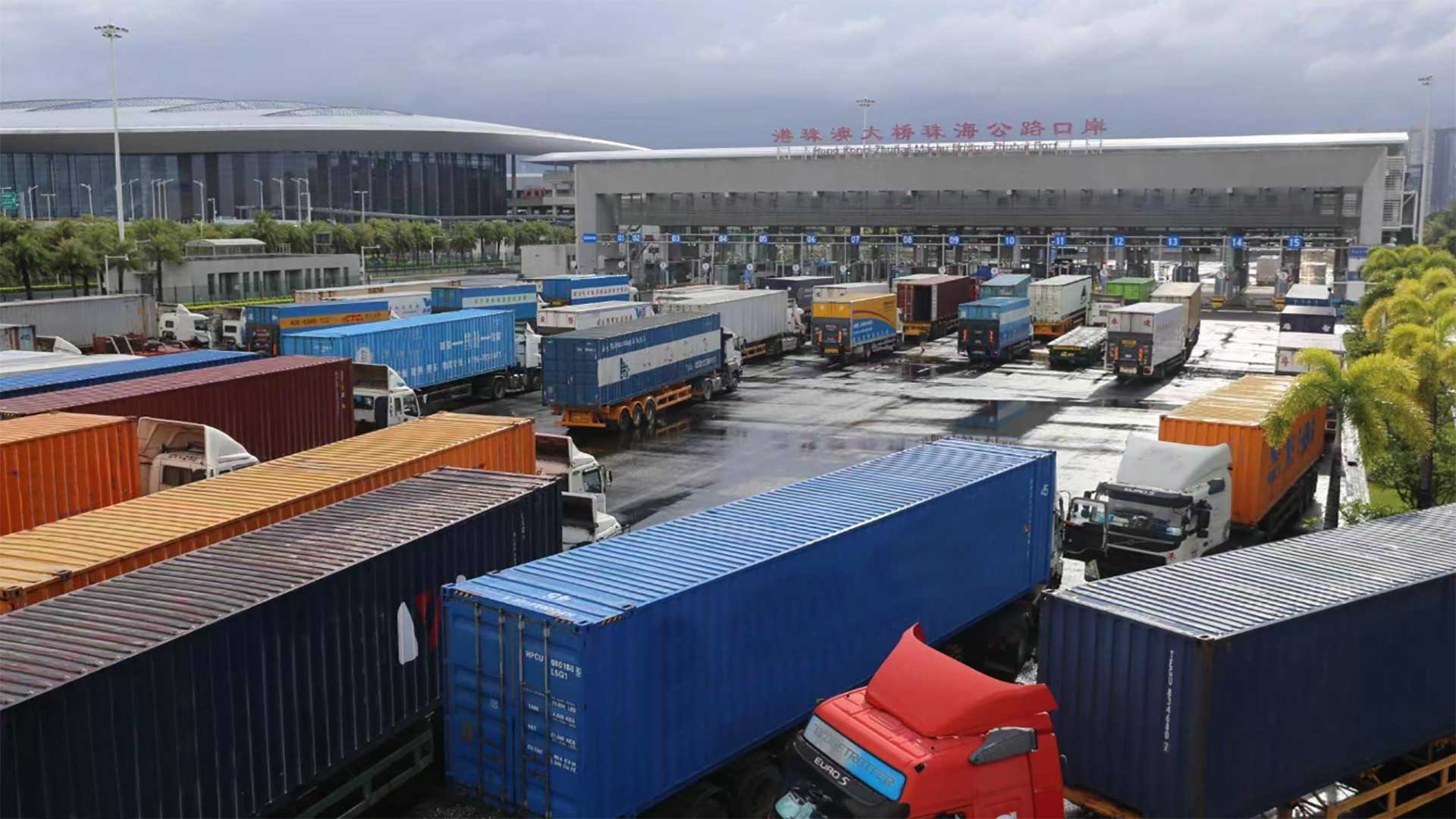
Later, during research, the client discovered another option for shipping from other provinces: collect goods via Zhuhai, then take the Hong Kong-Zhuhai-Macao Bridge directly to the Hong Kong International Airport port. The Hong Kong-Zhuhai-Macao Bridge offers round-the-clock customs clearance, the drive from Zhuhai to Hong Kong takes about 40 minutes, and trucks with cross-boundary plates can pass directly, without the layered transfers through the Shenzhen hub. For out-of-province goods from Hunan, Guangxi, Yunnan, Guizhou, and the western part of Guangdong, this channel turns the "entry into Hong Kong" step from "queuing" into "direct access."
Key Challenges
For customers shipping air exports via Hong Kong transshipment from other provinces, the challenges are concentrated in five areas:
- Interprovincial trunk haul plus port queuing: Getting from the factory to Shenzhen is already a long journey, and at the Shenzhen end, cargo must also go through peak-hour port queuing and transloading. When these two steps are combined, the buffer time for catching flights is largely consumed.
- Fragmented declaration processes, with problems only discovered near cargo cut-off: Air export declaration documents must flow through multiple points—Shenzhen, the port, and the Hong Kong airport cargo terminal—and were previously scattered among different service providers. Back-and-forth document verification is time-consuming, and discrepancies between documents and actual goods are often only found when cargo arrives at the airport, leading to rejected declarations and rescheduled flights.
- High pressure to catch flights and insufficient buffer: Different destination airports have different flight schedules, and checking the cut-off time for each shipment is already tedious. Cargo from other provinces involves many variables on its long transit, and a delay at any single link pushes back the entire chain.
- Shenzhen hub congestion cascades into flight connections: When customs clearance at the port is blocked, the subsequent handover and loading at the Hong Kong airport cargo terminal are all pushed back. If the scheduled flight is missed, the only option is to wait for the next one.
- Broken status information: Cargo status across multiple nodes—interprovincial trunk haul, consolidation in Shenzhen, port crossing, entry into the airport cargo terminal, and handover/loading—is scattered among several service providers. Customers find it difficult to track in real time "where the cargo is and whether it can make the flight," and have to rely on phone calls to confirm.
The essence of these challenges is "a chain that is too long and too many handover nodes." Cargo from other provinces already has an extra trunk leg compared to local Pearl River Delta cargo. If the port-entry stage still involves queuing and transshipment, the certainty of catching flights is greatly reduced. What customers really want is to compress and control the "port entry" step as much as possible—this is exactly the value the Hong Kong–Zhuhai–Macao Bridge can deliver: about a 40-minute drive from Zhuhai to the Hong Kong airport port with 24-hour customs clearance, removing that "unknown queue" at the Shenzhen hub from the chain.
Transport Requirements
- Route: Out-of-province factories → Zhuhai consolidation warehouse → Hong Kong-Zhuhai-Macao Bridge → Hong Kong International Airport → international flights;
- Cargo volume: Several shipments per week, ranging from loose cargo of tens of kilograms to palletized cargo of several tons per consignment, with a clear increase in the number of shipments during peak season;
- Timeliness: Departures are scheduled backward from flight cut-off times; about 1 day is reserved for line-haul transportation. From the Zhuhai end, vehicles depart and cross the bridge about 5 hours before cut-off, and the goods are delivered to the Hong Kong airport cargo terminal before the cut-off deadline;
- Special requirements: Each consignment is marked with the flight number and cut-off time; palletized and loose cargo are loaded separately; a handover receipt is sent back after reaching the cargo terminal; if the scheduled flight is missed, the shipment is automatically connected to the next flight and the customer is notified;
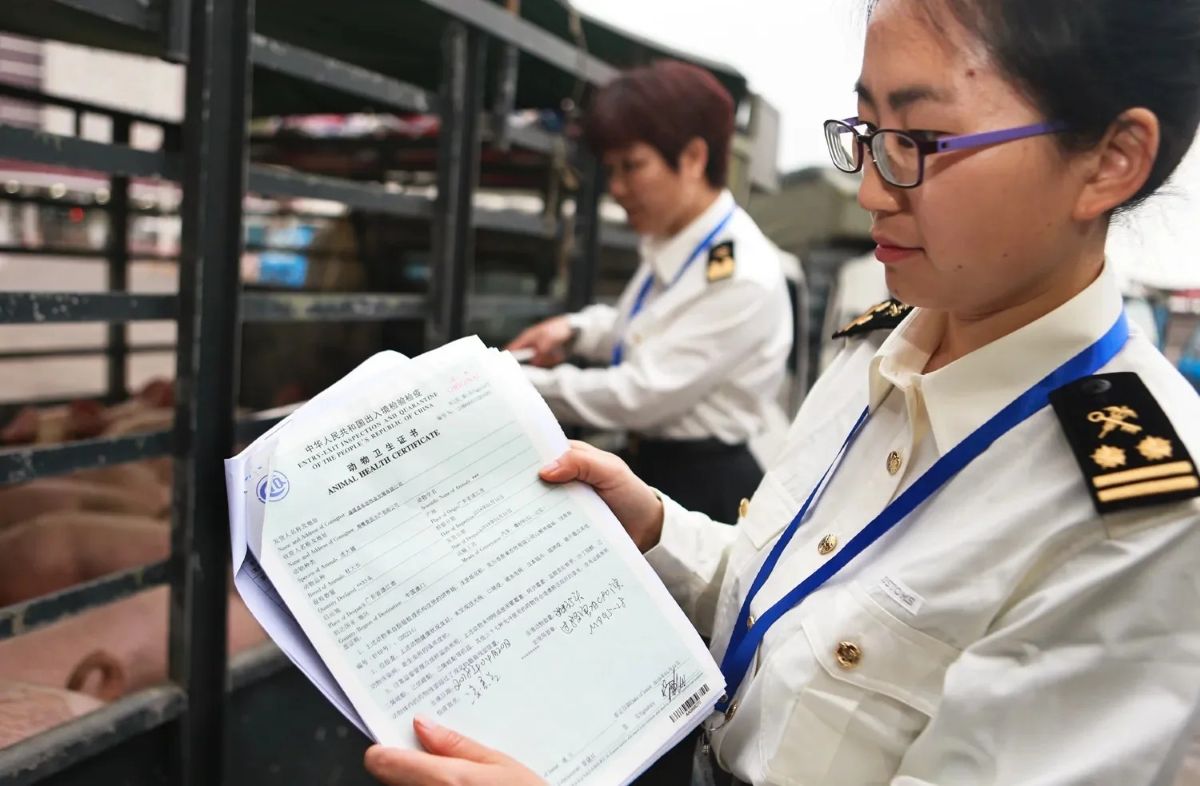
- Declaration and documentation: Air export declaration documents are pre-reviewed centrally at the Zhuhai end. Packing lists, invoices, and declaration elements are checked for each consignment to avoid last-minute rejection before cut-off;
- Insurance and billing: Insurance covers in-transit goods and warehouse storage at the cargo terminal. Invoices itemize the line-haul, bridge-crossing, and declaration costs for each consignment, providing a clear cost structure.
The customer's core demands are "on time and traceable": cargo arrives at the Hong Kong airport cargo terminal on time, air export declarations pass on the first attempt, and flight connections require no follow-up chasing.
Solution
Bofeng customizes a one-stop solution for customers — "inter-provincial trunk routes + Zhuhai consolidation + direct bridge express + flight connection" — putting the entire chain from factory to international flight into one window:
- Scheduled inter-provincial trunk services: Based on the factory locations of customers' main shipping origins, scheduled trunk services are set up for Changsha, Hengyang, Chenzhou and other directions, running via the Beijing–Hong Kong–Macau Expressway and other trunk routes to Zhuhai. The transport schedule is fixed; customers only need to hand the cargo to the trunk service before cutoff, and Bofeng handles the rest of the journey.
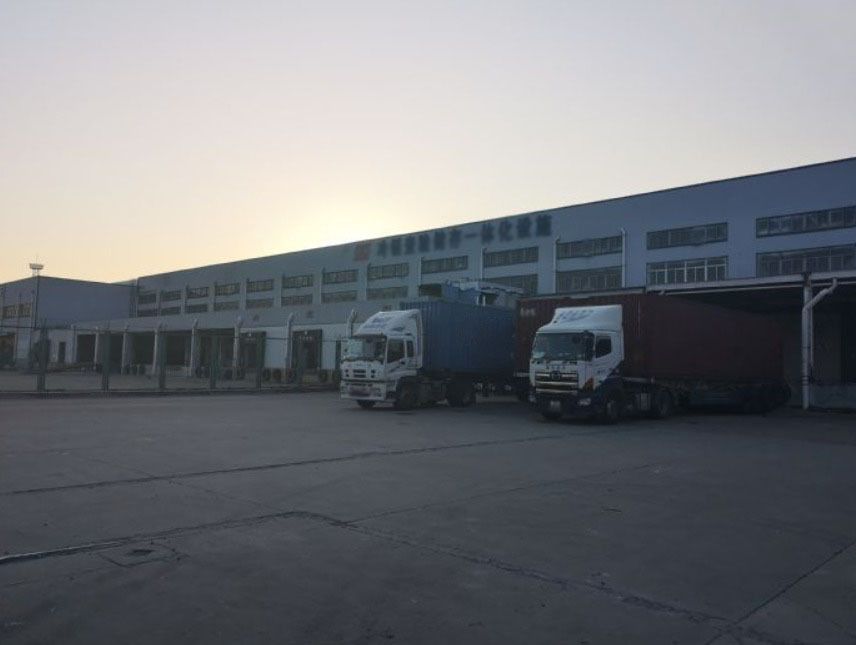
- Pre-clearance at the Zhuhai consolidation warehouse: After out-of-province cargo arrives in Zhuhai, it first enters the consolidation warehouse, where unloading, sorting and labelling are completed. Meanwhile, air export declaration documents are pre-reviewed at the Zhuhai end. Packing lists, invoices and declaration elements are checked one by one, and missing documents are completed on the spot, stopping "rejected declarations and rescheduling" before the cargo crosses the bridge — this is a particularly necessary step for out-of-province cargo, because the earlier problems after long-distance transit are exposed, the more room there is to remedy them.
- Direct bridge express via the Hong Kong–Zhuhai–Macau Bridge: Dual-plate cross-border trucks depart from Zhuhai and travel directly via the Hong Kong–Zhuhai–Macau Bridge to the Hong Kong International Airport cargo terminal, with 24-hour clearance and a drive of about 40 minutes — no more queueing and transfer through the Shenzhen hub. Departure times are calculated backwards from the flight cutoff; the Zhuhai side departs about 5 hours before cutoff, reserving time for customs clearance and cargo terminal handover.
- Hong Kong airport cargo terminal connection: Upon arrival, vehicles go directly into the Hong Kong airport cargo terminal and hand over the cargo according to the flight cutoff deadline. The terminal returns the handover receipt, and the customer confirms that the cargo has been handed over and loaded. Before handover, labels and piece counts are checked against the flight to avoid mis-loading or missing shipment.
- Flight-catching and rescheduling contingency: A mechanism of "current flight priority + next flight connection contingency" is established. Normally, cargo is handed over on the booked flight. In the event of a sudden port incident or cargo terminal congestion, it automatically connects to the next flight and notifies the customer immediately, turning "missing the flight" from a sudden occurrence into something predictable and manageable.
- Use of Hong Kong hub routes: For destinations where direct flight capacity on the mainland is tight, suitable flights are selected using Hong Kong International Airport's dense international flight network, reducing the number of transfers and shortening total transit time. In peak seasons, space is locked in advance to avoid being passive in last-minute booking.
Take catching an early morning flight as an example: the cargo arrives at the Zhuhai consolidation warehouse the previous afternoon and completes declaration pre-review; at 3 a.m. the next day it is loaded and departs across the bridge; it enters the Hong Kong airport cargo terminal for handover before 5 a.m., in time for the morning flight's cutoff deadline. The handover receipt is then returned immediately, and the customer uses it to update overseas buyers on the transit status.
The core of the solution is to change the inbound channel for out-of-province cargo from "layer-by-layer transfer via Shenzhen" to "direct bridge express via Zhuhai": apart from trunk transport, the segment into Hong Kong is compressed into a certainty of about 40 minutes' drive with 24-hour access. For customers, catching flights changes from "betting on whether the Shenzhen port is smooth" to "tracking progress against milestones", significantly improving both reliability and predictability.
From a cost logic perspective, the overall freight rates for out-of-province cargo through the Zhuhai channel and through Shenzhen are similar, but what is saved is the uncertainty of port queuing and transfer within Hong Kong. For export orders with concentrated cargo value and clear delivery deadlines, the certainty of catching the flight is more worth investing in than the freight rate of a single segment.
Results
| Indicator | Before cooperation | After cooperation | Improvement |
|---|---|---|---|
| Flight catch success rate | approx. 78% | approx. 95% | Significant improvement |
| Declaration error rate (returns/rescheduling) | approx. 7% | below 1% | Significant decrease |
| Transit time from Zhuhai side to Hong Kong airport port | Via Shenzhen transfer, highly variable | approx. 40 minutes direct, stable | Variability narrowed |
| Number of transfers/handling operations in the port entry segment | Multiple transfers | Direct, fewer transfers | Significantly reduced |
| Total transit time per shipment | Baseline | Decreased by approx. 25% | Port entry segment compressed |
| Rescheduling connection notification | Delayed, requires active follow-up | Automatic connection and immediate notification | — |
Data declaration: The above is data for this case (as of July 2026), reflecting this client's performance during the cooperation period and does not constitute a service commitment.
The quantitative improvements after cooperation focus on five points: first, the flight catch success rate increased from approx. 78% to approx. 95%, with the vast majority of orders shipped on the scheduled flight; second, the declaration error rate dropped from approx. 7% to below 1%, and returns and rescheduling caused by mismatched documents basically no longer occurred; third, the port entry segment changed from "via Shenzhen transfer, highly variable" to "approx. 40 minutes direct, stable" — the 24-hour customs clearance at the Hong Kong-Zhuhai-Macao Bridge essentially eliminated port queuing as a variable; fourth, the number of transfers and handling operations decreased significantly, reducing the damage risk for long-haul cargo; fifth, total transit time per shipment decreased by approx. 25%, and for out-of-province cargo, the overall efficiency via the Zhuhai corridor is actually better than the original route via Shenzhen. Behind the data is the coordinating value of a "single window": trunk line, cargo consolidation, declaration, bridge crossing, and cargo terminal are connected by the same service provider, and every node is traceable and predictable. For catching flights, what the client really values is "certainty" — whether they can make it is one thing, and whether they can know in advance if they can't is another. The "priority for the current flight + contingency plan for the next flight" approach in the solution provides exactly this certainty: shipments proceed as planned under normal circumstances, and advance notification is provided in abnormal situations. This case also shows that for enterprises with cargo from other provinces, to realize the Hong Kong airport hub advantage as actual time savings, the key lies in whether the port entry corridor is "direct" enough — the Hong Kong-Zhuhai-Macao Bridge makes Zhuhai a more worry-free entry gateway for out-of-province cargo.
The two parties' cooperation has entered its second year. The above is a record of individual cases of flight-catching transshipment exports during the cooperation period.
Client Testimonial
"In the past, goods left the factory, made a detour through Shenzhen, then queued up at the border crossing. At peak times we'd just wait around, and several times we nearly missed flights. Now, someone receives the goods as soon as they arrive in Zhuhai, and the declaration documents are pre-reviewed there too. After crossing the bridge, it's a 40-minute drive straight to the airport, and the cargo station's delivery receipt is sent back to us. Since we started working together, we've basically never missed a flight again. Even if we need to reschedule at the last minute, we get notified in advance—no more passively waiting for results."
— Customer feedback for Bofeng Logistics' Hong Kong logistics dedicated line (published with authorization and anonymized)
Need a similar logistics solution? Contact us — a plan within 30 minutes.
Phone:13075678958 | WhatsApp:+86 13075678958 | Email:info@zhbfwl.com
Get a Quote