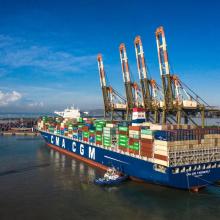
From signing an export contract, to chartering and booking shipping space, inspection, certificate of origin, insurance, delivery, customs declaration, loading and export, all the way through negotiation (or collection), document presentation, settlement, verification, and tax refund, this is the necessary process for every import and export transaction.
1. Sales Promotion
To introduce products into the international market, importers and exporters must first explore the market and find suitable trading partners. This can be done by sending sales letters or advertising products on computer networks, foreign magazines, and newspapers. Participating in trade exhibitions or conducting field trips abroad are also ways to find trading partners and increase trade opportunities.
2. Inquiry
Also known as a price inquiry. After receiving the exporter's sales letter or advertisement, the importer, based on their own needs, sends an inquiry to the exporter they wish to further negotiate with, aiming to reach a transaction.
3. Offer
Also known as a quotation. According to the buyer's letter request, the exporter first inquires with the supplying factory, then calculates the export price and replies to the importer. This process may involve multiple rounds of correspondence and negotiation, finally reaching a consensus on price terms.
4. Signing the Contract
After some bargaining, the foreign buyer and the exporter reach an agreement on various transaction terms and formally sign an export contract or agreement.
5. Obtaining the Verification Sheet
To ensure enterprises use foreign exchange strictly according to the needs of normal trade activities and to eliminate various illegal activities such as arbitrage, evasion, and fraud of foreign exchange, China stipulates that enterprises' external payments must pass national audits, implementing an import payment verification system. Under L/C settlement, the importer must obtain the "Trade Import Payment Verification Sheet (Declaration Form)" from the designated foreign exchange bank before opening the L/C; under other settlement methods, this sheet is obtained before payment.
6. Applying for L/C Opening
After filling out the payment verification sheet, the importer then fills out the "Irrevocable Documentary Credit Application" to apply for the opening of a letter of credit from its correspondent foreign exchange bank.
7. Opening the L/C
The issuing bank accepts the application and issues the Letter of Credit (L/C) based on the application. After returning it to the importer for confirmation, the L/C is sent to the exporter's bank (called the advising bank in the exporting country), requesting it to forward the L/C to the exporter.
8. Advising the L/C
The exporter's bank fills out the "Notification of Documentary Credit" and notifies the exporter of the L/C.
9. Accepting the L/C
After receiving the L/C from the advising bank and verifying it is correct, the exporter accepts the L/C and can begin preparing goods and arranging shipment. If there are errors in the L/C, the exporter can request the importer to make amendments.
10. Appointing the Shipping Company
Under CIF or CFR terms, the exporter prepares the goods while also finding a suitable shipping company to make shipping preparations in advance. Under FOB terms, this step should be completed by the importer.
11. Booking Shipping Space
After confirming the shipping company, the exporter books space according to the corresponding schedule and the shipment deadline. Once accepted by the shipping company, a shipping order is issued, which is used to fill out other documents and handle export customs declaration and loading procedures.
12. Applying for Inspection
The exporter fills out the "Application for Certificate of Export Inspection" according to the L/C provisions, and prepares commercial invoices, packing lists, and other related documents to apply for export inspection from the Entry-Exit Inspection and Quarantine Bureau.
13. Obtaining the Inspection Certificate
After the goods pass inspection, the inspection agency issues the "Customs Clearance Form for Export Goods" and, upon the exporter's request, issues corresponding inspection certificates, such as certificates of quality or health.
14. Applying for Certificate of Origin
The exporter fills out the appropriate certificate of origin form and submits it to the relevant authority. The "Certificate of Origin" and "Generalized System of Preferences Certificate of Origin 'Form A'" should be applied for from the Entry-Exit Inspection and Quarantine Bureau, while the "Certificate of Origin for Textile Products Exported to the EU" should be applied for from the textile export certificate issuing authority authorized by the Ministry of Commerce.
15. Issuing the Certificate of Origin
After review, the relevant authority issues the corresponding certificate of origin based on the exporter's application.
16. Arranging Insurance
Under CIF terms, insurance is arranged by the exporter. The exporter must fill out the "Cargo Transportation Insurance Application" according to the L/C provisions and attach the commercial invoice to insure with the insurance company.
Note: Insurance is arranged by the exporter only when the trade term is CIF. If it is FOB or CFR, the importer should arrange the insurance.
17. Obtaining the Insurance Policy
After underwriting, the insurance company issues the "Cargo Transportation Insurance Policy" to the exporter.
18. Obtaining the Verification Sheet
Chinese law stipulates that domestic export units exporting goods overseas must go through export receipts verification procedures. Before customs declaration, the exporter must obtain the "Export Receipts Verification Sheet" from the State Administration of Foreign Exchange.
19. Filing Verification for Record
After filling out the verification sheet, the exporter can use it to apply for filing the verification record with customs.
20. Delivering Goods to the Designated Location
After completing the above procedures, the exporter delivers the goods to the designated wharf or location for customs clearance and export.
21. Customs Declaration
After delivering the goods, the exporter fills out the "Export Goods Customs Declaration Form" and prepares relevant documents (export receipts verification sheet, commercial invoice, packing list, customs clearance form for export goods, etc.) to submit the declaration to customs.
22. Handling Export Customs Clearance Procedures
After verifying the documents are correct, customs handles the export clearance procedures, issuing the verification sheet and declaration form (export tax refund copy) stamped with the inspection seal to the exporter for verification and tax refund.
23. Loading and Shipping
After customs clearance is completed, the goods are loaded onto the ship and the voyage begins.
24. Obtaining the Bill of Lading (B/L)
The shipping company issues the B/L only after the goods are loaded on board and the ship has sailed. Therefore, after shipment, the exporter can go to the shipping company to obtain the "Bill of Lading" (B/L).
25. Sending the Shipping Advice
After shipping the goods, the exporter should send the "Shipping Advice" to the buyer. Especially under FOB and CFR terms, where the buyer arranges insurance, the exporter must send the shipping advice promptly so the buyer can arrange insurance.
26. Preparing Relevant Documents for Negotiation
After shipment, the exporter prepares the required documents as per the L/C (commercial invoice, packing list, B/L, cargo transportation insurance policy, inspection certificate, certificate of origin, L/C, etc.) and draws a bill of exchange with the importer as the payer, requesting negotiation from the exporter's bank. The export documents are pledged to obtain financing from the bank.
27. Notification of Settlement, Issuance of Verification Sheet
If the negotiation documents are verified by the negotiating bank to comply with L/C terms, the payment is negotiated, the exporter is notified for settlement, and a negotiation fee is charged. Additionally, the bank issues the "Special Copy for Export Receipts Verification" stamped with the verification seal to the exporter.
28. Verification
The exporter uses the special copy for export receipts verification and other related documents (submission registration form for export verification sheet, customs declaration form, export verification sheet, commercial invoice, etc.) to handle verification with the foreign exchange bureau. After completion, the foreign exchange bureau returns the export verification sheet (third copy).
29. Export Tax Refund
After verification, the exporter goes to the State Taxation Bureau with the export verification sheet (third copy), the customs declaration form (export tax refund copy), and the commercial invoice to handle the export tax refund.
30. Presenting Documents After Negotiation
After negotiation, the negotiating bank sends the documentation to the foreign issuing bank, demanding reimbursement of the negotiated amount.
31. Approving Payment
After checking the documents against the L/C terms without discrepancies, the issuing bank approves the payment to the exporter's bank.
32. Notifying the Importer for Payment/Document Retirement
The issuing bank asks the importer to pay the full amount of the goods. Since most of the L/C amount is unpaid when the importer applies to the issuing bank to open the L/C, and the exporter has already negotiated (collateral financing), the issuing bank notifies the importer to pay the remaining balance and retire the negotiated documents.
33. Payment
The importer pays the full amount to the issuing bank and must submit the previously obtained trade import payment verification form to the bank for review.
34. Delivery of Documents
After payment, the importer collects all documents from the issuing bank (the documents used by the exporter for negotiation).
35. Arrival Notice
At this point, the goods have arrived at the destination port in the importing country. The shipping company notifies the importer to exchange the B/L for a delivery order.
36. Surrender B/L, Obtain Delivery Order
The importer surrenders the Bill of Lading (B/L) to the shipping company to obtain the Delivery Order (D/O). Especially when the importer buys the goods under FOB terms, the importer must pay all freight and surcharges to the shipping company and exchange the B/L for the D/O before they can declare to customs, indicating authorization to take delivery of the goods.
37. Applying for Inspection
The importer fills out the "Application for Certificate of Import Inspection" and prepares the D/O, commercial invoice, packing list, and other documents to apply for import inspection from the Entry-Exit Inspection and Quarantine Bureau.
38. Obtaining the Inspection Certificate
After the goods pass inspection, the inspection agency issues the "Customs Clearance Form for Import Goods" to the importer.
39. Customs Declaration
The importer prepares the import goods customs declaration form, D/O, commercial invoice, packing list, customs clearance form for import goods, contract, and other documents to submit the declaration to customs.
40. Tax Payment
The importer pays all taxes to customs, which may include import duties, value-added tax, and consumption tax.
41. Handling Import Customs Clearance Procedures
After customs reviews and approves the documents, it handles import customs clearance procedures.
42. Taking Delivery
After customs release, the importer can take delivery of the goods at the dock or storage location.
43. Payment Verification
Finally, the importer goes to the foreign exchange bureau to handle payment verification using the import payment arrival verification form, the import goods customs declaration form, and the import payment verification form.
Bofeng Logistics specializes in providing one-stop logistics services such as domestic container shipping, international shipping (FCL/LCL), Hong Kong and Macau logistics routes, as well as trucking, customs declaration, and warehousing. Contact number: 130-7567-8958 (Manager Huang), call now for an exclusive quote!
Related Logistics Services
Bofeng Logistics offers the following related services, feel free to inquire: