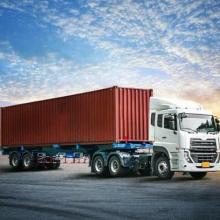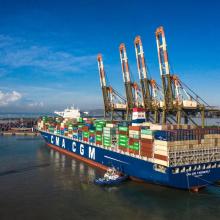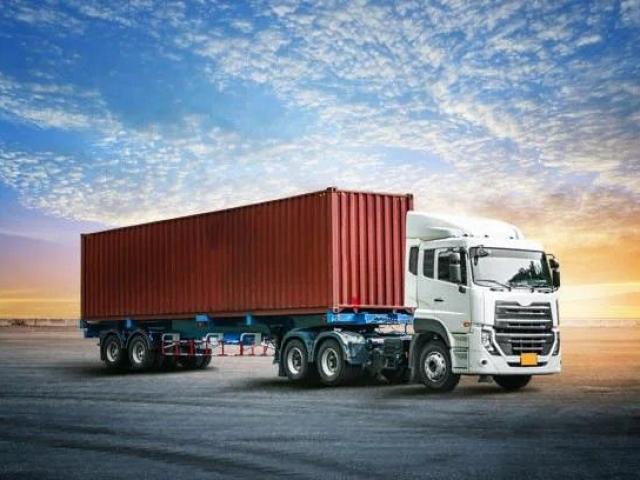
Container trucking — also called container drayage — is the movement of containers between ports, terminals, warehouses, and factories. Through our own fleet operations serving Shenzhen, Guangzhou, and Shanghai ports, we handle this critical link daily and understand the common pain points.
This guide covers container trucking in China: truck types, the standard process, cost factors, and how to choose a reliable trucking partner.
What Is Container Trucking?
Container trucking refers specifically to the road transport of intermodal containers. Unlike general freight trucking, container trucking requires specialized equipment (container chassis) and is closely timed with vessel schedules and port operations.
Common scenarios for container trucking in China:
- Moving an empty container from port to factory for loading
- Moving a loaded container from factory to port for export
- Moving a loaded container from port to warehouse after import
- Moving containers between domestic locations
Types of Container Trucks in China
| Truck Type | Description | Best For |
| Skeleton trailer (集装箱骨架车) | A chassis with no side walls, designed to carry standard containers | All standard 20GP, 40GP, 40HQ containers |
| Flatbed trailer (平板车) | A flat platform that can carry containers and other cargo | Containers plus breakbulk cargo |
| Gooseneck trailer (鹅颈车) | Includes a gooseneck tunnel for 40ft containers | Reduces overall height for tall containers |
| Heavy-duty trailer (重型拖车) | Reinforced chassis for overweight containers | Heavy machinery, dense cargo |
| Temperature-controlled trailer | Insulated with generator set | Reefer container transport when shore power is unavailable |
The Container Trucking Process
Step 1: Dispatch Order
Your freight forwarder or trucking company dispatches a container chassis to the pickup location (port terminal, depot, or warehouse).
Dispatch confirmation timeline:
- Standard booking (24+ hours): Confirmed within 30 minutes → driver assigned 2 hours before pickup
- Rush booking (2-4 hours): Subject to availability; premium typically +30-50%
- Port congestion surcharge: Applied when terminal queue wait exceeds 2 hours (typically CNY 200-500/hour after the first 2 hours of terminal waiting)
Equipment Interchange Receipt (EIR) inspection checklist
The EIR is the legal record of container condition at transfer. Both driver and shipper/consignee must inspect and sign. Here is the standard 15-point checklist used at Chinese ports:
| Check Item | What to Look For | Accept / Reject Criteria |
| Container number | Matches booking confirmation | Any mismatch = reject |
| External condition | Dents, holes, corrosion on walls/roof | Any hole >30mm = reject; surface dents <100mm OK |
| Door operation | Left and right doors open/close smoothly | Hinges must function; locking mechanism engages fully |
| Door seals | Gaskets intact; door lock mechanisms work | Torn or missing gasket = reject; door lock must accept customs seal |
| Floor condition | Plywood floor dry, no damage | Large cracks or moisture = reject |
| Interior roof | No condensation, no water stains | Water stains = reject (previous leak) |
| Wall interior | No protruding nails, no cargo residue | Clean and smooth walls required |
| T-bar floor rails | Clear of debris; air channels clear | Blocked channels = reject (reefer only) |
| CSC plate | Safety approval plate present and legible | Missing or illegible CSC plate = reject |
| ACEP plate | Ongoing examination status valid | Expired ACEP = reject (container out of inspection cycle) |
| Seal | Customs seal number matches documents | Mismatch = reject immediately |
| Container weight (tare) | Displayed on door plate | Record for VGM calculation |
Step 2: Container Pickup
The driver picks up either an empty container (for factory loading) or a loaded container (for port delivery). At the terminal, the driver:
- Presents the Equipment Interchange Receipt (EIR)
- Inspects the container condition
- Signs for the container
- Lifts the container onto the chassis
Step 3: Transportation
The container is trucked to its destination. For factory loading:
- The container arrives at the supplier's loading dock
- Cargo is loaded into the container
- The container is sealed with a bolt seal
- The truck returns to the port
Step 4: Container Return
The loaded container is delivered to the port terminal for vessel loading. The driver submits the gate-in document, and the container enters the terminal yard.
Typical timeline: 1–3 days for a complete trucking cycle (factory → port or port → warehouse).
Container Trucking Cost Factors
| Cost Factor | Impact | Typical Range (China) |
| Distance | Primary cost driver | CNY 10–25 per km (loaded container) |
| Container type | 40ft costs ~1.3× a 20ft | — |
| Loading/unloading wait time | Free waiting period typically 2 hours | CNY 200–500/hour thereafter |
| Port congestion | Adds waiting time at terminal | Variable |
| Night/weekend surcharge | 20–50% premium on standard rate | — |
| Weighbridge fee | Optional, for weight verification | CNY 50–100 per weigh |
Comparing Trucking Services Across Chinese Ports
Trucking operations vary significantly between Chinese ports. Our experience across different port cities reveals:
| Port City | Typical Fleet Size per Provider | Average Waiting Time at Terminal | Unique Consideration |
| Shenzhen (Yantian/Shekou) | 20-50 trucks | 2-4 hours | Yantian terminal has the highest container volume; pre-booking required during peak |
| Guangzhou (Nansha) | 15-30 trucks | 1-3 hours | Nansha has less congestion than Shenzhen; slightly lower trucking rates |
| Shanghai (Yangshan) | 30-80 trucks | 3-6 hours | Yangshan deep-water port is on an island — bridge crossing adds travel time + toll |
| Ningbo | 20-50 trucks | 1-2 hours | Most efficient terminal turnaround; shorter waiting times |
| Qingdao | 15-30 trucks | 2-3 hours | Port proximity to major industrial zones reduces trucking distance |
| Tianjin | 15-25 trucks | 2-4 hours | Winter weather can cause delays; road salt corrosion risk for trucking equipment |
Special types of container trucking:
- Bonded trucking: For moving containers between bonded warehouses or between a bonded warehouse and a port under customs seal
- Cross-border trucking: China-Hong Kong trucking requires special cross-border permits and license plates
- Oversized trucking: For flat rack or open top containers with over-dimensional cargo — requires special road permits
Choosing a Container Trucking Company in China
| Criteria | What to Check |
| Fleet size | Minimum 20+ trucks for reliable service |
| Port licensing | Registered with the port authority |
| GPS tracking | Real-time tracking capability |
| Insurance | Adequate cargo insurance coverage |
| Driver training | Understanding of container handling procedures |
| Response time | Availability within 2–4 hours |
FAQ
Q: How long does container trucking within China take?
A: Short-haul (within port city): 1–4 hours. Medium-haul (adjacent provinces): 1–2 days. Long-haul (cross-country): 3–7 days.
Q: Can container trucks handle overweight containers?
A: Yes — but overweight containers may require permits and specialized heavy-duty trailers. Check axle weight limits.
Q: Who arranges container trucking?
A: Typically the freight forwarder arranges trucking as part of the end-to-end service. The cost is included in the quote or itemized separately.
Need container trucking from Chinese ports? Bofeng Logistics provides reliable container trucking services at all major ports. Request a quote.
Related reading
- Container Trailer and Drayage Services
- Container Shipping from China: The Complete Guide for Importers
- China Ports Guide: Major Ports for International Shipping
- International Ocean Freight Services
- What are the Major Ports in Guangdong Province
Bofeng Logistics
Phone/WhatsApp: 13075678958
Email: info@zhbfwl.com
Contact us for a personalized shipping solution.
Related Logistics Services
Bofeng Logistics offers the following related services, feel free to inquire: