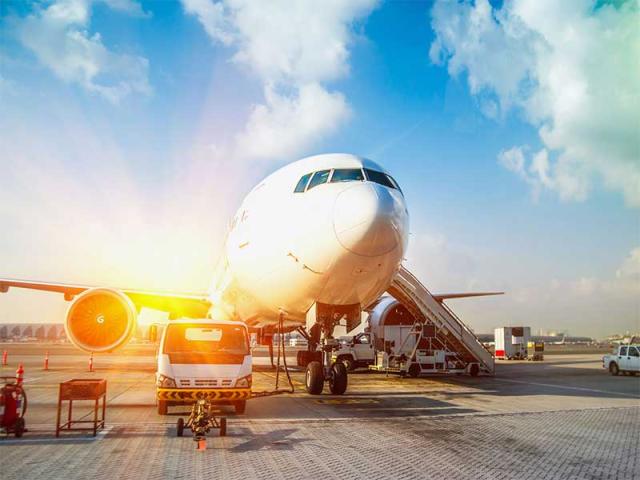
Air Freedom Rights: Refers to the rights of transit and transport business in international air transportation, also known as the business or air freedom rights of international air transport. They are important national aviation rights and interests that must be protected. When exchanging these rights in international air transport, the principle of reciprocity is generally adopted. Sometimes, one party may propose higher exchange conditions or charge compensation fees to appropriately protect the rights and interests of its domestic airlines.
First Freedom of the Air: The right to fly over foreign territory
Without landing, an airline's aircraft may fly over the airspace of a contracting country to reach its destination in another country. Example: For a flight from Beijing to San Francisco that traverses Japanese airspace, an overflight agreement must be signed with Japan to obtain the First Freedom of the Air; otherwise, the flight must take a detour, increasing fuel consumption and flight time.
Second Freedom of the Air: The right to make a technical stop
An airline's aircraft may land in a contracting country for technical reasons (such as refueling, aircraft malfunction, or weather-related diversions), but must not engage in any commercial activities, such as embarking or disembarking passengers, mail, or cargo. Example: For a flight from Beijing to New York that cannot be completed non-stop due to aircraft type and must stop in Japan for refueling without allowing boarding or disembarkation of passengers and cargo, a technical stop agreement must be signed with Japan.
Third Freedom of the Air: The right to set down passengers, mail, and cargo
An airline's aircraft may unload passengers, mail, or cargo within the territory of the contracting country. Example: For a flight from Beijing to Tokyo, if the Third Freedom of the Air is granted, Chinese civil aviation aircraft can bring passengers and cargo into Tokyo, but must return with an empty aircraft.
Fourth Freedom of the Air: The right to take on passengers, mail, and cargo
An airline's aircraft may carry passengers, mail, or cargo from the territory of the contracting country back to its home country. Example: For a flight from Beijing to Tokyo, if the Fourth Freedom of the Air is granted, Chinese civil aviation aircraft can carry passengers, mail, or cargo back to Beijing on the same aircraft.
Fifth Freedom of the Air: The right to carry traffic between two foreign countries
An airline may use a point in a third country as an intermediate stop to set down and take on passengers and cargo. The Fifth Freedom of the Air requires negotiations with two or more countries. Example: For a Singapore-Xiamen-Chicago route, Singapore Airlines, having obtained the Fifth Freedom of the Air, can stop in Xiamen to discharge and pick up passengers and cargo.
Sixth Freedom of the Air: The right to combine traffic via the home country
An airline can use two separate routes under its name to carry passengers and cargo between Country A and Country B, but the transportation must pass through its home country. Example: For a London-Seoul-Tokyo route, Korean Air can carry passengers originating from the UK to Tokyo via Seoul.
Seventh Freedom of the Air: The right to carry traffic between two foreign countries
An airline may carry passengers and cargo between two foreign countries without returning to its home country. Example: A London-Paris route operated by Lufthansa, a German airline.
Eighth Freedom of the Air:
An airline may carry traffic between two points within the territory of a contracting country.
Bofeng Logistics provides one-stop logistical services, including domestic container shipping, international shipping (FCL/LCL), Hong Kong and Macao dedicated logistics lines, as well as trucking, customs declaration, and warehousing. Contact number: 130-7567-8958 (Manager Huang), call now for a tailored quote!
Related Logistics Services
Bofeng Logistics offers the following related services, feel free to inquire: