
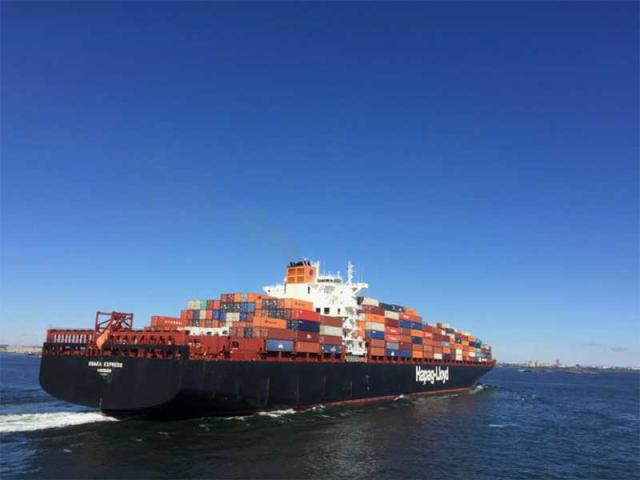
In a broad sense, ship insurance is an insurance business that takes ships and their appurtenances as the subject matter insured. According to the state of the ship, it is divided into ship operating insurance, ship construction insurance, ship lay-up insurance, ship repair insurance, shipbreaking insurance, container insurance, etc.
In a narrow sense, ship insurance refers to ship operating insurance, which can be further divided into three types: basic insurance, additional insurance, and special additional insurance.
The subject matter of container insurance is the containers in the course of operation, and it can also be divided into two types: basic insurance and special additional insurance. Basic insurance can also be divided into total loss insurance and all risks insurance.
Basic Hull Insurance
Basic hull insurance is a mandatory item when taking out vessel operating insurance, and includes two options: Total Loss Only and All Risks.
Ship Total Loss Insurance
Ship total loss insurance is a basic type of ship operating insurance, which the policyholder may choose to use when taking out insurance. Under this coverage, the insurer's insurance liability is:
① Natural disasters and accidents. Natural disasters refer to catastrophic accidents arising from natural phenomena that are beyond human control, including earthquakes, volcanic eruptions, lightning, etc. Accidents, however, are damaging incidents unexpected by the insured, specifically referring to grounding, collision, striking a reef, sinking, going missing, fire, explosion, etc.
② Violent theft from outside the ship or piracy. Such marine risks were previously classified within the scope of war risk liability. With the development of maritime shipping and the need for ship insurance to provide insurance protection, various ship insurance clauses internationally now include them in the scope of cover and have expanded the scope of risks. As long as it is violent theft from outside the ship, regardless of whether the loss is caused by piracy, the insurer shall compensate.
③ Jettison of cargo. This refers to the loss or damage of the ship caused by jettisoning cargo when the insured ship encounters a marine peril, for example, jettisoning cargo causing the ship to lose stability, capsize and sink, and constituting an actual total loss or constructive total loss.
④ Failure or accident of nuclear installations or nuclear reactors. In modern maritime shipping, nuclear power is increasingly widely used. Accordingly, the risk that failure or accident arising therefrom causes total loss of the insured ship inevitably exists, and thus it has become a component of the insurance liability of ship insurance.
⑤ Latent defects in ship machinery and hull. A defect that cannot be discovered by qualified surveyors using normal inspection methods is a latent defect in ship machinery or hull. If this causes total loss of the insured ship, the insurer shall bear the insurance
liability.
⑥ Total loss of the insured ship caused by the fault of relevant personnel, specifically including: accidents occurring during loading, unloading or moving cargo or fuel; acts by the master or crew intentionally harming the interests of the insured; negligent acts of the master, crew, pilot, ship repair personnel and charterers; actions taken by any government authority to prevent or mitigate pollution (such as oil pollution risk ) caused by damage to the insured ship due to covered risks, etc.
Hull All Risks
Hull All Risks is a basic type of cover in ship operating insurance, which the applicant may choose to take out when applying for insurance. Under Hull All Risks, the insurance liability assumed by the insurer is broader than that under Hull Total Loss cover, and therefore its premium rate is higher than that for Hull Total Loss cover. Under China's hull insurance clauses, under Hull All Risks the insurer bears total and partial loss of the insured ship caused by the various causes specified in Hull Total Loss cover, as well as the following liabilities and expenses:
① Collision liability. This is an extension of hull insurance liability; in substance, the insurer underwrites the insured's legal liability for damages owed to third parties in a ship collision, that is, liability for the legal damages the insured is liable for as a result of collision between the insured ship and other ships or contact with any fixed, floating or other object. In practice, this includes: loss of or repair costs for the collided ship, loss of and expenses for cargo carried on the collided ship, and liability and expenses arising from pollution or contamination caused by the collided ship or the property carried on it, etc. However, the insurer is not liable for personal injury, death or illness caused by ship collision, cargo or property carried on the insured ship or liabilities assumed by the insured, removal of obstructions, wrecks, cargo or any other articles, or pollution or contamination of any floating or fixed property or object (including preventive measures or cleanup costs), etc.
② General average and salvage. The insurer is liable to indemnify the insured ship's contribution to general average, salvage, and salvage charges. If the insured ship suffers a general average sacrifice, the insurer shall indemnify the entire loss without requiring the insured first to claim contributions from other parties. China's hull insurance clauses further provide, in the general average and salvage liability under all risks, that when all contributing parties are the insured or when the insured ship is navigating in ballast and there is no other party with a contributing interest, general average adjustment shall be handled in accordance with the Beijing Adjustment Rules (except Article 5) or similar rules expressly agreed upon, as if the contributing parties were not the same person, and the insurer shall indemnify accordingly. The purpose is to encourage the insured to actively salvage and avoid total loss of the insured ship.
③ Sue and labour charges. Where the ship is placed in danger by an insured peril, the insurer shall indemnify the reasonable expenses incurred by the insured in taking sue and labour measures to prevent or reduce a loss recoverable under the hull insurance. Moreover, the insurer's liability for such expenses is in addition to the liabilities provided for under other clauses of the hull insurance, but shall not exceed the insured amount of the ship.
Hull Insurance Exclusions
In marine hull insurance, under both Total Loss Only and All Risks, the insurer’s exclusions are exactly the same. In such hull insurance, the insurer shall not be liable for any loss, expense, or liability caused by the following:
① Loss caused by the insured vessel not being seaworthy at the commencement of the voyage. China’s hull insurance clauses provide: “Unseaworthiness includes improper manning, unsuitable equipment, or improper stowage, but only where the insured knew or ought to have known of such unseaworthiness at the commencement of the voyage.” The purpose of this provision is to encourage the shipowner to attach importance to the vessel’s seaworthiness and reduce the risk of damage to the vessel. Of course, if the insured vessel was unseaworthy at the commencement of the voyage but the shipowner did not know, the insurer shall still be liable under the insurance.
② Loss caused by the negligence or willful acts of the insured and its representatives. The insured usually refers to the shipowner or a person who actually exercises the shipowner’s rights to deploy and use the vessel (such as a ship operator), while the insured’s representatives refer to persons responsible for specialized operations and directing the vessel’s operation and transport, such as staff in shipping, dispatch, marine technical, and maritime supervision departments. Loss of the insured vessel caused by the negligence or willful acts of such persons is not an accident of maritime shipping, and the insurer shall not be liable for compensation.
③ Normal wear and tear, corrosion, rot, or inadequate maintenance of the insured vessel that should have been discovered by the insured in the exercise of due diligence, or material defects including the replacement or repair of parts in poor condition. Since normal wear and tear, corrosion, rot, etc., of the insured vessel are inevitable in the normal operation of the vessel, while inadequate maintenance means the insured failed to exercise due diligence, and replacement or repair of the insured vessel is a necessary condition for maintaining its seaworthiness. These are not marine perils, and the insurer shall not be liable.
④ The scope of liability covered and excluded under the Hull War and Strikes Clauses.
Hull Additional Insurance
Hull additional insurance is insurance that takes as its subject matter the carrier's loss of anticipated freight in the operation of a ship. Anticipated freight is paid by the consignee to the carrier after the cargo arrives at the destination port. If for some reason the cargo cannot be delivered to the destination port, the carrier cannot collect the freight. For this reason, carriers often, on a voyage for which anticipated freight is to be earned, insure freight additional risks together with hull insurance. At present, there is no provision for freight additional insurance in China's hull insurance clauses. In actual business, Chinese insurance companies, with reference to the I. T. C. clauses, also cover it within ship's disbursements insurance when underwriting hull insurance, and the insured amount of ship's disbursements insurance shall not exceed 25% of the hull insured amount and is limited to total loss.
Special Additional Risks for Ships
Special additional risks for ships mainly consist of war risk and strike risk. According to the practice of the international ship insurance market, once war risk has been insured, no additional premium is generally charged when strike risk is added, so the insured generally insures both war risk and strike risk at the same time.
Insurance Liability for Hull War and Strikes Risks
As an additional risk of hull insurance, the War and Strikes Risks specifically cover loss of the insured vessel caused by war and strikes. According to the provisions of China's Hull War and Strikes Risks Clauses, its coverage includes loss of the insured vessel, collision liability, general average, and salvage or sue and labour charges caused by the following:
① war, civil war, revolution, rebellion, or civil commotion or hostilities arising therefrom;
② capture, seizure, arrest, detention, confiscation or blockade (however, the insurer shall only accept it after 6 months from the date of occurrence);
③ all kinds of weapons of war, including mines, torpedoes and bombs;
④ strikes, forced stoppage of work or other similar events;
⑤ civil commotion, riots or other similar events;
⑥ malicious acts by any person with political motives.
Exclusions of Hull War and Strikes Insurance
Under this additional insurance for the vessel, the insurer shall not be liable for loss, liability or expense of the insured vessel caused by any of the following:
① Explosion of atomic bombs, hydrogen bombs or nuclear weapons (herein, this mainly refers to explosions of the above weapons for the purpose of destroying the other party, excluding nuclear weapon tests).
② Capture, seizure, detention or confiscation by or under the order of the government or local authorities of the flag state or state of registry of the insured vessel (because such acts are mostly due to political reasons and have exceeded the scope of war risks).
③ Requisition or compulsory purchase.
④ War breaking out between permanent members of the United Nations Security Council (whether declared or not).
Collision Liability
Collision liability is a basic clause in hull insurance contracts concerning the insurer's liability for collision compensation. However, this clause applies only to the liability that the insured bears for losses caused by a collision between the insured ship and other ships. Collision liability is a matter commonly covered in hull insurance contracts. However, the amount the insurer pays varies. Take the hull insurance clauses of the Institute of London Underwriters as an example. In the new hull insurance clauses revised by the Institute in 1983, the extent of the insurer's indemnity for the insured's collision liability is stipulated as 3/4 of the amount of damages the insured pays to a third party; therefore, this clause is also called the "three-fourths collision liability clause." There is no such independent clause in China's hull insurance clauses, but according to the provisions on the scope of liability, the insurer bears 4/4 insurance indemnity liability for the collision liability of the insured ship.
Marine Clause
The Marine Clause is a basic clause in a hull insurance contract. With reference to international marine insurance practice, China has also stipulated the Marine Clause in its hull insurance clauses. Its main purpose is to require that the insured vessel shall not engage in maritime towage or salvage services; shall not directly load or discharge cargo at sea with another vessel (other than small craft used in ports or along the coast), including approaching, lying alongside, and leaving; and the insured vessel is prohibited from undertaking voyages for the purpose of shipbreaking or sale for shipbreaking. Within the scope of this restriction, the insurer shall be liable only if the insured has obtained the insurer's prior consent and accepts the amended terms of cover and pays the additional premium required, or has separately taken out voyage insurance for a voyage for the purpose of shipbreaking or sale for shipbreaking. Otherwise, the insurer shall not be liable for any loss caused thereby or any liability to third parties.
Tender Clause
The Tender Clause is a basic clause in a hull insurance contract relating to tendered repairs of the insured ship and compensation for its loss. This clause stipulates the rights and obligations of the insurer and the insured in the process of tendering for ship repairs, as well as the scope of the insurer's compensation.
The Tender Clause stipulated in China's hull insurance clauses adopts the basic contents of the Tender Clause of the I. T. C., but is slightly different. Specifically:
① While providing that the insurer has the right to decide on and veto tenders and re-tenders, it also gives the insured the right to decide the place of ship repair. However, the condition for the insured to exercise this right is that it must, like a prudent uninsured shipowner, invite tenders for the repair of the damaged ship and accept the most favorable offer. If the insured fails to do so, the insurer has the right to veto the repair place decided by the insured, or deduct from the claim any expenses increased thereby.
② The insurer's compensation for tendered repairs is limited to the fuel, stores, and wages and maintenance of the master and crew paid by the insured from the time a tender notice is issued at the insurer's request until the tender is accepted, and is subject to a limit of 30% of the insured value of the ship for the year.
Navigation Limits Clause
The Navigation Limits Clause is a special clause in a marine insurance contract that restricts the navigation range of the insured vessel. Maritime transport involves all waters of the world, but because the routes, areas, and seasons of vessel navigation differ, the marine risks to which it is exposed also differ. Therefore, in order to avoid special risks, the insurer and the insured specifically agree that the insured vessel may not enter certain areas or certain places at certain times. For example, when the People's Insurance Company of China underwrites China's ocean-going vessels, it often stipulates in the policy that the navigation area is worldwide; however, the waters north of the Stockholm–Tallinn line in the Baltic Sea may not be entered from November 15 of each year to May 5 of the following year. This is because this period is the ice season in this area, and vessel navigation may encounter the danger of collision with icebergs. A typical example is the Titanic, which on its maiden voyage to New York in 1912 struck an iceberg and sank in this area. If the insured vessel, without the insurer's consent, enters a prohibited area during a time prohibited by the Navigation Limits Clause and a loss occurs, the insurer shall not be liable for the loss. Of course, this does not apply where the insured vessel enters the prohibited area after obtaining the insurer's prior consent and paying an additional premium.
Return Premium Clause
The Return Premium Clause is a clause stipulating matters concerning the refund of insurance premiums, and it is a basic clause generally applicable in marine hull insurance contracts. For time policies, China's marine hull insurance clauses provide the following refund method:
① When the insurance on the insured ship is cancelled or the insurance is terminated, the premium shall be refunded from the date of termination of insurance, calculated on a daily pro rata basis of the net premium.
② Whether or not the insured ship is at a shipyard for repairs or loading/unloading cargo, if it is laid up in a port or area approved by the insurer for more than 30 days, the premium for the lay-up period shall be refunded at 50% of the daily pro rata rate of the net premium. If the 30-day lay-up period falls under two consecutive policies issued by the same insurer, the lay-up refund shall be calculated separately according to the number of days covered by each policy. For voyage insurance, once the insurance liability commences, no cancellation or refund shall be made under any circumstances.
Sister Ship Clause
The Sister Ship Clause is a basic clause for indemnifying losses caused by collisions between ships belonging to the same owner. Theoretically, the same entity cannot commit a tort against itself, nor is there any liability for compensation, so the insurer should not bear insurance liability. However, if different ships under the same owner collide with each other, this can also cause enormous losses. Based on the purpose and function of insurance, in order to stabilize the normal order of maritime shipping, expand the protective role of hull insurance, and attract policyholders, insurers often stipulate a Sister Ship Clause in hull insurance contracts, assuming insurance liability for collision compensation and salvage remuneration of the insured ship. This clause is widely adopted in the international insurance market. China's hull insurance clauses do not provide for an independent Sister Ship Clause, but contain similar provisions. For example, Article 10, paragraph 6 of those clauses provides: "If the insured ship collides with, or receives salvage services from, a ship owned by the same shipowner or operated by the same management organization, it shall be regarded as a third-party ship, and this insurance shall be liable."
General Average Clause
The General Average Clause is a basic clause in a hull insurance contract concerning the handling of general average. It generally sets out the scope of the insurer's indemnity for general average sacrifices, contributions, and salvage charges, as well as the application of the rules for adjusting general average. China's hull insurance clauses do not contain an independent General Average Clause; instead, provisions relating to general average are included within the scope of insurance liability. Under its provisions, the insurer is liable under this insurance to indemnify the insured vessel's contributions to general average and salvage charges. Where the insured vessel suffers a general average sacrifice, the insured may obtain full indemnity without first claiming contributions from other parties. At the same time, the adjustment of general average shall be handled in accordance with the law or practice stipulated in the relevant contract. If the contract of carriage contains no such provision, it shall be handled in accordance with the Beijing Adjustment Rules or other similar rules.
Automatic Reinstatement Clause
The full name of the Automatic Reinstatement Clause is the “Automatic Reinstatement of Sum Insured Clause,” and it is a special additional clause in hull insurance. The Automatic Reinstatement Clause provides that after the insured repairs or replaces damage to the insured vessel, the value of the subject matter insured is restored to its original sound condition, and the sum insured is automatically reinstated to the original amount under the hull insurance contract. Of course, the insured shall pay, on a daily pro rata basis, additional premium for the reinstated portion of the sum insured from the date of loss until the termination of the insurance.
No Customary Deduction Clause
The No Customary Deduction Clause is a clause in a hull insurance contract concerning the insurer's waiver of the right to make a “new for old” deduction. According to the custom of marine insurance, when the insurer pays general average and particular average in respect of the insured ship, it has the right to deduct the portion of the value of new parts replaced during repair of the ship that exceeds the old parts. However, if the hull insurance contract provides for a No Customary Deduction Clause, the insurer waives this right of deduction and pays in full for the new parts fitted during repair of the ship, without deducting depreciation. This clause has been widely adopted in the international hull insurance market. Both the I.T.C. Clauses of the Institute of London Underwriters and China's hull insurance clauses contain such provisions.
Dual Valuation Clause
The dual valuation clause is a special clause in a marine hull insurance contract. Through negotiation between the parties, this clause stipulates two insured values for the insured vessel, which serve respectively as the basis for settling total loss claims and partial loss claims. Because in marine hull insurance the subject matter insured is of high value, the insured wishes to reduce the sum insured and pay less premium, while the insurer wishes the insurance to be effected at the insured value and collect more premium. To resolve this contradiction, the parties may agree on a dual valuation clause in the hull insurance contract. If the insured vessel suffers a total loss, the indemnity shall be calculated and paid according to the lower sum insured; if the insured subject matter suffers a partial loss, the indemnity shall be paid according to the higher sum insured. For hull insurance contracts containing such a special clause, premiums are calculated and collected at a compromise rate between total loss cover and all risks cover for hull insurance.
Bofeng Logistics specializes in providing one-stop logistics services such as domestic container shipping, international shipping (FCL/LCL), dedicated Hong Kong-Macao logistics lines, and trucking, customs clearance, warehousing. Contact number: 130-7567-8958 (Manager Huang). Call now for an exclusive quote!
Related Logistics Services
Bofeng Logistics offers the following related services, feel free to inquire: