
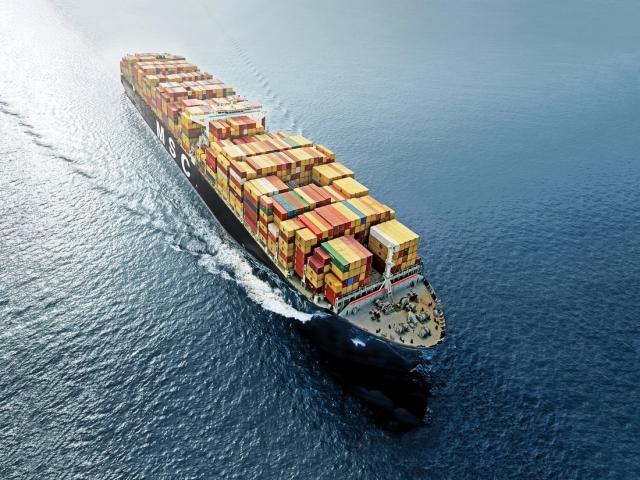
Shipping from China: The Foundation of Global Trade
China is the world's largest trading nation in goods, and container shipping is the main mode of international transport. Tens of millions of TEUs leave Chinese ports every year. Whether you are an importer, an exporter or a cross-border e-commerce seller, understanding the full chain of shipping from China helps you plan your supply chain, control costs and manage risk.
This guide follows the real order of operations: basic concepts, booking and documentation, export customs clearance, loading and ocean transit, destination clearance and pickup, cost structure, and how to choose a freight forwarder. It covers both FCL and LCL.
1. Basic Concepts
1.1 What container shipping is
Container shipping loads cargo into standardized containers carried by container vessels. The common sizes are 20 ft (20GP) and 40 ft (40GP/40HQ). ISO containers are interchangeable worldwide, which makes it efficient to move cargo between ports, terminals and inland legs.
Compared with break-bulk shipping, container shipping is stronger in cargo security, handling efficiency, ease of transshipment and economies of scale for large volumes.
1.2 FCL vs LCL
FCL (Full Container Load): used when your cargo fills one or more containers. The box holds only your goods, giving higher privacy and security; at destination you can take the container once release formalities are complete, without waiting for devanning.
LCL (Less than Container Load): when your volume is below a full container, the carrier consolidates cargo from several shippers into one box. LCL suits small shipments, but involves consolidation, devanning and distribution steps, so overall transit is slightly longer.
About 15 cubic meters is a common reference point when comparing FCL and LCL: above that volume FCL is usually more economical, below it LCL is more flexible. The final choice also depends on cargo characteristics, handling requirements and destination conditions.
1.3 Major Chinese ports
China has the busiest cluster of container ports in the world. The main export gateways include:
- Port of Shanghai: one of the world's largest container ports, with routes to all major trade regions
- Port of Ningbo-Zhoushan: a deep-water port serving Zhejiang and nearby provinces
- Port of Shenzhen: Yantian, Shekou and Chiwan terminals form South China's main export gateway
- Port of Guangzhou: the core port of the Pearl River Delta, serving both domestic and international trade
- Port of Qingdao: Shandong's main port, with dense services to Japan and Korea
- Port of Tianjin: North China's main port, serving the Beijing-Tianjin-Hebei region
- Port of Xiamen: an important port on the southeast coast with frequent cross-strait services
- Port of Dalian: the main port of Northeast China, oriented to Northeast Asia routes
Data note: the descriptions above are compiled from public sources; exact throughput and service coverage are subject to port and carrier announcements.
2. Booking and Export Process
2.1 Inquiry and booking
Before booking, provide your forwarder or carrier with: cargo name and HS code, whether it is dangerous goods, volume and gross weight, port of loading and port of discharge, required sailing date, container type and any special requirements (reefer, open top, flat rack, etc.).
The forwarder or carrier then confirms space and freight. A quotation normally consists of ocean freight plus surcharges such as BAF, CAF and PSS. Carriers differ in sailing schedules, port rotations and space policies, so the choice should match your delivery deadline and cargo profile.
2.2 Export customs clearance
Before export, the shipment must clear Chinese customs. The main steps are: prepare documents (commercial invoice, packing list, contract, customs power of attorney); compile declaration elements (HS code, description, quantity, value, origin); file electronically through the China International Trade Single Window; customs review, with inspection where required; release, after which the cargo may be loaded.
With complete and accurate documents, clearance is typically completed within 1–2 working days. Inspection or additional documentation can extend this. The customs decision governs the actual timeline.
2.3 Loading and ocean transit
After release, the container enters the terminal (gate in), is loaded on board, and the carrier issues the bill of lading once the vessel sails. Shipments can be tracked through the forwarder or carrier during transit.
Indicative ocean transit times: Southeast Asia 2–5 days; Middle East 10–15 days; Europe 25–35 days; US West Coast 12–16 days; US East Coast 22–28 days; Africa 20–35 days; South America 30–45 days.
Data note: transit times vary with sailing schedules, port congestion, weather and season. The figures above are general references, not commitments.
2.4 Destination clearance and pickup
After arrival, import clearance is required before pickup: the consignee receives the arrival notice; exchanges the original or telex-released bill of lading for a delivery order (D/O); files the import declaration with the destination customs; pays duties and taxes as assessed; and arranges trucking or devanning once released.
International ocean freight is primarily delivered to the port of discharge. Where delivery to a specific address is required, it can be arranged separately according to destination conditions; feasibility and cost can be confirmed together with the quotation.
3. Cost Structure
Ocean freight costs usually consist of three parts: origin local charges, ocean freight, and destination charges. Common items include:
- Ocean freight: the core transport charge, moving with supply and demand, fuel prices and season
- Origin charges: terminal handling, documentation, customs declaration and related fees
- Destination charges: terminal handling, devanning, storage and delivery fees, charged at destination rates
- Trucking: inland transport between factory, port and warehouse
- Cargo insurance: premium depends on cargo value, coverage and route
FCL is charged by container type and route; LCL is charged by revenue ton (the greater of weight ton and measurement ton). Actual amounts depend on the cargo, sailing and destination, and are confirmed by quotation.
4. International vs Domestic Shipping
International shipping: between ports in different countries, requiring export and import clearance, more documentation, freight that follows the international market, and transit of roughly 5–35 days.
Domestic shipping: between Chinese coastal and inland river ports, with no customs clearance, simpler documentation, more stable rates and transit of roughly 2–7 days.
5. How to Choose a Freight Forwarder
- Licensing: holds NVOCC (non-vessel operating common carrier) registration and related qualifications
- Route and space resources: stable carrier partnerships on your main routes
- Service network: agents or partners at destination to handle clearance and delivery
- Documentation capability: familiar with export clearance, document review and exception handling
- Value-added services: trucking, warehousing, customs brokerage and insurance
Bofeng Logistics holds NVOCC registration and provides international ocean freight from major Chinese ports, covering FCL, LCL and special containers, with coordinated customs brokerage, trucking, warehousing and insurance.
6. Conclusion
Shipping from China involves booking, customs clearance, ocean transit and destination clearance. How smoothly these steps connect directly affects transit time and cost. Working with an experienced and properly licensed forwarder reduces hand-offs and operational risk. For specific routes and sailing schedules, please contact us using the details below.
Further Reading
- International Ocean Freight
- Ocean LCL Shipping
- Domestic Ocean Shipping
- Ocean Freight Cost Structure
- Container Knowledge Center
- Customs Declaration
Bofeng Logistics provides domestic container shipping, international ocean freight (FCL/LCL), Hong Kong and Macau logistics lines, plus trucking, customs brokerage and warehousing. Phone/WhatsApp: 130-7567-8958. Email: info@zhbfwl.com.
Related Logistics Services
Bofeng Logistics offers the following related services, feel free to inquire: