1. What is container ocean freight?
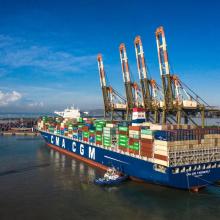
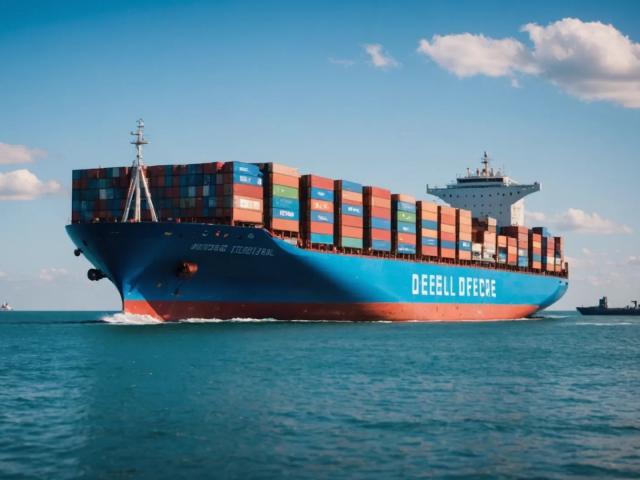
Container ocean freight refers to the transportation fee charged by the carrier (shipping company) for transporting containerized cargo from the port of loading to the port of destination. It is usually quoted per container or per freight ton, rather than calculated per individual piece of cargo.
In specific business operations, two concepts need to be distinguished: freight rates and freight charges. A freight rate is the transport price per unit of cargo or per container type, while freight charges are the total amount calculated for an entire shipment based on the freight rate. For example, a shipping company quotes a freight rate per 20-foot dry container on a given route; book 3 containers and the total you pay equals that rate multiplied by the number of containers.
Container transportation adopts a quotation system of "door-to-port", "port-to-port", or "door-to-door". Since container cargo transportation often involves multimodal transport, the carrier's scope of liability for the goods is greater than that of bulk cargo transportation. Therefore, container freight rates generally cover the entire process cost from the terminal yard (or container freight station) at the port of loading to the terminal yard (or container freight station) at the port of discharge. If the carrier arranges inland trucking, the freight will also include the inland transportation segment cost.
2. Basic ocean freight: the "backbone" of the freight rate
The basic ocean freight is the main component of the entire sea freight quotation, usually set based on two dimensions: route and container type.
From the box type perspective, common quotation units include:
- 20GP (20-foot general purpose container);
- 40GP (40-foot general purpose container);
- 40HQ (40-foot high cube container);
- Reefer containers (40RH/40RF), open-top containers, flat-rack containers and other special containers are subject to different freight rates.
From a pricing perspective, shipping companies generally adopt two models:
- FAK (Freight All Kinds): Regardless of cargo type, it is uniformly priced for the same route and same container type, and is currently the market mainstream;
- Class rate: Pricing is differentiated according to cargo class (such as dangerous goods, overweight cargo, and special cargo).
Shipping companies publish freight rates weekly (i.e., "weekly rates"), and freight forwarders provide final quotes based on the weekly rates, combined with their own available space and the policies of partner shipping companies. Therefore, you will see that for the same route and the same week, different freight forwarders may quote different prices — this is the true nature of freight rates.
3. Common Surcharges: The “Branches and Leaves” of Freight Rates
In addition to the basic ocean freight rate, various surcharges are usually added on top. Understanding the nature and billing method of each surcharge can help determine whether a quote is complete. Common surcharges include:
- Bunker Adjustment Factor (BAF): Adjusted according to fluctuations in international oil prices; shipping lines adjust it quarterly or monthly to reflect changes in fuel costs.
- Terminal Handling Charge (THC): Charges incurred for loading, unloading, and storage of cargo at the terminal, collected per container.
- Documentation Fee: Fee for producing shipping documents such as bills of lading, generally charged per bill of lading.
- Booking Fee: Fee incurred for booking space with the shipping line.
- Peak Season Surcharge (PSS): Temporarily imposed when space is tight during peak season, usually occurring during high-shipping periods such as August to October each year.
- General Rate Increase (GRI): A uniform increase applied by shipping lines to raise freight rate levels.
- Low Sulphur Surcharge (LSS): Charges incurred to meet new ship emission regulations (e.g., IMO 2020 low-sulphur requirements).
- Destination Port Surcharges: Such as destination terminal handling charges (DTHC), destination customs clearance and delivery charges, etc.; some are included in the quotation, while others are collect at destination.
Different shipping companies and freight forwarders quote in different ways: some use an ALL-IN one-price that includes all the above surcharges in the quoted rate; others use an itemized breakdown, listing the basic ocean freight and each surcharge separately. Neither method is absolutely better or worse — the key is to confirm what is and is not included in your quotation.
4. FCL and LCL: Two Billing Logics
Ocean freight cargo is divided into full container load and less-than-container load by shipment volume, and the billing logic for the two is completely different.
Full Container Load (FCL): The cargo fills one or more full containers, and the price is quoted at a flat rate per container type, i.e., “one container, one price.” The FCL freight rate has little to do with the cargo’s volume or weight (as long as it does not exceed weight or size limits), making it more suitable for exports with larger shipment volumes.
Less than Container Load (LCL): When the cargo is not enough to fill a full container, it is consolidated with cargo from multiple shippers in the same container, and freight is calculated based on the chargeable ton. The chargeable ton takes the greater of "volume (cubic meters)" and "weight (tons)", i.e., freight is charged based on whichever is higher between volumetric weight (light cargo) or actual weight (heavy cargo). LCL also incurs operational charges such as consolidation fees and devanning fees, and the shipping schedule is significantly affected by the sailing schedule of the consolidation port.
Therefore, the larger the shipment volume, the more suitable it is to use a full container to spread out the cost per unit; for small but frequent shipments, LCL is a more flexible choice. When choosing, factors such as cargo volume, weight, and shipping frequency should be considered together for a comprehensive assessment. p
5. How to Understand an Ocean Freight Quotation?
Understanding a quotation is the first step to controlling your transportation budget. A standard quotation usually includes:
- Route and Port: port of loading, port of destination, transshipment port (if any);
- Container Type and Cargo Type: applicable container types and cargo types;
- Price Composition: basic ocean freight + surcharge details, or ALL-IN flat rate;
- Validity: rate validity is usually 7-15 days; beyond that, a new quotation is required;
- Currency and Billing Unit: USD or RMB, per container or per revenue ton;
- Terms Description: whether destination port charges are included, whether inland trucking is included, payment terms, etc.
It is recommended to check the following items with the freight forwarder item by item before booking: Does the quotation include THC, documentation fees, and booking fees? Does it include destination port charges? Until when is it valid? Prices fluctuate significantly between low and peak seasons. When space is tight during peak season, freight rates usually rise. Booking in advance is more conducive to locking in rates and space.
6. Main Factors Affecting Freight Rates
Ocean freight is essentially a reflection of market supply and demand, and the following factors will directly drive changes in freight rates:
- Market supply and demand: During peak season when shipments are concentrated and space is in short supply, freight rates rise; in the off-season, the opposite;
- International oil prices: Changes in fuel costs are passed through to surcharges such as BAF;
- Route distance and transshipment: Direct routes usually have higher freight rates than transshipment routes but offer faster transit times;
- Carrier capacity deployment: Shipping lines adjusting schedules, suspending services, or blanking sailings will change market capacity supply;
- Season and holidays: Before Christmas and the Lunar New Year are traditional shipping peak seasons, and freight rates generally rise;
- Policies and emergencies: Events such as port congestion, strikes, or blocked canal transit (e.g., Panama Canal navigation restrictions) can push freight rates up in the short term.
It should be noted that freight rates fluctuate in real time with the market, and prices displayed on any website or channel are only “reference quotes.” The final transaction price shall be subject to the real-time quotation issued by the carrier at the time of booking. If you wish to track market conditions, you can follow public ocean freight rate indices, such as the Shanghai Containerized Freight Index (SCFI) and the Baltic Freight Index (FBX), as a reference for judging freight rate trends. p
7. Trade Terms and Attribution of Ocean Freight
For the same batch of goods, who pays for the ocean freight depends on the trade terms agreed upon by both parties—this is a question that must be clarified before reading the quotation:
- FOB (Free on Board): The seller is responsible for delivering the goods onto the vessel at the port of shipment; ocean freight and transport arrangements are handled by the buyer (or the buyer's designated freight forwarder);
- CFR / CIF (Cost and Freight / Cost, Insurance and Freight): The seller is responsible for chartering vessels or booking cargo space and paying ocean freight (CIF also includes insurance); risk transfers to the buyer once the goods pass over the ship's rail;
- DDP (Delivered Duty Paid): The seller bears all costs including ocean freight, destination port charges, customs clearance, and duties;
- EXW / FCA (Ex Works / Free Carrier): Inland delivery terms; the seller is not responsible for the ocean freight segment, and ocean freight is arranged by the buyer.
Practical Tip: When negotiating prices, first confirm the trade terms, then discuss the freight rate basis — the same price per carton has completely different responsibilities and cost coverage under FOB versus CIF terms. If the trade term is CIF/CFR, the freight forwarder’s quotation usually already includes ocean freight; if it is FOB/DDP, the allocation and payment method of destination port related costs still need to be clarified.
8. Frequently Asked Questions
Q1: Why do different freight forwarders quote very differently for the same destination port? A: Differences in cooperation policies between freight forwarders and shipping companies, availability of space, whether all surcharges are included, and different quotation validity periods can all cause price differences. When comparing, don't just look at the unit price; compare whether the fee items included in the quotation are consistent.
Q2: Is an ALL-IN flat price necessarily more expensive than itemized quotes? A: Not necessarily. A flat price saves the hassle of item-by-item calculation, but you need to confirm which items are actually included in the "flat price"; although itemized quotes are clear, there may be cases where items are omitted when quoting and then charged additionally on the bill. The key is to make clear agreements.
Q3: Why is the freight rate validity so short? A: Shipping companies adjust weekly rates frequently based on market supply and demand, so freight forwarders can only lock in prices within the validity period. During peak season when space is tight, the validity is often even shorter.
Q4: Do ocean freight charges need to be prepaid or collect? A: Usually ocean freight is prepaid (at the prepaid port), while some destination port surcharges may be collect (at the collect port). The specifics shall be subject to the contract between both parties and the bill of lading.
Understanding the composition of ocean freight is the basis for making a sound export logistics budget. If you need to calculate the complete freight composition for a specific route and container type, please contact Bofeng Logistics for a detailed quote.
Further reading
- Full Export Sea Freight Process
- Direct Vessel vs Transshipment Vessel: How to Choose?
- Global Major Shipping Routes and Ports
Bofeng Logistics provides professional one-stop logistics services including domestic container sea freight, international shipping (FCL/LCL), Hong Kong and Macau logistics dedicated lines, as well as trailer transportation, customs declaration, and warehousing. For the latest freight rates and booking information, please call 130-7567-8958 (Manager Huang) or leave a message online.
Related Logistics Services
Bofeng Logistics offers the following related services, feel free to inquire: