
I. Why Understand Certificates of Origin from the Perspective of "Tariff Concessions"
Many foreign trade companies treat a certificate of origin as a document that "the customer asks for, so just do as told," and casually choose a certificate type when applying. But as RCEP deepens and China's FTA network continues to expand, the essence of a certificate of origin is a proof for "cashing in tariff concessions"—whether you enjoy the destination country's preferential tariff rate and how much you enjoy depends on two things: whether your goods are on the destination country's tariff reduction list, and whether you can provide a certificate that complies with the rules of origin.
Once this is understood, handling a certificate of origin changes from "passively dealing with paperwork" into a decision to "proactively choose a channel to save money." From the perspective of tariff concessions, this article explains four main lines at once: how to check tariff reduction arrangements, how to choose the certificate type, how to determine origin criteria, and how to avoid risks in application and certificate return/verification.
If you are more focused on document support for specific routes (such as which documents to prepare for shipments to Southeast Asia, and how to choose between Form E and Form RCEP on Southeast Asia routes), please refer to the companion article "Guide to Southeast Asia Ocean Shipping Documents and RCEP Certificate of Origin Application"; this article focuses on the general practicalities of tariffs and certificate selection.
II. RCEP Tariff Concessions: How to Check and Read Tariff Reduction Arrangements
2.1 RCEP's Tariff Reduction Modalities
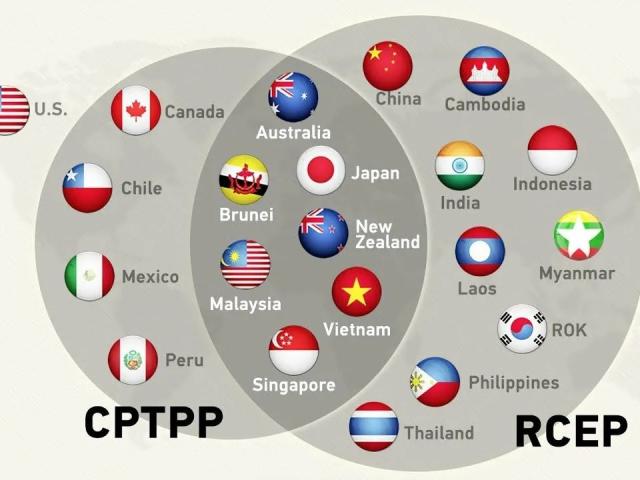
The 15 RCEP member countries (10 ASEAN countries + China, Japan, and South Korea + Australia and New Zealand) do not apply zero tariffs to one another's products across the board; instead, they gradually reduce tariffs through four types of "tariff concession schedules":
| Tariff Reduction Modality | Description | Final Tariff |
|---|---|---|
| Immediate zero tariff | Tariffs eliminated upon entry into force of the agreement | 0 |
| Linear reduction (S) | Gradually reduced over 10–15 years; for most members, about 86%–90% of products ultimately reach zero | 0 |
| Partial reduction | Reduced to the agreement rate but retains a non-zero rate | Agreement rate |
| Exception (U) | Not subject to tariff reduction; remains at MFN rate | MFN rate |
China, Japan, South Korea, and ASEAN members' commitments to ultimately zero-tariff products generally cover 86%–90%, but this is phased in year by year—today's tariff rate is not the same as its final rate, and the applicable rate for the same product may differ from year to year.
2.2 How to Check Tariff Reduction Schedules
The most authoritative and free query portal is the China Free Trade Area Service Network (fta.mofcom.gov.cn). Query steps:
- Go to the website and select "RCEP" → "Tariff Concession Query"
- Enter the HS code of the product you want to export (at least the first 6 digits) and the destination country
- Check the applicable agreement tariff rate for each year for that product, compare it with the most-favored-nation (MFN) rate, and calculate the margin of preference
How to interpret and draw conclusions: Compare "agreement rate vs. MFN rate" year by year—if the agreement rate is zero or clearly lower in a given year, the product is worth applying for a certificate of origin for this shipment to enjoy the benefits; if it is in the exception column (U) or the two rates are the same, then this channel offers no tariff preference, and the certificate of origin is only evidentiary.
Each member country's tariff schedule is updated annually; when querying, use the rate applicable for the current year. Tariff reduction progress is occasionally adjusted, and before shipment it is advisable to recheck once before dispatch.
III. How to Choose the Certificate Type: Form E / Form RCEP / Form A / Bilateral FTA
China has different free trade arrangements with different countries/regions, corresponding to different preferential certificates of origin. Before applying, first confirm which preferential channel the destination country has, then choose the certificate based on the two dimensions of "tariff rate + difficulty of meeting origin requirements."
3.1 Quick Overview of Major Preferential Certificates
| Certificate | Applicable Agreement / Region | Issuing Authority | Typical Destinations |
|---|---|---|---|
| Form E | China-ASEAN Free Trade Area | Customs / CCPIT | 10 ASEAN countries |
| Form RCEP | RCEP Agreement (15 countries) | Customs / CCPIT | Japan, South Korea, Australia, New Zealand + ASEAN |
| Form A | Generalized System of Preferences | Customs | Some countries still granting GSP treatment to China (the EU has withdrawn it; see below) |
| Form B | Asia-Pacific Trade Agreement | Customs / CCPIT | South Korea, India, Sri Lanka, Bangladesh, Laos |
| Form F | China-Chile Free Trade Area | Customs / CCPIT | Chile |
| Certificates under various bilateral FTAs | Corresponding bilateral free trade agreements | Customs / CCPIT | South Korea, Australia, New Zealand, Switzerland, Peru, Iceland, Georgia, Mauritius, Cambodia, etc. |
| CO | Non-preferential (ordinary certificate of origin) | Customs / CCPIT | No FTA arrangement / required by letter of credit |
For a complete checklist-style comparison of the applicable countries, issuing authorities, and preference margins for each type of certificate, see the Full Comparison of Certificate of Origin Applications.
3.2 Two Current Situations to Note
- Form A (GSP) is narrowing year by year for Chinese exports: The EU gradually phased out and, by 2021, fully withdrew GSP treatment for Chinese products; shipments to the EU can no longer enjoy preferences under Form A; Form A is currently mainly applicable to Norway, Switzerland, Australia (in part), Russia, and other countries that still retain GSP treatment for China.
- Japan and South Korea are central to China's "first-ever FTA relationships": RCEP is the first preferential tariff channel established between China and Japan and between Japan and South Korea—previously, most Chinese exports to Japan had no FTA under which to enjoy preferences. For products exported to Japan, the RCEP certificate is often the only preferential channel (see below).
3.3 How to Choose When the Same Country Has Multiple Channels
For countries that both have a bilateral FTA and are covered by RCEP (such as South Korea, Australia, New Zealand, and ASEAN countries), you need to compare by specific HS code and choose the better option:
Two decision steps:
1. Compare tariff rates: Check the current-year tariff rate for the same product under the "bilateral FTA" and "RCEP" on the China Free Trade Area Service Network, and choose the lower one
2. Compare difficulty of meeting requirements: When tariff rates are the same, choose the agreement whose origin criteria are easier to satisfy
Key points for judgment:
| Scenario | Recommendation | Reason |
|---|---|---|
| Export to Japan | RCEP (the only option) | There is no other FTA between China and Japan |
| Export to South Korea | Choose the better of the China-Korea FTA or RCEP | Compare tariff rates and the difficulty of meeting origin requirements |
| Export to Australia/New Zealand | Choose the better of the China-Australia/China-New Zealand FTA or RCEP | The bilateral FTAs are basically fully zero-tariff; in most cases, prioritize the bilateral one |
| Export to ASEAN | Choose the better of Form E or Form RCEP | For most direct exports, Form E is sufficient; for regional supply chains, use RCEP cumulation rules |
| Export to the EU | No preferential certificate (generally use CO) | The EU has withdrawn GSP treatment for China; most products are subject to MFN tariff rates |
The same consignment of goods may use only one certificate of origin. Even if it simultaneously meets the origin rules of two agreements, you must choose one to use; they cannot be combined; choosing the wrong channel means enjoying less or no tariff preference.
IV. Rules of Origin: Determining Whether You Can Enjoy Preferences
Whether you can enjoy preferences with a certificate depends on whether the goods comply with the rules of origin of the corresponding agreement. RCEP and most preferential arrangements follow “meeting one of three criteria”:
| Criterion | Description | Applicable Scenario |
|---|---|---|
| Wholly Obtained (WO) | Goods are wholly obtained or produced in one country (natural products, grown/raised/extracted) | Agricultural products, mineral products |
| Regional Value Content (RVC ≥ 40%) | The value-added proportion of the goods within the region is ≥ 40% | Processed manufactured goods |
| Change in Tariff Classification (CTC) | The first 4 digits of the HS code change after processing | More complex processing and manufacturing |
4.1 How Is Regional Value Content (RVC) Calculated
Formula: RVC = (FOB price − value of non-originating materials) ÷ FOB price × 100%
- FOB price: Free on board price, excluding international freight and insurance
- Value of non-originating materials: Value of raw materials/components procured from countries outside the agreement
Example: A shipment has an FOB price of USD 10,000, of which materials procured from countries outside the agreement are worth USD 2,500; then RVC = (10,000−2,500)÷10,000 = 75% ≥ 40%, meeting the origin criterion.
4.2 RCEP’s Core Advantage: Cumulation Rule
Cumulation Rule is an institutional advantage of RCEP compared with traditional bilateral FTAs—it allows raw materials and processing stages from the 15 member countries to be cumulated across countries:
Traditional bilateral FTA: Only value within the country itself is cumulated (materials and processing must both come from the same agreement country)
RCEP cumulation:   Chinese raw materials + Japanese components + Vietnamese processing → the value of all stages is fully counted
                Regional value → enjoy preferences if RVC ≥ 40% is met
For cargo owners whose supply chains span multiple countries, the cumulation rule significantly lowers the threshold for compliance—there is no need to require all materials to come from a single country. This is also RCEP’s unique competitiveness compared with bilateral FTAs.
V. Application in Practice: Full Process for Customs / CCPIT / Single Window
There are two main channels for handling Certificates of Origin: the China International Trade Single Window (via Customs) and the CCPIT Certificate of Origin System. Both are handled online and self-printed after review.
5.1 General Application Process
Enterprise filing → Product pre-review → Online application → Authority review → Issuance and printing
| Step | Action | Reference Time |
|---|---|---|
| ① Enterprise filing | Register enterprise information in the Single Window or CCPIT system | 1–2 business days |
| ② Product pre-review | Submit the HS code and origin criteria of the exported product, and origin filing information | 2–3 business days |
| ③ Online application | Fill in invoice, transport information, origin criteria, and corresponding certificate type | 10–20 minutes |
| ④ Authority review | Automatic system review or manual review | 30 minutes–several hours |
| ⑤ Issuance and printing | Issued after review approval; self-print on A4 (with anti-counterfeit QR code) | Instant |
- Self-printing: Exporters/producers approved by Customs may self-print preferential Certificates of Origin, without needing to collect the certificate on-site
- Longer RCEP retroactive issuance period: Eligible goods may have RCEP certificates issued retroactively within 1 year after export (compared with the shorter retroactive issuance window for Form E, giving cargo owners more leeway); retroactive preferential certificates usually must be marked “Issued Retrospectively”
- Back-to-back certificates: When goods are transshipped between RCEP member countries, back-to-back certificates can be issued based on the original certificate; benefits can continue to be enjoyed upon re-export after transshipment—this is an institutional advantage of RCEP compared with bilateral FTAs
Confirmation before application: Whether the goods are on the destination country's tariff reduction list → Confirm which origin criterion is met (WO / RVC≥40% / CTC) → Select the certificate type according to the two dimensions → Prepare commercial invoice, packing list, and bill of lading information, then apply online.
6. Common Certificate Rejection Risks and Mitigation
Certificate rejection and denial of preferential treatment are the most common pitfalls in foreign trade practice and have the greatest impact on costs. The following problems most often lead to certificate rejection or hindered customs clearance:
| Common risks | Mitigation measures |
|---|---|
| Wrong certificate type selected (preferential treatment that should have been enjoyed was missed) | Before shipment, check the tariff reduction schedule and select the optimal certificate based on tariff rate + difficulty of meeting the criteria |
| Submitting two types of certificates of origin for the same shipment at the same time | The same shipment can only use one type of certificate; choose one according to the optimal agreement |
| Incorrect determination of origin criteria | Confirm compliance with any one of the WO / RVC≥40% / CTC criteria before applying |
| Inconsistency between the goods description and customs declaration | Compare the certificate, invoice, packing list, and declaration elements item by item to ensure consistency |
| Non-compliance with the direct transport rule | Transport the goods along the committed route; transit requires a customs certificate from the transit place |
| Enterprise filing/product pre-review not completed | Export enterprises should complete filing and product pre-review in advance through the Single Window or CCPIT |
| Certificate information errors or omissions (product name/HS code/number of packages, gross weight, volume) | Check item by item before document review; if there are errors, promptly apply for amendment or reissue of the certificate |
One-sentence principle: Move the determination of the certificate of origin forward to before shipment—don't wait until the goods arrive at the port or the customer is clearing customs to discover that the tariff preference cannot be enjoyed; that is the most expensive lesson.
VII. Bofeng Logistics RCEP / Certificate of Origin Service Implementation
Bofeng Logistics has deep roots in Pearl River Delta exports and provides foreign trade enterprises with tariff and documentation services that complement ocean freight booking:
- HS Classification and Tariff Reduction Query Assistance: Assist with querying tariff reduction arrangements by destination country on the Free Trade Area Service Network, and determine applicable preferential channels
- Certificate of Origin Application Coordination: Connect with customs/CCPIT channels to assist with the application for Form E, Form RCEP, Form A, bilateral FTA certificates, and CO general certificates of origin
- FCL/LCL Ocean Freight Booking: FCL and LCL ocean freight services from major Pearl River Delta ports to Japan and South Korea, Australia and New Zealand, ASEAN, and the rest of the world, with integrated documentation and space arrangements
- Export Customs Declaration and Declaration Element Verification: Assist with booking supplements, export customs declaration, declaration elements, and HS classification verification to reduce the risk of certificate returns/inspections
To check commonly used HS codes yourself, please refer to our HS Code Query Tool. If you would like to know the transit time, sailing schedule, and documentation/certificate of origin requirements from the Pearl River Delta to a certain destination port, please contact us through the inquiry form at the bottom of the page.
8. FAQ
1. Do all goods become zero-tariff immediately after RCEP enters into force? No. Most goods have a 10–15 year tariff reduction transition period, and the proportion of products that ultimately receive zero tariffs is generally 86%–90%; the specific rate applicable in the given year shall prevail, and it must be checked year by year on the Free Trade Area Service Network.
2. For exports to Japan, is RCEP the only preferential channel? For most Chinese products, yes. Previously, there was no other free trade agreement between China and Japan; RCEP is the first free trade tariff relationship established—for products exported to Japan, the RCEP certificate is usually the only channel through which preferential treatment can be enjoyed.
3. Can Form E and Form RCEP be used simultaneously for the same shipment? No. Only one certificate of origin may be used for the same shipment. The tariff rates and origin criteria of the two may differ; compare them according to the specific HS code and choose the more favorable one.
4. Can Form A still be used to enjoy preferences with the EU? Generally no. Since 2021, the EU has completely abolished GSP treatment for Chinese products; most products sent to the EU are subject to MFN rates, and no preferential certificate is available.
5. If the origin criteria are difficult to determine, must RVC be calculated? Not necessarily. Satisfying any one of WO / RVC≥40% / CTC is sufficient; for most processed products, either CTC or RVC can be chosen for determination, depending on the nature of the goods.
6. Can an RCEP certificate only be applied for before export? When conditions are met, it can be issued retroactively within 1 year after export (a broader retroactive issuance window than Form E’s short window); however, it is recommended to complete it before shipment to avoid affecting timely enjoyment of preferences and customs clearance.
IX. Further Reading
- Full Comparison of Certificate of Origin Applications: CO / FORM A / FORM B / FORM E / FORM F / FTA / RCEP
- Guide to Utilizing RCEP Tariff Preferences: Cumulative Rules of Origin, Member State Tariff Reduction Arrangements, and Practical Implementation
- Southeast Asia Ocean Shipping Documents and RCEP Certificate of Origin Application Guide (Applying for Form E / Form RCEP)
- Southeast Asia Import Customs Clearance Guide: Comparison of Vietnam, Thailand, Malaysia, Indonesia, and the Philippines
- Customs Clearance Differences Among RCEP Member States: Comparison of Rules of Origin, Customs Clearance Efficiency, and Facilitation Across 15 Countries
- Common Foreign Trade Documents: Invoice, Packing List, Bill of Lading, Certificate of Origin
This article was compiled and written by the Bofeng Logistics team, and its content was verified in September 2026. RCEP tariff concessions and origin determinations by member states may be adjusted periodically in accordance with announcements. Before shipment, please refer to the current rules of the China Free Trade Area Service Network and the customs authorities of each member state. If you need assistance with booking, export customs declaration, or certificate of origin processing, please contact us through the website inquiry form (phone / WhatsApp / Email are at the bottom of the page).
Related Logistics Services
Bofeng Logistics offers the following related services, feel free to inquire: