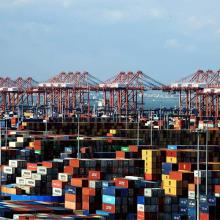

I. Overview of RCEP and Tariff Preferences
1.1 What is RCEP?
RCEP (Regional Comprehensive Economic Partnership) is the world's largest free trade agreement.
| Item | Data |
| Effective Date | January 1, 2022 (first batch of member states) |
| Number of Member States | 15 |
| Population Covered | Approximately 2.3 billion (approx. 30% of global population) |
| Economic Scale | Approximately USD 26 trillion (approx. 30% of global GDP) |
| Trade Volume | Approximately 28% of global trade |
1.2 The 15 Member States
| Region | Countries |
| ASEAN 10 | Thailand, Vietnam, Malaysia, Singapore, Indonesia, Philippines, Brunei, Cambodia, Laos, Myanmar |
| Northeast Asia 3 | China, Japan, South Korea |
| Oceania 2 | Australia, New Zealand |
Notably, RCEP establishes the first-ever FTA relationship between China and Japan, and between Japan and South Korea—prior to this, there were no bilateral FTAs between Japan and China, or between Japan and South Korea.
1.3 Core Value of RCEP Tariff Preferences
RCEP → Progressive tariff elimination among member states → Lower raw material import costs → Enhanced price competitiveness of exports
                                                                  → Access to new export markets → Enjoy importing country tariff concessions
The core value of RCEP tariff preferences for Chinese foreign trade enterprises is reflected in three dimensions:
| Dimension | Benefit |
| Import Side | Reduced tariffs on raw materials, components, and equipment imported from RCEP member states, lowering procurement costs |
| Export Side | Exported products to RCEP member states enjoy tariff concessions, improving price competitiveness |
| Supply Chain | Leverage rules of origin cumulation to optimize regional supply chain layout |
II. RCEP Rules of Origin
2.1 What are Rules of Origin?
Rules of origin are the criteria for determining a product's "nationality"—only goods that meet the rules of origin can enjoy RCEP preferential tariffs.
2.2 The Three Origin Criteria under RCEP
| Criterion | Description | Applicable Scenarios |
| Wholly Obtained (WO) | Goods are wholly obtained or produced in a single country (e.g., natural products, grown/raised/extracted in that country) | Agricultural products, mineral products |
| Regional Value Content (RVC ≥ 40%) | The regional value added within RCEP reaches or exceeds 40% | Processed/manufactured goods |
| Change in Tariff Classification (CTC) | The HS code changes at the 4-digit level after processing | More complex manufacturing processes |
2.3 RCEP's Core Innovation: Cumulation Rules
Cumulation Rules are the core institutional advantage of RCEP's rules of origin and a key differentiator from traditional bilateral FTAs.
Traditional FTA Cumulation:
  Chinese raw materials → Processing in China → Export to South Korea → Enjoy China-Korea FTA tariff preferences
  Only cumulation between China and South Korea

RCEP Cumulation:
  Chinese raw materials (50%) + Japanese components (20%) + Vietnamese processing (30%)
  → Total regional value content 100% → Meets RVC ≥ 40% → Enjoy RCEP tariff preferences
  → This is a regional value chain!
2.4 Regional Value Content (RVC) Calculation Method
Regional Value Content is a key indicator for determining whether goods meet RCEP origin criteria. The calculation formula is:
RVC = (FOB Price - Value of Non-Originating Materials) / FOB Price × 100%
Where:
- FOB Price: The free-on-board price of the goods (excluding international freight and insurance)
- Value of Non-Originating Materials: The value of raw materials/components sourced from non-RCEP member states
Judgment Standard: RVC ≥ 40% → Meets RCEP origin criteria → Eligible for preferential tariffs
Practical Calculation Example:
| Item | Amount (USD) | Description |
| FOB Export Price | 10,000 | Finished product export unit price |
| Of which: Chinese raw materials | 4,500 | Sourced from Chinese suppliers (within RCEP region) |
| Of which: Japanese components | 2,000 | Precision bearings imported from Japan (within RCEP region) |
| Of which: Non-RCEP materials | 2,500 | Control chips imported from the US (outside RCEP region) |
| Processing cost + Profit | 1,000 | Value added through processing in China |
RVC Calculation:
RVC = (10,000 - 2,500) / 10,000 × 100% = 75%
Conclusion: RVC = 75% > 40% → ✅ Meets RCEP origin criteria → Eligible for tariff preferences when exporting to Japan with RCEP certificate
Practical Tip: Even if raw materials are sourced from multiple countries within the region (China + Japan + South Korea + ASEAN, etc.), as long as the value of non-RCEP materials does not exceed 60% of FOB (i.e., regional value ≥ 40%), the criteria are met. Cumulation rules make this threshold easier to achieve.
Significance of Cumulation Rules:
- Components produced in one RCEP member state can count toward origin value when processed in another member state
- Raw materials and processing from multiple countries along the regional supply chain can be cumulated toward regional value
- Significantly lowers the threshold for enjoying tariff preferences
Practical Application Examples:
| Scenario | Traditional FTA | RCEP |
| Chinese fabric → Garments made in Vietnam → Export to Japan | Chinese fabric does not qualify under China-Japan FTA (none exists) | Fabric (China) + Processing (Vietnam) → RCEP regional cumulation → Export to Japan enjoys RCEP tariff preferences |
| Japanese steel → Processed into parts in China → Export to South Korea | China-Korea FTA only considers value from China and Korea | Steel (Japan) + Processing (China) → RCEP regional cumulation → Export to South Korea enjoys RCEP tariff preferences |
Cumulation rules are particularly beneficial for enterprises that distribute their supply chains within the RCEP region—sourcing raw materials or components from different member states, processing in another member state, and still enjoying tariff preferences upon export.
III. RCEP Tariff Concession Arrangements
3.1 Tariff Concession Models
RCEP member states have committed to progressively eliminating tariffs through the following models:
| Tariff Reduction Model | Description | Final Tariff Level | Transition Period |
| Model 1: Immediate Zero Tariff | Zero tariff implemented immediately upon agreement entry into force | 0% | None |
| Model 2: Linear Tariff Reduction (S) | Gradual reduction to zero tariff over 10–15 years | 0% | 10–20 years |
| Model 3: Partial Tariff Reduction | Reduced to agreed rate but not zero (with conditions) | Agreed Rate | No zero tariff |
| Model 4: Exceptions (U) | No tariff reduction; MFN rates maintained | MFN Rate | No reduction |
3.2 Tariff Commitments of Major Member States
| Member State | Final Zero-Tariff Product Ratio | Transition Period |
| China | Approx. 90% | 10–15 years |
| Japan | Approx. 86% | 11–16 years |
| South Korea | Approx. 86% | 10–20 years |
| Australia | Approx. 96% | 10 years |
| New Zealand | Approx. 96% | 10 years |
| ASEAN Member States | Approx. 90% | 10–15 years |
3.3 China-Japan Tariff Reduction Highlights
RCEP establishes the first-ever FTA tariff relationship between China and Japan. The most valuable concessions for Chinese exporters include:
| Chinese Exports to Japan | Concession Arrangement |
| Machinery/Electrical Products (Chapters 84/85) | Tariffs eliminated immediately or within 15 years |
| Textiles and Apparel | Tariffs eliminated within 10–16 years |
| Aquatic/Agricultural Products (selected) | Some immediately zero tariff; others reduced over 10–15 years |
| Furniture | Tariffs eliminated immediately or within 10 years |
| Bicycles | Tariffs eliminated immediately |
3.4 How to Query Tariff Concession Schedules
Each member state's tariff concession arrangements are published as "Tariff Concession Schedules." How to search:
- Go to China Free Trade Area Service Network (fta.mofcom.gov.cn)
- Select "RCEP" → "Tariff Concession Query"
- Enter HS code and export destination country → View tariff rates by year
IV. RCEP Practical Implementation Steps
4.1 Complete Process for Utilizing RCEP Tariff Preferences
① Confirm the product is listed in the RCEP tariff concession schedule
    ↓
② Confirm the product meets rules of origin criteria (RVC ≥ 40% or CTC or WO)
    ↓
③ Confirm qualification as exporter or producer of originating goods
    ↓
④ Apply for RCEP Certificate of Origin from customs or CCPIT
    ↓
⑤ Send RCEP Certificate of Origin to the importer with the shipment or electronically
    ↓
⑥ Importer applies for RCEP preferential tariff rate upon import declaration using the CO
    ↓
⑦ Enjoy tariff reduction
4.2 Applying for RCEP Certificate of Origin
The application process for the RCEP Certificate of Origin is similar to other preferential certificates of origin (see Section 3.2).
Special Advantages:
| Feature | Description |
| Self-Printing | Authorized exporters approved by customs can self-print RCEP certificates |
| Back-to-Back Certificates | When transshipping between RCEP member states, a back-to-back certificate can be issued based on the original CO, preserving tariff preferences |
| Extended Retroactive Issuance | Can be issued retroactively within 1 year of export (compared to 7–14 days for FORM E) |
| Electronic Data Transmission | Electronic data exchange between customs systems; importers can verify online |
4.3 Practical Examples
Case 1: Chinese Factory Exporting to Japan
Case 2: RCEP Supply Chain Optimization
V. RCEP vs. Other FTAs – Choosing the Right One
5.1 When Both RCEP and Bilateral FTAs Apply
For the following countries, China has both bilateral FTAs and RCEP applicability:
| Country | Bilateral FTA | RCEP | Which is More Preferential? |
| South Korea | China-Korea FTA | RCEP | Compare by specific HS code; choose the lower rate |
| Australia | China-Australia FTA | RCEP | China-Australia FTA already largely full zero-tariff |
| New Zealand | China-New Zealand FTA | RCEP | China-New Zealand FTA already largely full zero-tariff |
| ASEAN 10 | China-ASEAN FTA | RCEP | Some products better under RCEP; compare case by case |
| Japan | ❌ No bilateral FTA | RCEP is the only option | Must use RCEP |
Decision Principle:
1. Compare tariff rates for the same HS code under both agreements → Choose the lower rate
2. Compare ease of meeting rules of origin → Choose the easier option
3. Can flexibly switch between RCEP and bilateral FTAs (different products/years choose different agreements)
5.2 Unique Advantages of RCEP
Even where bilateral FTAs exist, RCEP offers the following unique value:
| Advantage | Compared to Bilateral FTAs |
| Rules of Origin Cumulation (15-country cumulation) | Bilateral FTAs can only cumulate value between two countries |
| Back-to-Back Certificates of Origin | Generally not supported by bilateral FTAs |
| Retroactive Issuance Period of 1 Year | Bilateral FTAs generally 7–14 days |
| Uniform Rules of Origin | Single standard across 15 countries, reducing compliance costs |
VI. Industry Distribution of RCEP Tariff Benefits
6.1 Industries Most Benefiting Chinese Exporters
| Industry | RCEP Benefit | Primary Beneficiary Markets |
| Textiles & Apparel | Japan progressively eliminates tariffs on Chinese apparel (previously 10%–15% on some categories) | Japan |
| Machinery & Electronics | Major RCEP members eliminate or significantly reduce tariffs on mechanical/electrical products | Japan, South Korea, ASEAN |
| Auto Parts | Japan and South Korea reduce import tariffs on auto parts | Japan, South Korea |
| Plastic & Rubber Products | ASEAN, Japan, and South Korea reduce tariffs | ASEAN, Japan, South Korea |
| Furniture & Toys | Japan and South Korea → Zero tariff | Japan, South Korea |
| Aquatic/Agricultural Products | Tariff preferences (with quota restrictions) | Japan, South Korea |
6.2 Import-Side Benefits (Lowering Procurement Costs)
The following imports from RCEP member states enjoy tariff concessions:
| Imported Goods | Major Source Countries | Tariff Change |
| Integrated Circuits/Semiconductors | Japan, South Korea | Progressive reduction to 0% |
| Auto Parts/Engines | Japan, South Korea | Progressive reduction |
| Chemicals | Japan, South Korea, Singapore | Progressive reduction |
| Mineral Products | Australia | Some immediately zero-tariff |
| Agricultural Products | ASEAN, New Zealand, Australia | Preferential within quotas |
VII. Practical Recommendations for RCEP Utilization
7.1 Immediate Action Checklist
- ✅ Review Product Portfolio: Check the RCEP tariff concession schedule to see if your main import/export products are within the reduction scope
- ✅ Assess Origin Criteria: Calculate whether RVC ≥ 40%, or whether tariff classification change criteria are met
- ✅ Update Supply Chains: Re-evaluate suppliers and procurement strategies within the RCEP region
- ✅ Train Customs Teams: Train staff on certificate of origin processing and RCEP declaration operations
- ✅ Communicate with Customers/Suppliers: Inform overseas customers that RCEP certificates are available to help them reduce import costs
7.2 Medium-to-Long-Term Strategy
- Supply Chain Restructuring: Assess whether increasing procurement from RCEP member states can help meet origin criteria
- Market Expansion: Leverage RCEP tariff preferences to enter new markets such as Japan (previously less competitive due to high tariffs)
- Origin Management: Establish an RCEP origin data management system to track regional value content for each product
- Tariff Planning: Incorporate RCEP tariff concessions into annual procurement and sales planning
7.3 Common Misconceptions
| Misconception | Fact |
| "All goods become zero-tariff immediately when RCEP takes effect" | Most products have 10–20 year tariff reduction transition periods |
| "RCEP and bilateral certificates can be used simultaneously" | Only one certificate of origin can be used for the same shipment |
| "RCEP rules are too complex for small businesses to use" | Self-printing and electronic transmission lower the barrier for SMEs |
| "RCEP only benefits large enterprises" | SMEs enjoy equally simplified procedures; tariff savings directly impact profitability |
| "RCEP only affects import/export" | RCEP also covers services trade, investment, IPR, and many other areas |
VIII. Key Reference Resources
| Resource | Purpose | Website |
| China Free Trade Area Service Network | RCEP tariff concession schedule queries | fta.mofcom.gov.cn |
| China International Trade Single Window | RCEP certificate of origin declaration | www.singlewindow.cn |
| GAC RCEP Portal | Latest RCEP implementation announcements | www.customs.gov.cn |
| CCPIT RCEP Services | Certificate issuance + training | www.ccpit.org |
📌 This article references RCEP tariff concession schedules as per the latest GAC announcements. RCEP tariff preferences are being progressively implemented; annual tariff rates are subject to the applicable tariff schedule published by the General Administration of Customs.
📞 Bofeng Logistics provides one-stop RCEP tariff planning and advisory services, covering RCEP rules of origin analysis, tariff concession queries, certificate of origin processing, and supply chain optimization recommendations. To learn how your products can benefit from RCEP preferences, please call 13075678958 or email info@zhbfwl.com.
📖 Next: "5.1 Complete Export Clearance Process" — Detailed walkthrough of Declaration → Review → Inspection → Release → Customs Closure
Related Reading: "3.2 Certificate of Origin Application Comparison" | "6.6 RCEP Member State Clearance Differences"
Bofeng Logistics specializes in domestic/international container shipping, Hong Kong/Macau logistics services, and value-added services (trucking, customs brokerage, warehousing, insurance).
Customs brokerage service areas: Zhuhai, Guangzhou, Shenzhen.
Related Logistics Services
Bofeng Logistics offers the following related services, feel free to inquire: