"Transit port," "What is a transit port?" "What does transit port mean?" A "transit port," also sometimes called a "transshipment point," refers to a port where cargo, while traveling from the port of departure to the port of destination, passes through a third port along the route. At this port, the transport vehicle stops for operations such as loading and unloading cargo, replenishment, etc., and the cargo is transferred to another transport vehicle to continue its journey to the destination. This includes both one-time transshipment by the shipping company and cargo owners changing bills and transferring vessels for tax exemption reasons. The status of a "transit port": Transit ports are generally base ports, so the vessels calling at transit ports are typically large ships from international mainline shipping routes and feeder vessels traveling between regional ports.
Regarding the choice between transshipment and direct routes, see Direct vs. Transshipment: A Guide to Choosing Shipping Routes; for global route layouts, see Major International Shipping Routes and World Major Shipping Route Maps and Route Types.
Unloading Port/Place of Delivery = Transshipment Port/Destination Port?
If it refers only to sea freight, the unloading port indeed means the "transshipment port," and the place of delivery means the destination port. When booking cargo, generally you only need to specify the place of delivery; whether transshipment is needed or which transshipment port to use is decided by the shipping company. In the case of multimodal transport, the unloading port refers to the destination port, and the place of delivery refers to the final destination. Since different unloading ports result in different transshipment fees, the unloading port must be specified when booking cargo.
The Wonders of Transshipment Ports
1. Duty-free: Here we are talking about segmented transshipment. If the "transshipment port" is designated as a free trade port, it can achieve the purpose of reducing or exempting tariffs. For example, Hong Kong is a free trade port. If goods are transshipped through Hong Kong, goods not subject to special national regulations can basically achieve export duty exemption, and may even receive tax rebates or subsidies.
2. Holding cargo: Here we are talking about transshipment by shipping companies. In international trade, various factors may cause goods to be unable to proceed midway, making it necessary to hold the cargo. The shipper can apply to the shipping company for detention before the goods arrive at the "transshipment port". After the trade issue is resolved, the goods are then shipped to the port of destination. This is often easier to handle than direct vessels. However, the cost is not low.
Transshipment Port Code
A ship will call at multiple ports, so the port entry codes filed by the ship at the same terminal—that is, the subsequent transshipment port codes—are numerous. If the shipper fills in the code arbitrarily and it cannot be matched, the container will not be able to enter the port. If it is matched but is not actually the transshipment port, then even if the container enters the port and is loaded onto the ship, it may be unloaded at the wrong port. Even if the code is corrected before the vessel is arranged, the container may still be unloaded at the wrong port. The cost of re-transshipment is very high, and a hefty fine may also be incurred.
Distribution of Major Global Transshipment Ports
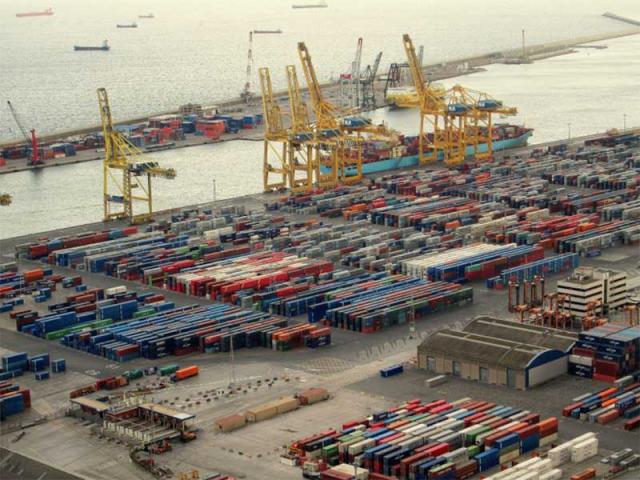
Major global transshipment ports are concentrated at the intersections of international trunk routes and regional feeder routes, serving the functions of container consolidation and transshipment. Common major transshipment ports include:
- Hong Kong — one of the busiest free trade ports in the Far East, connecting mainland China with global trunk routes, and an important transshipment node for routes from Southeast Asia to Europe and the Americas;
- Singapore — the core hub of the Strait of Malacca, where major Asia-Europe trunk routes and Southeast Asian feeder routes converge, with container throughput consistently ranking among the world's top;
- Busan (South Korea) — an important transshipment center in Northeast Asia, linking China, Japan, South Korea, and trans-Pacific routes;
- Colombo (Sri Lanka) — an important transshipment port on Indian Ocean routes, connecting the Middle East, South Asia, and deep-sea trunk lines;
- Jebel Ali (Dubai, UAE) — a distribution center in the Middle East, covering the Persian Gulf and surrounding markets;
- Rotterdam (Netherlands) and Hamburg (Germany) — two core gateway ports in Europe, serving as important transshipment and distribution nodes for Asia-Europe routes entering the European hinterland.
Whether a specific route calls at a transshipment port and how transshipment fees are calculated depend on the shipping company's port call arrangements and booking terms; you can consult a freight forwarder for confirmation.
Transshipment Port and Transshipment Terms
In the process of international cargo transportation, due to geographic, political, or economic reasons, cargo may need to be transshipped at certain ports or other locations. When booking space, it is necessary to define the transshipment port. However, it ultimately depends on whether the shipping company accepts transshipment at that location. If accepted, the terms for the transshipment port are clear, usually indicated after the port of destination, generally connected by “VIA” or “W/T (with transshipment at…, transshipped at…)”. For example:
Port of Loading: Shanghai, China VIA Hong Kong
Port of Destination: London, UK W/T Hong Kong
In actual practice, we must not directly regard the “transshipment port” as the port of destination, so as to avoid transport errors and unnecessary losses. Because the transshipment port is only a temporary port for transferring cargo, not the final destination of the goods.
Bofeng Logistics provides one-stop logistics services including domestic container shipping, international shipping (FCL/LCL), Hong Kong and Macau logistics dedicated lines, as well as trailer, customs declaration, and warehousing. Contact: 130-7567-8958 (Manager Huang), call now for a customized quote!
Transshipment Port FAQ
Q: What is the difference between a transshipment port and a destination port?
A: A transshipment port is a temporary stop where cargo is transferred between transport modes en route; it is not the final destination. The destination port (place of delivery) is where the cargo is ultimately unloaded and delivered. This must be clearly indicated when booking space.
Q: Is transshipment always slower than a direct route?
A: Generally, transshipment may add several days compared to a direct route due to cargo handling and waiting for connecting vessel schedules. However, transshipment offers a more frequent choice of mainline schedules, so the total transit time is not necessarily worse. Whether transshipment is used depends on the shipping company's route arrangements and booking terms.
Disclaimer: This article was compiled by the Bofeng Logistics team, with content verified in 2026-08. Route and port information may change due to shipping company port adjustments, market conditions, and policy changes. Please refer to the confirmed information at the time of booking.
Related Logistics Services
Bofeng Logistics offers the following related services, feel free to inquire: