Foreign trade is not a "two-person act" between buyer and seller — a shipment of goods involves collaboration among multiple parties, from the factory to the foreign customer. Understanding the roles and responsibilities of each participant helps newcomers know who to turn to and what each party should do.
I. The Trading Parties — Exporter and Importer
Exporter (Seller/Supplier)
The exporter is the provider of goods, which can be a factory (production-based export enterprise) or a trading company (foreign trade company).
| Type | Features | Suitable Products |
|---|---|---|
| Factory Direct Export | Price advantage, control over production progress | Own brands, customized products |
| Trading Company Export | Flexible supplier selection, multi-category combinations | Multi-category small orders, quick-response type |
Importer (Buyer/Customer)
The importer is the recipient of the goods, which can be a brand owner, wholesaler, retailer, or consumer (B2C).
Main Transaction Process for Both Parties
Exporter: Quote → Order Acceptance → Prepare Goods → Customs Declaration → Deliver Bill of Lading → Receive Payment
Importer: Inquiry → Place Order → Pay Deposit → Pay Balance → Take Delivery → Sell
II. Logistics Participants
Freight Forwarder
The freight forwarder is the "window" for foreign trade companies to connect with logistics, handling most logistics coordination work.
Main Services of Freight Forwarder:
| Service Item | Description |
|---|---|
| Booking | Reserving space with shipping lines/airlines |
| Truck Dispatching | Arranging trailers to load goods at factory |
| Customs Declaration Coordination | Coordinating with customs brokers for export declaration |
| Document Processing | Preparing/reviewing B/L, cargo manifests, etc. |
| Fee Settlement | Collecting and paying ocean freight, port charges, etc. |
| Cargo Tracking | Tracking goods from exit factory to destination port |
For newcomers, a good freight forwarder can solve most logistics problems. It is recommended to treat them more like a partner than a supplier.
Carrier (Shipping Line/Airline/Trucking Company)
The carrier is the company that actually transports the goods:
| Transport Mode | Main Carriers | Features |
|---|---|---|
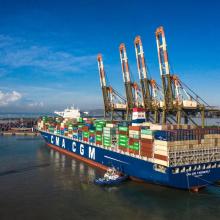
| Sea Freight | COSCO, MSC, MAERSK, CMA CGM, EVERGREEN | Low cost, long time |
| Air Freight | Airlines, DHL/UPS/FedEx | High cost, short time |
| Rail Freight | CR Express Platform Companies | Between sea and air freight |
| Truck Freight | Domestic transport companies/fleets | Short distance/cross-border land transport |
Warehousing and Trucking Companies
- Trucking Company: Provides container trucking services (terminal ↔ factory)
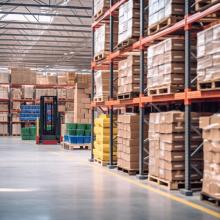
- Warehousing Company: Provides cargo storage/distribution/value-added services
- Customs Broker: Acts as agent for customs declaration/public inspection
Among logistics costs for a shipment, freight cost (sea/air freight) accounts for the largest part, but trucking and port charges also have a significant share.
III. Regulatory and Service Agencies
Customs
Customs is the regulatory authority for imported and exported goods. Every shipment of exported or imported goods must be declared to Customs. Main functions of Customs:
| Function | Description |
|---|---|
| Supervision | Monitor the compliance of import and export goods |
| Taxation | Collect customs duties and import VAT |
| Inspection | Conduct random or targeted inspection of declared goods |
| Statistics | Compile international trade statistics |
Commodity Inspection Agency
Some export goods are subject to mandatory inspection to confirm they meet quality and safety standards before export. The main inspection agency in China is China Inspection and Certification Group (CCIC) and the inspection department within Customs.
Banks
The role of banks in foreign trade should not be overlooked:
| Service | Description |
|---|---|
| International Settlement | T/T remittance, L/C (Letter of Credit), D/P collection, etc. |
| Trade Finance | Packing loan, export bill discounting, forfaiting, etc. |
| Foreign Exchange Management | Exchange settlement/purchase, foreign exchange verification |
| Credit Investigation | Investigate the credit status of foreign buyers |
IV. Other Supporting Agencies
| Agency/Role | Function |
|---|---|
| Insurance Company | Provide risk protection for cargo transport |
| Chamber of Commerce/Trade Association | Industry information, exhibition organization, trade promotion |
| CCPIT/Consulate | Commercial certification, certificate of origin issuance, trade dispute assistance |
| International Arbitration Body | Resolve trade disputes (e.g., ICC International Court of Arbitration) |
V. Collaboration of Participants in One Export Shipment
Take the most common CIF export scenario as an example to see how the participants collaborate:
Step 1: Exporter → Signs sales contract with importer
Step 2: Exporter → Consigns freight forwarder for export logistics
Step 3: Freight Forwarder → Book space with shipping line, obtain S/O
Step 4: Freight Forwarder → Arrange trailer to load goods at factory
Step 5: Freight Forwarder → Instruct customs broker for customs declaration
Step 6: Customs → Examines and clears goods for release
Step 7: Shipping Line → Loads containers onto vessel for shipment
Step 8: Freight Forwarder → Issues bill of lading (B/L) to exporter
Step 9: Exporter → Hands documents including B/L to importer
Step 10: Importer → Uses B/L to pick up goods at destination port
Each participant in each step performs their role, coordinating to complete the international trade circulation of one shipment.
💡 After understanding each participant's role → Go to the next chapter to learn about International Commercial Terms (Incoterms), clarifying seller/buyer responsibilities and cost allocation.
📞 Need logistics services? Bofeng Logistics offers international sea freight, domestic sea freight, Hong Kong/Macau dedicated lines, and value-added services, providing a one-stop solution for your logistics needs. Hotline: 13075678958 | info@zhbfwl.com
Related Logistics Services
Bofeng Logistics offers the following related services, feel free to inquire: