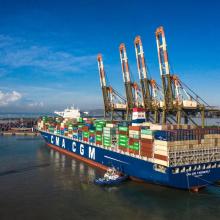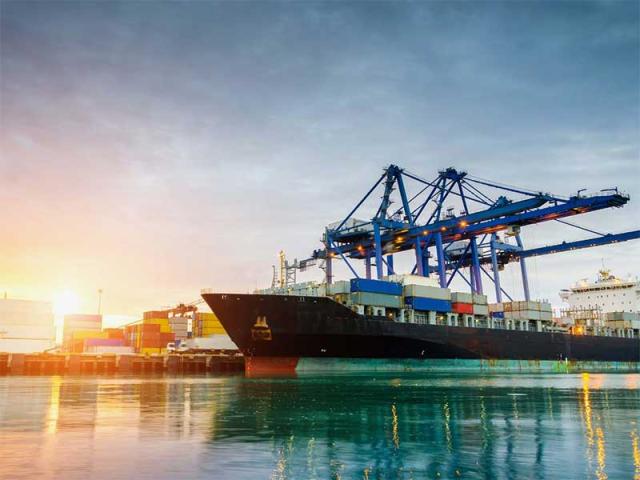
Foreign trade exports mainly include: quotation, order, payment methods, production preparation, packaging, customs clearance procedures, shipment, transport insurance, bill of lading, and exchange settlement.
1. Quotation
In international trade, trade usually begins with product inquiry and quotation. The quotation for export products mainly includes: product quality grade, product specifications and models, special packaging requirements, purchase quantity, delivery date requirements, transport method, product materials, etc.
Commonly used quotations include: FOB "Free On Board", CNF "Cost and Freight", CIF "Cost, Insurance and Freight", etc.
2. Order (Contract) – if your customer agrees with the price, then will place an order to you);
Once both parties agree on the quotation, the buyer formally places an order and negotiates related matters with the seller. After mutual agreement, a "Purchase Contract" is signed. During contract signing, negotiations cover product name, specifications, quantity, price, packaging, origin, shipment date, payment conditions, settlement methods, claims, arbitration, etc., and the agreement is written into the contract. This marks the official start of the export business. Usually, the purchase contract is prepared in duplicate, stamped by both parties, and each retains one copy.
3. Payment Terms
Common international payment methods include four types: Letter of Credit (L/C), Telegraphic Transfer (T/T), direct payment, and PayPal payment.
1) Letter of Credit (L/C)
L/C is divided into clean L/C and documentary L/C. Documentary L/C requires specific documents; clean L/C requires no documents. Simply put, an L/C guarantees payment to the exporter. Note that the shipment date must be within the L/C validity, and documents must be presented no later than the L/C expiry date.
In international trade, L/C payment is common, and the issuance date must be clear. Several Chinese state-owned banks, such as Bank of China, China Construction Bank, Agricultural Bank of China, and ICBC, can issue L/Cs (usually with a fee of 1.5‰ of the L/C amount).
Remark: L/C payment requirements are strict; check terms carefully to avoid disputes during shipment. Some customers may take advantage of translation ambiguities – terrible!
Best to use the second method.
2) T/T Payment
T/T payment settles in foreign currency cash; the client remits funds to your designated foreign exchange account. Payment can be requested within a certain period after delivery.
3) Direct Payment
Direct delivery and payment between buyer and seller: usually cash or cheque.
PS: Prior to mass production, at least 30% payment is required; balance due before shipment or after loading, otherwise original B/L is not released.
4) PayPal Payment
This method is also safe. For details, see PayPal official website: www.paypal.com
4. Production Preparation
Production preparation is crucial in the trade process; it must comply with the contract. Main checks:
1) Quality and specifications: Verified per contract.
2) Quantity: Ensure fulfillment of contract or L/C requirements.
3) Preparation time: Align with L/C and shipping schedule for smooth coordination.
5. Packaging
Choose packaging forms according to goods (e.g., cartons, wooden cases, woven bags). Different forms have different requirements.
1) Standard export packaging: General trade export standards.
2) Special export packaging: Customized per client requirements.
3) Packaging and marks (shipping marks): Must be checked and align with L/C/contract requirements.
6. Customs Declaration (or use a customs broker) – custom declaration
Customs procedures are cumbersome and vital; without clearance, transactions fail.
1) Goods subject to statutory inspection need export commodity inspection certificates.
China's import/export inspection involves four stages:
○ Acceptance of inspection application: Trade party applies to inspection authority.
○ Sampling: Inspectors go to the goods location for inspection.
○ Inspection: Review inspection items, verify contract/L/C requirements, determine standards and methods (e.g., sample, instrumental, physical, sensory, micro testing).
○ Certificate issuance: For goods on the "list", a release order is issued after inspection (or stamped on the export declaration form).
2) Authorized customs declarants handle procedures with packing list, invoice, customs entrustment letter, exchange settlement verification sheet, export contract copy, and inspection certificate.
○ Packing list: Details of packed export goods.
○ Invoice: Proof of exported goods.
○ Customs entrustment letter: For those without declaration capability.
○ Export verification sheet: Applied by export units from foreign exchange bureau for tax refund.
○ Inspection certificate: Issued by entry-exit inspection authorities; valid for contract fulfillment, disputes, arbitration, customs assessment, and tariff reduction/exemption.
7. Ship on Board
Choose shipment method based on cargo volume, and arrange insurance per the purchase contract. Options:
1) Full container load (FCL).
2) Less than container load (LCL) – freight calculated by volume or weight.
PS: Arrange with shipping company or freight forwarder before goods are ready; after completion, use the booking note to have a container delivered and loaded, transport to the designated port location. Provide pack list and other details to customs officer and shipping agent for bill of lading.
8. Transport Insurance
Usually pre-agreed in the purchase contract. Common types include marine cargo, and land/air/post insurance. Marine insurance includes basic and additional coverages:
1) Basic coverages: Free from Particular Average (F.P.A.), With Average (W.A. / W.P.A.), and All Risks (A.R.). F.P.A. covers total loss from natural disasters; total loss during loading/transshipment; general average contributions; and partial loss from fire, explosion, collision, etc. W.A. adds risks from adverse weather, lightning, tsunami, flood, etc. All Risks covers all risks under W.A. plus general additional risks.
2) Additional coverages: General additional (theft, rain, shortage, leakage, breakage, hooks, contamination, packing breakage, mold, heat, odor, etc.) and special additional (war, strike).
9. Bill of Lading (B/L)
A bill of lading is issued by the shipping company after customs clearance, for importer to take delivery and settle payment. Usually three copies (two kept by exporter for tax refund, one sent to importer).
For sea shipment, the importer must present original B/L, packing list, and invoice. For air shipment, fax copies are acceptable.
PS: Freight forwarder or shipping company may require payment of local charges before releasing the original B/L. To avoid non-payment, withhold the original B/L; check port charges and local laws in the buyer's country.
10. Exchange Settlement
After export, the exporter prepares documents (packing list, invoice, B/L, certificate of origin, etc.) and submits them to the bank for negotiation and settlement within the L/C validity.
Other payment remittance methods include Telegraphic Transfer (T/T), Demand Draft (D/D), and Mail Transfer (M/T). Due to digitization, T/T is most common. (In China, export enterprises benefit from tax rebate policies.)
Pofo Logistics specializes in domestic container sea freight, international sea freight (FCL/LCL), Hong Kong/Macao logistics dedicated routes, and one-stop logistics services including trucking, customs clearance, and warehousing. Contact: 130-7567-8958 (Manager Huang), call now for your exclusive quote!
Related Logistics Services
Bofeng Logistics offers the following related services, feel free to inquire: