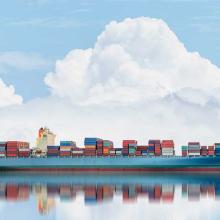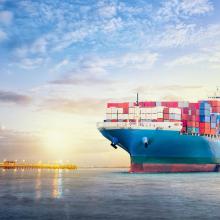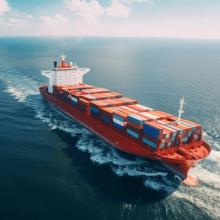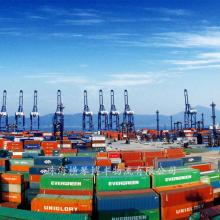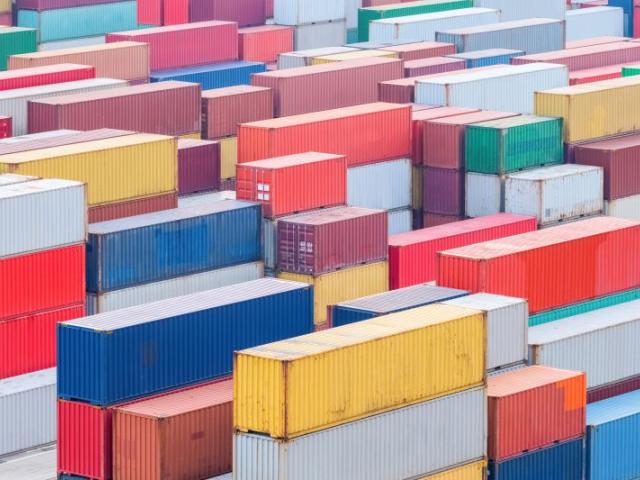
International maritime shipping, as a vital component of global trade, relies on standardized shipping containers to transport goods safely and efficiently. These containers not only ensure the protection of cargo during ocean voyages but also facilitate loading, unloading, and stacking, greatly enhancing logistics efficiency. Below are several common types of international shipping containers and their characteristics:
1. General Purpose Container (GP)
- Dimensions: Mainly available in 20-foot (approx. 6m long, 2.2m wide, 2.3m high) and 40-foot (approx. 12m long, same width and height as 20ft).
- Uses: Suitable for most dry cargo, such as mechanical parts, furniture, electronics, and other non-hazardous goods.
- Capacity: The 20ft container has a theoretical volume of about 30 cubic meters, with actual usable volume around 25-27 cubic meters; the 40ft container has a theoretical volume of about 60 cubic meters, with actual usable volume around 55-57 cubic meters.
2. 40ft High Cube Container (HC)
- Dimensions: Same length as the 40ft standard container, but height increased to approximately 2.8m.
- Uses: Suitable for goods with large volume but relatively light weight, such as textiles and plastic products.
- Capacity: Theoretical volume of about 73 cubic meters, with actual usable volume around 68-70 cubic meters.
3. Open Top Container
- Features: The top can be opened, with no hard roof or a removable tarpaulin cover.
- Uses: For oversized height cargo or goods that need to be loaded from above, such as heavy machinery or steel products.
4. Reefer Container
- Features: Equipped with temperature control devices to maintain a constant temperature.
- Uses: For transporting perishable food, pharmaceuticals, and other temperature-controlled goods.
5. Flat Rack Container
- Features: No side walls or end walls, only a base floor and two fixed end beams.
- Uses: For transporting extra-long, extra-wide, or irregularly shaped cargo, such as steel pipes and large mechanical equipment.
6. Bulk Container
- Features: Specifically designed for bulk cargo, often with special leak-proof and ventilation designs.
- Uses: For transporting grain, powder, or granular goods.
7. 20ft Heavy-Duty Container
- Features: Same dimensions as the standard 20ft container, but with enhanced load-bearing capacity.
- Uses: Suitable for goods that are heavy in weight yet relatively small in volume.
8. Special-Sized Containers (e.g., 45ft, etc.)
- Features: Dimensions that fall between standard sizes, offering additional capacity options.
- Uses: Customized based on specific cargo requirements, providing higher flexibility.
Notes:
- Actual loading capacity may vary due to factors such as cargo density, packaging methods, and safety requirements.
- When selecting the appropriate container type, consider the nature, volume, weight, loading/unloading method of the cargo, as well as the facility conditions at the destination.
- International shipping must also comply with various international safety and environmental standards, including but not limited to the International Convention for the Safety of Life at Sea (SOLAS) and the International Convention for Safe Containers (CSC).
Bofeng Logistics specializes in providing one-stop logistics services including domestic container shipping, international shipping (FCL/LCL), Hong Kong and Macau logistics routes, as well as trucking, customs clearance, and warehousing. Contact number: 130-7567-8958 (Manager Huang), call now for a customized quotation!
Related Logistics Services
Bofeng Logistics offers the following related services, feel free to inquire: