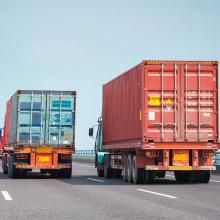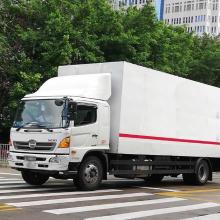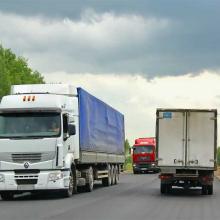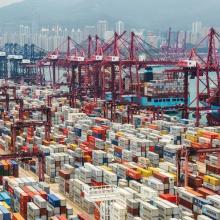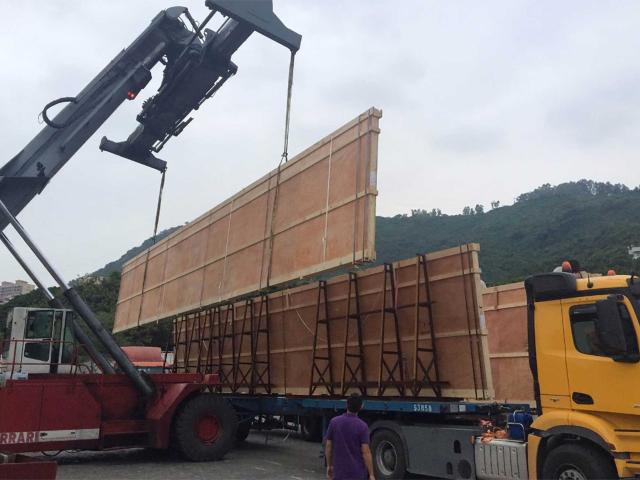
Sino-Hong Kong freight trucks and Hong Kong cargo trucks, as the name suggests, refer to trucks used for freight transport services between Mainland China and Hong Kong. Sino-Hong Kong freight trucks can be broadly divided into three categories: tonnage trucks, container trucks, and special vehicles, each with further subdivisions based on load capacity and container size.
- Sino-Hong Kong Tonnage Trucks Tonnage trucks are named according to their load capacity registered with customs. Common tonnages include 3-ton, 5-ton, 8-ton, 10-ton, and 12-ton trucks. These vehicles are typically box-type trucks and are suitable for general trade imports and exports, less-than-container-load (LCL) consolidation, or Sino-Hong Kong express services. Due to their high flexibility and adaptability, tonnage trucks can meet different customer requirements for cargo volume, making them especially suitable for the rapid transport of small to medium-sized batches of goods.
- Sino-Hong Kong Container Trucks (Container Trailers) Container trucks are mainly used to transport standard containers. Common container sizes include 20ft GP (General Purpose), 40ft GP, 40ft HQ (High Cube), and 45ft GP. These vehicles are suitable for long-distance transport of bulk cargo, particularly for goods that require keeping the original cargo seal intact or have special temperature requirements, such as food and pharmaceuticals transported via refrigerated containers.
- Special Vehicles
Such as refrigerated trucks, dangerous goods transport trucks, and crane trucks, specially serving goods with specific temperature control or safety transport requirements.
Sino-Hong Kong Freight Truck Transport Process
- Order Reception and Preparation After the customer places an order, the logistics company arranges an appropriate truck based on factors such as the nature, volume, and weight of the cargo, and prepares the necessary customs clearance documents.
- Loading Cargo is loaded at the designated location, ensuring it is secured and meets safety transport standards.
- Customs Declaration After loading, the truck proceeds to the border port for export customs declaration procedures, including submitting relevant documents and paying tariffs.
- Cross-Border Transport Following customs inspection, the truck passes through the Mainland China port and crosses the border to the Hong Kong port, where import clearance is conducted. After release, the truck enters Hong Kong.
- Unloading and Delivery at Destination Upon arrival at the Hong Kong destination, unloading is carried out, import customs clearance is completed, and the cargo is finally delivered to the consignee.
Sino-Hong Kong Freight Truck Selection
Sino-Hong Kong freight trucks must possess cross-border license plates for both Mainland China and Hong Kong to operate legally. Different truck tonnages are suitable for different cargo volumes. Choosing the right type of truck can optimize transportation costs. Bofeng Logistics offers a variety of Sino-Hong Kong trucks to meet diverse transport needs.
Bofeng Logistics specializes in providing domestic container shipping, international shipping (FCL/LCL), Hong Kong and Macau logistics dedicated lines, as well as one-stop logistics services including towing, customs declaration, and warehousing. Contact number: 130-7567-8958 (Manager Huang). Call now for a customized quote!
Related Logistics Services
Bofeng Logistics offers the following related services, feel free to inquire: