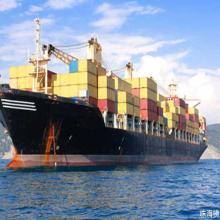
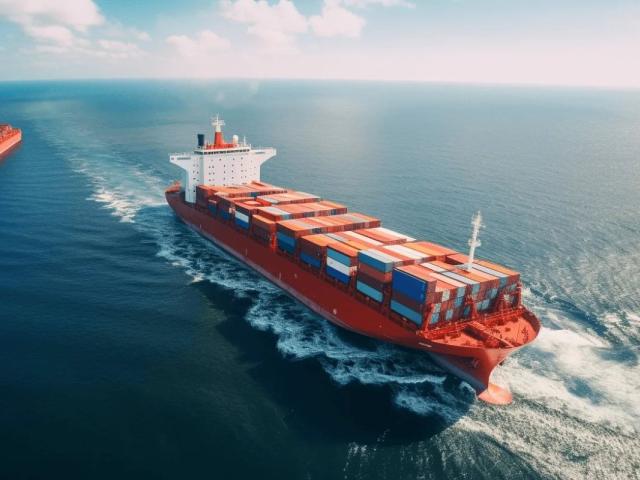
Domestic container shipping (also known as domestic trade shipping) refers to the transport of goods between China's coastal ports using container vessels. It is a vital component of the domestic logistics system——for large-volume, heavy, and non-urgent goods, domestic sea shipping is a more economical option than road or rail transport.
This article provides a detailed explanation of the definition and core features of domestic sea shipping, as well as a comprehensive comparison with foreign trade sea shipping.
1. What is Domestic Container Sea Shipping
Domestic container sea shipping, simply put, means transporting goods between China's coastal ports using container ships.
Its core features:
- Customs Territory: Goods circulate within China's territory, no customs involvement
- Documentation: Uses a domestic trade waybill (not a bill of lading), non-negotiable document of title
- Quotation: RMB ALL-IN flat rate, tax and terminal charges included
- Operations: No customs declaration, no customs clearance, no need for bill of lading transfer
- Transit Time: Coastal routes 3-12 days
For domestic traders and factory shippers, domestic sea shipping is a bulk transport solution that is "cheaper than land transport and more flexible than rail."
2. Domestic Sea Shipping vs. Foreign Trade Sea Shipping - 7 Dimensions Comparison
| Dimension | Domestic Sea Shipping (Domestic Trade) | Foreign Trade Sea Shipping (International) |
|---|---|---|
| Customs Territory | Within China, no customs declaration required | Cross-customs territory, requires export/import customs declaration |
| Documentation | Domestic trade waybill (non-negotiable, cargo release via ID) | Bill of Lading B/L (document of title) |
| Quotation | RMB flat rate, tax and terminal charges included | USD quotation, tax excluded, THC listed separately |
| Operating Process | 6 steps (Booking → Trucking → Container Loading → Vessel Loading → Arrival → Pickup) | 9 steps (includes customs declaration/clearance/bill of lading procedures) |
| Transit Time | 3-12 days (Coastal routes) | 15-35 days (Ocean routes) |
| Suitable For | Bulk/Heavy goods/Non-urgent items | Import/Export trade/Cross-border e-commerce |
| Applicable Law | "Rules for Domestic Waterway Cargo Transport" | "Maritime Law"/International Conventions |
Key Difference Analysis
1. Different Documentation - Domestic Waybill vs. Bill of Lading
In foreign trade shipping, the Bill of Lading (B/L) is a document of title——whomever holds the original B/L owns the goods. Bank negotiation, Letter of Credit settlements are inseparable from the B/L.
Domestic trade shipping uses a Domestic Trade Waybill (also called Waterway Waybill), which is not a document of title. The consignee picks up cargo using their ID (ID card or business license) and does not need to present any "documentary proof." This means:
- Simple operations, no B/L transfer steps needed
- Flexible settlements, no need for complex international methods like L/C
- Easier to change the consignee - just provide a formal letter with official seal stamp
2. Different Fee Structure - ALL-IN Flat Rate vs. Itemized Quotation
A foreign trade shipping quotation typically lists: Ocean Freight, THC, DOC, SEAL, ISPS, VGM... a long list of fee items.
Domestic sea shipping is much simpler——a RMB ALL-IN flat rate, covering ocean freight, terminal charges, and tax. What is quoted is what is paid, with no need to check each item individually.
3. Different Operating Process - 6 Steps vs. 9 Steps
Domestic sea shipping has 3 fewer steps than foreign trade shipping: customs declaration, B/L transfer, and customs clearance. This means:
- Time saved by 3-5 days
- Significantly lower operational complexity
- No need for third-party services such as customs brokers or clearance agents
3. Applications Suitable for Domestic Sea Shipping
Domestic sea shipping is best suited for the following scenarios:
- Large-volume goods: Shipment per order > 5 tons
- Long-distance transport: > 500 km
- Non-time-sensitive: Delivery within 3-12 days acceptable
- Heavy goods/Bulk cargo: Steel, building materials, machinery & equipment, FMCG
Scenarios less suitable:
- Urgent items, samples, small-volume goods
- Perishable goods, chilled goods, requiring high timeliness
- Transport between inland cities (requiring barges + trucking connections)
4. Market Position of Domestic Sea Shipping
Domestic coastal shipping is an indispensable part of China's logistics system. According to statistics from the Ministry of Transport, domestic coastal cargo volume continues to grow steadily. Among the port container throughput volume nationwide, the domestic container share is approximately XX%, forming a complementary pattern with foreign trade sea shipping——goods arriving via domestic sea shipping at coastal ports can be smoothly transferred to international sea routes for export.
📌 Data Note: Specific throughput figures fluctuate by quarter. Please refer to the latest data released on the official Ministry of Transport website.
Summary
Although both domestic container sea shipping (domestic trade) and foreign trade sea shipping are called "sea shipping," they fundamentally differ in terms of customs territory, documentation, fees, and operational processes. For bulk goods in domestic trade, it is a more economical choice than road freight and more flexible than rail transport.
Subsequent articles will gradually delve into practical content, such as domestic sea shipping operating procedures, cost calculations, and route timeliness.
📞 Need domestic sea shipping? Contact Bofeng Logistics for a quotation
📞 Hotline: 13075678958 | Email: info@zhbfwl.com
Related Logistics Services
Bofeng Logistics offers the following related services, feel free to inquire: