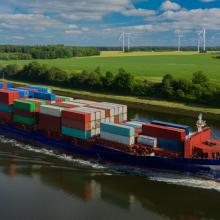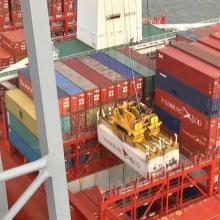
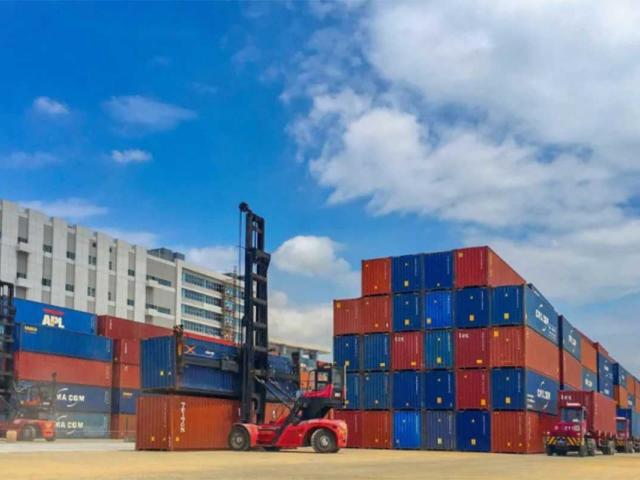
Friends, imagine this: your carefully produced goods travel across the ocean, just about to reach the customer, but then... the ship encounters a heavy storm and the containers are soaked in seawater! Without insurance, you might have to bear the loss yourself, and going back to square one overnight is no joke.
Don't worry! International cargo transportation insurance is your "super talisman" for global trade. Today, in plain language, we'll break down this seemingly complex insurance so you'll never be confused when buying it and confident when making a claim!
Why is this "safety net" indispensable?
In the world of foreign trade, the seas are rough and the winds are strong. Your goods can encounter all sorts of unexpected incidents along the way that even the wildest scripts couldn't invent.
The "Thriller Set" of a Cargo's Journey
- Nature's Wrath: Raging winds, towering waves, thunder, lightning, and hail – the ocean's temper is unpredictable.
- Transport Accidents: Ship groundings, collisions, airplane or train breakdowns.
- "Human Factors" at Play: Theft, robbery, porters' slips (improper handling), or even port blockages due to strikes.
Not buying insurance? Your wallet will be shaking in its boots!
One major cargo damage could mean:
- Lost Payment: Total loss of goods, losing both the money and the cargo.
- Astronomical Extra Costs: For example, a General Average contribution – even if your cargo is unharmed, you might have to share in the losses of others!
- Damaged Customer Relationships: Failure to deliver on time can ruin your reputation and lose future orders.
So, this insurance premium is not truly a cost; it's a "pill of reassurance" safeguarding your business!
Decoding the "Jargon" of Insurance Clauses!
Are those terms on the insurance policy giving you a headache? Let's translate them into ordinary language! The most popular internationally are the Institute Cargo Clauses (ICC), while domestically the China Insurance Clauses (CIC) are common.
Global Star Clauses – ICC (A)(B)(C)
Think of them as insurance "packages":
- ICC(A) Package (Premium Version): "All Risks" – covers everything except what's explicitly excluded. Broadest coverage, suitable for high-value or fragile goods.
- ICC(B) Package (Standard Version): "Named Perils" – like a list, only covers risks explicitly written on it, such as ship sinking, collision, fire, etc. Broader than C, cheaper than A.
- ICC(C) Package (Basic Version): "Major Catastrophe Only" – covers only major accidents like ship sinking, stranding, collision, or fire. Cheapest premium, most basic coverage.
Domestic Classic Clauses – CIC (FPA/WPA/All Risks)
These are our "local" packages, similar to the ICC:
- Free from Particular Average (FPA): Nice name, but very "basic" coverage. It is actually minimum coverage, only covering total loss, not partial loss (unless the ship overturns or collides).
- With Particular Average (WPA / WA): Better than FPA! It starts covering partial losses, such as the common occurrence of goods being wet by seawater.
- All Risks: Similar to ICC(A), it's the "top-tier" option in CIC, offering the broadest coverage.
How to Choose the Right Package for Your Precious Goods?
Don't fret facing these packages; we can quickly match based on the "nature" of your goods:
- If you need "Top-Tier Premium":
- Corresponding Package: ICC(A) or CIC All Risks
- Suitable Goods: Fragile, high-value, delicate items. For example, LCD screens, high-end smartphones, precision instruments, high fashion. Simply put, goods where any damage would hurt deeply – choose this one for sure!
- If you want "Standard Value for Money":
- Corresponding Package: ICC(B) or CIC With Particular Average
- Suitable Goods: Sturdy, not-too-delicate ordinary products. Like hardware tools, ordinary textiles, plastic products, furniture. These goods can handle minor bumps; this package offers the best value for money, covering most common risks.
- If you want "Basic Economy":
- Corresponding Package: ICC(C) or CIC Free from Particular Average
- Suitable Goods: Tough, sturdy items unlikely to get damaged easily. Like iron ore, coal, grain, primary agricultural products. These goods are not very susceptible to damage; this package is sufficient to guard against devastating events like sinking or grounding.
Got a problem? Don't panic! A step-by-step guide to the claim process
If an accident really does happen, remember: Stay calm! Follow these steps!
Step One: The Golden 48 Hours, Do This!
- Notify Immediately: Contact your carrier right away, and inform your insurance company in writing.
- Preserve the Scene: If possible, protect the damaged goods – don't touch anything!
- Take Photos for Evidence: Take loads of photos and videos! Container, damage details, shipping marks... the more and clearer, the better.
- Get Proof: Obtain a Certificate of Damage / Shortage from the carrier. This is a crucial document for holding them accountable and claiming from insurance!
Step Two: Prepare Your "Claim File Kit"
Claim adjustment is like a detective case; the more evidence you have, the faster the payout! You need to prepare:
- Original Insurance Policy (your insurance contract)
- Bill of Lading (the "ID card" of your goods)
- Commercial Invoice and Packing List (to prove the goods' value)
- The above-mentioned Certificate of Damage / Shortage
- The photos/videos you took
- Inspection report from a third party (if necessary)
A Real Anecdote: The Coffee Beans' Saltwater Bath
Mr. Wang, a coffee bean producer, exported a batch. At the port, he found some packaging wet with seawater. He promptly took photos and obtained a damage certificate from the dock. Then, he contacted the insurer with the "file kit" mentioned above. With solid evidence and clear liability, the insurer quickly assessed the loss and paid the claim. Mr. Wang used the payout to arrange a replacement shipment for his customer, securing that long-term client!
Avoid these pitfalls about insurance! (FAQ)
- Q: If I buy "All Risks," am I completely worry-free?
- A: No! "All Risks" is just a name. It does NOT cover inherent defects, natural wear and tear, or special risks like war or strikes. You must read the "Exclusions" clauses carefully!
- Q: What's the difference between insurance my freight forwarder recommends and one I buy myself?
- A: The forwarder also buys from insurance companies; the advantage is convenience and expertise – just hand them the forms and they use their experience to make a good choice. Buying directly from an insurer or through a broker gives you more say in choosing the exact product right for you.
- Q: Is the insured amount just written arbitrarily?
- A: Of course not! It's usually Cargo Value (CIF price) x 110%. The extra 10% covers expected profit and other costs. Too low, and you'll be underinsured; too high, and you waste premiums.
After reading this, haven't you transformed from a beginner into a "little insurance expert"?
International cargo transportation insurance isn't about cold clauses; it's your most loyal partner while expanding your global market. Spend a little to transfer a huge risk, letting your foreign trade business go further and more steadily.
Bofeng Logistics specializes in providing domestic container sea freight, international sea freight (FCL/LCL), Hong Kong/Macao logistics lines, and one-stop logistics services including trucking, customs clearance, and warehousing. Contact number: 130-7567-8958 (Manager Huang), call now for your exclusive quote!
Related Logistics Services
Bofeng Logistics offers the following related services, feel free to inquire: