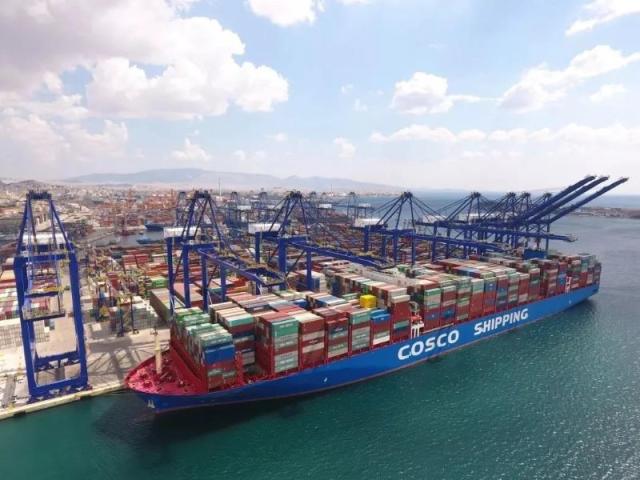
Getting to Know the Domestic Waterway Logistics "Powerhouse"
When it comes to logistics transportation, you might first think of trucks streaming on the highways. But today, we invite you to set your sights on the broader waters and get to know a "powerhouse actor" that plays a crucial role in the logistics system—Domestic Waterway Logistics. It may not be the "fastest," but in terms of cost and scale, it is undoubtedly the king, silently supporting the main artery of the national economy.
What is Domestic Waterway Logistics? It's More Than Just "Sailing"
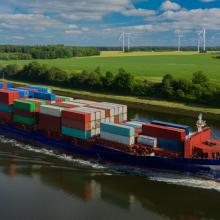
Simply put, domestic waterway logistics refers to a transportation mode that uses China's inland rivers, lakes, canals, and coastal waterways to ship goods via vessels.
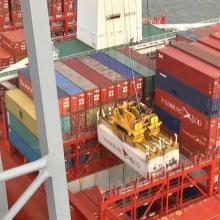
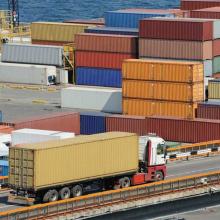
However, its connotation goes far beyond just "sailing." It is a complete systems engineering project, encompassing port loading and unloading, vessel transportation, warehousing and transshipment, multimodal transport connections, and information management among many other precise links. As a key pillar of the national comprehensive transportation system, waterway transport acts like the surging "golden artery" within the economy, serving as the cornerstone for the cross-regional circulation of bulk materials.
Why Choose Waterway Transport? Four Core Advantages Revealed
Choosing waterway transport in the right scenario is a mark of wisdom for supply chain managers. Here are its four irreplaceable advantages:
Advantage 1: Unbeatable Cost, the Top Choice for Reducing Expenses and Boosting Efficiency
The most prominent advantage of waterway transport is its unparalleled low cost. The massive loading capacity of ships makes the unit transport cost of goods much lower than road and air transport. For enterprises aiming to optimize total supply chain costs, waterway transport is a strategic choice to achieve cost reduction and efficiency enhancement.
Advantage 2: Massive Capacity, the "Steadfast Anchor" for Bulk Cargo
Whether it's tens of thousands of tons of coal or ore, or large engineering project equipment, ships can easily accommodate them. This powerful carrying capacity is unmatched by other modes of transport, making it particularly suitable for bulk cargo and oversized items. It acts as the "steadfast anchor" safeguarding national energy and resource security.
Advantage 3: Green and Low-Carbon, a Practitioner of Sustainable Development
Against the backdrop of the "dual-carbon" strategy, the green and environmentally friendly nature of waterway transport is increasingly prominent. Research data shows that for an equivalent volume of transport, energy consumption and carbon emissions from waterway transport are far lower than those of other methods. Choosing waterway transport is not only an economic decision but also a practice of corporate social responsibility and sustainable development principles.
Advantage 4: Stable and Reliable, Less Affected by External Interference
Waterways are less prone to congestion like highways and are less impacted by traffic controls. Therefore, waterway transport offers very high planability and stability, especially on long-distance trunk routes, providing more reliable delivery guarantees.
Main Modes of Domestic Waterway Transport: Which "Waterway" to Choose?
Based on the navigation area, domestic waterway transport is mainly divided into two modes:
Inland Waterway Transport: The "Economic Capillaries" Reaching Deep into the Hinterland
This mainly refers to transport conducted on inland water systems like the Yangtze River, Pearl River, and Beijing-Hangzhou Grand Canal. It acts like the capillaries of the economy, deeply connecting inland production bases with consumer markets, holding a key role in regional logistics and feeder supply.
Coastal Transport: The "Golden Sea Highway" Connecting North and South
This mainly refers to transport conducted in China's coastal waters. It acts like an efficient "sea expressway," undertaking the backbone circulation of cross-regional bulk goods like "shipping coal from North to South" and "transferring grain from South to North", serving as a bridge connecting coastal economic zones.
Which Cargoes Are a "Match Made in Heaven" with Waterway Transport?
Based on industry practice experience, the following types of cargo maximize benefits when combined with waterway transport:
- Bulk Cargo: Such as coal, metal ores, construction materials (sand, gravel, cement), grain, etc.
- Large Project Logistics: Such as wind power equipment, chemical reactors, large construction machinery, and other oversized items.
- Time-Insensitive Containerized Cargo: Such as furniture, general merchandise, ordinary chemicals, raw materials, etc.
- Agricultural Products and Fertilizers: Seasonal agricultural products and inputs with large volumes.
In summary, domestic waterway logistics is an economical, efficient, green, and stable strategic mode of transportation. When your supply chain is characterized by long distances, large volumes, and flexible time requirements, making good use of waterway transport will be a wise move to enhance your competitiveness.
We hope this article helps you understand domestic waterway logistics more deeply. Bofeng Logistics is always ready, with our expertise and experience, to set sail for your goods, safeguarding them and creating value together! Welcome to contact us for these domestic waterway logistics transport services!
Bofeng Logistics provides professional one-stop logistics services including domestic container shipping, international shipping (FCL/LCL), Hong Kong/Macau logistics dedicated lines, as well as trailer, customs clearance, and warehousing. Contact number: 130-7567-8958 (Manager Huang), call now for a tailored quote!
Related Logistics Services
Bofeng Logistics offers the following related services, feel free to inquire: