
What are the port charges for domestic sea shipping?
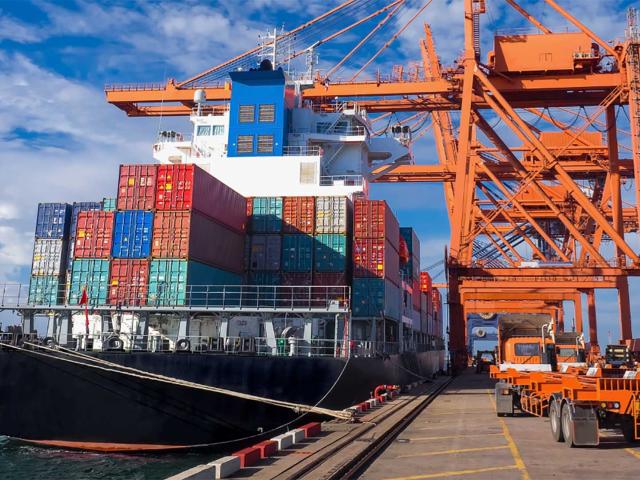
As transportation hubs for domestic sea shipping, ports use their own equipment, facilities, and manpower to provide services and labor for ship transportation and cargo handling. The general term for various fees charged to cargo owners and ship owners according to prescribed standards and items is called port charges. The unit price for calculating port charges is called the port tariff. The objects of port charge collection may be the ship owner, the cargo owner, or both. Generally, loading and unloading fees for domestic ships are charged to the cargo owner; for foreign ships, handling is based on contract terms, with fees sometimes split between ship owner and cargo owner or fully borne by the cargo owner. Cargo storage fees are typically charged to the cargo owner, except under special circumstances where the ship owner bears them.There are many types of port charges, which can be divided into two categories by charge item:
One category is cargo-related port charges, including loading and unloading fees, warehouse storage fees, lighterage fees, transshipment lump-sum fees, cargo port dues, miscellaneous operation fees, and port construction fees. The other category is ship-related port charges, including pilotage fees, mooring and unmooring fees, berth fees, hatch opening and closing fees, agency fees, and ship port dues.Port charges can also be divided into two categories by business nature:
One category is basic service fees, also known as service charges, which are the main part of port operating revenue. These include fees for using port equipment and facilities (such as pilotage fees, berth fees, shifting fees, hatch opening and closing fees, port tug usage fees), service charges (such as loading and unloading fees, miscellaneous operation fees, difficult operation fees, business agency fees), and other fees (such as storage fees, lighterage fees). The other category is port regulatory fees, which are fee-like taxes, including ship port dues, cargo port dues, and port construction fees. Regulatory fees are centrally collected and allocated expenses.Port charges can also be divided into two categories by scope of application: domestic and international:
Those applicable to international use are port charges levied on ships sailing on international routes and on imported and exported foreign cargo. Their charging rules are uniformly formulated by the Ministry of Transport. Those applicable to domestic use are port charges levied on ships sailing on domestic routes and on imported and exported domestic cargo. Their charging rules are generally formulated by the transportation authorities of provinces (municipalities, autonomous regions) and implemented upon approval by the Ministry of Transport. Ports consume various human and material resources in their production and operation. The various fees charged by ports to ships and cargo owners are, on one hand, to compensate for the material consumption in production and operation, and on the other hand, to realize the new value created by port workers' labor. The total port charges minus the total cost of port production operations represent the economic benefit obtained by the port. At the same time, port revenues are necessary for port enterprises to maintain simple reproduction and expand reproduction. Since China's reform and opening up, some ports originally directly under the Ministry of Transport have been devolved to local governments, jointly managed by the ministry and local authorities, implementing the policy of using port revenues for port development. Profits and taxes that ports are required to turn over to the state are fully returned to the ports (or a certain percentage is paid), used to maintain reproduction and expand reproduction. That is, in addition to regular port production expenses, the funds for port maintenance, expansion, and new construction must also be borne by the port itself. Therefore, port charges are of great significance to the development of ports.Zhuhai Bofeng Logistics, domestic full container door-to-door price inquiry: 13075678958 Manager Huang (WeChat same number)
Bofeng Logistics specializes in providing one-stop logistics services including domestic container shipping, international shipping (FCL/LCL), Hong Kong and Macao logistics dedicated lines, as well as trucking, customs declaration, warehousing, etc. Contact number: 130-7567-8958 (Manager Huang), call now to get an exclusive quote!
Related Logistics Services
Bofeng Logistics offers the following related services, feel free to inquire:
Knowledge Category