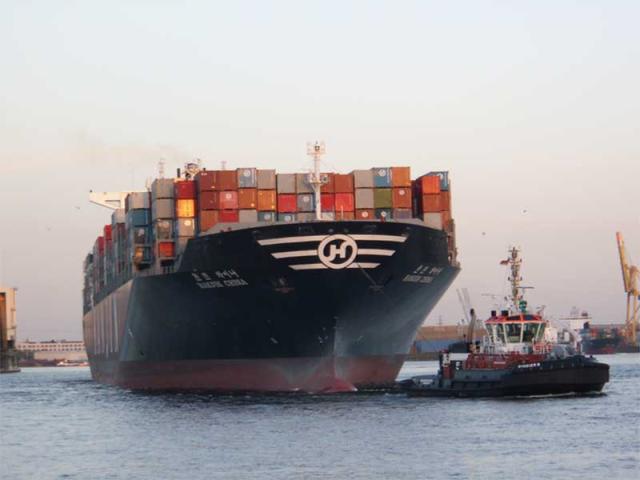
What is the structure of a container ship?
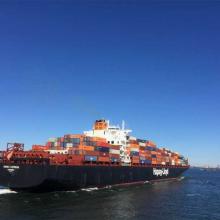
Container ships differ significantly from conventional general cargo ships in terms of hull structure. The structural characteristics of container ships are closely related to the method of container loading and unloading. The following introduces the structural features of lift-on/lift-off container ships. This type of container ship is loaded and unloaded using a lift-on/lift-off operation method. These ships generally do not have lifting equipment installed; instead, they rely on specialized shore-based container gantry cranes for loading and unloading.
The structural characteristics of lift-on/lift-off full container ships are as follows:
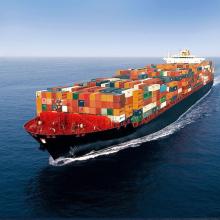
(1) The engine room of lift-on/lift-off container ships is basically located at the stern or near the stern. This arrangement aims to make the cargo hold as square as possible in order to load more containers.
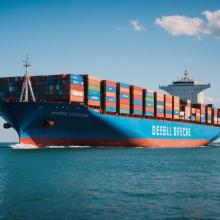
(2) The hull form of container ships is relatively slender and sharp (the block coefficient of many container ships is less than 0.6), with a long and narrow profile. The ship's width and deck area are relatively large to ensure a higher speed and reasonable deck loading. To prevent waves from directly impacting containers on the deck, higher bulwarks or wave-breaker walls are installed at the bow section.
(3) Container ships have a single deck. The upper deck is flat, with no sheer or camber. They are generally not equipped with cargo handling gear. Containers can be stacked 2 to 4 layers high on the deck, directly on the hatch covers, with dedicated fasteners and lashing devices used to secure the cargo boxes.
(4) The hull is divided into several cargo holds by watertight transverse bulkheads. The cargo hatch openings are large; some ships have two or three rows side by side. The width of the hatch opening equals the width of the cargo hold, reaching 70% to 90% of the ship's breadth, facilitating container handling and maximizing the use of cargo hold volume.
(5) Fixed cellular guide structures are installed inside the cargo holds to facilitate container handling and prevent container movement when the ship rolls. During loading and unloading, containers can smoothly enter and exit the cargo hold along the cell guides through the bell-mouthed guide slots at the top of the guide rails. Containers stowed in the hold are placed in the cell slots of the guide structure, eliminating the need for lashing.
(6) The hull has a double-shell structure with double side shells and a double bottom. Generally, deep side tanks (the double-skin structure formed by the extension of the hatch coaming into the hold and the side shell plating) and double bottom tanks are arranged in hull areas where containers cannot be loaded. These can hold ballast water to adjust the ship's stability. This structure greatly enhances the ship's longitudinal strength.
Domestic container shipping door-to-door inquiry and booking hotline: 13075678958 Manager Huang
Bofeng Logistics specializes in providing one-stop logistics services including domestic container shipping, international shipping (FCL/LCL), Hong Kong and Macau dedicated logistics routes, as well as trucking, customs clearance, and warehousing. Contact number: 130-7567-8958 (Manager Huang), call now for an exclusive quote!
Related Logistics Services
Bofeng Logistics offers the following related services, feel free to inquire: