Basic Structure of International Container Transportation Costs
1. International Container Ocean Freight
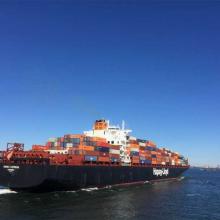
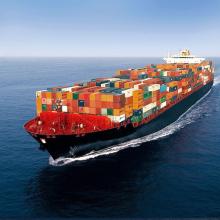
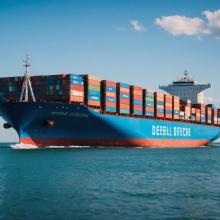
International container ocean freight refers to the cost of transporting containers by sea, typically for deep-sea liner container shipping. It mainly involves large and ultra-large container vessels, with large cargo volumes (compared to feeder transportation), long transport distances, and significant risk liability. This constitutes the main portion of international container freight revenue and is charged to the shipper or consignee according to the tariff regulations of the shipping conference or liner company.
2. International Container Port Service Charges
Ports serve both shipping lines and cargo interests, primarily providing services to vessels. Therefore, terminal operators charge fees for services provided for container transportation. Container port service charges include container yard service fees, consolidation service fees, and container freight station service fees. (1) Container Yard Service Fee The container yard service fee is also called the terminal handling charge. At the loading port, the container yard service fee includes: receiving export containers → sorting and stacking them in the yard as required → transporting them to the berth for loading onto the vessel. At the discharge port, the container yard service fee includes: unloading import containers from the vessel → transporting them → sorting and stacking them in the yard as required → delivering import containers. Container yard service fees are generally charged to the shipping line based on a container loading and unloading lump sum fee. Full container storage fees are charged to the consignor and consignee respectively. Empty container storage fees are charged to the shipping line. (2) Consolidation Service Fee The consolidation service fee covers charges for completing the following service items: ① Transporting empty containers from the yard to the freight station. ② Transporting loaded full containers from the freight station to the yard (at the loading port). ③ Transporting full containers from the yard to the freight station (at the discharge port). ④ Tallying. ⑤ Issuing dock receipts and packing lists. ⑥ Normal handling of goods at the freight station. ⑦ Stuffing, stripping, sealing, and marking containers. ⑧ Storage within a specified period. ⑨ Necessary splitting of bills of lading and stowage. ⑩ Providing a stowage plan for the cargo inside the container. (3) Container Freight Station Service Fee Container freight stations charge service fees for completing the following service items: ① For Export Stuffing Transporting empty containers from the yard to the freight station and handling the container equipment interchange procedures; unloading goods from the consignor's vehicle at the container freight station and handling the cargo interchange procedures; sorting and stacking export containerized cargo; coordinating with customs, inspection, and tally authorities; normal handling of goods at the freight station; stuffing and performing general securing of cargo inside containers; preparing the "Container Packing List" and issuing documents like the "Dock Receipt" and "Container Packing List"; sealing and marking loaded containers; transporting full containers to the container terminal yard and handling the container delivery-in procedures. ② For Import Stripping Handling the cargo interchange procedures for containers arriving at the station; unloading containers from the vehicle at the container freight station; coordinating with customs, inspection, and tally authorities; stripping import containers, keeping records of the stripping process, and sorting and stacking the cargo; normal handling of goods at the freight station; contacting consignees for delivery of import goods, collecting the "Original Bill of Lading," and signing the "Delivery Order"; returning empty containers to the container yard designated by the sea carrier or its agent, and handling the empty container delivery-in equipment interchange procedures. The stuffing and stripping service fee for container freight stations is usually charged as a lump sum stuffing and stripping fee. For bills of lading specifying delivery at a container freight station, the lump sum fee is charged to the shipping line; for stuffing and stripping requested by the cargo interest, the lump sum fee is charged to the cargo interest.
3. International Container Feeder Freight
Container feeder transportation, also known as branch line transportation, is an organizational method for international container transport relative to deep-sea liner shipping. Deep-sea liner vessels call at container hub ports. Container cargo is consolidated for these deep-sea vessels through coastal and inland waterway feeder networks, as well as road and railway branch line networks, and is also distributed from the hub ports via these feeder networks.
(1) Waterway Feeder Freight Waterway feeder container liner services include coastal feeder and inland waterway feeder container liner services. This involves using fixed vessels on fixed routes between domestic ports, following published schedules or connecting regularly with deep-sea liner services, to conduct international container feeder transportation. Waterway feeder shipping companies charge feeder freight to the shipper or consignee according to the feeder tariff. If the waterway feeder service is operated by the deep-sea liner company, the deep-sea company may charge the shipper or consignee the combined mainline and feeder freight for internal accounting and settlement, or the feeder shipping company may independently charge the feeder freight to the shipper or consignee. If the waterway feeder service is operated independently by a feeder company, freight is charged according to that feeder company's tariff, and a feeder transport agreement should be signed with the deep-sea liner company. Under multimodal transport conditions, where the waterway feeder acts as a subcontractor for the deep-sea carrier, the deep-sea carrier collects the total transport costs from the shipper or consignee and then pays the waterway feeder carrier according to the subcontract.
(2) Road Feeder Freight
Payment of road feeder freight mainly involves four scenarios: ① Transport organized by the deep-sea carrier, e.g., COSCO Group containers transported by its subsidiary China Road Transport Corp., charging shippers according to the "Automobile Transport Rules" and related regulations; ② The deep-sea carrier entrusts local road transport companies, which then charge shippers according to provincial implementation rules based on ministry documents; ③ The deep-sea carrier acts as the multimodal transport operator and the road transport company as the subcontractor; the deep-sea carrier collects the full door-to-door charge and pays the road transporter per the subcontract; ④ The cargo owner arranges its own transport; the deep-sea carrier can lease containers and equipment at designated depots based on prior agreement and charges accordingly.
Road feeder freight mainly includes: ① Zone rate: charged for transporting full or empty containers between locations specified by the shipper. ② Unproductive trip fee: charged when an empty container is delivered as requested but no cargo is provided and a return is requested; includes the full zone charge and potentially any delay costs. ③ Change of stuffing location fee: if the carrier agrees to change the container delivery point as requested by the shipper, the shipper must compensate the carrier for all resulting costs. ④ Loading time and delay fee: varies greatly depending on port conditions and practices. Example for stuffing at the shipper's factory/warehouse: free time limit is 2h for 20ft containers and 3h for 40ft, counted from when the driver delivers the container, non-negotiable for bad weather. Delay fees apply beyond this. ⑤ Cleaning fee: after use, the shipper is responsible for returning a clean, odor-free container. If the carrier handles it, the shipper bears the cost. If inland transport is managed by the shipper, the carrier can lend equipment per prior agreement at designated locations for a fee. Shipper-managed inland transport costs mainly include container handling charges, detention charges for container overuse, and inland transport costs. Total door-to-door costs include: ① Inland transport and related costs in the country of origin; ② Port/terminal yard charges in the country of origin; ③ Ocean freight; ④ Port/terminal yard charges in the country of destination; ⑤ Inland transport and related costs in the country of destination. (3) Railway Feeder Freight Railway feeder freight is calculated according to relevant regulations of the Ministry of Railways. The situation is generally similar to road feeder freight.
Bofeng Logistics specializes in providing one-stop logistics services including domestic container shipping, international shipping (FCL/LCL), Hong Kong and Macao logistics routes, as well as trucking, customs clearance, warehousing, etc. Contact: 130-7567-8958 (Manager Huang). Call now for a customized quotation!
Related Logistics Services
Bofeng Logistics offers the following related services, feel free to inquire: