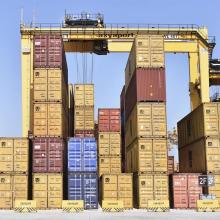
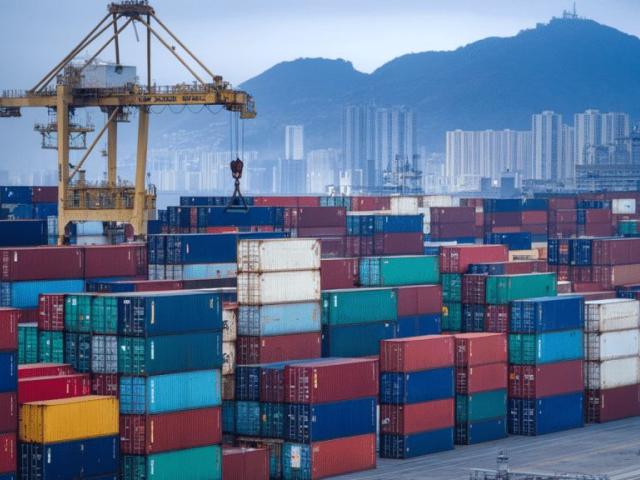
Over long-term use, containers are subject to damage from seawater corrosion, handling impacts, and stacking pressure. Without regular maintenance and inspection, structurally compromised containers can threaten transport safety.
1. Basic Container Maintenance Requirements
1.1 Key Daily Inspection Points
Every time a container is picked up, the following checks should be performed before loading:
| Inspection Area | What to Check | Acceptance Criteria |
| Exterior | Visual check for dents, breaks, deformation | No damage affecting structural integrity |
| Doors | Open/close smoothly; locking bars secure | Opens/closes normally ≥90°; locking bars not bent |
| Floor | Damage, rot, protruding nails | No through-holes; load-bearing ≥3 tonnes per axle |
| Interior Cleanliness | Odors, residue, dampness | No threat to cargo safety |
| Container Seals | Light-tight when doors closed | No light penetration at door seals or corner fitting joints |
| Vents (if applicable) | Adjustment function | Can be opened and closed normally |
| CSC Plate | Clearly legible; inspection date not expired | Plate intact; inspection within validity period |
1.2 Regular Maintenance Items
| Maintenance Item | Recommended Interval | Notes |
| Container Cleaning | After each transport cycle | Especially after transporting chemicals or foodstuffs |
| Door Hinge Lubrication | Every 3 months | Use corrosion-resistant grease |
| Locking Bar Inspection | Every 3 months | Replace if bent |
| Floor Repair | As damage occurs | Small holes can be repaired with epoxy resin |
| Container No. / Plate Cleaning | Before each inspection | Ensure container number and CSC plate are clearly legible |
| Rust Prevention | Annually | Focus on corner fittings and bottom cross members |
2. Detailed CSC Inspection Regimes
2.1 PES (Periodic Examination Scheme)
PES is the most traditional inspection regime, conducted at fixed intervals by an authorized inspection body.
Inspection Timeline:
↗→→→→→→→→→↘
Ex-Factory → 5 Years (1st) → 7.5 Years (2nd) → 10 Years (3rd)
                         ↓
                   12.5 Years (4th) → 15 Years (5th)
                         ↓
        [Current IMO Regulation] Shortened to 12 months for containers >15 years old
| Container Age | PES Inspection Interval | Cost Reference |
| 0–5 years | No inspection required (exempt) | — |
| 5–15 years | Every 30 months | ¥200–500 per inspection |
| >15 years | Every 12 months (current regulation) | ¥200–500 per inspection |
2.2 ACEP (Approved Continuous Examination Programme)
ACEP is a more advanced inspection regime, suitable for large container owners with an ISO 9001 quality management system.
| Comparison | PES | ACEP |
| Inspection Body | Third-party authorized body | Internal owner (program approved by authorized body) |
| Inspection Interval | Fixed schedule | Arranged per owner's program; no fixed interval |
| Reporting Requirements | Submit after each inspection | Continuous recording; annual summary report |
| Applicable Fleet Size | Suitable for all sizes | Recommended ≥500 containers |
| Setup Cost | None | ISO 9001 + program development (¥50,000–100,000) |
| Long-Term Cost | ¥200–500 per container per cycle | ¥100–300 per container per cycle |
2.3 ACEP Application Requirements
| Requirement | Details |
| Quality Management System | ISO 9001 certification (or equivalent) |
| Fleet Size | Recommended ≥500 containers (fewer is uneconomical) |
| Inspection Procedures | Must compile an owner's inspection manual, approved by an authorized body |
| Personnel Qualification | Internal inspectors must be trained by an authorized body |
| Record-Keeping System | Establish a container inspection management database |
3. IICL Inspection Standards
The inspection standards developed by IICL (Institute of International Container Lessors) are the most widely adopted acceptance criteria in the container industry, applicable to scenarios such as owner handovers, lease returns, etc.
3.1 IICL Inspection Categories
| Category | Definition | Applicable Scenario |
| DD (Damage Done) | Damage within normal wear and tear limits | Routine handover; off-hire acceptance |
| DP (Damage Paid) | Damage exceeding normal wear and tear; compensation required | Cost settlement upon off-hire |
| TAR (Total Apparent Repair) | Repairs confirmed complete | Post-repair acceptance |
3.2 Common IICL Deduction Items
| Damage Type | DD Acceptance Criteria | DP Cost Reference |
| Side panel dent (depth <15 mm) | ✅ Acceptable | — |
| Side panel dent (depth 15–30 mm) | ❌ Repair required | ¥200–500 |
| Floor damage (hole <25 mm) | ✅ Repairable | ¥100–300 |
| Floor damage (hole >25 mm) | ❌ Replacement required | ¥500–2,000 |
| Door deformation (cannot close properly) | ❌ Must be repaired | ¥1,000–3,000 |
| Illegible container number | ❌ Must be repainted | ¥100–200 |
4. Common Container Damage and Repairs
| Damage Type | Common Cause | Repair Method | Repair Cost |
| Side panel dent | Forklift impact, handling collision | Steel panel repair or replacement | ¥500–2,000 |
| Bent bottom cross member | Overloading or uneven stacking | Straighten or replace | ¥1,000–3,000 |
| Rotten floor | Prolonged dampness, hard object impact | Partial replacement | ¥500–2,000 |
| Door deformation | External impact | Straighten or replace | ¥1,000–5,000 |
| Cracked corner fitting | Stacking impact | Weld or replace | ¥800–2,000 |
| Aged door gasket | Sun and rain exposure (natural aging) | Replace gasket | ¥200–500 |
| Rust (large area) | Long-term near-sea use | Sandblasting + repainting | ¥2,000–5,000 |
5. Practical Impact of IMO Inspection Revisions on Aging Containers
The CSC amendment adopted at the IMO MSC 109th session in 2025 has the greatest impact on containers aged >15 years:
| Container Age Range | Before Revision | After Revision (Current Regulation) | Impact |
| 0–5 years | Exempt | Exempt | None |
| 5–15 years | Every 30 months | Every 30 months | None |
| 15–20 years | Every 30 months | Every 12 months | 🔴 Inspection frequency doubled |
| 20+ years | Every 30 months | Every 12 months | 🔴 Significant increase in inspection costs |
Recommendations for Container Owners:
- For containers older than 15 years, assess repair costs vs. residual value; consider early scrapping if appropriate.
- For leased containers, review lease contracts regarding the division of inspection responsibility under current CSC regulations.
- Electronic CSC plates accepted from July 2026 onward can reduce administrative costs associated with plate replacement.
Data Note: CSC inspection standards are cited from the IICL Guide and IMO CSC Convention amendments. Data current as of July 2026.
Related Logistics Services
Bofeng Logistics offers the following related services, feel free to inquire: