1. Export Customs Clearance Process (Mainland → Hong Kong)
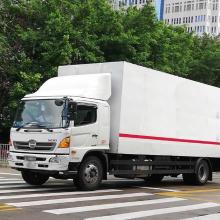
There are four steps for a cross-border vehicle traveling from a Mainland factory to Hong Kong:
Mainland Export Declaration. Before the goods are dispatched, an export declaration is submitted to the Mainland customs. General cargo is automatically cleared by the electronic system without inspection. If randomly selected for inspection, customs will examine the cargo, which adds 1-2 working days. Bofeng Logistics can handle the export declaration on behalf of enterprises without requiring them to have their own import/export license. The key to export declaration is accurately declaring the product name and HS code; incorrect declarations may lead to inspection or rejection. Shippers should verify cargo information before dispatching to ensure accuracy.
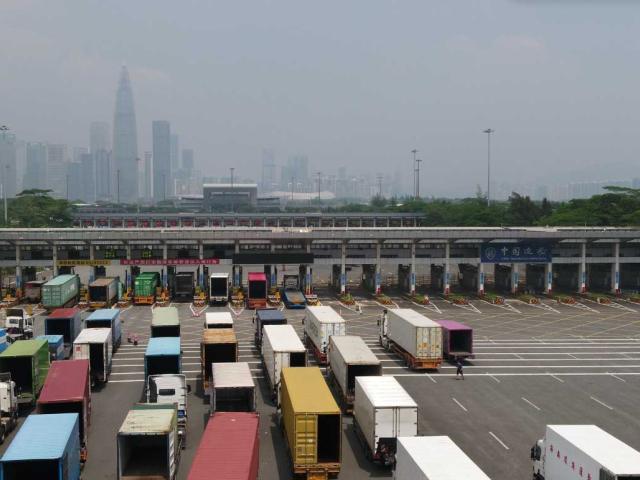
Border Exit Inspection. Upon arrival at the border, Mainland customs conducts an exit check on the vehicle. Under the "one-stop, two-check" system at Shenzhen Bay, exit and entry inspections are completed at the same location, requiring only one stop. At traditional ports (Huanggang, Wenjindu, etc.), vehicles must stop separately at each side.
Transit Section. The cross-border vehicle travels via the port link road from the Mainland side to the Hong Kong side. The port link road is typically 2-5 km long, taking 5-10 minutes.
Hong Kong Import Declaration. Hong Kong customs inspects the vehicle and goods. As Hong Kong is a free trade port, import declaration for general cargo is simplified, with electronic submission allowing release, usually without physical inspection.
2. Import Customs Clearance Process (Hong Kong → Mainland)
The import customs clearance process from Hong Kong to the Mainland is similar to the export direction but includes an additional import declaration step:
1. Pick up goods at the designated location in Hong Kong
2. Cross-border vehicle departs from the Hong Kong side port
3. Via the port link road to the Mainland side port
4. Mainland import customs declaration — requires import contract, invoice, packing list, and special documents (e.g., CCC certification, food hygiene licenses)
5. Customs review and release (inspection rate for imports is typically higher than exports, around 5-10%)
6. Goods delivered nationwide within the Mainland after release
The inspection rate for import clearance is higher than that for exports. Therefore, it is recommended to allow more time for import customs declaration and prepare documents in advance. For high-value or urgent imported goods, full trailer transport is advisable to reduce the overall time risk caused by inspections. For imported goods, allow 2-3 working days for customs declaration to address potential inspections.
3. Factors Affecting Customs Clearance Efficiency
Customs clearance time is affected by the following factors: port selection (Shenzhen Bay is fastest at 20-40 minutes, Huanggang 30-60 minutes), dispatch time (heavy daytime congestion at the port), inspection status (electronic release for general cargo without waiting, inspection takes 1-2 days), holidays (Mainland and Hong Kong holiday schedules shift customs times; it is recommended to arrange 2-3 days in advance before long holidays). Plan for a buffer of 1-2 working days when scheduling shipments. The fastest total time from Shenzhen to Hong Kong can be 6-8 hours, from Guangzhou 8-12 hours, from Dongguan 5-7 hours. Choosing the correct port and properly scheduling dispatch times are key to improving clearance efficiency.
4. Complete Shipping Operation Process
The full operational process from submitting cargo information to signing for goods in Hong Kong:
Step 1: Submit Cargo Information. Send the product name, weight, volume, quantity, and origin/destination to Bofeng Logistics. A transport plan and quote will be recommended based on the cargo details, typically within 30 minutes. Before dispatching, confirm if the goods are a special category (oversized, cold chain, dangerous goods) and the loading/unloading conditions at the pickup address. The more accurate the information, the more precise the logistics provider's recommendation and quote.
Step 2: Confirm the Order. After confirming the plan, a cross-border vehicle is arranged to pick up the goods at the designated address at the agreed time. Pickup can be arranged in major cities within Guangdong Province, such as Shenzhen, Dongguan, Guangzhou, Foshan, Zhongshan, and Zhuhai. Goods from outside the province are transferred via the Zhuhai warehouse.
Step 3: Loading and Transport. After loading, the vehicle goes through customs clearance at Shenzhen Bay or Huanggang port to Hong Kong. For groupage cargo, it must first be collected at the Shenzhen warehouse, sorted, and loaded, then go through clearance together; a full trailer can go directly to the port for clearance. Groupage takes approximately 24-36 hours door-to-door, while full trailers arrive in Hong Kong the same day.
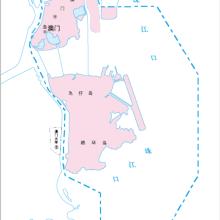
Step 4: Hong Kong Delivery. Upon arrival at the Hong Kong warehouse, goods are delivered to the specified address across Hong Kong. Goods destined for Macau are transferred via the Zhuhai warehouse, then delivered via the Hong Kong-Zhuhai-Macao Bridge, with about 30 minutes drive time to Macau.
The import direction process (Hong Kong → Mainland) is similar: pick up in Hong Kong, cross the border into the Mainland, with Bofeng Logistics handling the customs clearance procedures. Imported goods require customs clearance documents, including the contract, invoice, and packing list. Ensure all documents are prepared for smooth clearance. Although the Mainland-Hong Kong customs clearance process involves several steps, it is operationally mature and standardized. Enterprises can successfully complete Mainland-Hong Kong cargo transportation by mastering the correct procedures and preparing complete documentation.
5. Documents Required for Export Customs Declaration
Export customs declaration typically requires the export cargo declaration form, commercial invoice, packing list, contract (if available), and exit cargo customs clearance form (for legally inspected goods). General cargo can be submitted electronically without paper documents. Special goods (dangerous goods, cold chain, etc.) require an MSDS and additional relevant documents. The Mainland-Hong Kong customs clearance process is highly standardized; mastering each step ensures efficient cargo clearance. The fastest transit from Shenzhen to Hong Kong can be within 6 hours, from Guangzhou about 8-12 hours. General cargo can be submitted electronically. Special goods require an MSDS and additional documents. The overall efficiency of Mainland-Hong Kong customs clearance directly determines the transportation time from the Mainland factory to the Hong Kong warehouse, making it a critical step in the logistics chain. The process has matured over years; enterprises with basic knowledge can complete it smoothly. The Middle East-Hong Kong customs clearance process is standardized and mature. As long as enterprises prepare documents and choose the right port, efficient cargo clearance is ensured. Bofeng Logistics handles a large volume of cross-border vehicle customs clearance procedures daily and is familiar with operations at various ports.
Related Logistics Services
Bofeng Logistics offers the following related services, feel free to inquire: