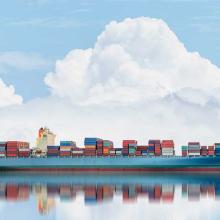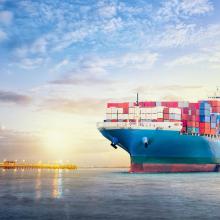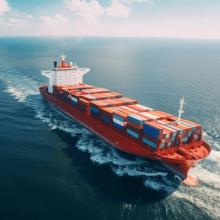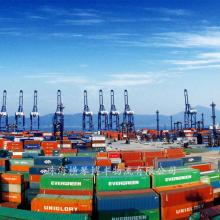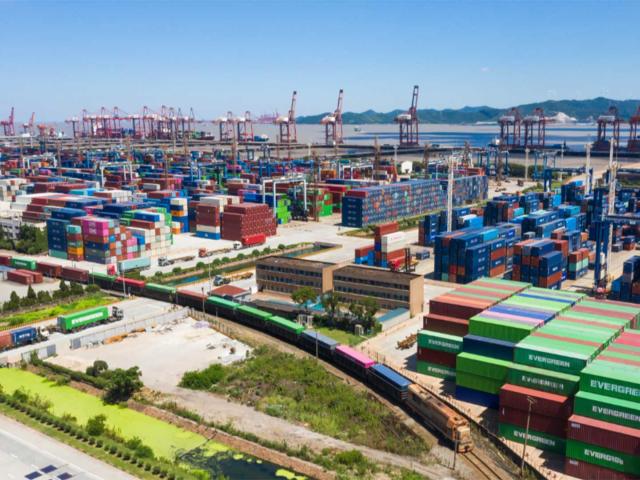
Domestic sea-rail intermodal transportation refers to a multimodal transport method that combines domestic sea and rail transport, providing an efficient logistics solution primarily used to connect coastal ports with inland cities and regions for cargo movement.
Compared to traditional segmented transport, domestic sea-rail intermodal transportation better meets the requirements for fast, efficient, and cost-effective delivery from origin to destination. This is because it adopts an advanced transport organization form where the entire journey is consigned once, covered by a single bill, with unified billing and claims, taking full responsibility for the cargo throughout the combined transport process.
Domestic sea-rail intermodal transportation typically includes the following transport methods:
- Sea transport + rail transport: Goods are first transported by sea, and upon arrival at the port, they are transferred to rail for inland movement. This method leverages the long-distance advantages of sea routes and the inland coverage capabilities of railways to improve transport efficiency and flexibility.
- Rail transport + sea transport: Goods are first transported by rail to a railway station within the port area, then shipped by sea to the destination. This method is suitable for inland regions far from the coast, utilizing rail to bring goods close to the destination quickly before final sea delivery to the destination port.
- Operational process for domestic sea-rail intermodal transportation: Booking cargo— picking up containers— loading cargo— railway dispatch— port-rail transfer— domestic sea transport— arrival at destination port— delivery
By adopting domestic sea-rail intermodal transportation, the strengths of both domestic sea and rail transport can be fully utilized, enhancing the flexibility and reliability of cargo movement. Additionally, sea-rail intermodal transport reduces the number of transshipments, lowering logistics costs, and thereby achieving a more efficient and economical method of cargo transport.
Boffett Logistics specializes in providing one-stop logistics services, including domestic container shipping, international shipping (FCL/LCL), Hong Kong and Macao logistics routes, as well as trucking, customs declaration, and warehousing. Contact us at 130-7567-8958 (Manager Huang). Call now for a customized quote!
Advantages of Domestic Sea-Rail Intermodal Transport
1. Cost advantage: Combining the low cost of sea transport with the efficiency of rail, sea-rail intermodal transport can save 30%-50% in freight costs compared to full-truckload road transport.
2. Wide coverage: Coastal ports connect deep into inland regions via railway networks, allowing inland cities to benefit from the low-cost advantages of sea transport.
3. High transport stability: Rail transport is less affected by weather conditions, with fixed schedules and accurate departure and arrival times, offering higher punctuality compared to road transport.
4. Environmentally friendly and low carbon: The carbon emission per unit of rail transport is significantly lower than that of road transport. Combined with the low-emission characteristic of sea transport, sea-rail intermodal transport is an ideal choice for green logistics.
Suitable Cargo Types
Sea-rail intermodal transport is particularly suitable for the following types of cargo: bulk raw materials (ore, grain, fertilizers), industrial manufactured goods (machinery, equipment, automotive parts), consumer goods (electronics, daily necessities)—cargo that is cost-sensitive but has moderate timeliness requirements.
Related Logistics Services
Bofeng Logistics offers the following related services, feel free to inquire: