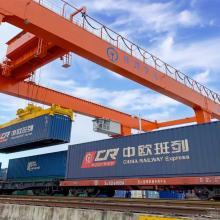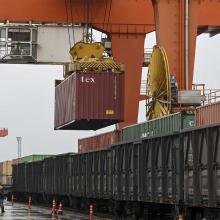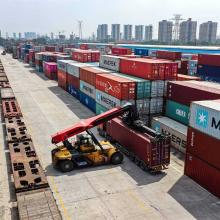
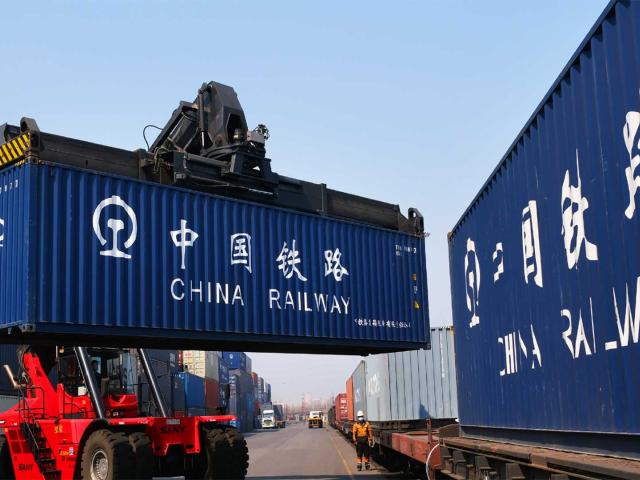
Container loading is a very important part of domestic railway transportation. Reasonably planning the loading time can avoid container delays and related overtime fees. A proper loading method can not only improve container utilization but also reduce transportation costs. Below, we will introduce how to arrange container loading for domestic railways.
The process for arranging container loading on domestic railways is as follows:
- Determine the loading time: After successfully booking space on a domestic railway, the logistics company communicates with the shipper in advance to confirm the loading time.
- Pick up the empty container: The logistics company arranges for a tractor to pick up the empty container at the domestic railway freight station. When picking up the container, check for any damage to the container and ensure the equipment is in good condition, and arrive at the loading factory within the agreed time.
- Load the container:
- Before loading, the factory loading supervisor inspects the container to check if it is intact and meets requirements, then arranges for loading.
- During loading, take photos for record-keeping at different stages and follow the pre-prepared loading plan. Generally, adhere to the principle of "heavy not on light, large not on small, hard not on soft." Adjust as loading proceeds; the cargo's center of gravity and weight distribution should be reasonable to avoid shifting and uneven distribution, ensuring container stability during transport. Depending on the cargo, use strapping or other fixing materials for reinforcement to prevent movement and damage during transit.
- After loading, the loading supervisor counts the loaded quantity, properly secures and reinforces the cargo, and finally affixes the seal.
- Return the container: After loading is complete, the tractor driver transports the container back to the designated railway freight station to return it, completes the booking and dispatching procedures, and arranges for the container to be loaded onto a train bound for the destination railway freight station.
The above is the basic process for arranging container loading on domestic railways. During container loading operations, it is also necessary to strictly comply with national railway transport regulations, safety standards, and relevant laws and regulations to ensure cargo is delivered safely, on time, and efficiently.
Precautions for Domestic Railway Container Loading
1. Preparation before loading: Confirm cargo information (name, quantity, weight, volume) in advance and select the appropriate container type and size. Prepare loading tools and personnel.
2. Loading operation standards: Distribute cargo evenly inside the container, with heavy goods at the bottom and light goods on top. Use fillers or strapping to secure the cargo to prevent movement during transit. Take photos at different stages during the loading process for record-keeping.
3. Inspection after loading: Check if the container doors can close properly, ensure the seal is intact, and record the seal number. Confirm the container is in good condition before transporting it back to the station to await dispatch.
Bofeng Logistics specializes in providing one-stop logistics services including domestic container sea freight, international sea freight (FCL/LCL), Hong Kong and Macau logistics dedicated lines, as well as tractor services, customs declaration, and warehousing. Contact number: 130-7567-8958 (Manager Huang). Call now to get an exclusive quote!
Related Logistics Services
Bofeng Logistics offers the following related services, feel free to inquire: