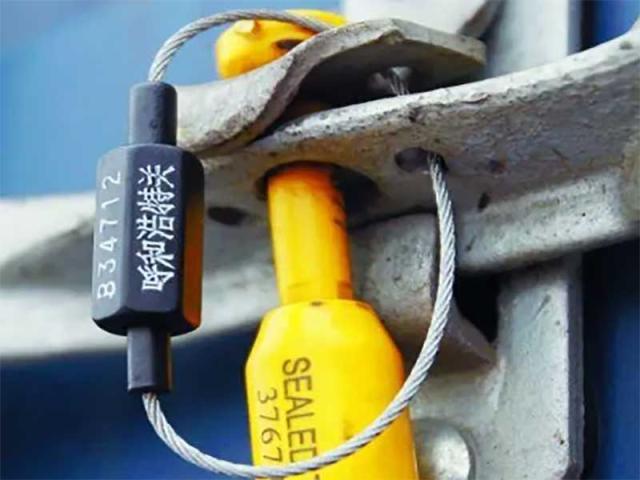
When Customs places a seal, there are generally two situations:
Customs sealing situation one: When goods are transferred from one customs district to another for export, known as transit cargo. In this case, the goods first enter the customs inspection yard. After customs clearance, Customs places a seal on the goods, which are then transferred to another district for export.
Customs sealing situation two: When regular goods require a customs inspection during declaration and are re-sealed with a customs seal after the inspection.
Other related concepts:
Re-sealing: If goods under customs supervision need to be re-sealed due to re-inspection or other reasons, this act is called "re-sealing."
Customs envelope: An envelope imprinted with the words "Customs Envelope" used for internal communication and transfer of related documents, capable of being sealed.
Customs lock: A one-time-use, elongated metal lock used to seal goods under customs supervision.
Paper seal: A paper seal used for sealing small items under customs supervision.
Customs seal mark: Designations such as specific customs office names and dates are included for paper seals clamping customs supervision goods, which is called seal marks.
Difference Between Customs Sealing and Customs Envelope
Customs sealing involves Customs using special seals on goods to prevent unauthorized opening. A customs envelope refers to a sealed official envelope containing transit documents within Customs, designed for paperwork-only sealing.
Boyf Logistics provides professional domestic container shipping, international maritime shipping (FCL/LCL), Hong Kong/Macau logistics services, trucking, customs declaration, and warehousing as one-stop logistics services. Contact: 130-7567-8958, dial now for your customized quote!
Understanding the difference between Customs Sealing and Customs Envelope assists import and export companies in coordinating Customs regulatory efforts better.
Precautions in Handling Customs Envelopes
Customs envelopes are vital transit supervision documents. Enterprises should keep these sealed envelopes intact; opening them without permission is prohibited. Inspection records or Transit support envelope problems such as damage or loss must be properly referenced and Customs notified and reissued applied promptly. Suitable understanding and application of Customs envelopes facilitate accelerated clearance.
Essential Points during Customs Sealing and Envelope use
Essentials regarding Customs Sealing: Sealing tapes possess unique numbering prohibits their improperly breaking; consignee promptly contact needed observe specified process shall anomaly . Management affairs in accord best ensures regulations observed overall suitable operation high auditability accordingly transit cargo expeditiously
Related Logistics Services
Bofeng Logistics offers the following related services, feel free to inquire: