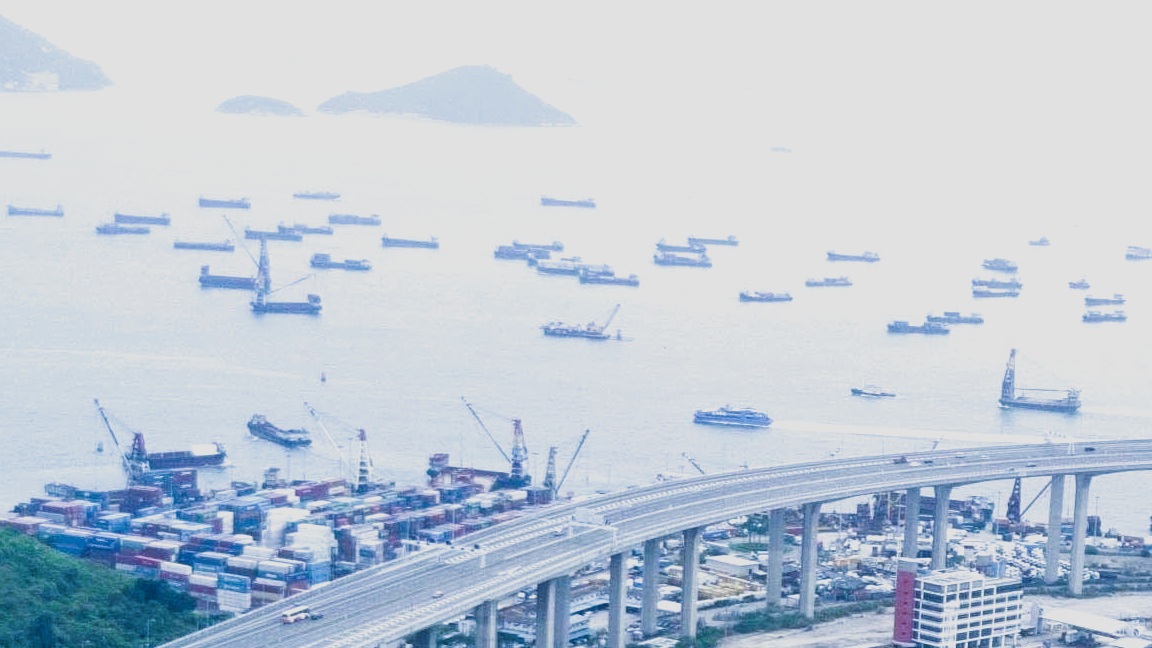
Client Background
A European trader sources products such as furniture, building materials, and household goods from China, with suppliers spread across multiple cities in the Pearl River Delta — Shenzhen, Dongguan, Foshan and elsewhere all supply goods. The trader's business model is "multi-supplier, multi-category, small-volume per shipment": each supplier's cargo volume is often not enough to fill a full container, so the goods need to be consolidated into full containers at the point of origin before being shipped to Europe together. Previously, the trader had been exporting through direct-call liner services at a port in East China, which required first using mainland trucks to transport goods from various Pearl River Delta suppliers over long distances to East China for central consolidation, then going through customs and loading onto vessels. Both time and cost were spent on inland transportation.
As the range of procured categories and the number of suppliers increased, the trader hoped to find an export solution closer to the source of goods, reducing the inland consolidation stage while maintaining a stable connection to the European mainline schedule. As an international shipping hub in South China, Hong Kong has dense international mainline liner services and is a free trade port — as long as transshipment cargo does not enter the local Hong Kong market, it does not need to go through routine import/export customs procedures in Hong Kong. This provides natural conditions for the multimodal transport chain of "inland consolidation — transshipment in Hong Kong — shipment to Europe."
The client ultimately chose Hong Kong as the transshipment hub and, through cooperation with Bofeng, built an end-to-end chain from cargo consolidation in Shenzhen, transshipment via Hong Kong, to delivery in Europe. For the European trader, the core value of this solution lies in: suppliers deliver goods nearby in the Pearl River Delta, the goods are shipped to Hong Kong in consolidated LCL form, and then, leveraging the transshipment convenience of Hong Kong's free port and the frequency of international mainline sailings, they are transported to various European destination ports in a steady, batch-wise manner.
The trader's procurement has clear seasonality: the second half of every year is the peak season for European household consumption, with suppliers shipping in volume in late summer and early autumn, causing cargo volumes to rise rapidly in a short time. At this point, the shortcomings of inland consolidation are further amplified — long-haul trucking resources become tight, unit prices rise, and transit times are hard to control. This also prompted the client, when planning the following year's procurement, to shift the focus of the logistics solution from "finding a vessel" to "finding a route," and to consider splitting cargo consolidation and export into two controllable stages rather than staking the entire chain on one fixed shipping route.
Key Challenges
- Scattered suppliers and small shipment sizes: More than ten suppliers are located across multiple cities, and individual shipments range from a few cubic meters to dozens of cubic meters. It is difficult for each to ship a full container, so consolidated container loading is necessary. Meanwhile, different consolidation options vary significantly in distance and cost, requiring unified planning.
- High inland consolidation costs: Previously, goods from the Pearl River Delta were consolidated and shipped to East China ports, resulting in long trucking distances, high transport costs, and multiple transfers along the way, which increased the risk of cargo damage and delays.
- Tight shipping space during peak season: During one peak season, space on a liner originally planned to sail directly to Europe was suddenly reduced, and the full container was postponed to the next voyage, leaving it stranded at the port for over a week. The trader not only had to bear additional warehousing and inventory costs, but also missed the delivery date agreed with European customers, sharply increasing pressure from customer complaints. During that week-long port detention, the cargo occupied terminal storage space, and the trader repeatedly communicated with the shipping line to rebook the next sailing, only breathing a sigh of relief after the new schedule was confirmed. Tight space during peak season is not uncommon in the industry; the key is whether there is a viable backup plan.
- Uncertain connection when changing ships: In transshipment solutions, the biggest concern is “arriving in Hong Kong but unable to board the next ship”—if the main-line connections are poorly scheduled, the cargo has to wait another sailing interval in Hong Kong, increasing warehousing and time costs.
- Complex documentation and liability: When goods from multiple suppliers are consolidated into one container, documents such as bills of lading, packing lists, and certificates of origin need to be managed in a unified manner. Any error can affect the export of the entire container and delivery upon arrival at the destination port.
These challenges show that the key to a transshipment solution is not “whether transshipment is possible,” but “whether the transshipment connection is controllable”—whether consolidation is efficient, whether the ship change is accurate, whether space is guaranteed, and whether documents are complete. A missing link in any one of these can break the entire chain.
Transport Requirements
- Route: Shenzhen consolidation → Hong Kong → Europe (destination ports such as Hamburg, Rotterdam);
- Volume: Approximately one 40HQ LCL container every two weeks, and one per week during peak season; supplier cargo volume per shipment ranges from a few cubic meters to dozens of cubic meters;
- Lead time: Cargo is consolidated and loaded within 2-3 days after supplier delivery, connecting to the international mainline within 2-3 days after the vessel change in Hong Kong; from consolidation to boarding the mainline vessel takes about one week;
- Special requirements: Cargo from different suppliers should be marked separately and loaded together by order; goods in the LCL container need to be sorted by consignee at the destination port, with a clear packing list provided;
- Billing method: Charges are allocated based on LCL cubic volume/measurement; the consolidation segment, Hong Kong segment, and mainline are billed separately with a unified invoice;
- Documentation requirements: Bill of lading, packing list, and certificate of origin are issued uniformly for the full container, and transshipment documentation for the Hong Kong segment must be clearly coordinated.
The three things customers value most are: consolidation efficiency, transshipment connection, and stable vessel space—these three factors determine whether the transshipment solution can truly replace the original direct routing from the mainland.
Solution
Bofeng builds a multi-modal transport link for customers of "Pearl River Delta consolidation + Shenzhen container stuffing + Hong Kong transshipment", with five core tasks at its heart:
- Nearby consolidation in the Pearl River Delta: Using the Shenzhen warehouse as the consolidation hub, suppliers deliver goods to the Shenzhen warehouse at the agreed time, or Bofeng picks up goods directly from them. Goods are consolidated in the Shenzhen warehouse and stuffed into containers according to European orders. Suppliers no longer need to haul goods over long distances to East China, the inland haulage distance is significantly shortened, and the number of transshipment and loading/unloading handlings is reduced, lowering the risk of cargo damage and delay;
- Transshipment via the Hong Kong free port: After the container is exported to Hong Kong via the Shenzhen Bay Port, it takes advantage of Hong Kong's free port policy — transshipment cargo does not enter Hong Kong's local market and does not require conventional import/export customs declaration procedures in Hong Kong. The container is directly transferred to an international trunk vessel at the Hong Kong terminal. As an international shipping hub, Hong Kong has frequent trunk sailings to Europe, leaving ample choice for transshipment. Goods arriving at the port can typically connect to the next available trunk vessel within a relatively short time;
- Early space booking to guarantee peak season capacity: To address tight capacity during peak seasons, Bofeng has established long-term space agreements with multiple shipping lines in Hong Kong and locks in trunk sailings in advance. Even if a shipping line makes last-minute adjustments, alternative sailings can be rebooked within a short time, avoiding cargo being held up at the port. Hong Kong's terminals and liner companies have relatively flexible space allocation in South China; once space is booked in advance, even if the destination port is adjusted at short notice, cargo can be switched between nearby sailings, keeping the impact on delivery within a manageable range. During the first peak season after the partnership began, one transshipment delay occurred due to a last-minute reallocation by the shipping line combined with the customer's previous habit of booking at short notice. Bofeng immediately institutionalized the early booking approach, changing from short-notice booking to locking space 3–4 weeks in advance, and no further delayed sailings occurred in subsequent peak seasons;
- End-to-end document management with a single set of documentation: Documentation is managed in a unified manner across the entire chain, from supplier delivery lists and container stuffing manifests to the Hong Kong transshipment documents and trunk bills of lading, ensuring clear handoffs. During transshipment in Hong Kong, cargo is checked against the destination-port container breakdown list, so that goods can be quickly sorted by consignee after arrival in Europe;
- Real-time tracking updates at every node: Every checkpoint — from container loading at the Shenzhen warehouse, arrival at the port, to boarding the vessel — is reported back in real time. Traders can monitor progress remotely, and European customers can arrange destination-port customs clearance and cargo pickup in advance.
Taking a typical order as an example: suppliers deliver goods to the Shenzhen warehouse over three days, and on the fourth day before container stuffing, the warehouse checks the marks against the destination-port container breakdown list and seals the container after confirming nothing is missing. The container is then exported to Hong Kong via the Shenzhen Bay Port, and upon arrival connects with the next trunk vessel bound for Europe, with transshipment usually completed within 2–3 days. From the moment the container is loaded at the Shenzhen warehouse, the customer can see each step of progress through the node updates, without having to chase individual suppliers. The European end also receives vessel schedule information in advance to prepare for cargo reception.
This solution turns the single option of "direct shipment from inland China" into a flexible combination of "inland consolidation + Hong Kong transshipment": suppliers deliver goods nearby in the Pearl River Delta, cargo is shipped to Hong Kong in consolidated containers, and then shipped steadily to Europe via Hong Kong's free port convenience and frequent trunk sailings. For traders, logistics is no longer "passively arranged around a single shipping route", but "flexibly dispatched according to suppliers and orders", so even in peak season they are not held hostage by a single vessel schedule.
Results
| Indicator | Direct Mainland Shipment (Before Cooperation) | Transshipment via Hong Kong (After Cooperation) | Improvement |
|---|---|---|---|
| Comprehensive transportation cost | Baseline | Reduced by 25% | Lowered by nearby cargo consolidation |
| Mainland consolidation mileage | Long-distance haulage | Nearby delivery in the Pearl River Delta | Significantly shortened |
| Peak season space guarantee | Previously delayed by a voyage | Advance space booking | Improved stability |
| Vessel transfer connection time | — | 2-3 days to connect to the mainline | Improved certainty |
| Supplier delivery radius | Long-distance delivery required | Nearby delivery | Improved flexibility |
Data disclaimer: The above is case-specific data (as of July 2026), reflecting this client's performance during the cooperation period and does not constitute a service commitment.
After the cooperation, suppliers' delivery costs and time decreased significantly, and traders no longer needed to consolidate cargo from the Pearl River Delta over long distances to East China. The vessel transfer connection in Hong Kong was stable, and with advance space booking during the peak season, cargo was no longer delayed for an entire voyage. With unified documentation management, the efficiency of sorting by consignee after LCL shipments to Europe also improved, and European clients' ratings on on-time arrival improved accordingly. The client has adopted this solution as the default export route for Pearl River Delta procurement and plans to increase the consolidation frequency at the Shenzhen warehouse from weekly to daily as the number of suppliers further increases, further compressing the consolidation cycle.
For companies engaged in re-export trade, the value of Hong Kong transshipment lies not only in "cheaper" but also in "flexibility": nearby supplier delivery, a wide range of route options, and controllable peak-season space. When goods are sourced across the Pearl River Delta with Europe as the destination, multimodal transport via vessel transfer at Hong Kong's free port is a stable export route worth evaluating. At the same time, this solution preserves traders' autonomy in documentation and freight forwarding arrangements, allowing them to flexibly split consolidation and mainline services based on order structure—a flexibility that a single fixed route can hardly offer.
The cooperation between the two parties has entered its second year. The above data are case records of fixed LCL shipments every two weeks during the cooperation period.
Client Testimonial
"Suppliers deliver locally in the Pearl River Delta, goods are consolidated in Shenzhen, then transshipped in Hong Kong, and European customers can see the shipping schedule in advance. After locking in space early during peak season, we've never encountered delayed voyages again — the entire chain is clear and controllable."
— Customer feedback for Bofeng Logistics' Hong Kong logistics dedicated line (published with authorization and anonymized)
Need a similar logistics solution? Contact us — a plan within 30 minutes.
Phone:13075678958 | WhatsApp:+86 13075678958 | Email:info@zhbfwl.com
Get a Quote