Client Background
A frozen food processing enterprise in Panyu, Guangzhou, specializing in quick-frozen dim sum, frozen meat products, and prepared dishes, supplies products mainly to multiple chain supermarkets and catering groups in Hong Kong. The core requirement for the supply chain in the quick-frozen food industry is "no break in the cold chain": from factory exit, transportation, customs clearance to shelving, the entire process must be kept frozen at or below -18°C. If the temperature rises significantly, the food thaws and then refreezes, affecting taste, appearance, and food safety; for food enterprises supplying Hong Kong, it may also lead to the risk of products being removed from shelves.
The company's production base is located in Panyu, with a large low-temperature cold storage facility and considerable daily production capacity. Products for Hong Kong are shipped in multiple batches each week. The receiving end at Hong Kong supermarkets has strict temperature acceptance procedures: upon arrival, the vehicle compartment temperature is measured, the core temperature of individual items is sampled and checked, and the transport temperature recording sheet is verified. Batches that do not meet requirements are rejected or downgraded. This means that cold-chain transport is not just "a trip in a refrigerated truck," but a complete temperature management system that leaves records, can be traced, and can be verified for acceptance.
Hong Kong supermarkets have a fixed acceptance procedure: after the vehicle arrives in Hong Kong, the receiving clerk first reads the temperature records inside the compartment, then selects several individual items to measure their core temperature. Only when both are within the standard range is the shipment released into the warehouse. If the temperature exceeds the standard, the clerk takes photos on the spot as evidence and decides, based on the degree of exceedance, whether to downgrade the batch or reject it entirely. In order to pass acceptance on the first attempt, food enterprises supplying Hong Kong often require the transportation link to "let the data speak" at the time of outbound delivery — this has become a hard indicator for cold-chain logistics.
Previously, the client relied on fragmented cold-chain logistics resources, with different fleets taking turns to carry the goods. On the surface, freight costs were not high, but the problems were concentrated in two points. First, temperature control depended on the driver's experience; the temperature inside the compartment was set manually, lacking continuous automatic records, so at the time of acceptance in Hong Kong, complete temperature data could not be provided, and supermarket receiving clerks could only rely on impressions to release or reject the goods. Second, the border crossing and route were single, and during peak hours there was queuing; vehicles were delayed at the border crossing, compartment doors were opened and closed frequently, and the temperature rose significantly. The client's management realized that hidden dangers in cold-chain transport would not be exposed immediately, but once a problem occurred during the high-temperature summer period, it would affect the reputation of the entire product line on supermarket shelves.
Key Challenges
- Incomplete temperature records: The old fleet used traditional refrigerated trucks, with drivers manually setting the refrigeration temperature, and no automatic recording of temperature changes inside the cargo compartment. Upon arrival in Hong Kong, they could not provide continuous temperature data. Hong Kong supermarkets require temperature records for acceptance; batches with missing data are often treated as "unable to prove cold chain compliance," triggering disputes over downgrading or returns;
- Excessive temperature upon arrival in summer: During high-temperature seasons, the temperature inside the compartment rose quickly. Some batches were measured upon arrival with compartment temperatures clearly exceeding the acceptance standard. Supermarkets rejected them, and the entire batch had to be disposed of on-site or returned to the warehouse, with losses piling up on top of the cargo itself and emergency dispatch;
- Single-port dependency risk: The old model fixedly used a single port. During peak customs clearance periods, trucks queued and lingered at the port, with frequent opening and closing of compartment doors, causing cold air loss and temperature rise, while also disrupting the scheduled unloading time slots on the Hong Kong side;
- Difficulty in defining responsibility for anomalies: When temperature exceeded the standard—whether due to insufficient pre-cooling before loading, mid-route refrigeration failure, or port delays—the old fleet could not produce segment-by-segment data, making responsibility unclear. Customers had to bear the losses themselves and appease the Hong Kong receiving end;
- Lagging emergency response: In cases of refrigeration failure or temperature anomalies, drivers could only notify by phone, lacking a tiered handling mechanism. From detecting the anomaly to taking remedial action, several hours often passed, further amplifying cold chain risks.
The common root of these challenges is that "the cold chain is not digitalized": temperature relies on experience, records rely on verbal reporting, and anomalies rely on post-hoc remedies. For frozen food enterprises, the cost of a single cold chain incident is not just that batch of goods, but the supermarkets' overall trust in the supplier's cold chain management capability.
Transport Requirements
- Route: Guangzhou Panyu → Hong Kong supermarket distribution center and stores, door-to-door delivery;
- Volume: Multiple batches per week, about 8–15 pallets per batch, with frequency doubling in peak season;
- Timeliness: Pickup on the same day, shelves the next day; arrive in Hong Kong for unloading according to the supermarket's scheduled time slot;
- Temperature requirement: Maintain below -18°C throughout; pre-cool the truck before loading; measure the temperature of the truck and the core temperature of individual items upon arrival in Hong Kong;
- Record requirement: Automatic temperature recording throughout; provide a continuous temperature record sheet upon arrival in Hong Kong, which is traceable and printable;
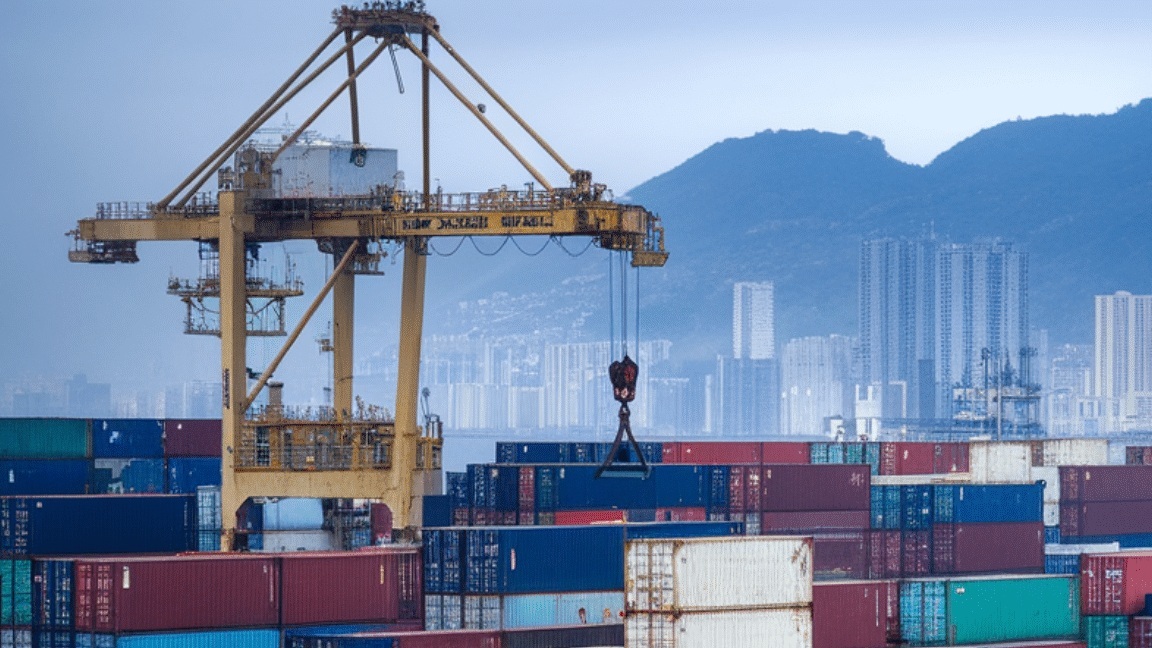
- Port requirement: Shenzhen Bay Port as the primary, Hong Kong-Zhuhai-Macao Bridge Port as backup, switching based on real-time clearance conditions;
- Acceptance cooperation: Cooperate with temperature measurement, document verification, and unloading during the scheduled time slot in accordance with the Hong Kong supermarket's receiving specifications.
The client's core requirement is "temperature data provides accountability and traceability": cold chain transport must be able to prove compliance throughout, and quickly identify where a problem occurred, rather than relying on argument.
Solution
Bofeng has designed a cold chain solution for clients that integrates "full-process temperature control + dual ports + temperature record sheets," embedding temperature management into every step of transportation:
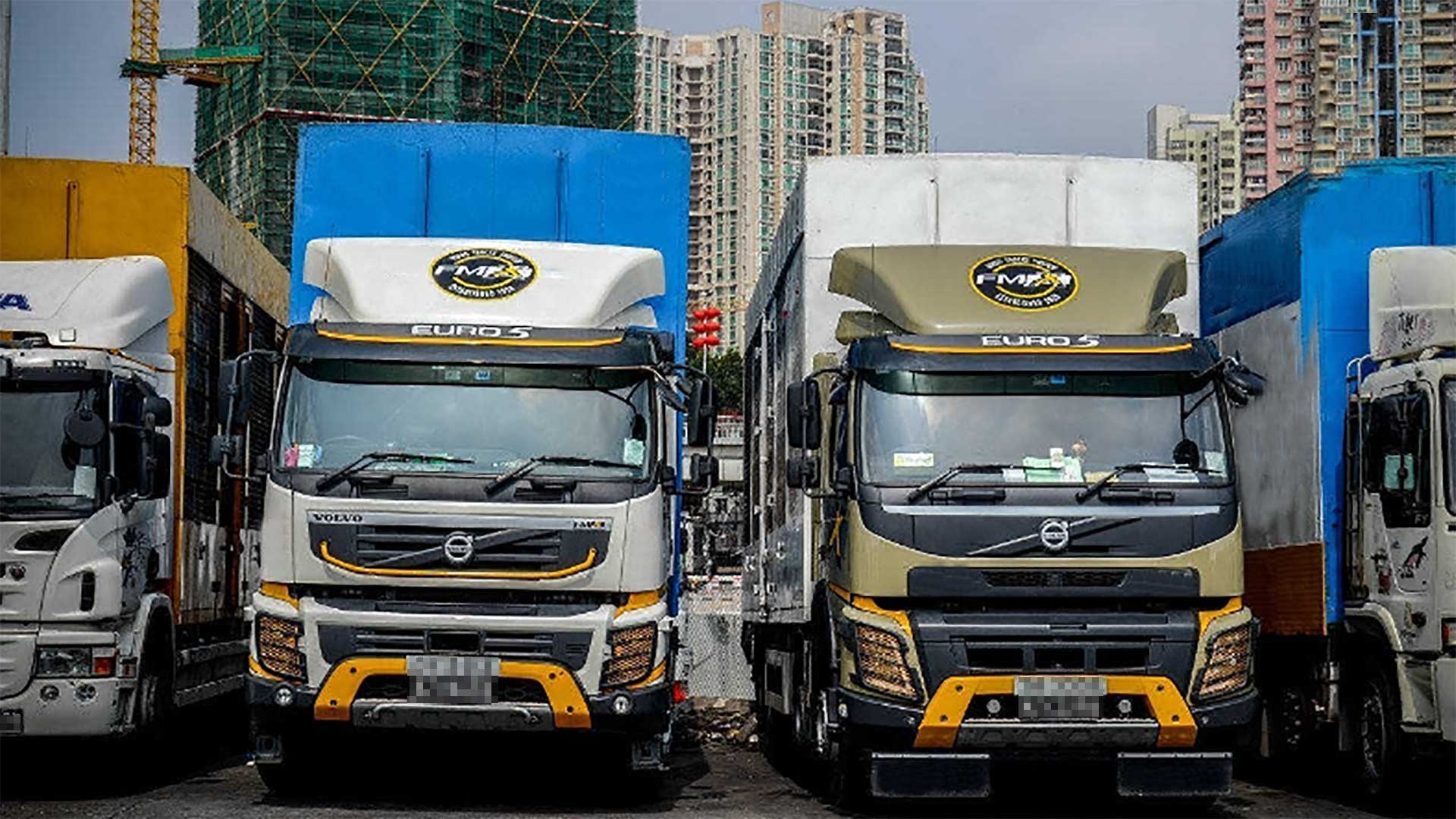
- Cold chain truck + pre-cooling before loading: Arrange a cross-boundary China-Hong Kong cold chain truck with an independent refrigeration unit. Pre-cool the compartment before loading, lowering the temperature to the target range before loading. Goods are loaded directly after leaving the Panyu cold storage to reduce exposure time in ambient-temperature areas. When loading, leave ventilation gaps between pallets to avoid poor cold air circulation caused by overly dense stacking.
- Full-process automatic temperature recording: Temperature and humidity data loggers are installed in the compartment, automatically recording and uploading at set intervals, with data available for retrieval at any time throughout the journey. After arrival at the port, a continuous temperature record sheet is printed as the basis for supermarket acceptance and as a transport voucher for the client's files. The content of the temperature record sheet is standardized according to supermarket acceptance requirements—listing the vehicle plate number, product name and batch, loading time, temperatures for each segment of the journey, and arrival time—and is signed by both the driver and the receiving clerk, with one copy kept by the supermarket and one by the client for future reference.
- Dual-port backup switching: Use Shenzhen Bay Port as the routine passage while keeping a backup plan at the Hong Kong-Zhuhai-Macao Bridge Port. Before departure each day, assess the real-time customs clearance status at both ports to predict queuing risks, and switch to the backup port if necessary, reducing temperature rises caused by port delays at the source. After switching, the system updates the estimated arrival time, and the unloading appointment at the Hong Kong end is adjusted accordingly.
- Tiered response to temperature anomalies: Establish a tiered anomaly handling mechanism—minor fluctuations are adjusted by the driver according to the plan and recorded; obvious exceedances are immediately reported to dispatch, with customer service simultaneously notifying the client and the Hong Kong receiving end to negotiate a solution; batches involving food safety risks are immediately taken out of use and arrangements made for return or disposal. All anomalies are recorded and reviewed afterward to identify causes.
- Arrival temperature measurement and document handover: Upon arrival, cooperate with the supermarket receiving end to measure the compartment temperature on site, spot-check the core temperature of individual items, provide the temperature record sheet on site, and complete the sign-off. Unloading time slots are booked in advance, and vehicles arrive within the time window to reduce waiting. Acceptance documents are transmitted electronically, allowing the client to view and archive them.
- Cold chain truck and driver management: The refrigeration unit is inspected before departure, and operating data is recorded with the vehicle. Drivers are trained in cold chain operations, confirm door sealing after loading, check temperatures at the required frequency during transit, and do not keep doors open for extended loading/unloading in ambient-temperature areas. Vehicle in-transit information is transmitted back to the dispatch center, based on which the Hong Kong end unloading time slots are arranged in advance.
The core change of this solution is transforming cold chain transportation from "driving by experience" to "delivering with data": every temperature segment is recorded, every anomaly receives a response, and every port has a backup. For the client, the greatest gain is not that a single shipment goes more smoothly, but that a reusable cold chain compliance delivery capability is established.
Results
| Indicator | Before Collaboration | After Collaboration | Improvement |
|---|---|---|---|
| Temperature record traceability rate | Partially missing | Fully traceable throughout | Complete records |
| Summer arrival rejection rate | Relatively high | Decreased by 75% | Significantly improved |
| Average port clearance time | Baseline | Shortened by 40% | Dual-port switching |
| One-time pass rate of temperature control records | Baseline | Consistently meets standards | Full-process records |
| Arrival unloading wait time | Baseline | Shortened by 50% | Appointment coordination |
Data Statement: The above is case data for this project (as of July 2026), reflecting the client's individual performance during the collaboration period and does not constitute a service commitment.
After the collaboration, the client was able to produce complete temperature records for every shipment, and the one-time acceptance rate at Hong Kong supermarkets improved significantly. During the summer high-temperature season, there was no longer any fear of temperature exceedance upon arrival, and dual-port switching reduced port dwell time. For the client, the most direct change was that "cold chain management shifted from verbal assurance to documented proof": previously, acceptance relied on disputes between both parties; now data speaks and responsibilities are clear. Previously, temperature anomalies required post-hoc remediation; now there is a tiered response, and issues can be resolved en route. The client consolidated the entire solution into a standard process for supplies to Hong Kong, and newly launched supermarket collaboration projects also follow this cold chain delivery model.
From a cost perspective, most cold chain transport investment goes into "invisible areas": pre-cooling time, recording equipment, and contingency plans for port switching. These investments are difficult to reflect directly in a single freight rate, but the losses from one arrival rejection or one batch of product downgrade often far exceed the cost of these preparations. After reconciliation, the client found that overall cold chain expenditure remained stable, while losses from rejections and warehouse returns decreased significantly — effectively converting originally sporadic risk expenses into a fixed, budgetable operating cost.
This case also serves as a reminder for similar frozen food companies: the value of cold chain transport lies not in "using a refrigerated truck," but in "temperature being provable throughout the entire journey." As supermarket receiving ends make temperature record sheets the norm, the ability to provide complete, continuous cold chain data is becoming a foundational capability for frozen food supply to Hong Kong.
The two parties have entered the second year of collaboration, and the above data reflects case performance based on full temperature control records over the past 12 months.
Client Testimonial
"Previously, when summer arrived, we worried that the temperature on arrival would exceed the standard and the supermarket would reject the shipment. Now every batch comes with a complete temperature record sheet, and the acceptance inspection passes on the first try. We can also communicate more confidently with the supermarket. Since switching between the dual ports, there have been no major delays in customs clearance during the peak season either."
— Customer feedback for Bofeng Logistics · Hong Kong logistics dedicated line (published with authorization and desensitized)
Need a similar logistics solution? Contact us — a plan within 30 minutes.
Phone:13075678958 | WhatsApp:+86 13075678958 | Email:info@zhbfwl.com
Get a Quote