Client Background
Zhuhai is a major industrial hub on the west bank of the Pearl River, with solid foundations in industries such as home appliances, electronics, and equipment manufacturing. Many local manufacturers count Hong Kong and Macau as their primary markets. The protagonist of this case is a manufacturing enterprise in Zhuhai that specializes in producing household appliances and supporting electronic components, with its products targeting Hong Kong appliance brands, retail channels, and warehousing traders. The company operates its own factory in Zhuhai, and finished goods and semi-finished products are shipped in batches to a transit warehouse in Hong Kong every month, where the Hong Kong warehouse receives and quality-checks the goods before dispatching them to local stores or further transshipping them to overseas markets according to orders.
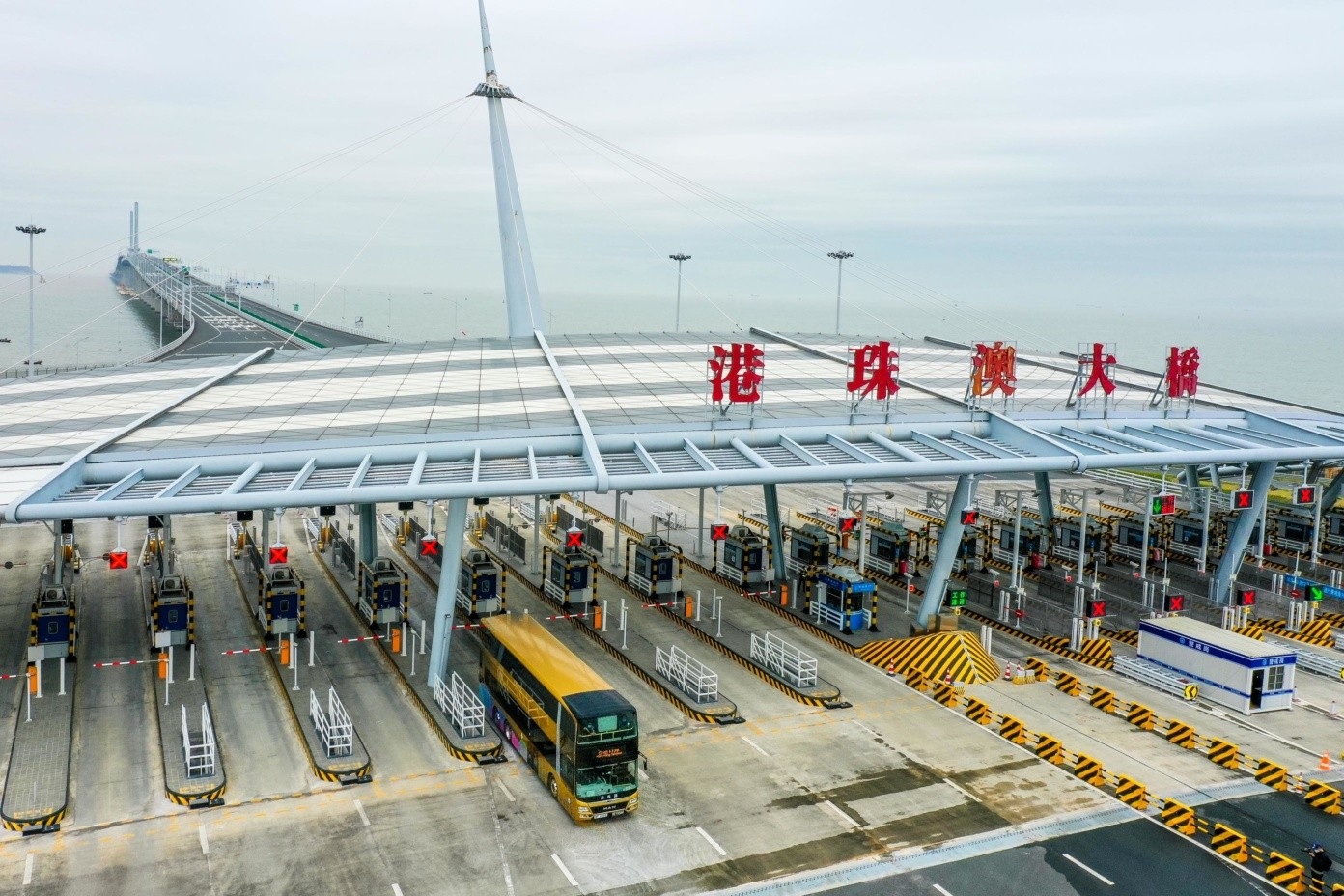
Although Zhuhai and Hong Kong are separated by a stretch of sea, the opening of the Hong Kong-Zhuhai-Macau Bridge has fundamentally transformed transportation conditions between the two cities. The bridge operates 24-hour customs clearance, and the drive from Zhuhai to Hong Kong takes about 40 minutes. A cross-border vehicle with both Guangdong and Hong Kong license plates can depart from the Zhuhai factory and deliver goods to the Hong Kong warehouse the very same day. In the past, the company mainly took a detour through the Shenzhen Bay Port. Although it could still reach Hong Kong, the longer driving distance, queuing at customs during peak hours, and unpredictable variables along the way made it difficult to guarantee same-day arrival. For Hong Kong clients who place great importance on delivery cadence, this uncertainty directly affected their inventory planning.
The company's shipments are mainly full containers and full batches, with large shipment volumes per batch and clear time requirements, making them well-suited for full-truckload transport. However, in the past, full-truckload transport relied on logistics providers from other cities. Trucks would be dispatched from Shenzhen to pick up the goods, resulting in high empty-running costs and naturally less favorable pricing; delivery time was also compromised because "the truck came from afar." The company hoped to find a logistics service provider that truly understood Zhuhai and could leverage the advantages of the Hong Kong-Zhuhai-Macau Bridge, turning "cross-sea delivery" into a reliable rhythm of "same-day arrival in Hong Kong."
For industrial enterprises, logistics stability is directly tied to production and delivery: the Hong Kong warehouse's inventory plan is scheduled by the day, and late-arriving goods may miss the week's shipping window; if semi-finished products arrive late, the assembly schedule at the Hong Kong end also has to be adjusted accordingly. Logistics is not just a question of "how much does shipping cost," but "can the goods arrive as planned" — which is precisely why the company is willing to pay a reasonable premium for reliable delivery.
The company's shipping rhythm is linked to its production schedule: a batch of goods is often part of the production plan, with both loading time and port arrival time following the order schedule. After the Hong Kong warehouse receives the goods, it must sort and shelve them according to orders. If the goods arrive half a day late, the sorting schedule has to be rearranged, and one disruption can affect the entire chain. This is also why the company insists on "full-truckload + same-day arrival in Hong Kong" — not as an overreaction, but because every node in the supply chain is interconnected, and a delay at one point can trigger a chain reaction affecting all subsequent stages.
Key Challenges
Under the old model, the challenges centered on four points:
- Time-consuming detours: Detouring via Shenzhen Bay Port from Zhuhai significantly lengthened the driving distance, and often coincided with peak customs traffic. Under normal circumstances, it was difficult to arrive in Hong Kong the same day, and shipments usually didn't arrive until the next day. In one case, a company dispatched a truck on Friday to take the detour in order to meet Monday stocking at the Hong Kong warehouse, but it hit peak queues at the port on Saturday, and the goods didn't reach the Hong Kong warehouse until Monday morning, missing the stocking window. The Hong Kong side could only temporarily adjust the sorting sequence;
- Full-truckload transit time is compromised: Vehicles from out-of-town logistics providers had to deadhead from Shenzhen to Zhuhai to pick up goods, and departure times were determined by the vehicle's itinerary, leaving companies unable to arrange loading at their own pace. The time-efficiency advantage of full-truckload transport was never truly realized;
- Too many intermediate links: The detour route passed through multiple checkpoints and inspection points, creating many variables along the way. Vehicle positions in transit were difficult to track in real time, and companies could only passively wait for arrival notifications;
- Opaque costs: Out-of-town logistics providers were not very familiar with the Zhuhai route, and their quotes were inconsistent. Combined with hidden costs such as deadheading and waiting, the total cost was difficult to budget.
The cost of these challenges went beyond freight charges, extending to more subtle hidden losses: disrupted stocking plans at the Hong Kong warehouse and an impacted reputation for customer delivery. For companies, the predictability of "when the goods arrive and in what condition" matters more than the one-off freight cost.
Transport Requirements
- Route: Zhuhai factory → Hong Kong transit warehouse, door-to-door delivery;
- Cargo volume: About 20-25 pallets per batch, full truckload, 6-8 batches per month, increasing in peak season;
- Transit time: Loading in the morning, arriving in Hong Kong the same day, with 24-hour customs clearance via the Hong Kong-Zhuhai-Macao Bridge; in special circumstances (such as inspection), delivery will be made the next day, and advance notice is required;
- Special requirements: Goods stacked by pallet and secured with film; upon arrival, unload according to the Hong Kong warehouse's designated time slot, and count and sign for each pallet;
- Billing method: Billed at a flat rate per full truckload, avoiding repeated conversions based on mileage and waiting time for detour routes;
- Insurance: Confirm the insurance coverage based on cargo value, claims can be filed throughout the entire transportation.
The above requirements may seem scattered, but they all point to the same goal: making every batch predictable in terms of when it arrives and in what condition.
Solution
Bofeng customizes a "Zhuhai full-truckload direct delivery" solution for customers, making full use of the channel advantages of the Hong Kong-Zhuhai-Macao Bridge:
- Local vehicle pickup nearby: Local Zhuhai vehicles are used, with trucks dispatched from Zhuhai or surrounding areas. Enterprises can load in the morning and dispatch the same day, without waiting for out-of-town vehicles to deadhead in; the loading pace is entirely controlled by the enterprise;
- Full truckload exclusively occupies one dual-plate China-Hong Kong vehicle: Choosing full truckload rather than LTL, one dual-plate cross-border truck carries only this batch of goods, with no mixed loading throughout the journey. From factory exit to Hong Kong warehouse, the goods remain in a controllable environment, avoiding the main risks of mixed-load compression and misloading at the source;
- Direct via the Hong Kong-Zhuhai-Macao Bridge: After loading, the vehicle goes through customs clearance at the Hong Kong-Zhuhai-Macao Bridge port and drives directly to Hong Kong. The bridge offers 24-hour customs clearance, and the drive from Zhuhai to Hong Kong takes about 40 minutes, significantly shortening the route compared to detouring via Shenzhen Bay Port. Full truckload passes inspection efficiently, supporting the pace of "load in the morning, arrive the same day". Vehicles can also depart at night, so enterprises with urgent cargo do not have to wait until the next day;
- Delivery according to time window: After arriving in Hong Kong, delivery is made during the time slot designated by the Hong Kong warehouse. Unloading is completed in place, and each pallet is counted and signed for, ensuring clear handover and defined responsibility. Operationally, the receiving time slot is confirmed with the Hong Kong warehouse before transport; the vehicle arrives early according to the appointment, forklifts and access are coordinated in advance, and unloading and signing are completed immediately upon arrival;
- Flat-rate full truckload pricing: A flat rate per trip eliminates the hidden costs of converting volume and weight for LTL, as well as additional charges for detour mileage. The bill is simple and transparent, and costs are budgetable;
- Contingency and insurance plans: Before transport, the insurance coverage is confirmed with the customer; if delays occur due to uncontrollable factors such as inspections or weather, the customer is informed immediately and assistance is provided to coordinate rescheduling with the Hong Kong warehouse, minimizing the impact on delivery.
Regarding the cost logic of full truckload vs. LTL, the plan also gives customers a clear calculation: LTL is converted by volume and weight, so the unit price appears low, but cargo damage, rescheduling coordination, and reconciliation disputes all generate hidden costs; full truckload's flat rate is seemingly "straightforward", but with fixed costs, controllable lead times, and stable delivery, the overall cost is actually lower. For industrial full-batch goods that require stable delivery, full truckload is a more suitable choice. For local Zhuhai enterprises, this cost calculation has a special twist: using the Hong Kong-Zhuhai-Macao Bridge shortens the driving distance compared to detouring via Shenzhen Bay, and the bridge has smooth traffic and is open at night, effectively trading shorter mileage and more controllable customs clearance for more stable same-day delivery; when calculated this way, the trust value brought by stable delivery is often more important than the freight itself.
Take a typical working day after cooperation as an example: at 9:00 AM, a local Zhuhai vehicle arrives at the factory, and the enterprise counts each pallet according to the loading list, loads, and wraps and secures them; loading is completed before 11:00 AM, and the vehicle passes customs clearance at the Hong Kong-Zhuhai-Macao Bridge port; it arrives at the Hong Kong warehouse at noon, unloads according to the appointed time slot, counts each pallet and signs for receipt; in the afternoon, the enterprise receives the signed proof of delivery and the full transit tracking information. From loading to signing, the entire process is completed on the same day. The Hong Kong warehouse's stocking plan is scheduled by day, and there is no need to reserve buffer time waiting for goods.
The plan turns "detouring and leaving things to fate" into "full control via the bridge": enterprises only need to confirm the Hong Kong warehouse's receiving time window; the rest—pickup, lashing, customs clearance, delivery, and signing—are all completed by Bofeng according to process. Throughout the process, the enterprise can track the vehicle's location and estimated arrival time in real time, providing a basis for delivery arrangements at the Hong Kong warehouse, and there is a clear communication channel for any last-minute adjustments.
Results
| Indicator | Detour via Shenzhen Bay (Before Cooperation) | Full Truckload via Hong Kong-Zhuhai-Macao Bridge (After Cooperation) | Improvement |
|---|---|---|---|
| Port arrival time | Most arrived the next day | Arrived the same day | About 1 day earlier |
| Driving distance | Detour from Zhuhai via Shenzhen Bay | Via the Hong Kong-Zhuhai-Macao Bridge | Shortened by about 40% |
| Loading time | Waited for out-of-town vehicles to arrive empty | Loaded in the morning as scheduled | Controllable pace |
| Comprehensive transport cost | Baseline | Reduced by 20% | Local vehicle availability + flat rate |
| Cargo damage / misloading rate | Occasional mixed-loading incidents | Independent full-truckload loading | Significantly reduced |
Data statement: The above is case-specific data (as of July 2026), reflecting this customer's performance during the cooperation period and does not constitute a service commitment.
After the cooperation, the most immediate change the company noticed was that "cross-sea delivery no longer spans a day": loading in the morning and arriving at the port the same day became the norm, and the Hong Kong warehouse stocking plan was no longer interrupted. With the shorter detour mileage, transport costs also dropped, and the flat rate for full trucks made expenses budgetable and cost accounting easier. For the company's Hong Kong customers, the improved delivery reliability directly enhanced coordination on stocking between both parties, and peak-season orders were therefore better guaranteed. When renewing the contract, the company took the initiative to designate full-truckload shipping via the Hong Kong-Zhuhai-Macao Bridge as the regular delivery method and is considering applying the same model to shipments bound for Macau.
This case provides a viable path for local manufacturers in Zhuhai: with the Hong Kong-Zhuhai-Macao Bridge right at their doorstep, using the right corridor and the right vehicle type can make Zhuhai-to-Hong Kong logistics arrive the same day. Full-truckload transport is not necessarily more expensive than consolidated shipping—once hidden costs such as empty running, detours, and waiting time are properly accounted for, the comprehensive cost of stable delivery is often lower.
The two parties have entered the second year of cooperation. The above data is a record of individual cases of continuous full-truckload shipments during the cooperation period.
Client Testimonial
"Previously, we had to detour from Zhuhai via Shenzhen Bay, and goods often didn't reach the Hong Kong warehouse until the next day, which kept disrupting our stocking plans. Now, via the Hong Kong-Zhuhai-Macao Bridge, they arrive in Hong Kong the same day—loaded in the morning and delivered in the afternoon. Coordinating with our Hong Kong clients is much easier, and costs are clearer than before."
— Feedback from Bofeng Logistics · Hong Kong Logistics Special Line client (published with authorized anonymization)
Need a similar logistics solution? Contact us — a plan within 30 minutes.
Phone:13075678958 | WhatsApp:+86 13075678958 | Email:info@zhbfwl.com
Get a Quote