Client Background
East China is a hub for the hardware industry. Around Ningbo, Taizhou, and Wenzhou, there are numerous manufacturers of architectural hardware, bathroom hardware, and fasteners. Their product lines cover multiple categories such as door locks, hinges, plumbing fittings, fasteners, and metal sheets, sold across the country and reaching Hong Kong, Macau, and overseas markets. The protagonist of this case is a hardware manufacturer in Ningbo that mainly produces architectural hardware and bathroom hardware. Its customers are primarily Pearl River Delta traders and Hong Kong/Macau renovation projects, and it operates on a supply rhythm of "small batches, frequent dispatch" — Macau customers order according to renovation project milestones, with dozens of boxes or hundreds of pieces per order, and batches are frequent.
Macau does not produce hardware locally. Architectural hardware and bathroom hardware are almost entirely dependent on mainland supply. Market demand is stable but fragmented: some goes to hardware traders and building material markets, and some goes directly to renovation sites. For the company, the Macau market means low value per shipment and medium volume per batch, but it is a stable source of growth and worth long-term cultivation. For this reason, the stability and cost controllability of logistics directly determine whether this business line can be sustained.
Before finding Bofeng, the company had no direct channel for shipping to Macau. It had to send goods first from Ningbo to logistics parks in Guangzhou or Shenzhen, then transfer to China–Macau trucks for transport to Macau, with separate customs declaration coordination in between. The entire chain was stitched together by multiple scattered carriers: the mainland segment, the Pearl River Delta segment, and the cross-border segment each handled their own part. Each leg quoted and took responsibility independently, the handover of goods was ambiguous, and arrival time was left to chance on each leg. For Macau customers who care about delivery milestones, this uncertainty directly affects their construction schedules and sales plans — door locks can wait when out of stock, but missing bathroom hardware may stop an entire renovation milestone.
The company had also consulted local freight forwarders in East China, and most responses were: "We do little on the Macau route; shipments have to go via Hong Kong or Shenzhen, and transit time cannot be promised." A major difference between Macau logistics and Hong Kong logistics lies precisely here: the destination is single, and there are few dedicated-line service providers. Many East China forwarders are accustomed to the Hong Kong channel and are not familiar with the route via Zhuhai to Macau. What the company needed was a service provider that could connect the entire chain of "nationwide supply → Zhuhai hub → bridge corridor → Macau delivery", replacing multiple subcontracting legs with single-point responsibility.
Hardware products have another characteristic: mixed specifications, light individual items, mainly packed in cartons, and overall they are goods that are "damage-prone but not weight-heavy." Such goods are very cost-effective to ship via Zhuhai transit in consolidated trucks — LTL shares costs based on cargo volume, and a batch of 5–15 cubic meters is just the right size for scheduled dispatch. This neither wastes full truck space nor loses control over transit time, as it remains stable and predictable by schedule. For a single-destination market like Macau, consolidated trucking plus fixed schedules achieves a good balance between cost and transit time, which is precisely why the company ultimately chose the Zhuhai transit model among many options.
Key Challenges
The challenges of the old model center on four points:
- Multiple transit links: Shipments from Ningbo to Macau required multiple transshipments via Guangzhou or Shenzhen. With each transfer, the handover of cargo ownership and division of responsibility became more ambiguous. Once, cargo sat in a transit warehouse for days with no one following up; only when the customer urged did it come to light that a customs documentation handover issue had caused it to get stuck in the gap between two carriers;
- Unreliable delivery times: Arrival times on fragmented routes were hard to guarantee. Macau customers needed goods by project milestones, and delays directly affected their construction and sales schedules. One batch of bathroom hardware arrived late, forcing the customer to adjust their construction sequence, and both sides incurred extra costs;
- Opaque costs: Quotations were split by segment, with transportation, customs clearance, and miscellaneous fees billed separately. Monthly reconciliation was cumbersome, hidden charges were difficult to detect, and cost budgeting was full of uncertainty;
- Risk of cargo damage: Multiple loading and unloading operations made hardware in carton packaging prone to damage or mis-shipment. Once a problem occurred, carriers at different stages shuffled responsibility among themselves, making after-sales handling time-consuming and labor-intensive.
The cost of these challenges was not just freight, but also Macau customers' trust in supply stability—a single delay or damage could lead them to reassess the entire supplier.
Transport Requirements
- Route: Ningbo factory → Zhuhai warehouse → via Hong Kong-Zhuhai-Macau Bridge → Macau, door-to-door;
- Cargo volume: 5-15 cubic meters per shipment, mainly consolidated shipments, 4-6 shipments per month, increasing during peak season; shipments under 5 cubic meters go via groupage, and large quantities can choose dedicated trucking;
- Lead time: From East China dispatch to Zhuhai warehouse about 3-5 days, delivered to Macau within the next day after arrival, with island-wide delivery in 2-4 hours;
- Special requirements: Sort by Macau destination (Peninsula/Cotai), count batch by batch, and provide in-transit tracking; general goods with standard invoices can be shipped, and special goods require advance confirmation of the plan;
- Billing method: ALL-IN all-inclusive (transport + customs clearance + delivery), with transparent costs that can be budgeted;
- Insurance: Insured according to cargo value, with claims available throughout the entire transport.
The above requirements may seem scattered, but they all point to the same goal: making every batch's "when it will arrive and in what condition" predictable.
Solution
BoFeng customizes a "nationwide transshipment to Macau via Zhuhai warehouse" solution for enterprises, integrating East China cargo sources, the Zhuhai hub, and the Hong Kong-Zhuhai-Macao Bridge corridor into a controllable chain:
- Direct shipment from East China to Zhuhai warehouse: Goods are shipped from the Ningbo factory, arriving at the Zhuhai warehouse via regular freight or express delivery. Shipments from East China take about 3-5 days to arrive at the warehouse, and are traceable throughout. Once the tracking number is synced with BoFeng, the warehouse arrival status can be monitored in real time. After goods arrive at the warehouse, staff count the quantity, inspect the appearance, and confirm warehousing. Damaged packaging is photographed and reported to the shipper in a timely manner;
- Unified distribution at the Zhuhai warehouse: The warehouse classifies and stores goods by Macau destination (Peninsula/Cotai) and cargo volume in designated zones, and can provide value-added services such as labeling and repackaging as needed. There are fixed daily departures for Macau: goods arriving in the morning depart in the afternoon, and goods arriving in the afternoon depart the next morning, with transit times controlled by the schedule. Single batches smaller than 5 cubic meters are consolidated for co-loaded departures, while large volumes are arranged as direct full truckloads; the mode is selected by cargo volume so costs better match actual needs;
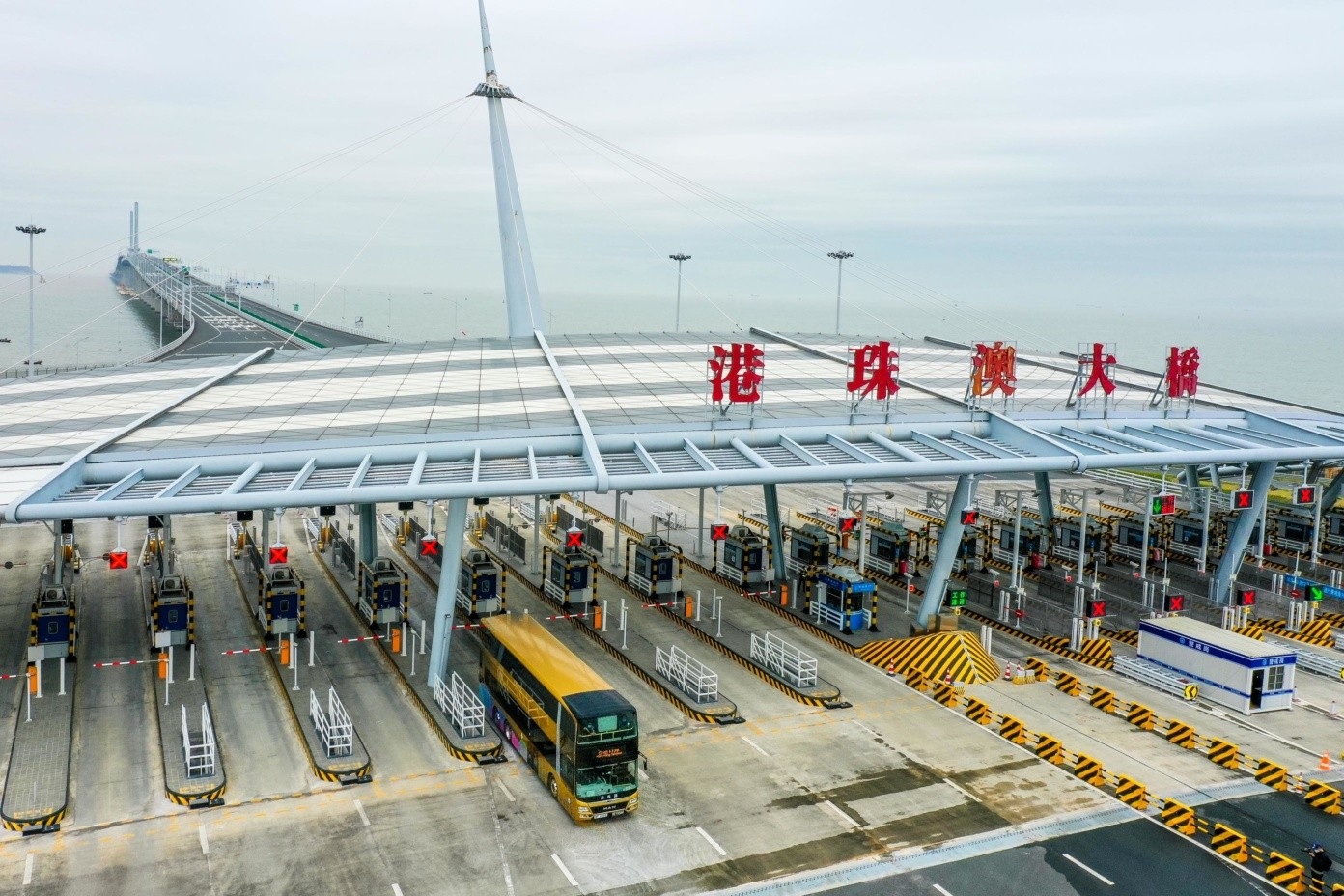
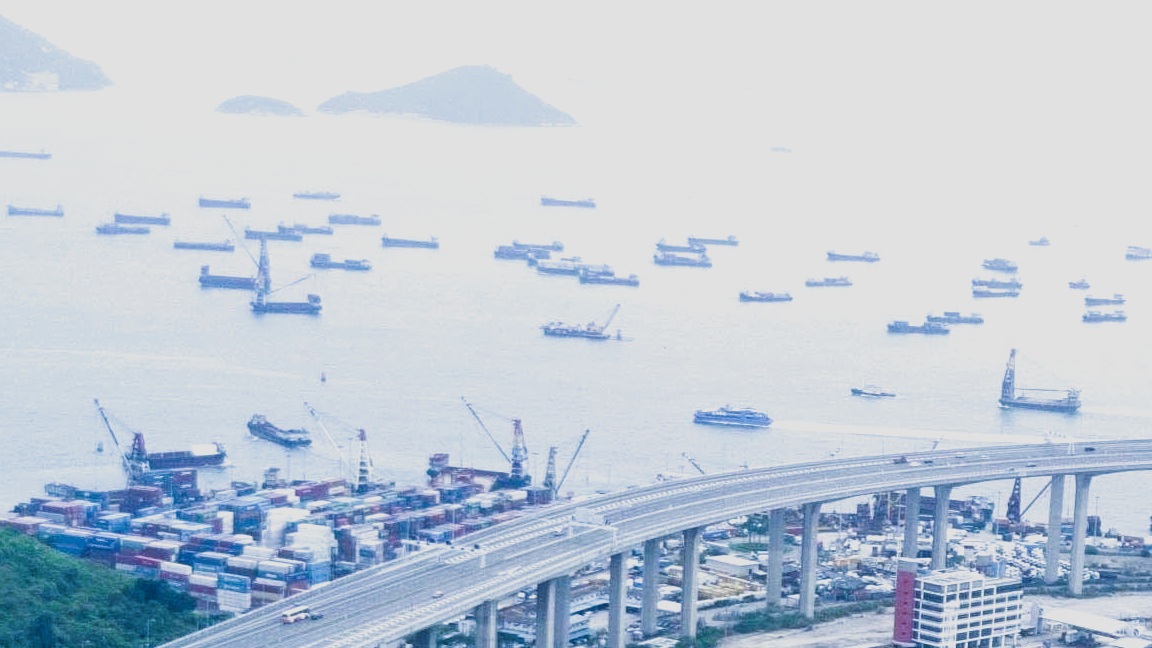
- Direct routing via the Hong Kong-Zhuhai-Macao Bridge: From the Zhuhai warehouse, it takes about 30 minutes to reach Macau via the Hong Kong-Zhuhai-Macao Bridge, with customs clearance taking only 15-25 minutes. The bridge port is open 24 hours and offers one-stop customs clearance; China-Macau vehicles can complete customs inspections by both sides with a single stop, and general cargo can be released after electronic declaration. Compared with detours through other ports, the bridge corridor offers a shorter drive and faster clearance, making it a highly reliable land route from the mainland to Macau;
- Delivery across all of Macau: After arrival and signing, the Macau local delivery team delivers island-wide within 2-4 hours. The Macau Peninsula is mainly commercial and residential, while Cotai is mainly hotels and casinos; the two areas are served on separate routes, and efficient delivery is ensured as long as the delivery address is accurate;
- One-invoice all-inclusive pricing: The freight from outside to Zhuhai is borne by the shipper, while the freight from Zhuhai to Macau is included in the ALL-IN package. Transport, customs declaration, and delivery are offered at a single flat price with no hidden charges, and monthly reconciliation is handled with one invoice;
- Exception coordination: In case of uncontrollable factors such as port inspections or weather, customers are notified immediately and the receiving time on the Macau side is coordinated to minimize the impact on delivery.
Take a typical batch after cooperation as an example: on Monday, the enterprise ships from the Ningbo factory; on Wednesday, the goods arrive at the Zhuhai warehouse and complete counting and warehousing; on Thursday morning, the warehouse arranges dispatch, clears customs via the Hong Kong-Zhuhai-Macao Bridge, and arrives in Macau around noon; in the afternoon, the Macau delivery team delivers by zone (Peninsula/Cotai), with signing and return completed the same day. From dispatch in Ningbo to signing in Macau, the whole process takes about 3-4 days, and the "Zhuhai to Macau" segment is stably controlled within half a day.
For enterprises in East China, the core value of this solution is turning the previous "multiple transfers, scattered responsibilities" into "one warehouse entry, one through bill": once goods arrive at the Zhuhai warehouse, all subsequent transport, customs clearance, and delivery to Macau are completed by BoFeng according to the process, and the enterprise only needs to manage the "Ningbo to Zhuhai" segment.
Results
| Metric | Before Cooperation (Scattered Transshipment) | After Cooperation (Zhuhai Warehouse Transshipment) | Improvement |
|---|---|---|---|
| Total transit time (East China → Macau) | About 6-8 days | 4-5 days | Shortened by about 2 days |
| Transshipment stages | Multiple fragmented transshipments | One sorting at Zhuhai warehouse | Greatly simplified |
| Damage / misdelivery rate | Occasional | Below 0.3% | Significantly reduced |
| Reconciliation manpower | About half a day per week | Real-time with single waybill | Greatly saved |
| Responsibility allocation | Dispersed among multiple parties | Single responsibility under Bofeng | Clear and traceable |
After the cooperation, the most intuitive feeling for the company is that "shipping to Macau is no longer left to fate": shipments from Ningbo arrive at the Zhuhai warehouse in about 3-5 days, and are delivered to Macau within the next day after arrival, keeping the overall transit time stable within a committable range; the cost is a fixed all-inclusive price, making cost accounting easier. Previously, they had to spend half a day each week on reconciliation and chasing shipments; now one system shows all nodes of the entire process, changing from "tracking orders and chasing goods" to "checking the system". For Macau customers, the improved delivery stability has directly enhanced coordination on both sides, and orders in peak season are more assured. The company is also considering replicating the same model to Hong Kong-bound shipments—the Zhuhai warehouse can be used to distribute to both the Hong Kong and Macau markets from one location.
For Macau customers, stable arrivals allow them to stock up as planned and work according to schedule; for the company, a replicable Macau shipping chain means the Macau market is no longer a business that "they want to ship to but find awkward to ship". As the two sides enter the second year of cooperation, the company has made the Zhuhai warehouse transshipment the standard shipping method for the Macau route.
Data statement: The above are data for this case (as of July 2026), reflecting the performance of this specific customer during the cooperation period and do not constitute a service commitment.
The two parties have entered the second year of cooperation. The above data are case records of batch consolidated shipments from East China to Macau over the past 12 months.
Client Testimonial
"Previously, shipping to Macau required several transfers, and we had no way of knowing where the goods were. Now the goods go directly from Ningbo to the Zhuhai warehouse, and reach the Macau customer the next day. The price is also all-inclusive, making account reconciliation much easier."
— Customer feedback for Bofeng Logistics' Macau logistics special line (published with authorization and desensitized)
Need a similar logistics solution? Contact us — a plan within 30 minutes.
Phone:13075678958 | WhatsApp:+86 13075678958 | Email:info@zhbfwl.com
Get a Quote