Container trailers are not as simple as "just pulling a container to the factory." Different types of trailers suit different cargoes and scenarios—choose the right one, and you can double loading efficiency and reduce transport costs; choose the wrong one, and you might end up making a wasted trip or even facing a safety incident.
1. Types of Container Trailers
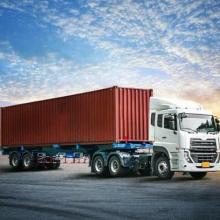
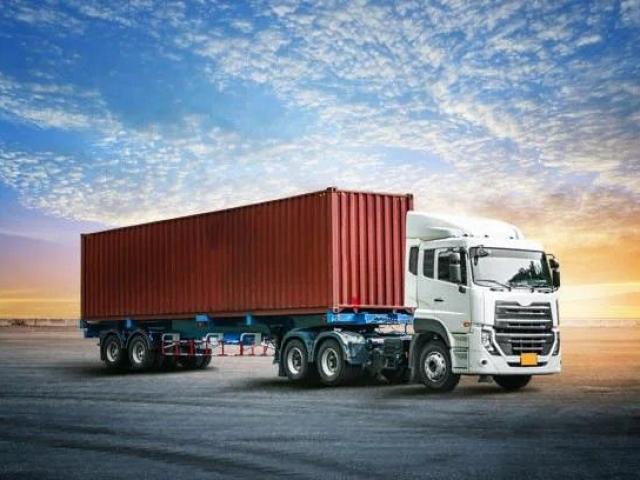
Container trailers mainly consist of a tractor (truck head) + a trailer (chassis). The type of trailer chassis determines the applicable scenario.
| Type | Structural Features | Applicable Scenarios | Advantages | Disadvantages |
|---|---|---|---|---|
| Chassis Trailer / Skeleton Trailer | Only a chassis frame; the container itself acts as the cargo box. | Standard container transport | Light tare weight, low fuel consumption | Cannot carry bulk cargo |
| Flatbed Trailer | Flat loading platform | Steel, machinery, oversized items | Flexible loading, suitable for irregular cargo | Subject to height restrictions |
| Curtainside Trailer | Side curtains that can be opened and closed, with roof bows | Rain-sensitive bulk cargo / palletized goods | Weatherproof, allows side loading/unloading | Limited load capacity |
| Lowboy Trailer / Drop Deck Trailer | Loading floor lower than the wheels; can be very low | Construction equipment, large machinery | Can transport extra high / extra wide cargo | Large turning radius |
2. Detailed Look at Chassis Trailers (Skeleton Trailers)
A chassis trailer is the most common type of container trailer and fits the typical image of a "container trailer" in most people's minds.
It consists of a frame chassis and tires, without an independent cargo box – the container itself serves as the box. The advantages are light tare weight, low fuel consumption, and flexible operation.
| Item | Description |
|---|---|
| Suitable Cargo | Standard 20GP/40GP/40HQ containers |
| Load Capacity | Approximately 28-30 tons (including container weight) |
| Applicable Scenarios | Standard container haulage from port to factory |
| Requires Loading Dock? | Yes, requires the factory to have a loading dock |
3. Detailed Look at Flatbed Trailers
An flatbed trailer has a completely flat loading platform surface without a fixed box structure. Cargo is placed directly on the flatbed and secured with tie-down straps or wire ropes.
| Item | Description |
|---|---|
| Suitable Cargo | Steel/steel pipes, large machinery, timber, irregular cargo that cannot be containerized |
| Load Capacity | 10-30 tons (depending on trailer model) |
| Applicable Scenarios | Transporting imported steel from port to factory, moving oversized machinery |
| Advantage | Not limited by container dimensions, can carry extra-long/extra-wide cargo |
Flatbed trailers are typically not used for standard container transport; they are used for cargo like steel, machinery, or other items not suitable for containers.
4. Detailed Look at Lowboy Trailers
A lowboy trailer is a variant of the flatbed but with a much lower deck height, allowing it to transport taller cargo. Its wheels are located on the sides of the platform, with the loading area situated between the wheels.
| Item | Description |
|---|---|
| Suitable Cargo | Construction machinery (excavators/bulldozers), large equipment, indivisible loads |
| Load Capacity | 30-60 tons |
| Applicable Scenarios | Engineering project logistics, heavy haul / oversized transport |
| Note | Large turning radius; restricted access on city roads |
Usually, an oversize/overweight transport permit is required before a lowboy trailer can be driven on public roads.
5. Detailed Look at Curtainside Trailers
A curtainside trailer has sides made of curtain material that can be pulled aside, providing side-access loading. The roof is protected by bows and a tarpaulin.
| Item | Description |
|---|---|
| Suitable Cargo | Rain-sensitive loose cargo, palletized goods, bagged goods |
| Load Capacity | 5-15 tons |
| Applicable Scenarios | Short-distance transport, city distribution, loose goods not requiring containerization |
| Advantage | Weatherproof; can be loaded from 3 sides (rear + both sides) |
Curtainside trailers are primarily used for domestic short-distance distribution and are not a standard container trailer type.
6. Decision Process for Choosing a Trailer Type
What is your cargo?
   │
   ├── Standard container → Chassis trailer (standard choice)
   │
   ├── Steel / Machinery / Irregular cargo → Flatbed trailer
   │
   ├── Construction machinery / Oversized items → Lowboy trailer (needs permit)
   │
   └── Bulk cargo / Rain-sensitive LTL → Curtainside trailer
7. Coordination Between Trailer and Loading Operation
Different trailer types have different loading requirements:
| Trailer Type | Loading Requirements | Precautions |
|---|---|---|
| Chassis Trailer | Requires a loading dock at the factory; forklift enters container. | Container inspection is crucial; container damage is the shipper's responsibility. |
| Flatbed Trailer | Requires a crane/forklift; cargo must be lashed down firmly. | Lashing must be secure to prevent shifting during transit. |
| Lowboy Trailer | Requires a lifting device; cargo may need to be welded/secured with lashings. | Oversized transport requires administrative approval. |
| Curtainside Trailer | Forklift can load/unload from the side. | Curtains must be properly closed and secured; they are weatherproof but not theft-proof. |
Selection Experience: In practical operations, chassis trailers account for over 90% of transport and are the default choice for most scenarios. Flatbed and lowboy trailers are for specialized needs – confirm your cargo type first before deciding. Do not use a flatbed to move a standard container as it's inefficient and uneconomical.
💡 Not sure which trailer to choose? Send your cargo information and loading address to Bofeng Logistics; we'll help you find the most suitable trailer solution.
📞 Trailer solution consultation: 13075678958 | info@zhbfwl.com
Related Logistics Services
Bofeng Logistics offers the following related services, feel free to inquire: