Container shipping is the backbone of global trade, and China — accounting for approximately 30% of global container port throughput — sits at its very center. Whether you are a first-time importer or an experienced supply chain professional, understanding how container shipping from China works is essential for cost-effective and reliable logistics.
This guide is based on Bofeng Logistics' 10+ years of hands-on experience arranging container shipments from all major Chinese ports. It covers container types, FCL vs LCL, major shipping routes, Chinese port infrastructure, real cost structures, and the complete step-by-step process.
1. What Is Container Shipping?
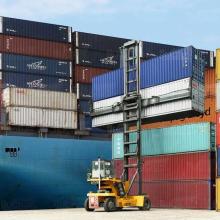
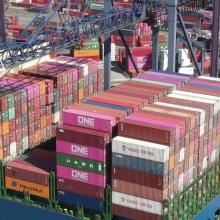
Container shipping is a method of transporting goods in standardized steel containers (intermodal containers) that can be transferred seamlessly between ships, trucks, and trains. These containers come in standard sizes — primarily 20-foot and 40-foot — allowing cargo to be packed once and travel across oceans, highways, and railways without repeated handling.
Why container shipping dominates global trade:
- Standardization: One container fits on any vessel, truck, or rail car equipped for containers
- Efficiency: Loading and unloading times are reduced from days to hours
- Security: Containers are sealed at origin and only opened at destination (unless inspected by customs)
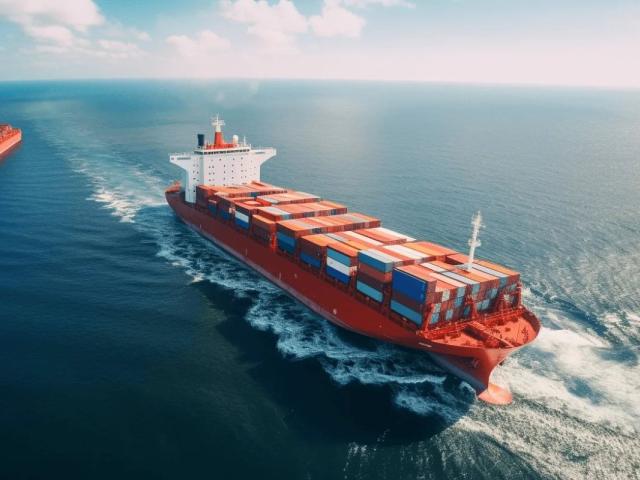
- Scale: Modern container ships carry 10,000 to 24,000 TEUs (twenty-foot equivalent units) per voyage
- Cost-effectiveness: Per-unit shipping costs drop dramatically as volume increases
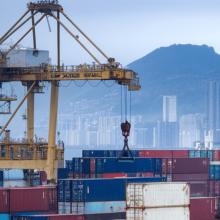
China accounts for approximately 30% of global container port throughput, with the world's 7 busiest container ports located on its coastline.
2. Container Types & Size Guide
Choosing the right container type is the first critical decision in container shipping from China. Here is a comparison of the most common types:
| Container Type | Internal Length | Internal Width | Internal Height | Max Payload | Typical Cargo |
| 20GP (General Purpose) | 5.90 m / 19.4 ft | 2.35 m / 7.7 ft | 2.39 m / 7.8 ft | ~28,200 kg | Dense cargo, machinery, metals |
| 40GP (General Purpose) | 12.03 m / 39.5 ft | 2.35 m / 7.7 ft | 2.39 m / 7.8 ft | ~27,600 kg | General merchandise, electronics |
| 40HQ (High Cube) | 12.03 m / 39.5 ft | 2.35 m / 7.7 ft | 2.70 m / 8.9 ft | ~27,000 kg | Light bulky cargo, furniture |
| Reefer (Refrigerated) | 11.56 m / 37.9 ft | 2.29 m / 7.5 ft | 2.27 m / 7.5 ft | ~26,500 kg | Food, pharmaceuticals, flowers |
| Open Top | 12.03 m / 39.5 ft | 2.35 m / 7.7 ft | 2.39 m / 7.8 ft | ~27,000 kg | Over-height cargo, machinery |
How to choose the right container:
- 20GP: Best for dense, heavy cargo (machinery, steel products, stone). Maximum payload but limited volume (~28 CBM).
- 40GP: Best for general cargo with moderate density (~58 CBM capacity).
- 40HQ: Best for light, bulky cargo such as furniture, plastic products, or textiles (~68 CBM capacity). The extra 30 cm in height makes a significant difference for volume-sensitive shipments.
- Reefer: Required for temperature-controlled cargo. Costs significantly more than dry containers.
- Open Top / Flat Rack: Required for over-height or over-width cargo that cannot fit in standard containers.
3. FCL vs LCL: Which Mode Is Right for You?
The two primary modes of container shipping from China are Full Container Load (FCL) and Less than Container Load (LCL) .
FCL (Full Container Load)
In FCL shipping, you rent an entire container exclusively for your cargo. The container is sealed at your supplier's warehouse and stays sealed until it reaches your destination.
When to choose FCL:
- Your cargo volume fills 15+ CBM (roughly 60%+ of a 20GP container)
- You want faster transit times (FCL is typically 3-7 days faster than LCL)
- Your cargo is high-value or sensitive to handling
- You want to minimize the risk of damage or theft
- You prefer simpler documentation
Cost structure: You pay a flat rate per container, regardless of whether it is 30% or 100% full. This makes FCL increasingly cost-effective as volume increases.
LCL (Less than Container Load)
In LCL shipping, your cargo shares container space with goods from other shippers. Your cargo is consolidated at a Container Freight Station (CFS) and deconsolidated at destination.
When to choose LCL:
- Your cargo volume is under 15 CBM
- You want to test a new market with small quantities
- Your shipment is infrequent and does not justify a full container
- You are shipping samples or small-batch orders
Cost structure: You pay per cubic meter (CBM) or per 1,000 kg (whichever is greater). LCL costs more per unit than FCL but avoids paying for unused space.
Decision framework:
```
Your cargo volume → Under 10 CBM → LCL (compare with air freight for very small volumes)
→ 10–15 CBM → Calculate both FCL and LCL estimates
→ Over 15 CBM → FCL is almost always more economical
```
> Detailed comparison: See our full [FCL vs LCL guide](/en/fcl-vs-lcl) for cost comparison tables and real-world examples.
4. Major Container Shipping Routes from China
Container shipping routes from China connect every major region of the world. Here are the primary routes with typical transit times:
| Route | Chinese Departure Ports | Destination Region | Transit Time |
| China to North America (West Coast) | Shanghai, Ningbo, Shenzhen, Yantian | Los Angeles, Long Beach, Vancouver | 13–18 days |
| China to North America (East Coast) | Shanghai, Ningbo, Shenzhen, Qingdao | New York, Savannah, Charleston | 25–32 days |
| China to North Europe | Shanghai, Ningbo, Shenzhen, Guangzhou | Rotterdam, Hamburg, Felixstowe, Antwerp | 28–35 days |
| China to Mediterranean | Shanghai, Ningbo, Shenzhen, Xiamen | Piraeus, Genoa, Barcelona, Valencia | 30–38 days |
| China to Southeast Asia | Shenzhen, Guangzhou, Xiamen, Shanghai | Singapore, Port Klang, Ho Chi Minh, Bangkok | 5–10 days |
| China to Middle East | Shanghai, Ningbo, Shenzhen, Guangzhou | Dubai, Jebel Ali, Dammam | 14–20 days |
| China to South America | Shanghai, Ningbo, Shenzhen, Qingdao | Santos, Buenos Aires, Callao | 35–45 days |
| China to Africa | Shanghai, Ningbo, Shenzhen, Guangzhou | Durban, Lagos, Mombasa, Tema | 25–40 days |
| China to Australia/NZ | Shanghai, Ningbo, Shenzhen, Guangzhou | Sydney, Melbourne, Auckland | 12–18 days |
Note: Transit times are estimates based on direct services. Transshipment routes (cargo transferred at a hub port) will add 5–14 days depending on the connection.
5. Top China Ports for Container Shipping
China's coastline hosts the world's busiest and most sophisticated container ports. Each has distinct strengths:
| Port | 2025 Throughput (M TEU) | Key Strengths | Best For |
| Shanghai | ~49 M | World's busiest port; extensive deep-water facilities; 300+ international routes | All cargo types; global destinations |
| Ningbo-Zhoushan | ~35 M | Deep-water berths (draft up to 23m); strong for heavy cargo; efficient customs | Heavy machinery; bulk cargo; Europe routes |
| Shenzhen (Yantian/Shekou) | ~30 M | Primary port for Southern China manufacturing; frequent sailings to US West Coast | Electronics; US-bound cargo; time-sensitive shipments |
| Guangzhou (Nansha) | ~26 M | Hub for Pearl River Delta; strong Southeast Asia coverage | General cargo; Southeast Asia routes |
| Qingdao | ~26 M | Major port for Northern China; deep-water; strong in cold-chain | Refrigerated cargo; North America routes |
| Tianjin | ~22 M | Beijing region's gateway; strong for Northern China manufacturing | General cargo; domestic connections |
| Xiamen | ~13 M | Efficient operations; good for Fujian province manufacturing | Electronics; light manufacturing |
Which port should you choose?
The best port depends primarily on where your supplier is located. Shipping a container from an inland supplier to a distant port (e.g., shipping from Chongqing to Shenzhen by truck) can add significant cost. As a general rule:
- Southern China (Guangdong, Fujian): Use Shenzhen (Yantian) or Guangzhou (Nansha)
- Eastern China (Zhejiang, Jiangsu, Shanghai): Use Shanghai or Ningbo
- Northern China (Shandong, Hebei, Beijing, Tianjin): Use Qingdao or Tianjin
6. Container Shipping Costs: What Affects the Price?
Container shipping costs from China are influenced by multiple variables. In our experience advising hundreds of importers through Bofeng Logistics, understanding these factors is the difference between a competitive freight spend and paying 20-40% above market. Here is what actually drives the numbers.
Major cost components (based on 2026 market data from Shanghai Shipping Exchange SCFI indices):
| Cost Component | Typical Estimate (FCL 40HQ, China to USWC) | Notes |
| Ocean Freight | Base rate varies significantly by route and season | The largest component; fluctuates with market demand. SCFI-indexed contracts offer more stability |
| BAF (Bunker Adjustment Factor) | Fluctuates with fuel prices | Applied monthly by most carriers; typically USD 200-800 per container in 2026 |
| THC (Terminal Handling Charge) | Varies by Chinese port (CNY 600-1,200 at origin) | Shenzhen/Yantian terminals tend to be on the higher end; Ningbo on the lower end |
| Documentation Fee | CNY 300-500 per set | Covers bill of lading and related documents |
| Customs Clearance | CNY 1,000-2,000 per declaration | Varies by commodity complexity and inspection requirements |
| Inland Trucking (factory to port) | Depends on distance | e.g., Shenzhen factory to Yantian terminal: approx CNY 1,500-3,000 |
| Cargo Insurance | 0.1%-0.3% of cargo value | Strongly recommended — carrier liability is limited to approx USD 500-2,000 per container under maritime law |
What drives price fluctuations:
- Seasonality: Peak season (August–October for US/Europe routes) commands premium rates
- Fuel prices: BAF is adjusted monthly by most carriers
- Capacity utilization: When vessels are full, rates increase
- Trade imbalances: Routes with strong export demand (China→US) often cost more than return legs
- Spot vs contract: Contract rates are generally 20–40% lower than spot rates but require volume commitments
> Important: Container shipping rates are dynamic and route-specific. Always request a current quote rather than relying on published rate tables. Get a real-time container shipping quote.
7. Step-by-Step: How to Ship a Container from China
Here is the complete process from factory floor to your warehouse:
Step 1: Cargo Preparation
- Supplier manufactures and packs goods according to export standards
- Arrange cargo inspection if required by your destination country
- Confirm cargo dimensions, weight, and HS code
Step 2: Booking
- Contact your freight forwarder with cargo details (dimensions, weight, destination)
- Receive booking confirmation and container number
- Arrange empty container pick-up time
Step 3: Container Loading
- Empty container is delivered to the supplier's factory (or loading warehouse)
- Cargo is loaded into the container following proper stowage procedures
- Container is sealed with a tamper-proof bolt seal
- Seal number is recorded on all shipping documents
Step 4: Export Customs Declaration
- Your freight forwarder (or their customs broker) submits the export declaration electronically
- China Customs reviews documentation and may inspect the cargo
- Upon approval, cargo is "released" for loading
Step 5: Port Handling & Vessel Loading
- Loaded container is trucked to the departure port
- Container is stacked at the container yard awaiting vessel
- Container is loaded onto the vessel by quay cranes
Step 6: Ocean Transit
- Container travels aboard the vessel to the destination port
- You can track progress via the carrier's online tracking system
- Transit time varies by route (see Section 4 above)
Step 7: Import Customs Clearance at Destination
- Arrival notice is sent to the consignee (or their broker)
- Import declaration is filed with destination customs
- Duties and taxes are paid
- Customs may inspect the cargo
Step 8: Container Pickup & Delivery
- After customs release, container is available for pickup
- Container is trucked to your warehouse for unloading
- Empty container is returned to the carrier's depot
Total timeline: 30–50 days from booking to delivery (China to US/Europe), depending on route, customs processing, and inland logistics.
8. How to Choose a Container Shipping Partner
Selecting the right freight forwarder or shipping partner for container shipping from China is critical. Consider these factors:
| Criteria | What to Look For |
| Route coverage | Regular sailings on your target routes; relationships with multiple carriers |
| China presence | Office or long-term partners in the departure port city |
| Communication | English-speaking staff; responsive to inquiries (time zone difference matters) |
| Services | End-to-end capability: booking, customs clearance, trucking, insurance |
| References | Track record with businesses of similar size and industry |
| Technology | Online tracking; digital documentation |
Questions to ask potential partners:
- Which carriers do you work with on my target route?
- What is your volume — do you have contract rates or are you buying spot?
- Can you handle customs clearance at both origin and destination?
- What is your process for resolving shipping delays or cargo damage?
- Can you provide references from clients shipping similar products?
9. Frequently Asked Questions
Q: How much does it cost to ship a container from China?
A: Costs vary dramatically by route, season, and container type. A 40HQ container from China to the US West Coast typically ranges from USD 2,500–6,000 depending on market conditions. Always request a current quote for accurate pricing.
Q: What is the cheapest way to ship a container from China?
A: FCL is cheaper per unit for volumes above 15 CBM. For smaller volumes, compare LCL shipping vs consolidating with other shipments. Booking during off-peak seasons (January–March) also reduces costs.
Q: How long does container shipping from China take?
A: Transit times range from 13–18 days (China to US West Coast) to 35–45 days (China to South America). Add 7–14 days at each end for inland logistics and customs clearance.
Q: Do I need a customs broker in China?
A: Yes — China requires all export declarations to be filed through a licensed customs broker. Most freight forwarders include this service.
Q: What documents do I need to ship a container from China?
A: Essential documents include: Commercial Invoice, Packing List, Bill of Lading, Certificate of Origin, and Export Customs Declaration. Additional documents may be required depending on the commodity and destination country.
Q: Can I ship personal belongings in a container from China?
A: Yes — personal effects and household goods can be shipped. You will need a detailed inventory list and may need a destination-country customs broker for clearance.
Ready to ship your first container from China? Contact Bofeng Logistics for a competitive quote and expert guidance through every step of the process.
Bofeng Logistics
Phone/WhatsApp: 13075678958
Email: info@zhbfwl.com
Contact us for a personalized shipping solution.
Related Logistics Services
Bofeng Logistics offers the following related services, feel free to inquire: