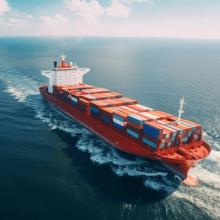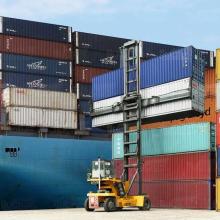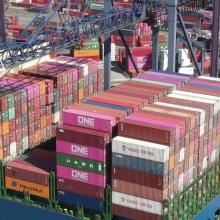
Choosing between a 20ft and 40ft shipping container is one of the first decisions you will make. In our experience at Bofeng Logistics, the right choice depends on three factors: cargo volume, weight, and type — and getting it wrong can mean paying 30-50% more than necessary per unit shipped.
This guide compares the two sizes across all critical dimensions, with practical guidance on which to choose for different cargo scenarios.
External Dimensions Comparison
| Dimension | 20GP | 40GP | 40HQ |
| External Length | 6.06 m (20 ft) | 12.19 m (40 ft) | 12.19 m (40 ft) |
| External Width | 2.44 m (8 ft) | 2.44 m (8 ft) | 2.44 m (8 ft) |
| External Height | 2.59 m (8.5 ft) | 2.59 m (8.5 ft) | 2.89 m (9.5 ft) |
| Tare Weight | ~2,200 kg | ~3,700 kg | ~3,900 kg |
| Max Gross Weight | 30,480 kg | 30,480 kg | 30,480 kg |
| Max Payload | ~28,280 kg | ~26,780 kg | ~26,580 kg |
Internal Dimensions Comparison
| Dimension | 20GP | 40GP | 40HQ |
| Internal Length | 5.90 m (19.4 ft) | 12.03 m (39.5 ft) | 12.03 m (39.5 ft) |
| Internal Width | 2.35 m (7.7 ft) | 2.35 m (7.7 ft) | 2.35 m (7.7 ft) |
| Internal Height | 2.39 m (7.8 ft) | 2.39 m (7.8 ft) | 2.70 m (8.9 ft) |
| Door Opening Width | 2.34 m (7.7 ft) | 2.34 m (7.7 ft) | 2.34 m (7.7 ft) |
| Door Opening Height | 2.28 m (7.5 ft) | 2.28 m (7.5 ft) | 2.58 m (8.5 ft) |
| Internal Cubic Capacity | ~33 CBM | ~67 CBM | ~76 CBM |
Lashing Point Specifications
Proper cargo securing requires knowing where and how many lashing points exist:
| Specification | 20GP | 40GP | 40HQ |
| Lashing rings on floor (each) | 8–12 | 16–24 | 16–24 |
| Lashing ring capacity | 1,000 kg each | 1,000 kg each | 1,000 kg each |
| Lashing rings on side posts | 4–6 per side | 8–10 per side | 8–10 per side |
| Forklift pocket location | 2 at each end (floor level) | 2 at each end (floor level) | 2 at each end (floor level) |
| Forklift pocket size (W×H) | 360×115 mm | 360×115 mm | 360×115 mm |
| Grabhook / sling location | 4 per side (top corner) | 8 per side (top corner) | 8 per side (top corner) |
Maximum recommended lashing load distribution:
- Use at least 4 lashing points for any single heavy item (machine, engine)
- Distribute lashing tension evenly — over-tensioning on one side can deform the container
- Combined lashing load should not exceed 40% of the container's max payload (approx 11,200 kg for 20GP)
Capacity in Pallets
Standard pallet sizes and how many fit in each container:
| Pallet Type | 20GP | 40GP | 40HQ |
| Euro pallet (1.2 × 0.8 m) | 10 | 24 | 24 |
| Standard pallet (1.2 × 1.0 m) | 8 | 20 | 20 |
| US pallet (1.2 × 1.06 m) | 8 | 20 | 20 |
When to Choose 20GP
Choose a 20GP container if:
- Your cargo weighs more than 15,000 kg (approaching the 20GP's weight advantage)
- Your cargo volume is under 28 CBM (a 40GP would be wasteful)
- Your cargo is dense and heavy (machinery, metals, stone, bottled goods)
- You are shipping a single heavy item (one machine, one vehicle)
- You want to sample a new market with a full container
The 20GP advantage: For heavy cargo, the 20GP offers higher payload capacity than a 40GP because the container itself weighs less (2,200 kg vs 3,700 kg tare weight).
When to Choose 40GP
Choose a 40GP container if:
- Your cargo volume is between 30 and 60 CBM
- Your cargo is light and bulky (furniture, plastic products, textiles)
- You want the lowest cost per unit of volume
- You are consolidating cargo from multiple suppliers
The 40GP advantage: The cost per CBM of a 40GP is typically 30-50% lower than a 20GP, making it significantly more economical for volume-based cargo.
When to Choose 40HQ
Choose a 40HQ container if:
- Your cargo is light but very bulky (above 60 CBM, under 22,000 kg)
- Your cargo is tall (between 2.3 m and 2.6 m) — standard 40GP door height is 2.28 m
- You are shipping furniture, inflatable goods, or large machinery with vertical clearance requirements
The 40HQ advantage: The extra 30 cm of height provides approximately 13% more volume than a standard 40GP — ideal for light, bulky goods.
Cost Comparison
| Cost Factor | 20GP | 40GP | 40HQ |
| Ocean freight rate | Baseline | ~1.5–1.8× of 20GP | ~1.6–1.9× of 20GP |
| Cost per CBM | Higher (less volume) | Lower (more volume) | Lowest (most volume) |
| Inland trucking | Lower (lighter container) | Higher | Higher |
| Terminal handling | Same | Same | Slightly higher |
Decision Flowchart
Your cargo weight over 20,000 kg?
├── YES:
│ └── Volume under 28 CBM? → 20GP
│ └── Volume over 28 CBM? → Consider splitting or 40GP (check axle weight limits)
└── NO:
└── Volume under 28 CBM? → 20GP
└── Volume 28–60 CBM? → 40GP
└── Volume 60–76 CBM? → 40HQ (check weight won't be exceeded)
Beyond 20ft and 40ft: Other Container Sizes
While 20ft and 40ft containers dominate the market, other sizes exist for specific needs:
| Size | Common Type | Typical Use | Availability |
| 10ft container | Standard dry | Small shipments, niche logistics | Limited — available from specialized depots |
| 45HQ (45-foot high cube) | High cube pallet-wide | Maximum volume (~86 CBM); fits 26 euro pallets | Common on US-Europe routes; rare in China |
| 48ft / 53ft containers | Domestic US sizes | US domestic intermodal | Not available for international shipping from China |
| Half-height (20ft) | Open-top half-height | Bulk cargo (coal, ores, stone) | Available for bulk commodities |
Pallet-wide containers (45'PW): These are 45ft containers with 2.5m internal width (vs standard 2.35m), allowing 3 euro pallets side by side instead of 2. They are common on Europe-bound routes but rare from China.
FAQ
Q: How many tons can a 20ft container hold?
A: A 20GP container can hold up to approximately 28.2 metric tons of cargo (payload).
Q: How many CBM is a 40ft container?
A: A standard 40GP container holds 67 CBM. A 40HQ (High Cube) holds 76 CBM.
Q: Is a 40ft container cheaper than two 20ft containers?
A: Yes — typically 30–40% cheaper than shipping two separate 20ft containers, assuming cargo fits in one 40ft.
Q: Can I ship a 40ft container by truck?
A: Yes — but check local road regulations. In some regions, 40ft containers require special permits for road transport.
Unsure which container size you need? Bofeng Logistics can help calculate the optimal container size for your cargo. Request a consultation.
Bofeng Logistics
Phone/WhatsApp: 13075678958
Email: info@zhbfwl.com
Contact us for a personalized shipping solution.
Related Logistics Services
Bofeng Logistics offers the following related services, feel free to inquire: